White and Beige Loft Doors: Getting the Powder Coating Right
Hold two white sample plates up to a freshly painted wall and one of them will look wrong. That, in a nutshell, is the difficulty with a white loft door: the frame is powder-coated steel in whichever RAL white you pick, and RAL has more than one white to offer. This guide takes you through the two whites British buyers weigh up most often, RAL 9016 and RAL 9010, explains why matt and silk-gloss versions of the same code can pass for two different colours, and tells you when beige, anthracite RAL 7016 or matt black is the smarter choice for the room you actually have.
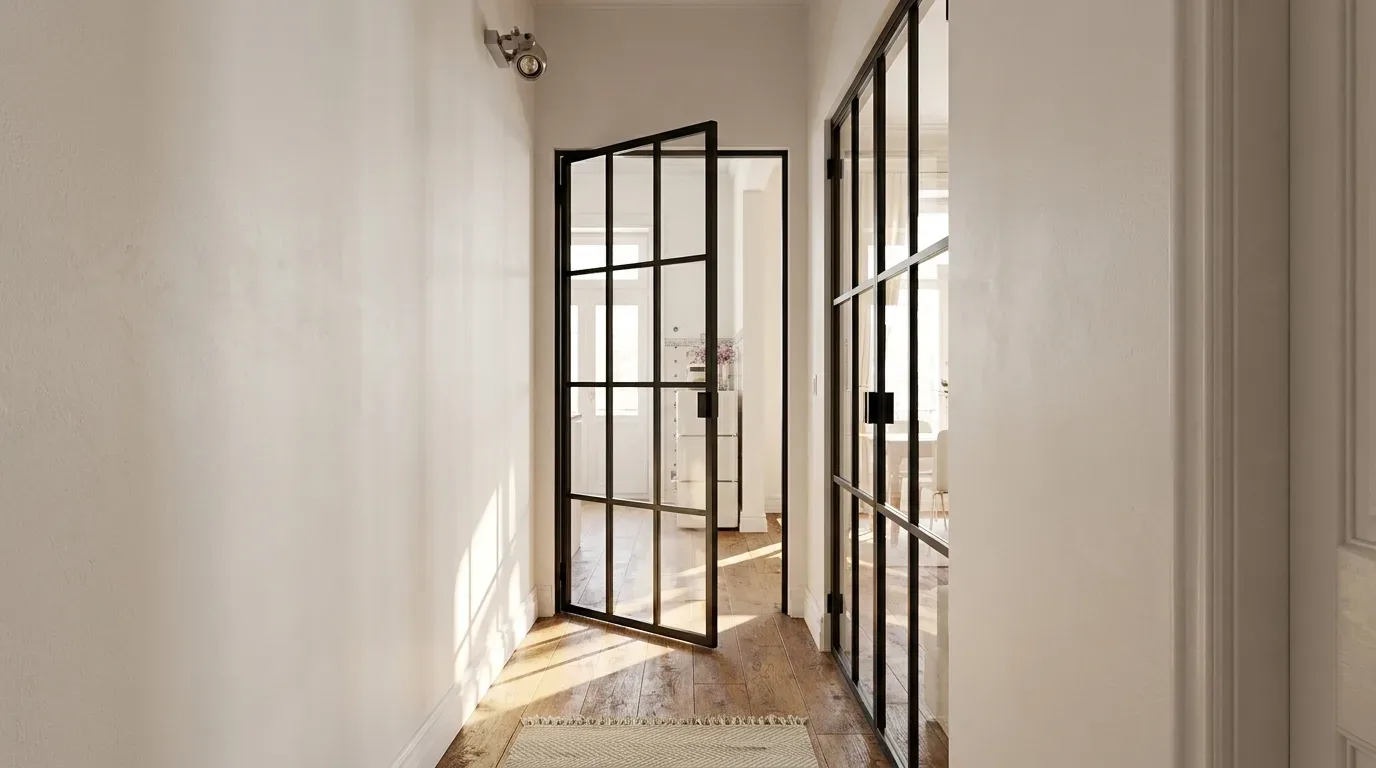
A white loft door pairs a powder-coated steel frame in any RAL white, most commonly RAL 9016 or RAL 9010, with toughened or laminated safety glass. The coating colours the steel only, never the pane. Matt and silk-gloss finishes change how the white reads, so the final code should be checked on a physical RAL sample under your own room light.
White loft doors are internal glazed doors with a steel frame powder-coated in a standardised RAL white. As a result, the exact frame colour can be reproduced for side panels, matching parts and touch-ups years after the door was made.
The short version
- Any RAL colour is possible, but two whites do most of the work: RAL 9016 (traffic white, a touch warm) and RAL 9010 (pure white, cooler). The undertone of your wall paint decides, not taste alone.
- The powder coating lives on the steel. If you want the pane itself to look white, that comes from frosted glass, not from coating the glass.
- Matt hides fingerprints and softens light; silk-gloss throws more light back into a dim room but shows touch marks sooner.
- Manufaktur X configurator data: 48% of loft door configurations previewed clear glass most, and 23% chose RAL 7016 - white and anthracite are the two ends of one and the same decision.
- Never sign off a white from a screen. Displays distort white undertones more than any other colour family.
What this means for your room
| Insight | What to do with it |
|---|---|
| "White" is several RAL codes | RAL 9016 leans slightly cream, RAL 9010 reads cooler and more neutral - hold both against the wall the frame will sit beside. |
| Finish shifts the colour as much as the code does | The same white looks crisper in silk-gloss and softer in matt, so decide gloss level and RAL code together. |
| Coating and glazing are separate choices | Clear, frosted, smoked, dark smoked or textured glass, each as toughened or laminated safety glass, with any RAL frame colour you like. |
| White and anthracite pull in opposite directions | A pale frame recedes and makes the room feel bigger; RAL 7016 or matt black draws a graphic outline. Room size and wall tone decide. |
Which RAL whites do people choose for a powder-coated steel door?
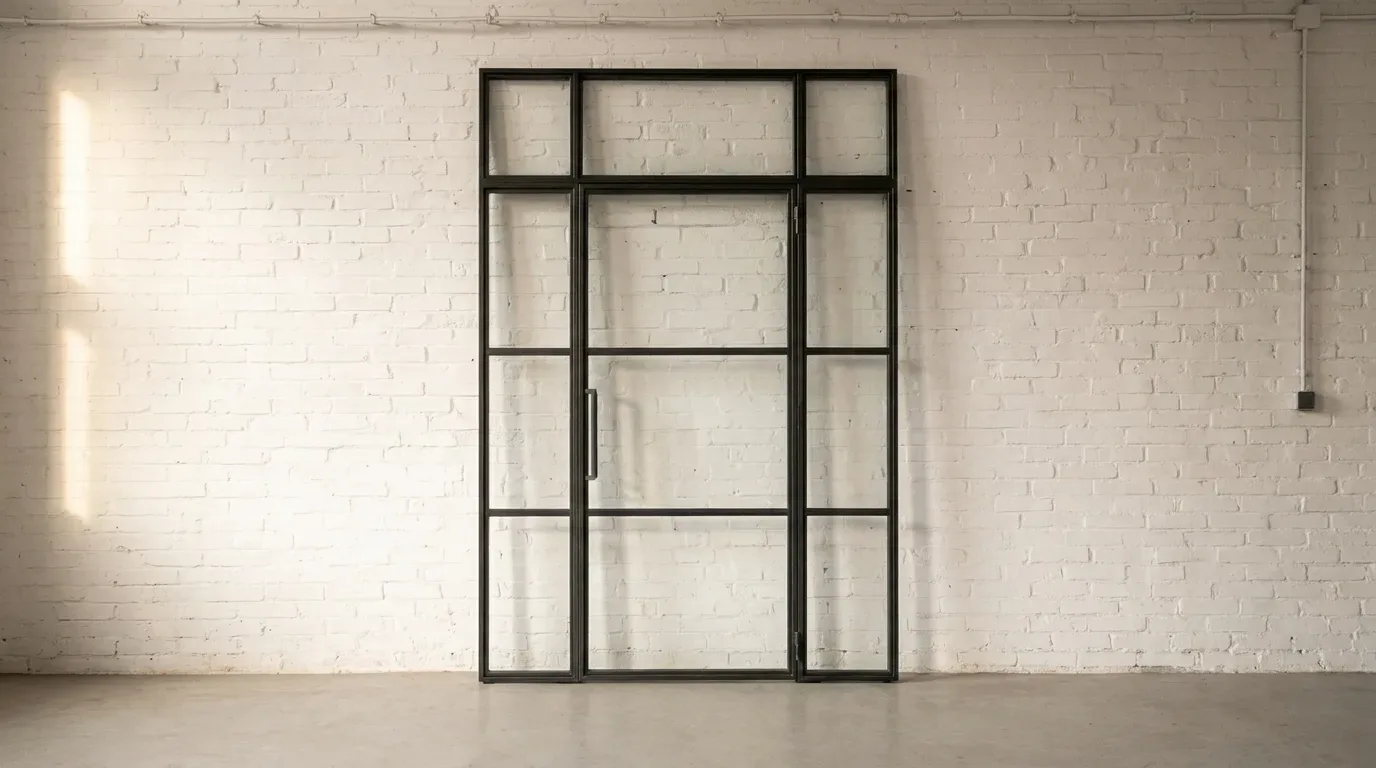
The two whites chosen most often for powder-coated steel loft doors are RAL 9016 traffic white and RAL 9010 pure white, though the frame can be coated in any RAL colour going. A steel-and-glass loft door from Manufaktur X starts life as S235JR structural steel to EN 10025, welded into a slim Crittall-style frame and glazed with toughened (ESG) or laminated (VSG) safety glass - laminated being the sensible pick for larger panes, since it holds together if it ever breaks. You enter the exact door size you want, to the millimetre, and that matters more in Britain than almost anywhere: off-the-shelf internal doors come in fixed sizes such as 1981 x 762 mm, and a knocked-through wall in a Victorian terrace or a 1930s semi almost never plays along. Data from Manufaktur X (based on 224 anonymous configurator sessions): In our own configurator, drawn from 27,349+ anonymous interactions, 48% of loft door configurations previewed clear glass most - people planning a pale frame overwhelmingly want to see straight through it.
RAL 9016 against RAL 9010: warm cream or cool neutral
RAL 9016 carries a faint warmth that sits happily with cream walls, oak floors and the softer whites you find in period properties. RAL 9010 is the cooler, cleaner tone that suits grey-tinted modern whites and Scandinavian-leaning schemes. On its own, each one is simply white. Side by side against a painted wall, the gap is plain to see. The reliable tiebreaker is the undertone of the paint the frame will touch - not personal preference, and certainly not the name on the tin.
The coating is on the steel, never on the glass
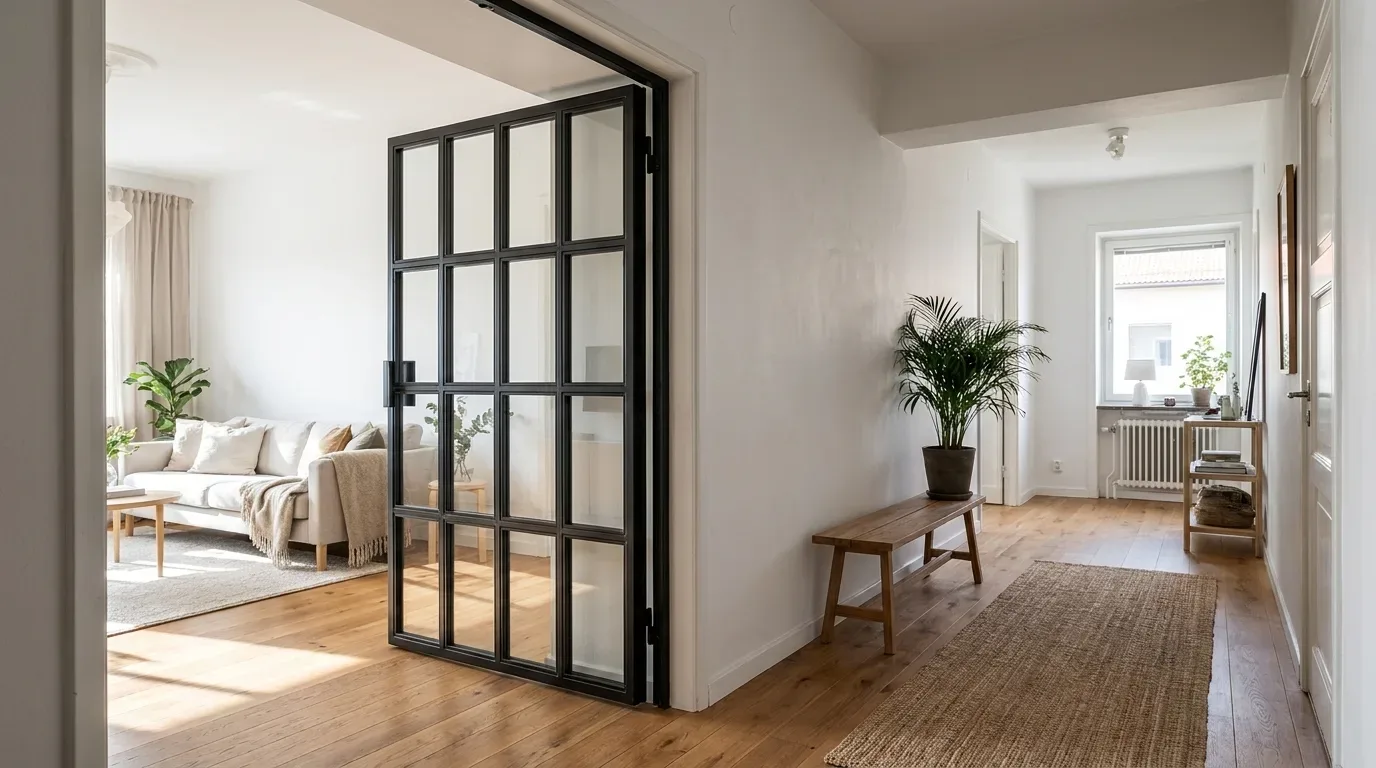
Powder coating is an electrostatic process for metal, so the RAL code you choose colours the frame, the glazing-bar grid and the hardware, and nothing else. Anyone searching for "powder-coated glass" is really after frosted or textured glass, which gives you a white, light-diffusing surface as a property of the pane itself. Frame colour and glass type are two separate decisions, and any RAL white goes with any of the five glass options.
Matt or silk-gloss: which finish suits a white steel frame?
Go matt where the door stands in raking daylight or gets handled all day long, and silk-gloss where a darker room needs the frame to bounce light around. Powder coatings on architectural steel follow EN 13438 and go on electrostatically as a film of roughly 60-80 micrometres; within that, gloss level is a free parameter, with the classic silk-gloss sitting around a 75% gloss grade and matt versions well below it. In our workshop we regularly hand customers two plates of the very same RAL code, one matt and one silk-gloss, and watch them read the pair as two different colours. That is not a trick of the eye you can train yourself out of - it is precisely why gloss level belongs in the colour decision from the start, not as a tick-box at checkout.
Why the same white looks like two colours
Silk-gloss reads brighter and a little harder because the surface mirrors part of the room back at you; matt scatters the same light and makes the identical pigment look softer, almost chalky. On a white frame this effect is stronger than on any dark colour, because white already reflects most of the visible spectrum. A matt RAL 9010 next to a silk-gloss RAL 9016 can even seem to swap their warmth, which is why comparing finishes across codes leads you astray. Change one thing at a time.
Fingerprints, dust and side light from a hallway window
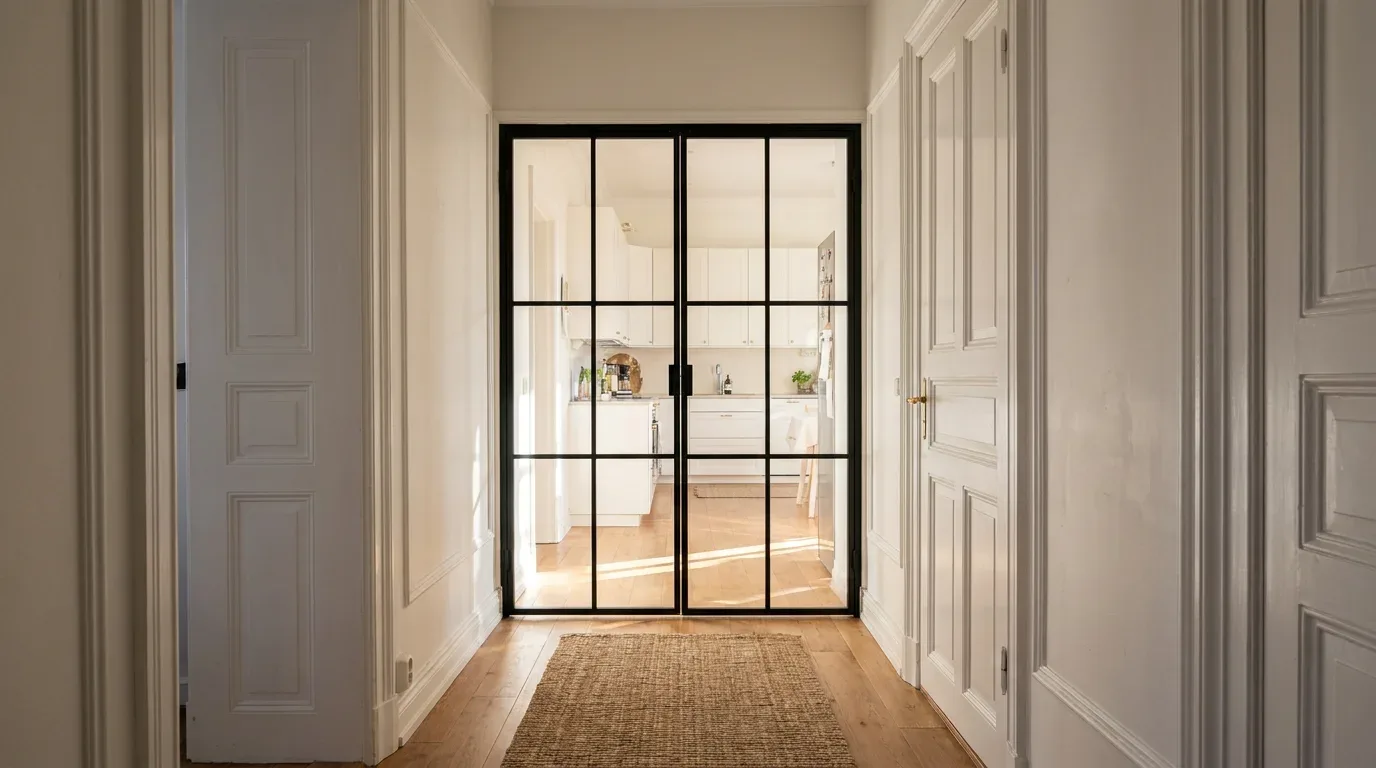
Everyday life splits the two finishes neatly: matt white shows dust settling on horizontal profiles a little sooner, silk-gloss shows fingerprints around the handle sooner. Neither is a fault, and a damp microfibre cloth sorts both. If your door catches low side light from a landing or stairwell window, matt is the more forgiving choice, because gloss under raking light picks out every weld transition and touch mark along the profile.
In Victorian conversions I see more raking light than people expect, from a stairwell window or a long hallway. I tell clients to hold a matt and a silk-gloss sample in that exact spot before they choose a white.
James W.
Bespoke furniture maker, London
Can a white loft door make a small British room feel bigger?
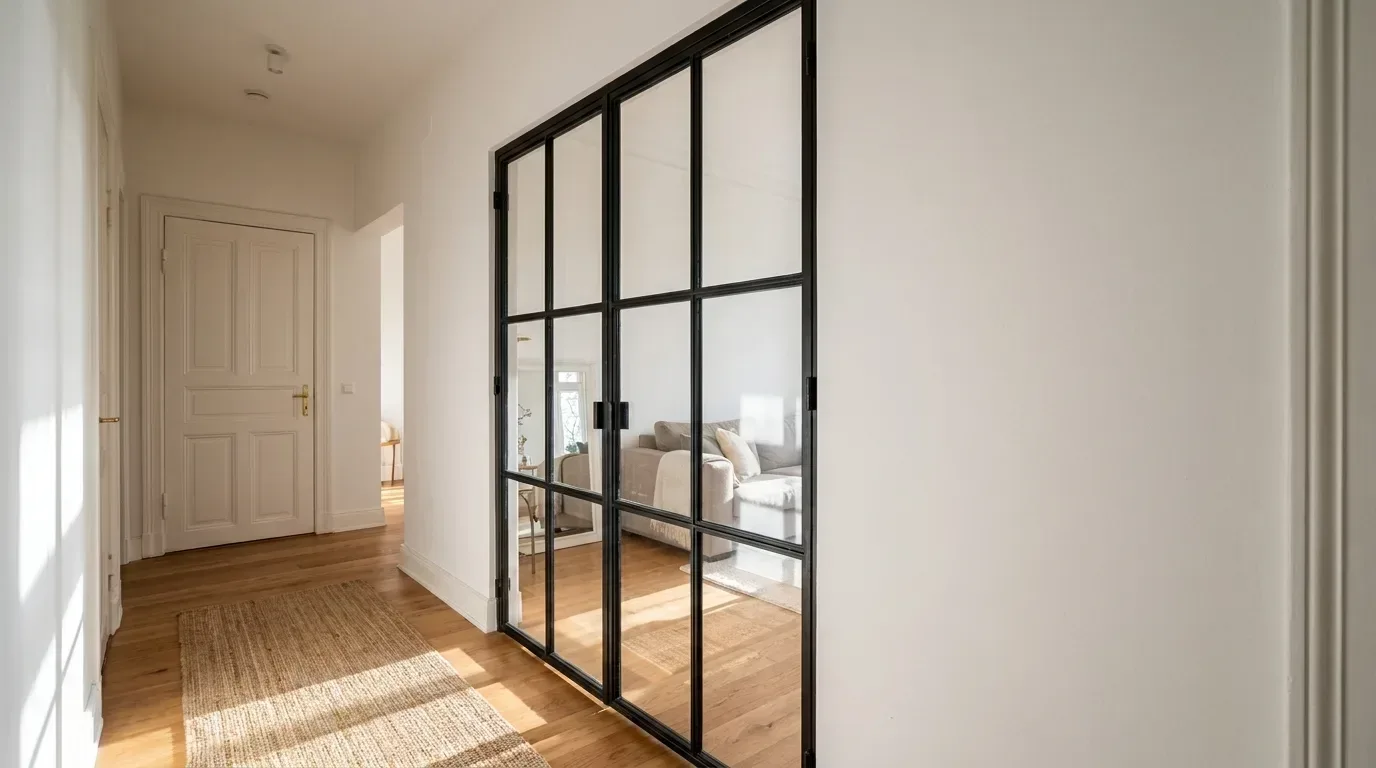
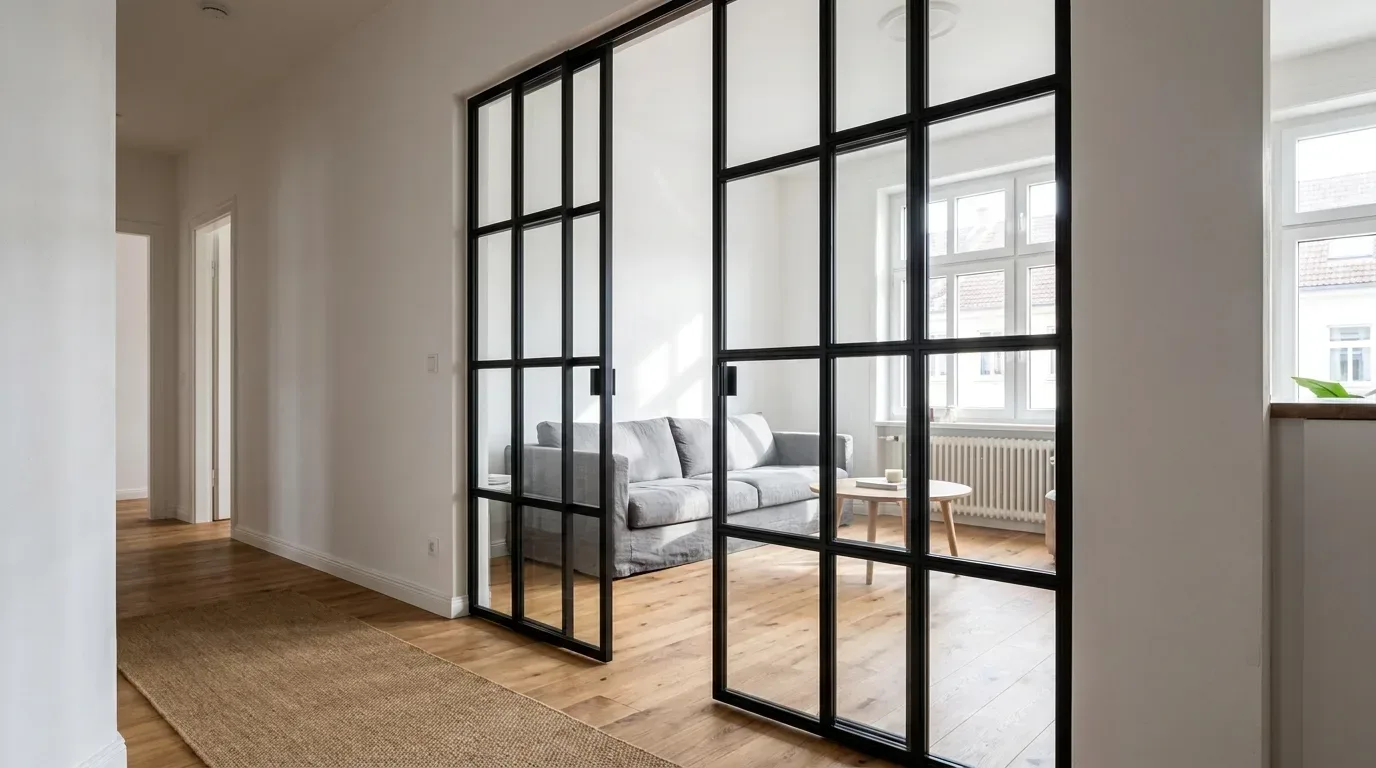
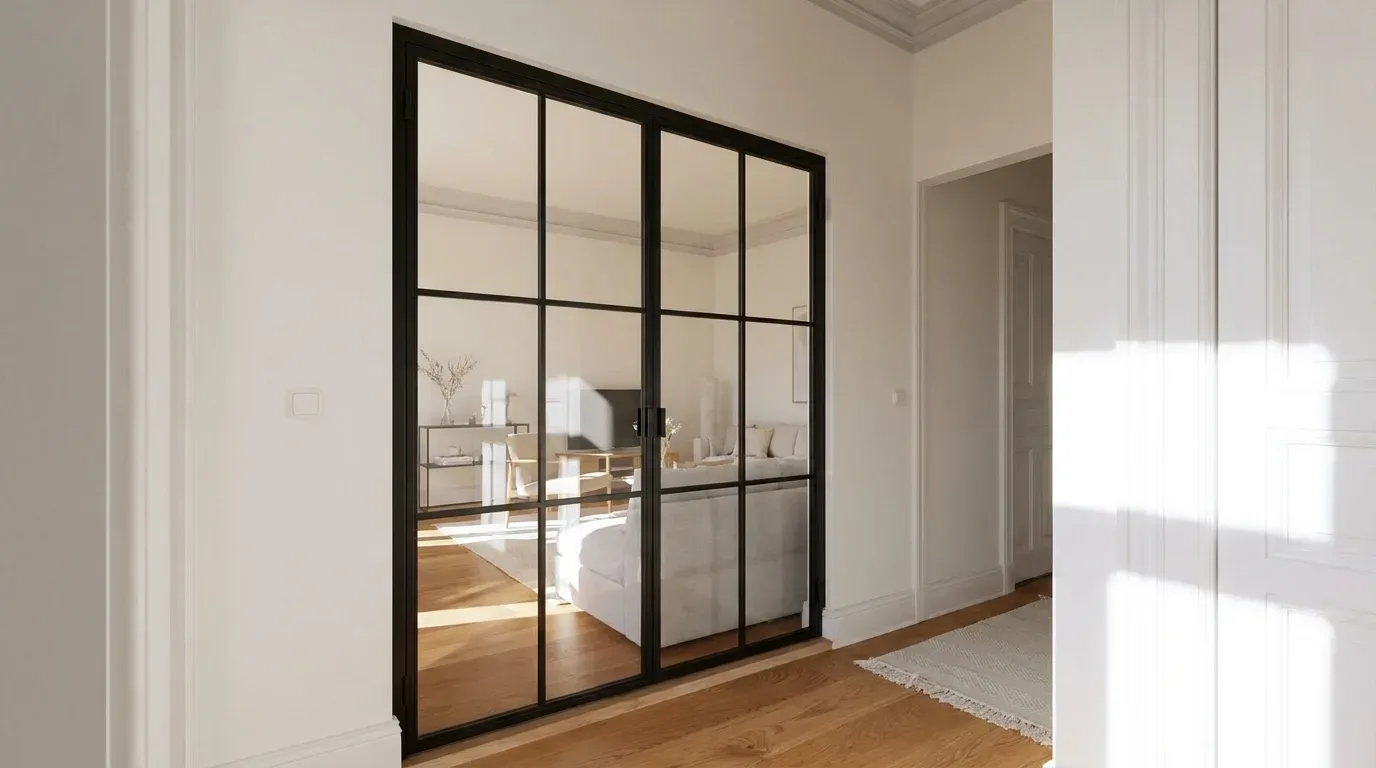
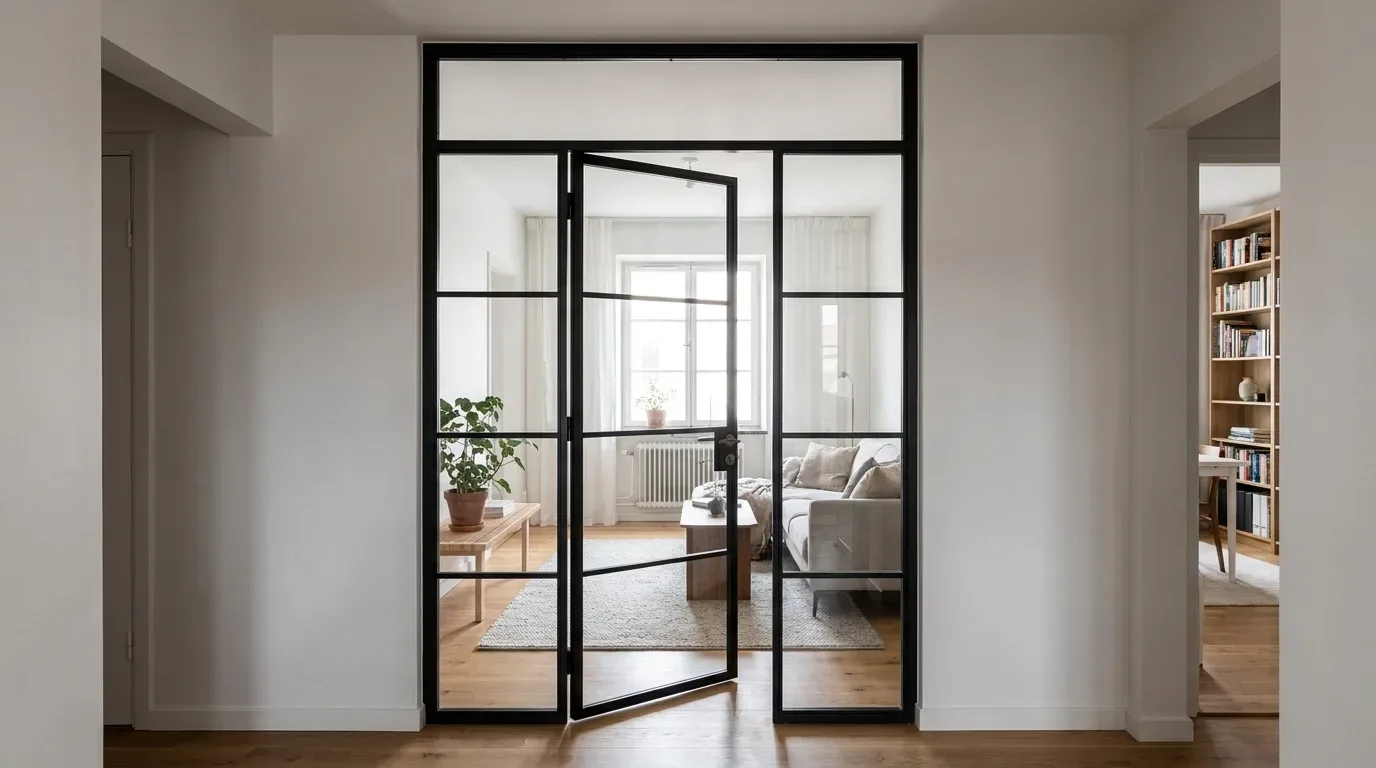
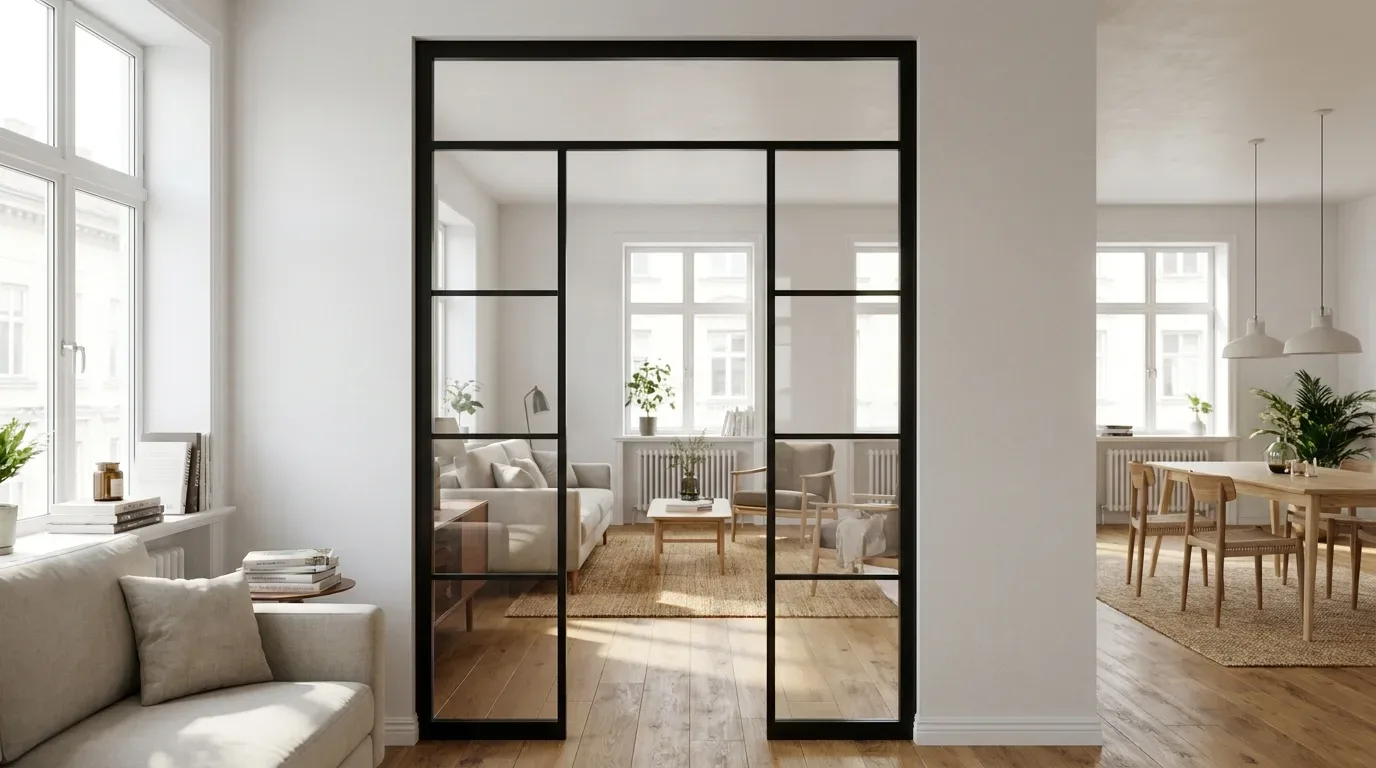
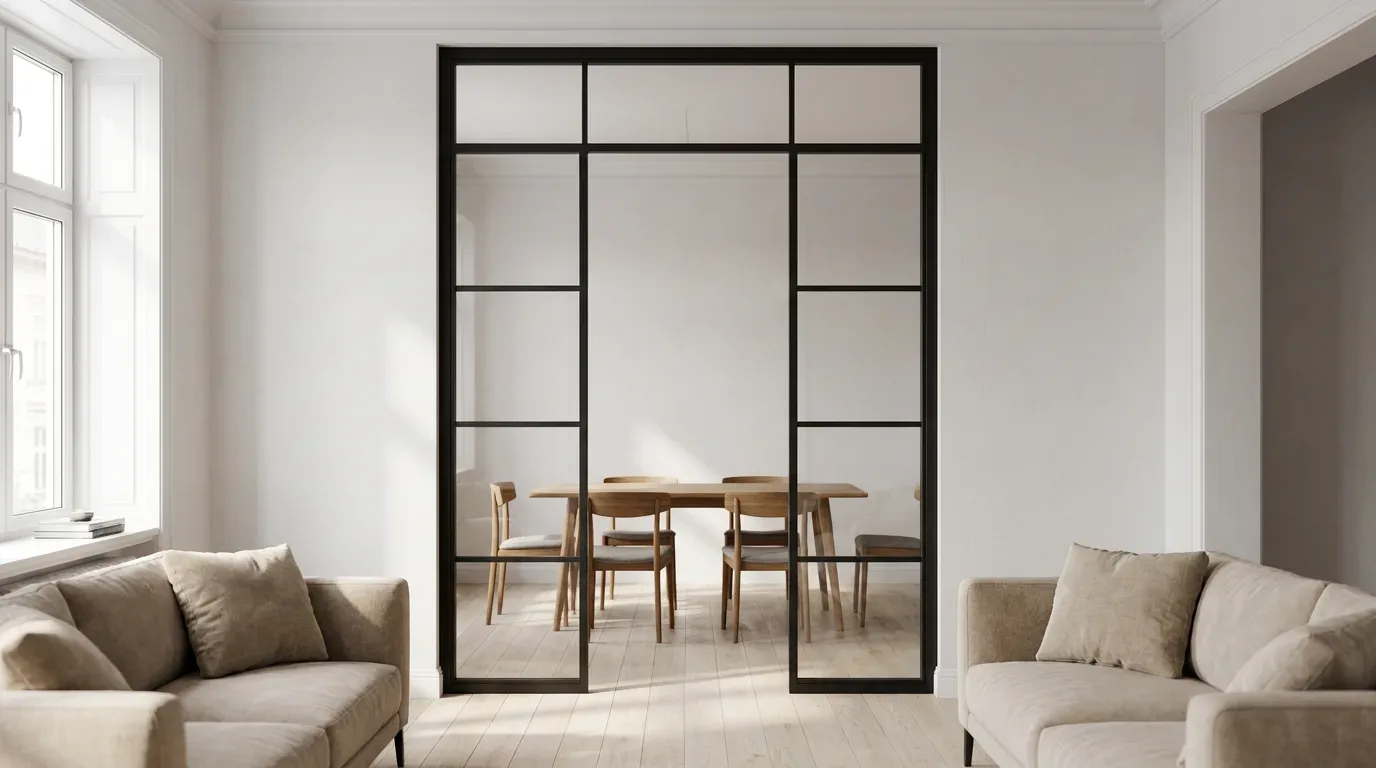
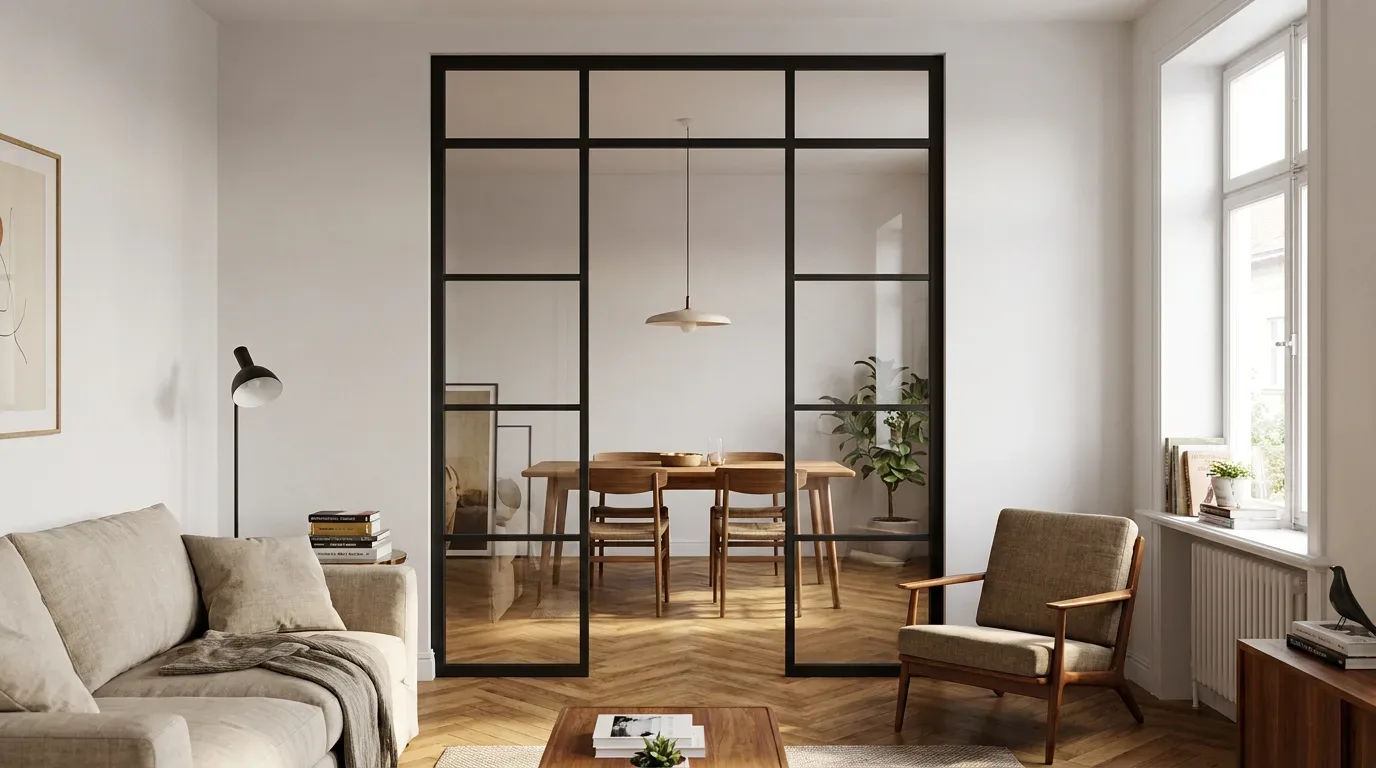
Yes - a white frame with clear glass keeps the sightline running through the opening, so a divided room still reads as one continuous space. Daylight passes through the glazing, and the pale frame reflects rather than soaks up whatever light lands on it, which is why pale steel doors are the go-to answer for separating a kitchen-diner from a home office without visibly shrinking either side. British housing makes the case by itself: the knocked-through front and back reception rooms of a Victorian terrace, the compact hallway of a 1930s semi, the open-plan living space of a new-build flat with ceilings around 2.4 m. None of them has floor area to spare for a solid partition. Where the opening never needs to close, a fixed steel-and-glass room divider with an optional walk-through gap does the same job with no leaf, no handle and no hinges.
Clear or frosted glass in a compact floor plan
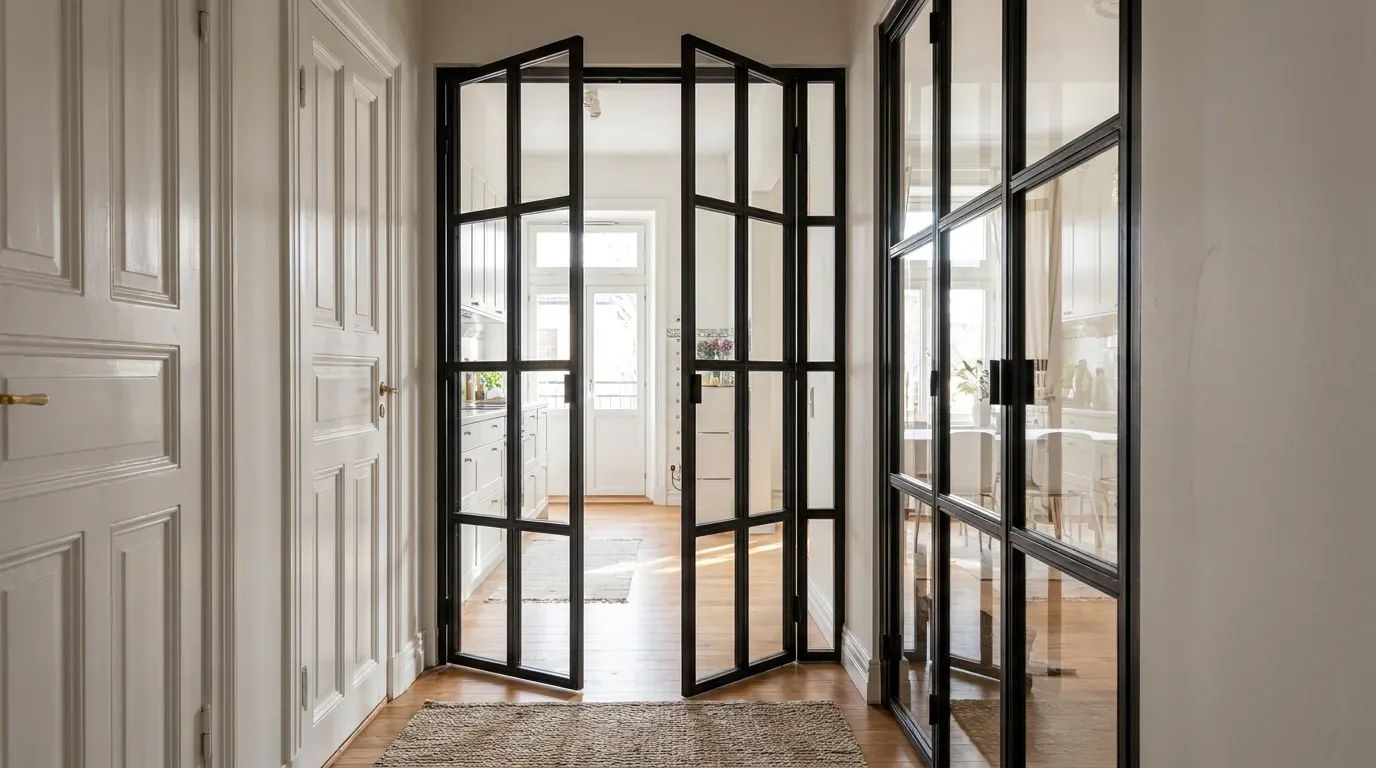
Clear glass gives you the fullest view through and suits living areas, while frosted glass keeps the light but blocks the sightline where privacy matters, say towards a bedroom or a bathroom landing. Both come as toughened or laminated safety glass. One honest note: a glazed steel door takes the edge off noise between rooms, but it is chosen for light and sightlines, and that is what you should buy it for.
White on white: avoiding the clash with your wall colour
Put a cool-white frame against a warm white on woodchip or Anaglypta and the frame turns faintly grey-blue; swap the pairing round and the frame looks yellowed. The remedy costs nothing: check the RAL sample against the actual wall surface, in daylight and again under your evening lamps, before you commit to the code.
White, beige, anthracite or matt black: matching the frame to the interior
White recedes and enlarges, beige softens, and anthracite RAL 7016 or matt black draws a deliberate graphic outline - wall tone, direction of light and room size settle which one you need. Data from Manufaktur X (based on 224 anonymous configurator sessions): The dark camp is very real in our first-party figures: 23% of loft door configurations chose RAL 7016 for the RAL choice, making anthracite the single most popular code even among buyers who arrived researching pale frames. Colour temperature counts as much as lightness here. A beige such as RAL 1001 shares the warmth of an oak floor, while anthracite belongs with polished concrete, grey sofas and black taps and fittings.
Four frame colours compared
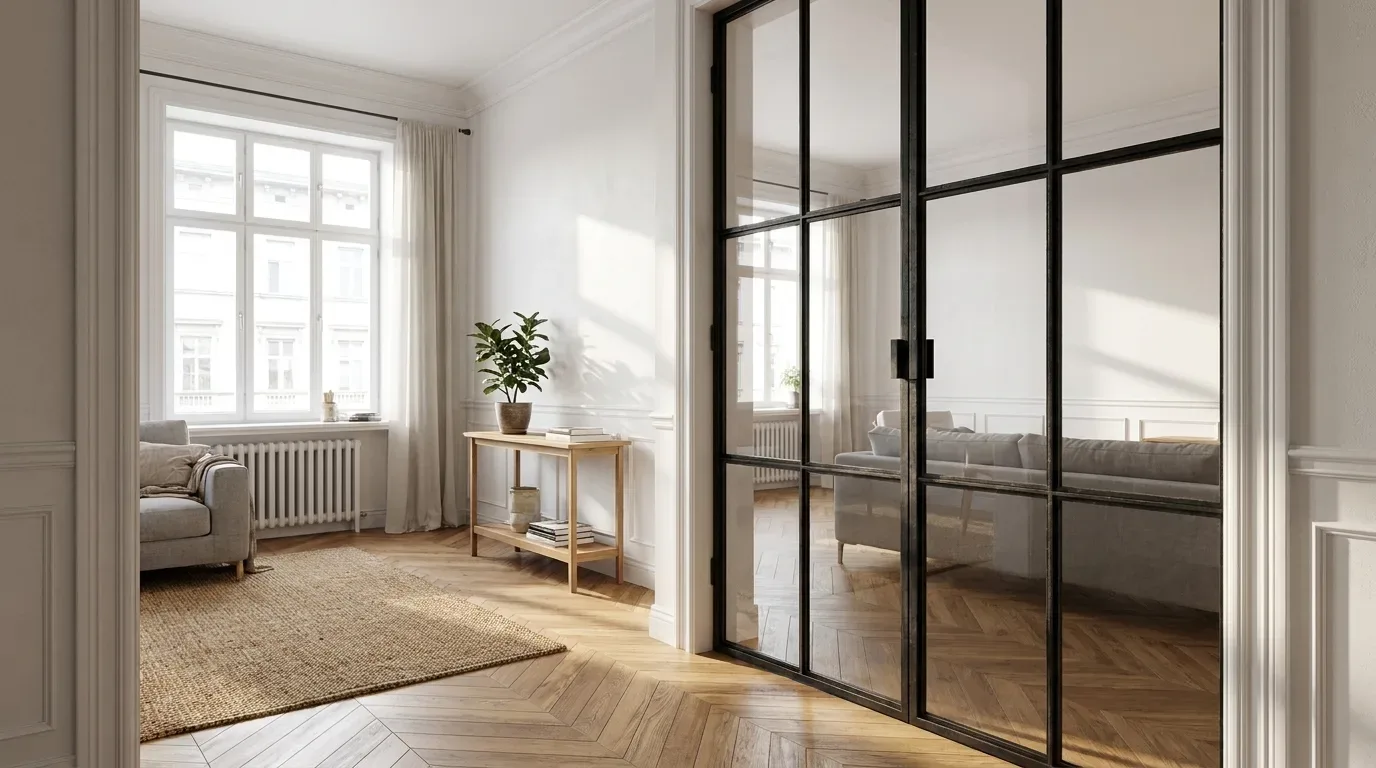
The table boils down what we see across projects into a quick decision aid.
| Frame colour | Effect in a small room | Wall pairings | Dust and marks | Style direction |
|---|---|---|---|---|
| White RAL 9016 / 9010 | Recedes, frame all but disappears, glass takes over | White and pastel walls with a matching undertone | Marks least visible, dust invisible | Scandinavian, minimalist, period conversion |
| Beige RAL 1001 | Recedes gently, warmer than white | Cream walls, oak and ash tones | Very forgiving day to day | Modern rustic, warm minimalism |
| Anthracite RAL 7016 | Draws a visible outline, gives the space structure | Pale walls crying out for contrast, concrete, greys | Dust visible on horizontal profiles | Urban industrial, contemporary |
| Matt black RAL 9005 | Strongest graphic line, the classic Crittall look | Bright white walls, brass or timber accents | Dust most visible, fingerprints muted by matt | Warehouse loft, industrial heritage |
A straight recommendation: white if, dark if
Go white or beige if the room is under roughly 20 m2, gets modest daylight, or already carries strong furniture colours; go RAL 7016 or matt black if the space is generous and bright and you want the steel grid itself to be the statement. Households that cannot make up their minds usually do best with white in the smaller room and a dark frame wherever the ceiling height, be it a lofty Victorian reception room or a converted attic, can carry it.
| Product | From | Note |
|---|---|---|
| Loft Door | £813 | Lowest possible option |
| Room Divider | £1,902 | Steel + laminated glass, custom width |
| Large Shelf | £2,752 | Solid wood, steel frame, floor-to-ceiling |
| Dining Table | £2,038 | Solid wood, steel frame |
| Coffee Table | £1,548 | Solid wood, steel frame |
| Bench | £946 | Solid wood, steel frame |
| TV Stand | £1,324 | Solid wood, steel frame |
| Bedside Table | £856 | Solid wood, steel frame |
| Hallway Wardrobe | £1,608 | Solid wood, steel frame |
| Display Cabinet | £2,533 | Solid wood, steel frame |
| Pipe Shelf | £916 | Modular pipe shelf |
| Desk | £1,561 | Solid wood, steel frame |
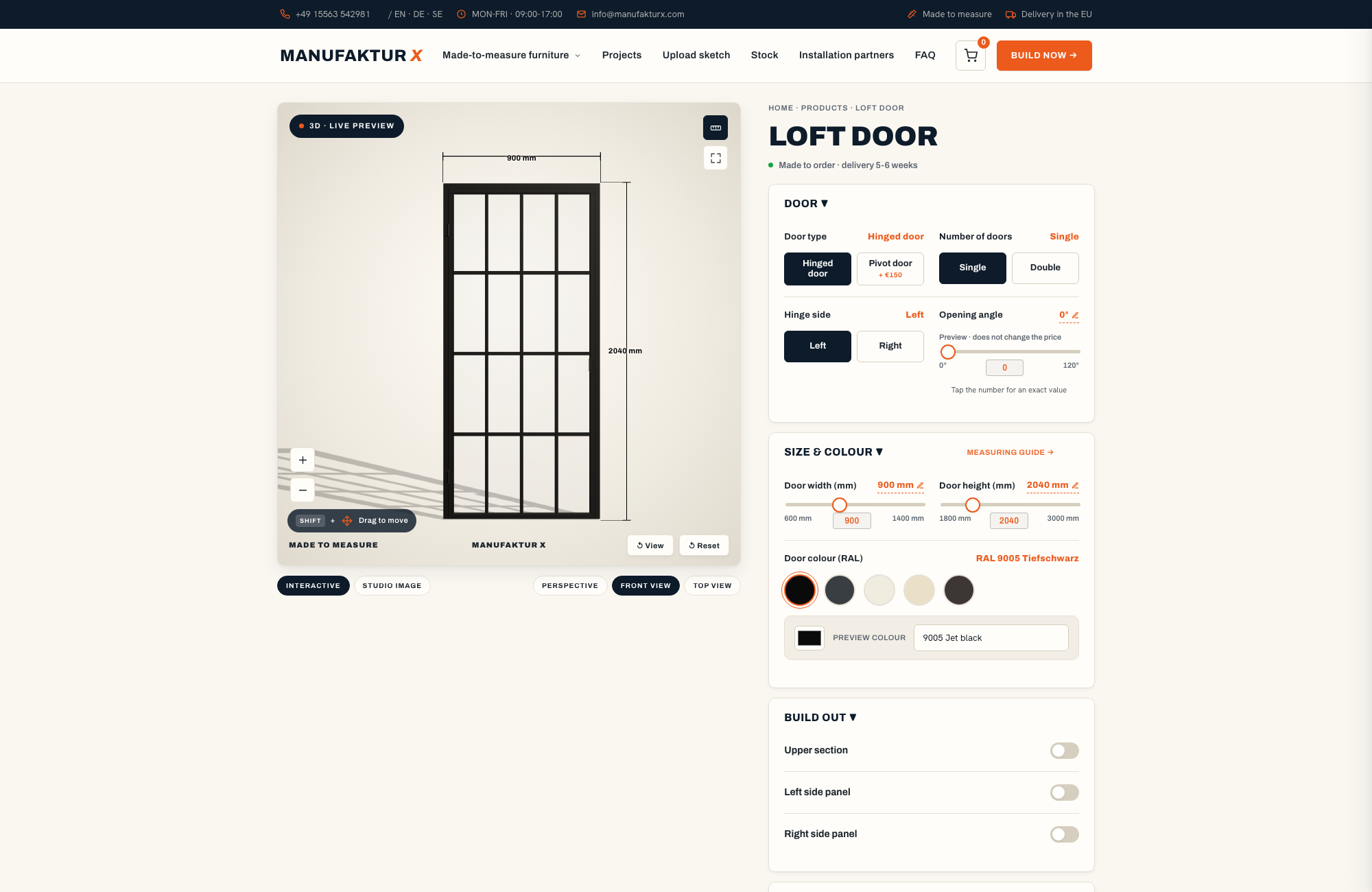
Choosing your RAL colour in the 3D configurator
You choose any RAL code and finish in the live 3D configurator, preview it against your chosen glass, and watch the fixed price update as you go - no quote requests, no surprises down the line. Manufaktur X builds every door to the dimensions you enter, made in the EU, and delivers to the UK in 4-6 weeks with customs and duties handled, for one flat delivery charge of £349 per order. Data from Manufaktur X (based on 177 anonymous configurator sessions): Interestingly, colour is where buyers linger least: the elongated bar handle appears on 43% of the doors configured with us, and the single most-adjusted setting across all sessions was door leaf width. Millimetre sizing, not colour, is what people fine-tune, and that squares with our experience that the walls of older British homes rarely run true. The most common reason a custom door does not fit is mis-measurement, not a production fault: measure the opening at several points, take the smallest reading, allow the roughly 5 mm mounting clearance per side, and enter the door size you actually want rather than lifting it off a floor plan. That clearance also nudges the visible proportion of the frame, so confirm your RAL choice on the final dimensions. The steel frame arrives pre-drilled and is screwed straight to the wall; a heavy or double leaf needs two people, so unless you fancy fitting the 40-80 kg frame yourself, a local joiner will make quick work of it.
Five steps from wall colour to confirmed RAL code
Work through the sequence once and the colour question tends to answer itself.
- Photograph the wall and floor right beside the opening in daylight - the surfaces the frame will actually touch.
- Sort your shortlist into a warm or cool white family based on the undertone you see in those photos.
- Set the RAL code and gloss level in the 3D configurator and preview the combination against your glass type and glazing-bar layout.
- Verify the shortlisted code on a physical RAL fan deck or coated sample plate under your own room light, morning and evening - never on a screen.
- Make sure handle, hinges and glazing bars are coated in the same batch as the frame so every part matches exactly.
Handle, hinges and glazing bars in the same colour
All three handle designs - the elongated bar, the discreet handle and the half-moon - plus the hinges and the glazing-bar grid get the same powder coating as the frame, so hardware colour is settled the moment you fix the RAL code. Hinge side and opening direction remain freely selectable whatever the colour, which keeps the aesthetic decision cleanly separate from the practical ones.
On Swiss loft conversions I insist that frame, glazing bars, hinges and handles are coated in one batch. When a client orders a side panel later on, that shared RAL code and gloss level is what keeps everything matching.
Martina F.
Site manager, Zurich
Looking after white powder-coated steel, and the colour mistakes we see most
White powder-coated steel asks for nothing beyond mild soap, water and a soft microfibre cloth - the problems that land in our inbox are colour decisions, not coating faults. A properly cured powder coating shrugs off fingerprints, minor abrasion and fading far better than brush-applied paint, which is why touch-ups on our doors are rare over 10-20 years of normal indoor use. The most frequent colour-related follow-up we hear is not a defect at all but a white that argues with the wall white, and a single sample check would have avoided it. Anything still open is probably answered in our loft door FAQ, and for something specific to your opening you can contact the Manufaktur X team directly.
Cleaning without dulling the finish
Wipe the profiles with lukewarm water, a drop of mild washing-up liquid and a microfibre cloth, then dry them off. Give scouring pads, chloride-based cleaners and solvent-heavy sprays a miss, as they dull the gloss grade for good. In kitchens, degrease now and again - it is the airborne film of cooking fat, not the coating, that makes a white frame look tired.
Five colour mistakes to avoid
These five account for nearly every colour regret we hear about.
- Choosing the RAL from a screen. Displays shift white undertones; order a physical sample.
- Matching the frame to the furniture rather than the wall it touches - the wall wins visually, every time.
- Picking gloss for a door in raking hallway light, where every weld and touch mark shows; matt forgives there.
- Forgetting the hardware: handle and hinges are coated with the frame, so a later colour change means recoating the lot.
- Ignoring the glass tint - smoked or dark smoked glass beside a white frame reads far darker than the preview lets on.
Frequently asked questions about white and RAL-coloured loft doors
Can the glass of a loft door be powder-coated white?
No - powder coating is an electrostatic process for the steel frame and hardware only. A white or opaque pane comes from choosing frosted or textured glass among the five glass types, each available as toughened or laminated safety glass, entirely independent of the frame's RAL code.
Does white powder coating yellow indoors over time?
A properly cured powder coating is markedly more colour-stable indoors than painted lacquer, and in an ordinary living room no visible yellowing is expected over many years. What passes for yellowing in kitchens is usually a film of airborne cooking fat, and a periodic degrease removes it completely.
Is beige a standard RAL colour for steel loft doors?
Yes - beige tones such as RAL 1001 sit in the standard RAL palette and are ordered exactly like a white, with no special-colour procedure. Beige earns its keep when pure white looks clinical against warm timber floors.
Can I change the RAL colour of my loft door later?
Recoating is technically possible, but it means taking the door down, stripping it and recoating frame, glazing bars and hardware as a complete set - a workshop job, not a bank-holiday project. Checking the code on a sample under your own light before you order is by far the cheaper route.
Will double doors and side panels arrive in exactly the same white?
Yes, provided they are coated in one production batch with one code and one gloss level, which is how an order built to your dimensions runs. Even a side panel ordered years later can still be matched because RAL is standardised - just specify the identical gloss grade.
Your next step: test your white against your own wall
Three rules carry the whole decision. The two-whites test: hold the sample against the wall the frame will touch, nothing else. The finish-by-light rule: raking light favours matt, dark rooms favour silk-gloss. The batch-match principle: frame, glazing bars, panels and hardware in one batch, one code, one gloss level. Matt is gaining ground on silk-gloss in white steel door orders, much as it already has in kitchen fronts - but your wall, not the trend, should have the casting vote.
The only reliable way to judge a white frame is against your own walls and your own glass choice. Configure your powder-coated steel loft door in the live 3D configurator - set RAL code, finish, glass and handle, watch the fixed price update in real time, and have it built to the millimetre in the EU and delivered to the UK in 4-6 weeks.