Bedroom Interior Design - Designing for Rest
Your bedroom is the one room in the house that is entirely yours. It is not for guests, not for entertaining, and not for showing off. Yet for many people - whether they live in a compact Victorian terrace, a sprawling Edwardian semi or a new-build flat - the bedroom ends up as an afterthought: a bed, a wardrobe, and whatever else did not fit elsewhere.
Good bedroom interior design is not about following trends from a magazine. It is about understanding which elements genuinely support rest - and making deliberate choices around each of them.
Why the Bedroom Deserves More Design Attention
We spend roughly a third of our lives in the bedroom. That figure alone should put it near the top of any home improvement priority list - yet it consistently gets less design thought than the kitchen or the living room. The logic of "no one else sees it" is easy to understand, but it misses the point. You see it every morning and every evening. How a space feels directly affects how quickly you unwind.
The good news is that thoughtful bedroom design does not require a full renovation. Small, considered changes - a different colour on the walls, a layered lighting scheme, smarter storage - can transform how a room feels within a weekend.
Colour: The Foundation of a Restful Bedroom
Colour psychology is well documented when it comes to sleep environments. The broad principles are consistent:
- Soft blues and blue-greys are calming and have been shown to measurably reduce resting heart rate
- Muted greens feel grounding and bring a sense of the natural world indoors
- Warm neutrals - off-whites, warm stone, pale taupe - create a timeless, unfussy backdrop
- Earthy tones like terracotta (used sparingly) add warmth without visual noise
Colours to approach with caution include saturated reds and bright oranges - both are neurologically stimulating and better suited to spaces where energy is the goal, not rest.
In a typical Victorian terrace bedroom with limited natural light, a warm off-white or soft greige tends to work better than a cool grey, which can feel flat in north-facing rooms. In a loft conversion with skylights, you have far more flexibility.
Lighting Done Properly: Layers, Not Just Switches
A single central ceiling light is one of the most common bedroom design mistakes. It creates flat, even illumination with no sense of atmosphere - and switching it off is the only way to dim it.
A layered lighting scheme solves this with three types of light working together:
- Ambient light: a dimmable ceiling fitting or semi-flush pendant, set low in the evening
- Task light: bedside reading lamps - wall-mounted swing arms work particularly well in tighter rooms where table space is limited
- Accent light: indirect uplighting behind furniture, a floor lamp in a corner, or low-level LED strips tucked beneath a bed frame
Colour temperature matters more than most people realise. Warm white bulbs in the 2,700-3,000 Kelvin range support the body's natural melatonin production in the evening. Cooler, bluer light above 4,000 Kelvin signals wakefulness - fine for a home office, counterproductive in a bedroom. This is a straightforward, low-cost change that makes a genuine difference.
Materials That Support a Calm Atmosphere
The materials you choose for bedroom furniture and soft furnishings have a subtle but real effect on how the space feels.
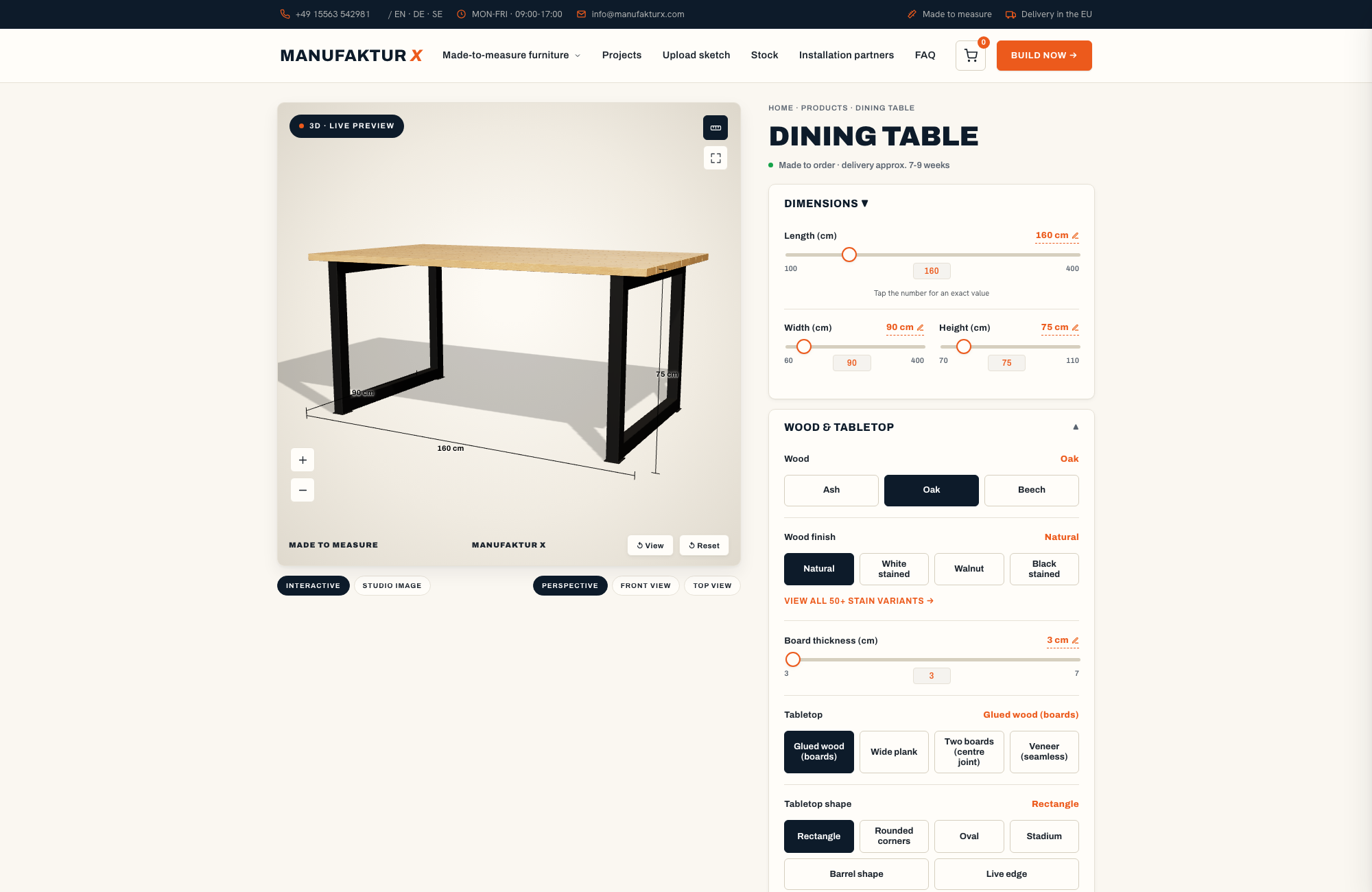
Solid wood is the most reliable choice for bedroom furniture: it is warm to the eye, quiet in texture, and ages well. Oak in particular has a natural warmth that suits British interiors across a wide range of styles - from stripped-back industrial to more traditional period aesthetics. Ash is slightly cooler in tone and works well in contemporary, pared-back schemes. Both are available across the Manufaktur X range and can be specified in exact dimensions to suit awkward alcoves or non-standard wall lengths, which is a common challenge in older British properties.
For soft furnishings, natural fibres consistently outperform synthetics. Linen and cotton bedding breathes better, regulates temperature more effectively, and contributes to better sleep quality. Heavy linen curtains double as acoustic absorption - more on that below.

Furniture Layout: Edit Before You Add
In British bedrooms - particularly in terraced houses or period conversions where rooms tend to be narrower than their Continental equivalents - overcrowding is a far more common problem than under-furnishing. The standard advice applies here: start with the bed, and work outwards.
The bed should sit where you can approach it from both sides. In a room with a chimney breast, placing the bed between two alcoves often works well and creates natural symmetry. Bedside tables should sit at roughly mattress height - a detail that sounds obvious but is frequently ignored when people buy mismatched pieces.
If you can move the desk out of the bedroom, do it. The mental association between a workspace and a sleeping space is well established as a disruption to sleep quality. In flats where that is simply not possible, a physical separation - even a partial visual boundary - helps more than you might expect.
Acoustic Comfort: The Factor Everyone Ignores
In terraced housing and older conversions, noise transfer between rooms and from the street is a genuine concern. Hard surfaces - bare floorboards, plaster walls, glass - reflect sound and create a live, echoey quality that most people find subconsciously unsettling in a bedroom.
Soft surfaces absorb sound. The most effective acoustic interventions for a bedroom are also the most straightforward:
- Heavy lined curtains, floor to ceiling, absorb a significant amount of both street noise and internal echo
- A large rug on bare boards reduces impact noise and adds warmth underfoot
- Upholstered headboards and fabric-covered panels on walls quietly dampen sound without looking like acoustic treatment
- A solid, well-fitted wardrobe against a party wall creates an effective acoustic buffer
Storage Without Clutter
Visual clutter is one of the fastest ways to undermine a bedroom's sense of calm. The solution is not necessarily more storage - it is better-organised, better-hidden storage.
- Beds with underbed drawers are particularly valuable in smaller rooms - a standard double with drawers recovers a surprisingly large amount of usable space
- Built-in wardrobes running floor to ceiling make far better use of a room than freestanding alternatives, and feel more architecturally considered
- A narrow solid wood shelf in an unused alcove provides display and storage without dominating the room
- Multi-functional pieces - an ottoman at the foot of the bed, a bench with internal storage - work well in rooms where every square metre counts
In our experience, the most restful bedrooms are not the emptiest ones - they are the ones where everything has a defined place and the storage itself is not on display.
Defining Space in Open-Plan Layouts and Loft Conversions
Open-plan living has become increasingly common in British homes, particularly in urban flats and warehouse conversions. A sleeping area that flows directly from a living or working space without any physical boundary tends to feel restless - you are never quite off duty.
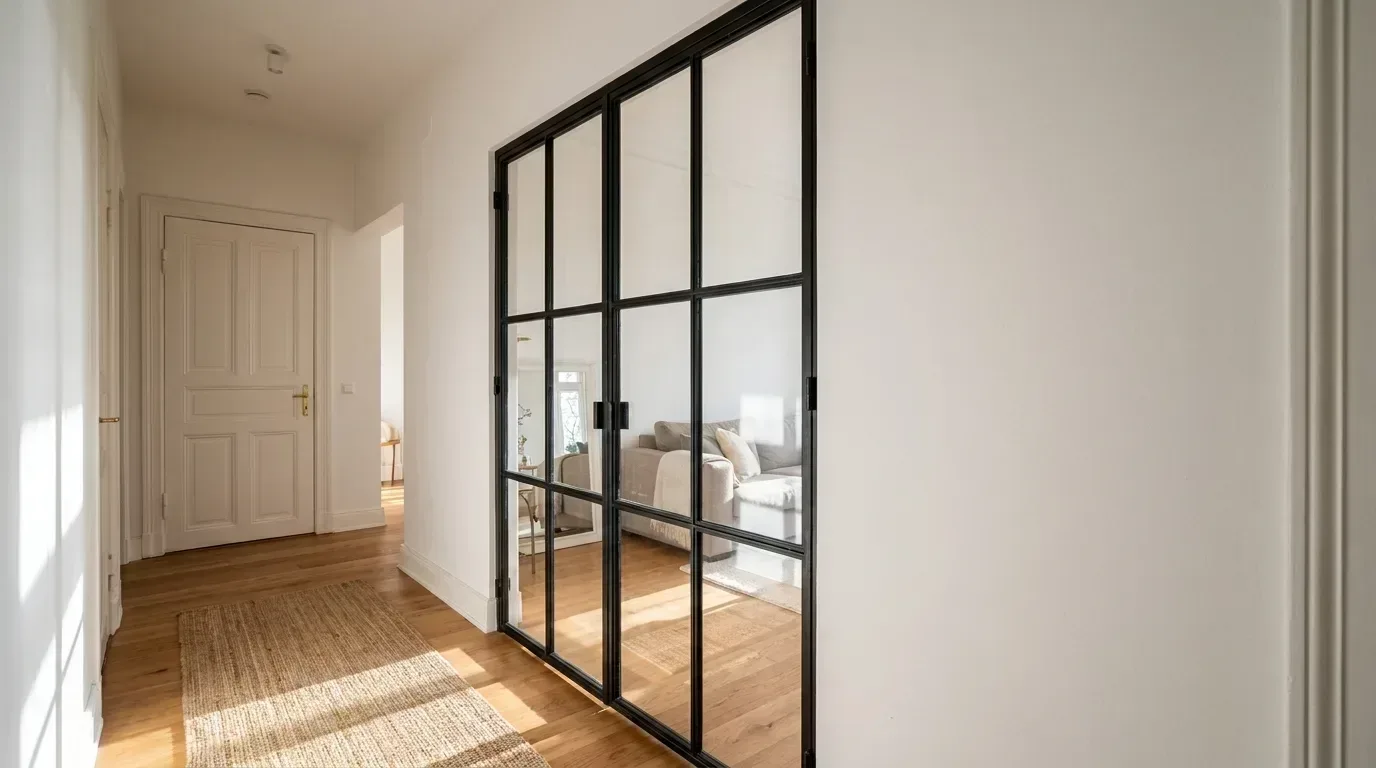
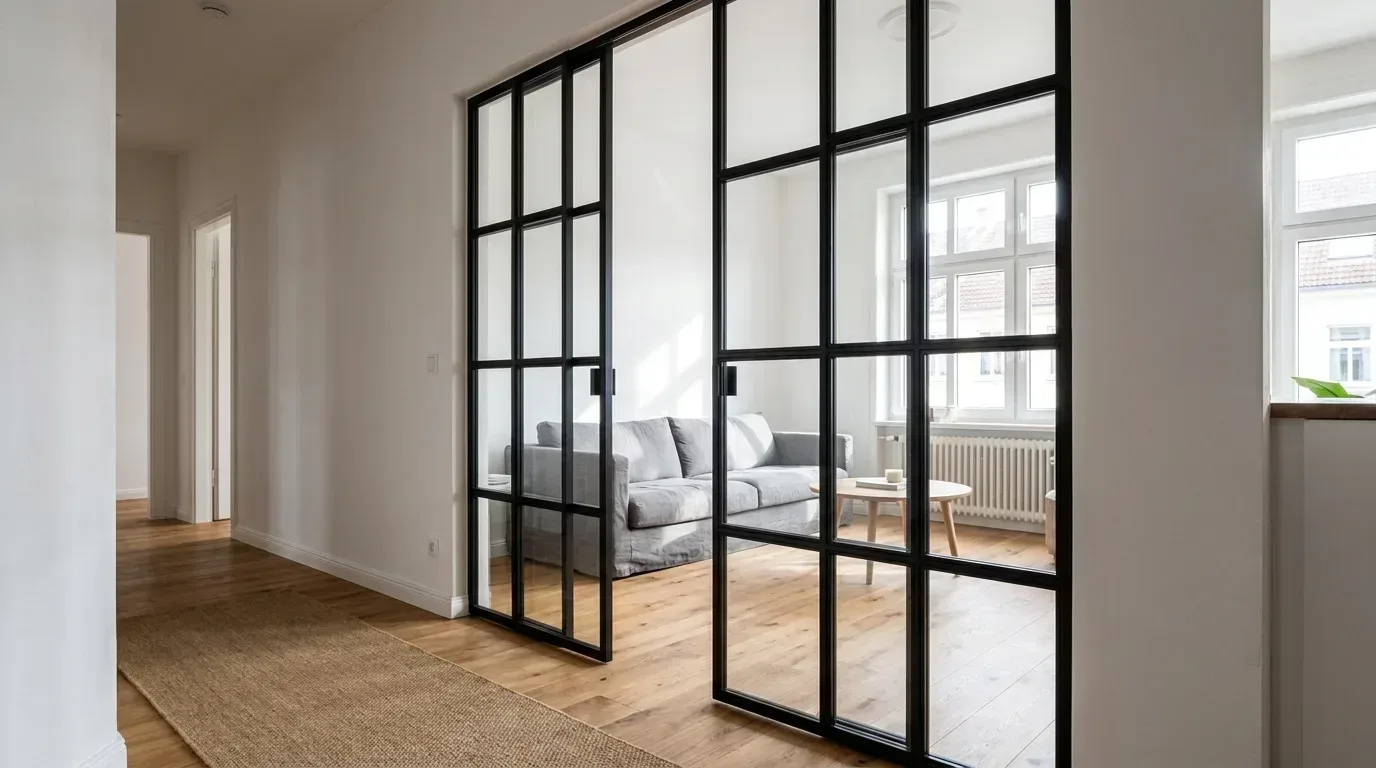
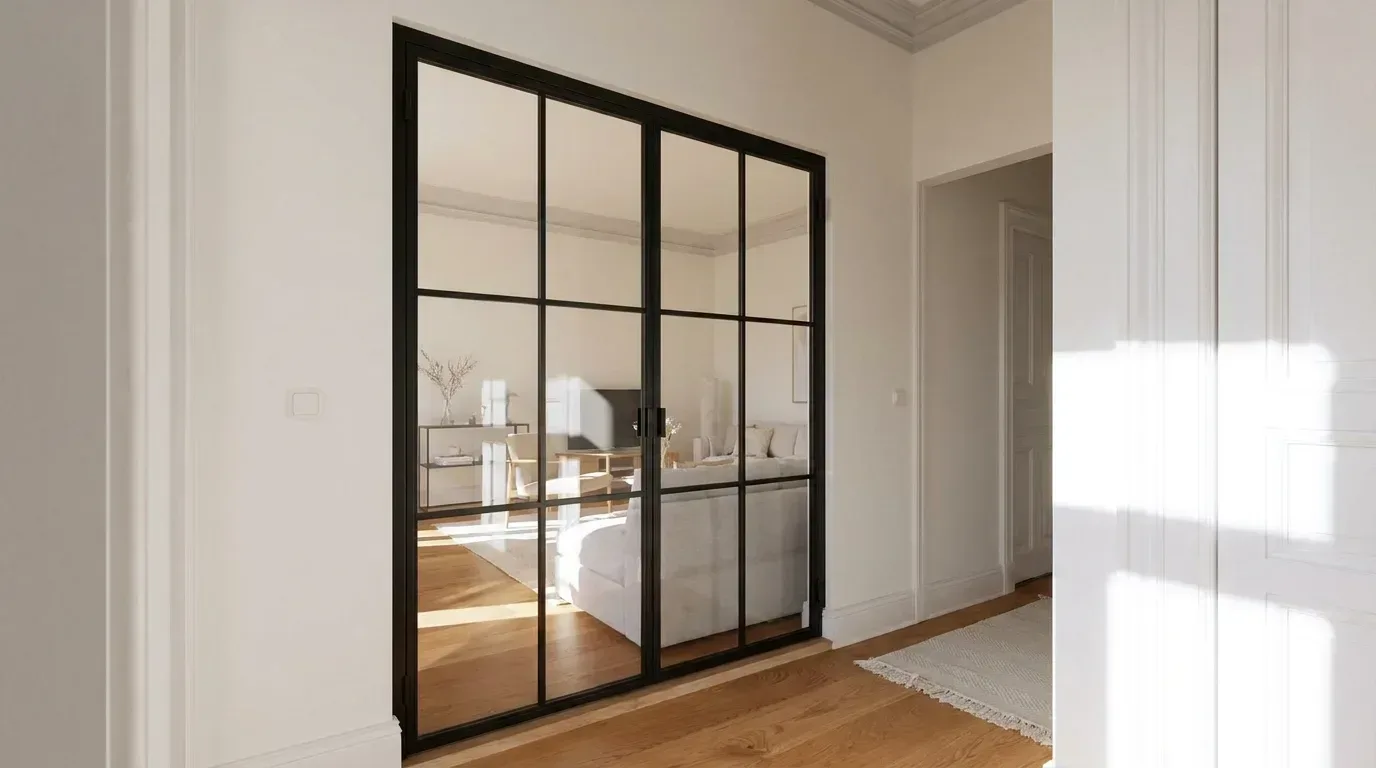
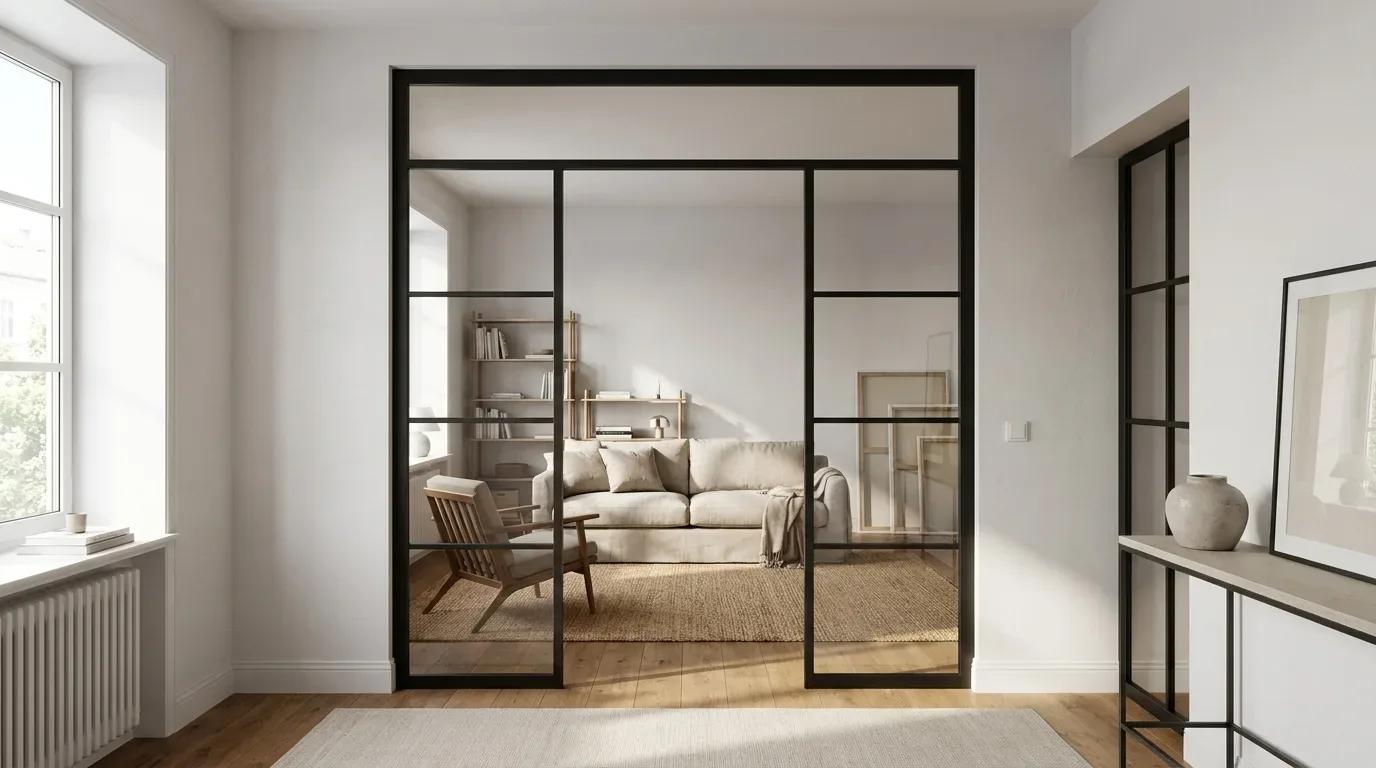
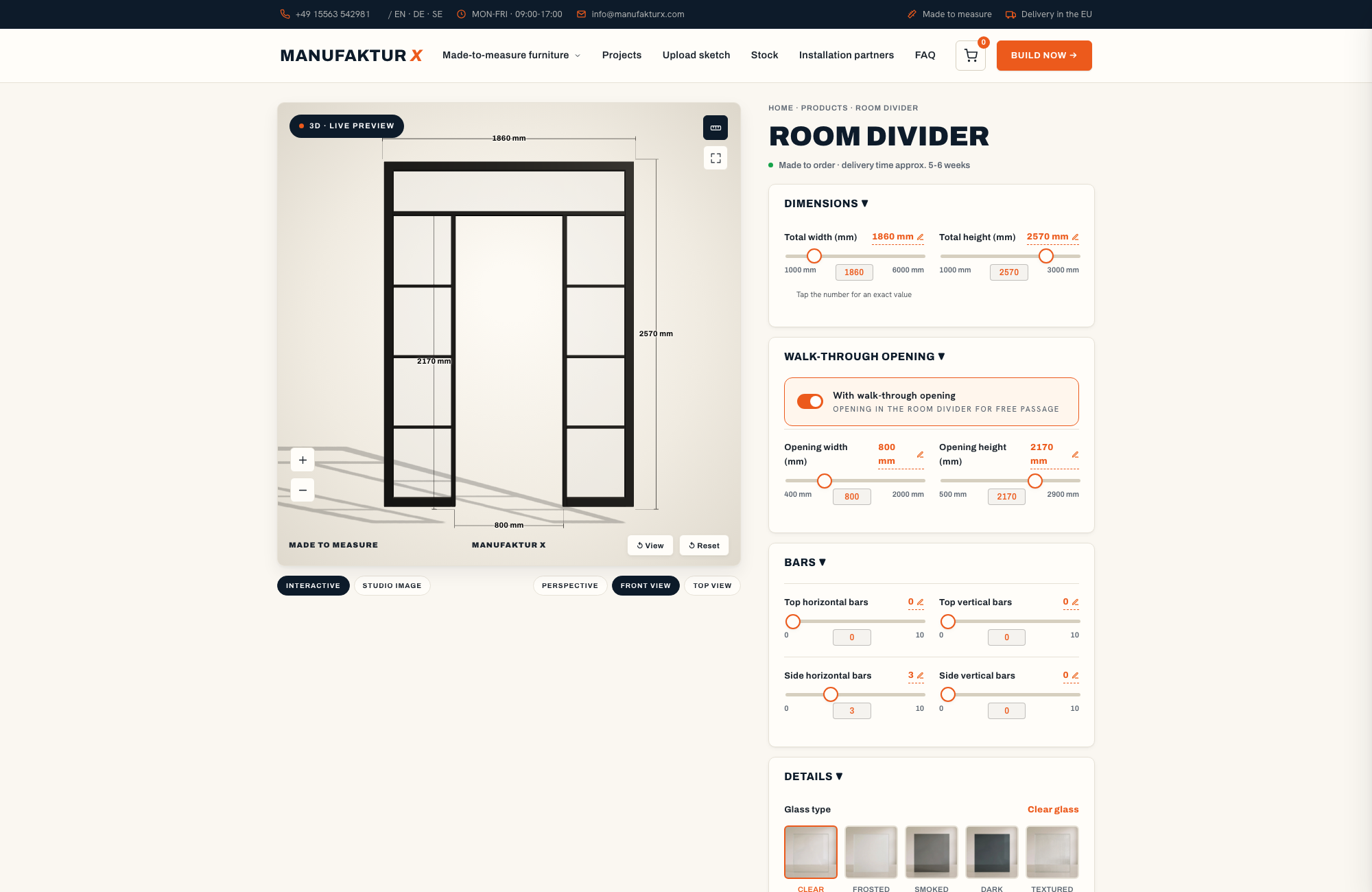
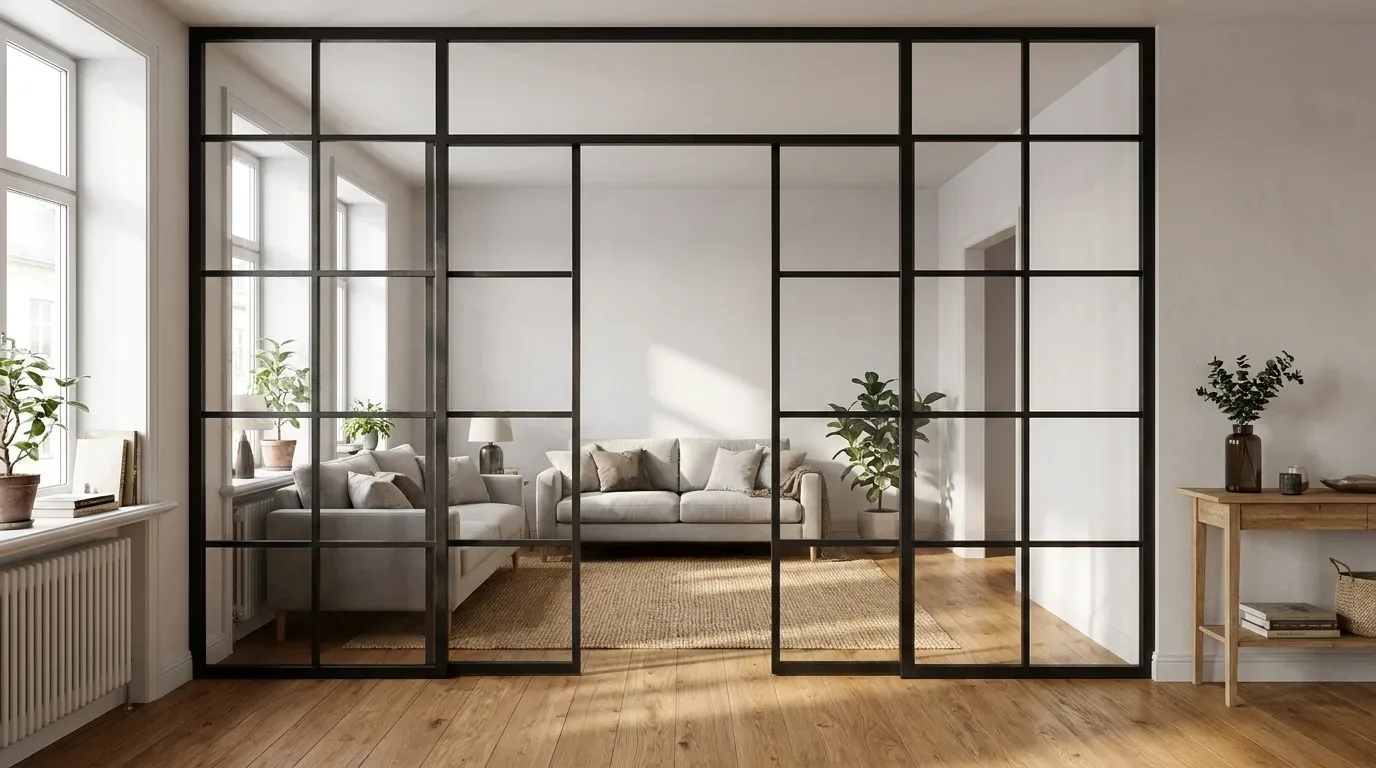
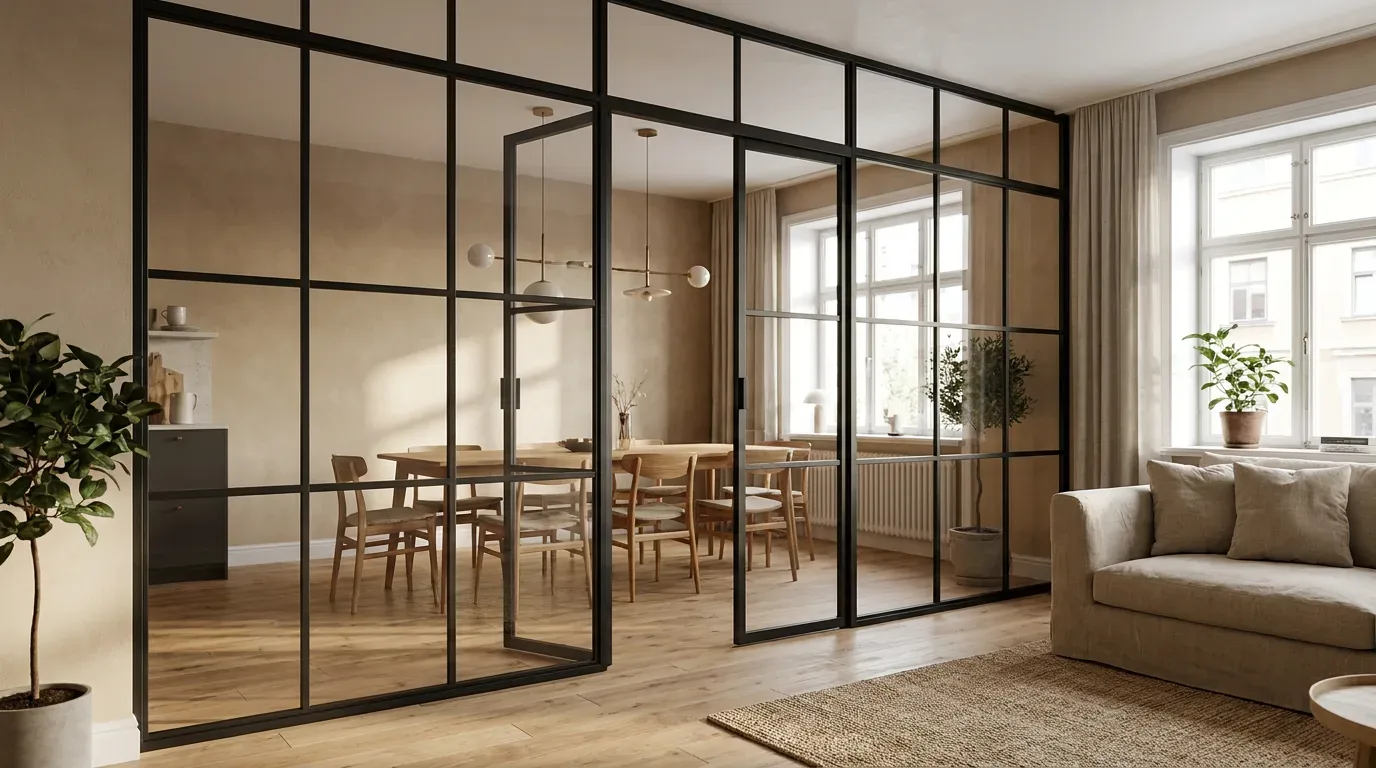
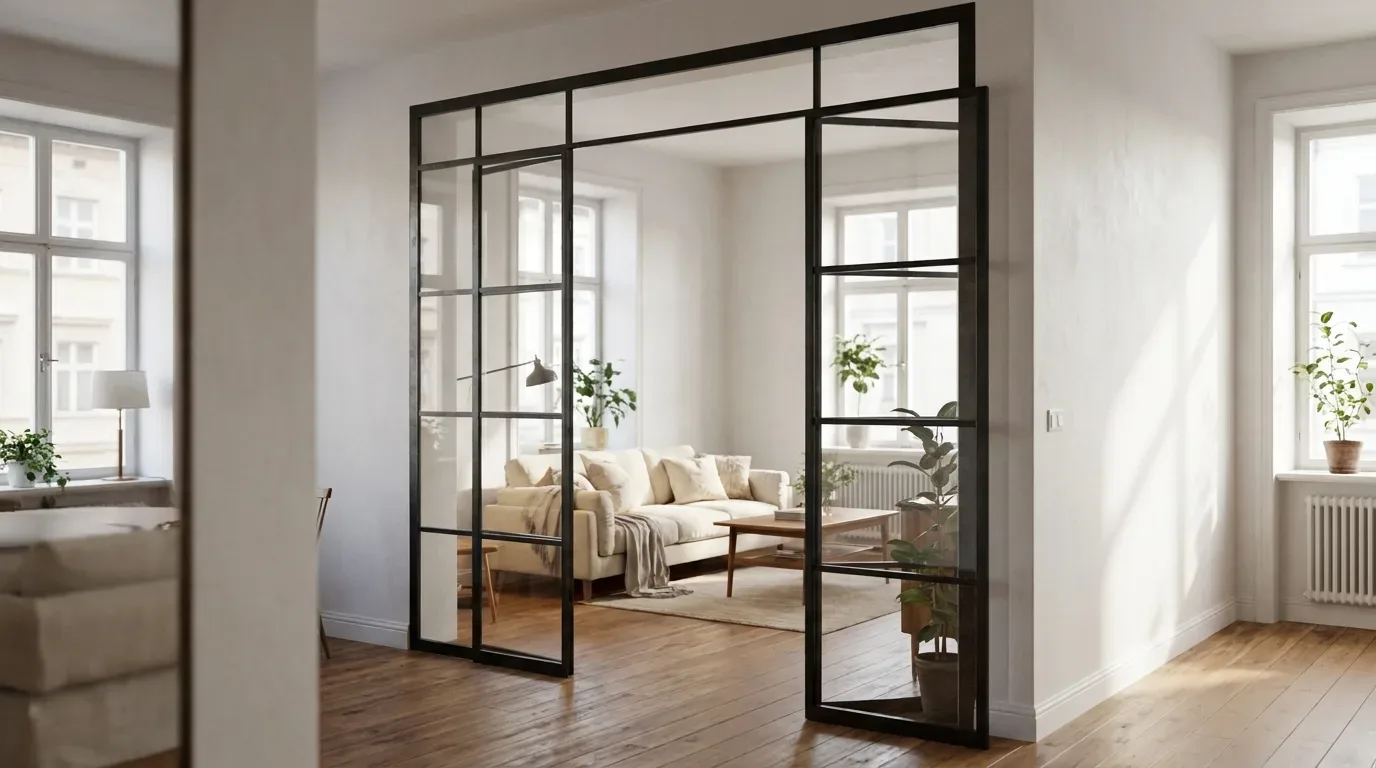
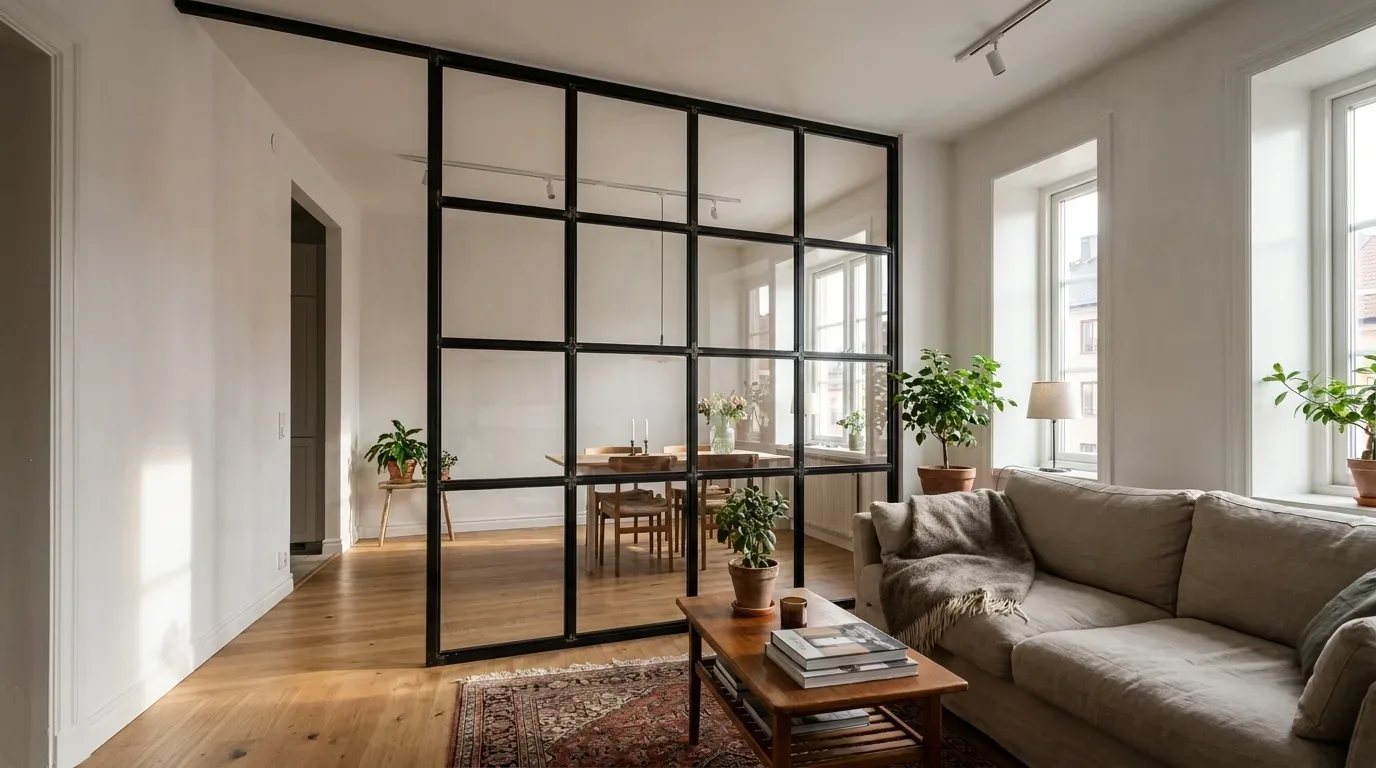
A steel-and-glass room divider is one of the most elegant solutions to this problem. Unlike a stud wall, it retains the sense of spatial generosity that makes open-plan living appealing in the first place - light moves through it, the room reads as one - while creating a clear visual and psychological boundary around the sleeping area.
The Manufaktur X room divider is configured entirely to your dimensions: you enter your exact desired width and height, choose a glass type (clear, frosted, smoked or dark smoked), add horizontal and vertical bar divisions if you want a more architectural grid effect, and select a RAL frame colour for the powder-coated steel. Optional walk-through openings, side panels and top sections can all be added in the same configurator. Pricing is shown live in the configurator, with a 5-6 week production time, making it a genuinely bespoke architectural element rather than an off-the-shelf product.
| Product | Default configuration price | Note |
|---|---|---|
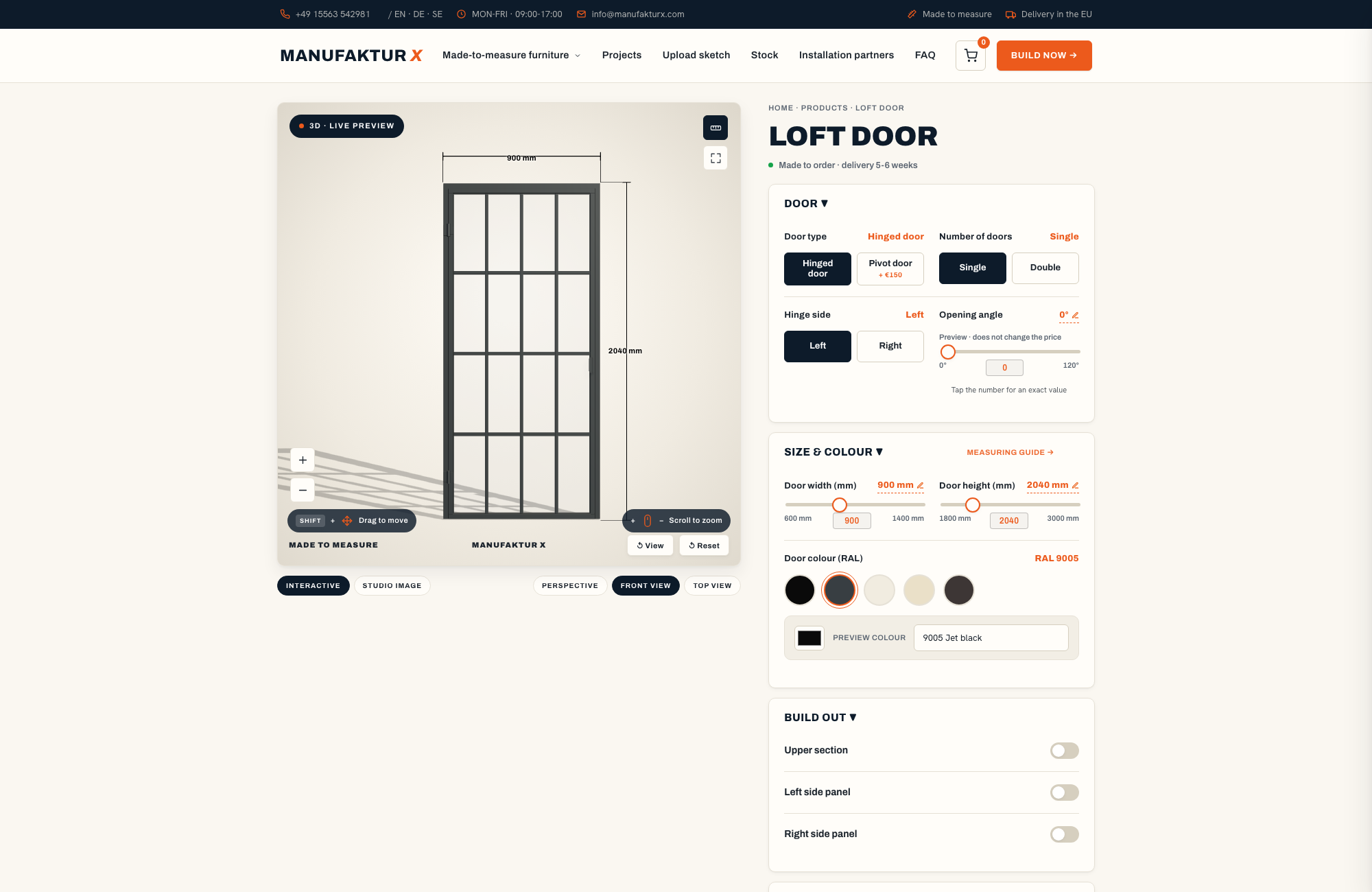
| Loft Door | £1,413 | Steel and glass, default configuration 900 × 2,040 mm |
| Room Divider | £1,902 | Steel + laminated glass, custom width |
| Large Shelf | £2,752 | Solid wood, steel frame, floor-to-ceiling |
| Dining Table | £2,038 | Solid wood, steel frame |
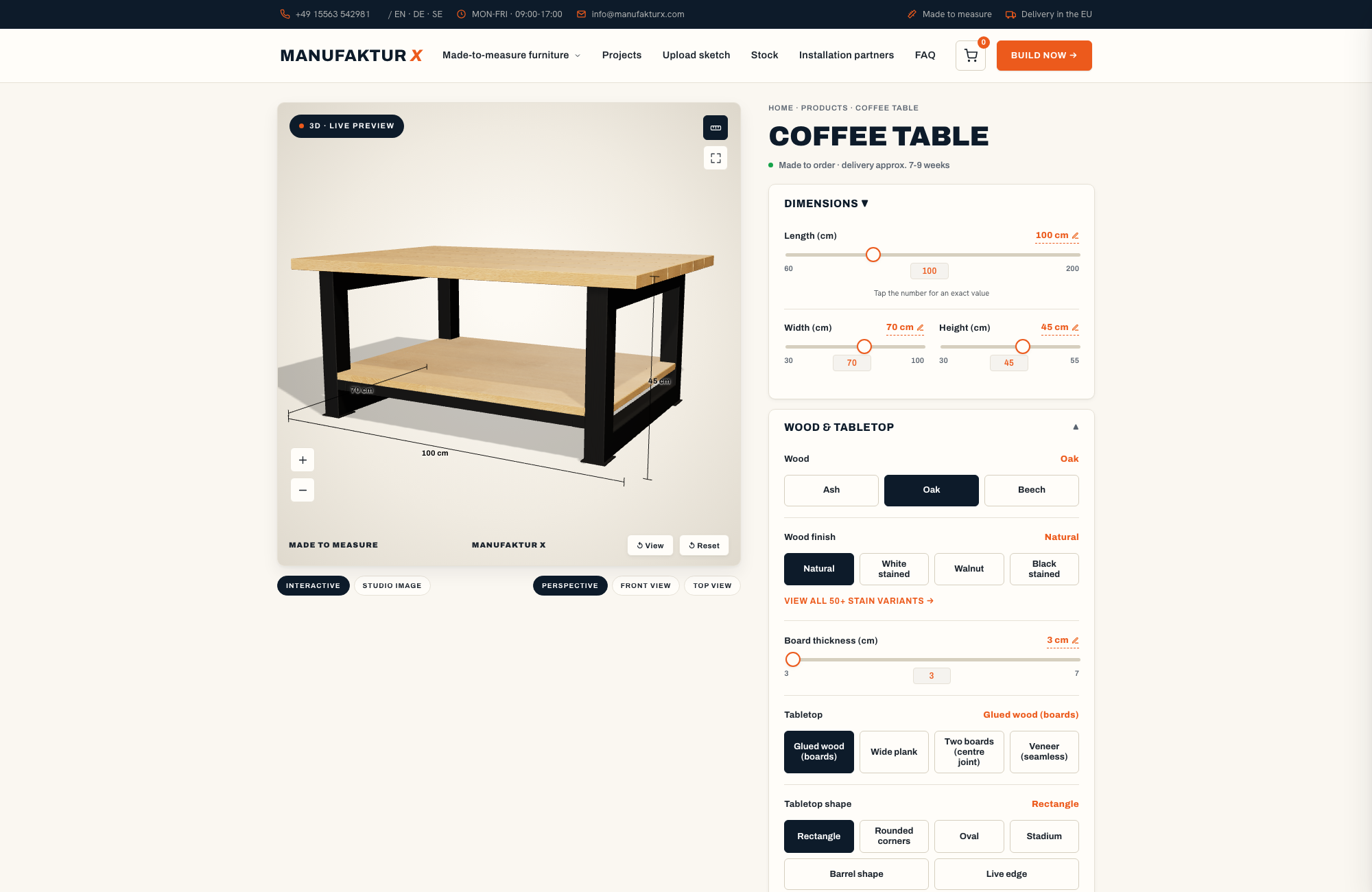
| Coffee Table | £1,548 | Solid wood, steel frame |
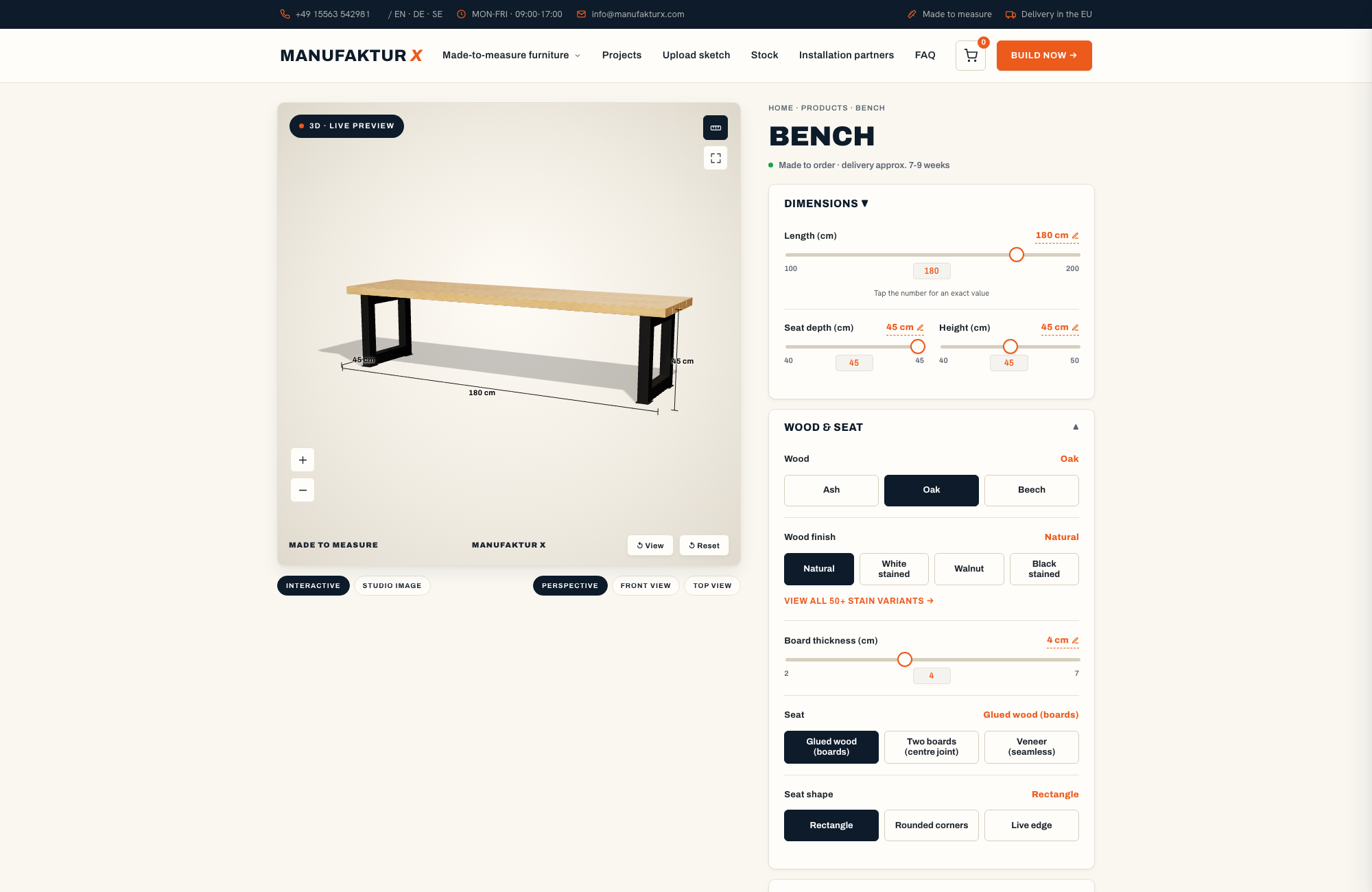
| Bench | £946 | Solid wood, steel frame |
| TV Stand | £1,324 | Solid wood, steel frame |
| Bedside Table | £856 | Solid wood, steel frame |
| Hallway Wardrobe | £1,608 | Solid wood, steel frame |
| Display Cabinet | £2,533 | Solid wood, steel frame |
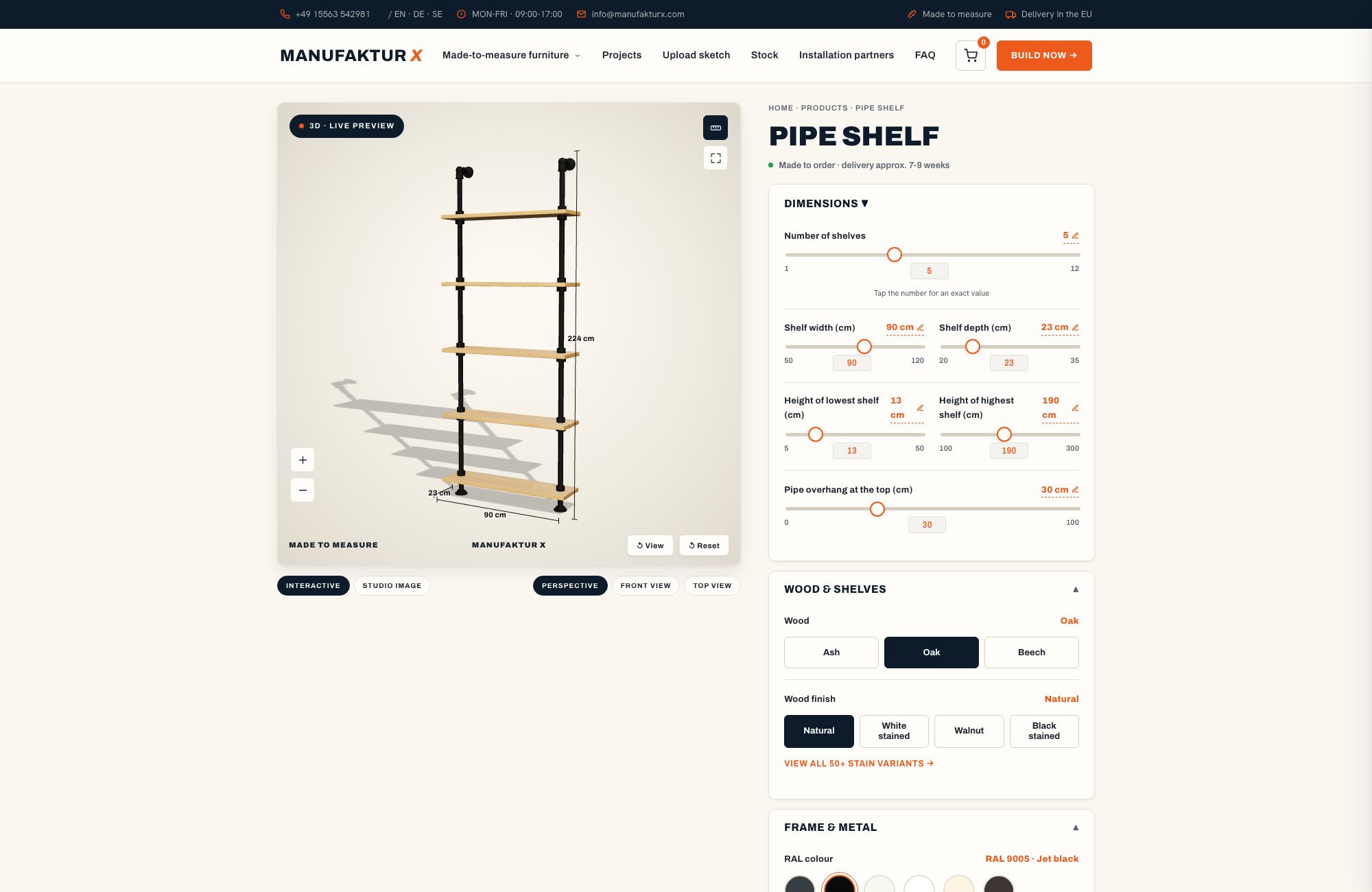
| Pipe Shelf | £916 | Modular pipe shelf |
| Desk | £1,561 | Solid wood, steel frame |
| Chest of Drawers | £4,334 | Solid wood, steel frame |
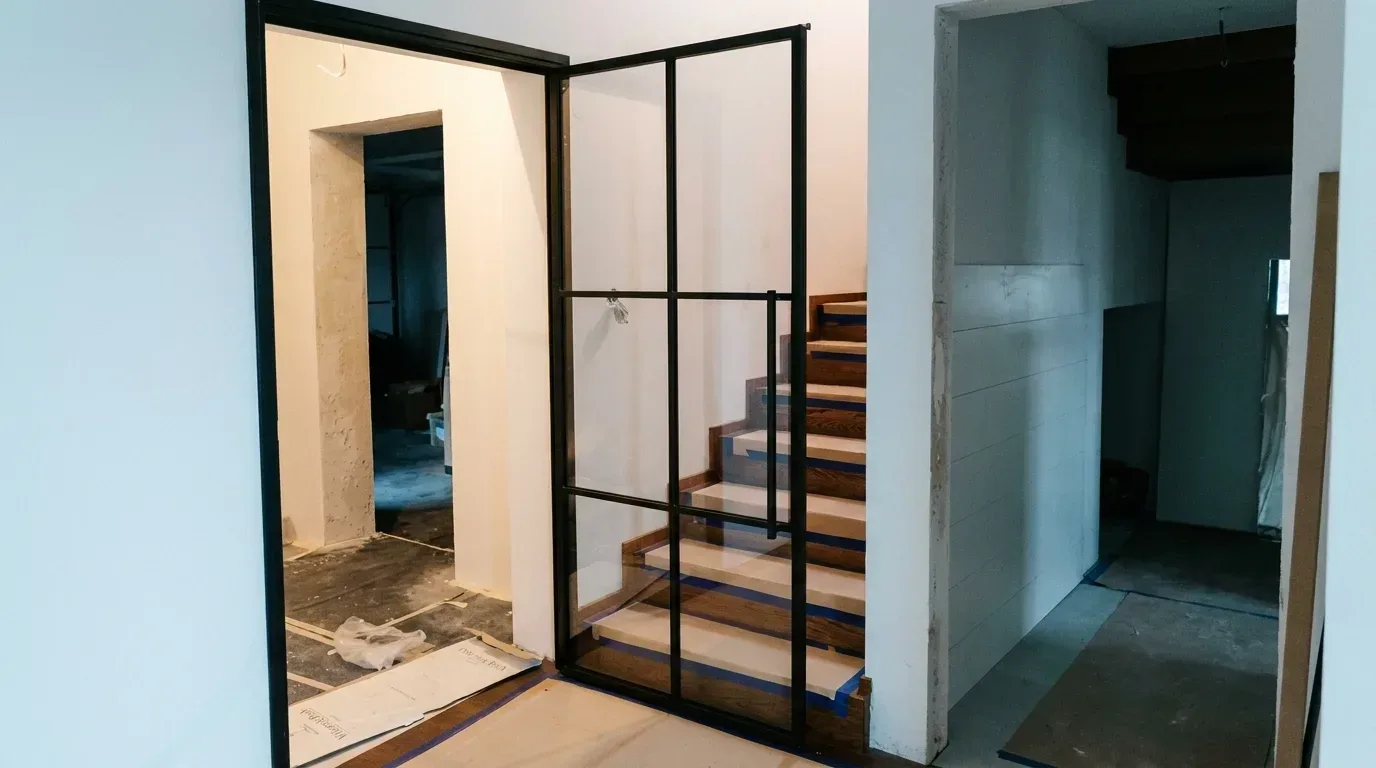
In a loft conversion with a sloped ceiling - a very common situation in London and other cities where roof conversions have become a primary way of adding space - a made-to-measure loft door can define the bedroom entrance with far more character than a standard door blank. Because you enter your exact desired dimensions rather than a standard sizing, irregular openings are handled without the usual compromise.
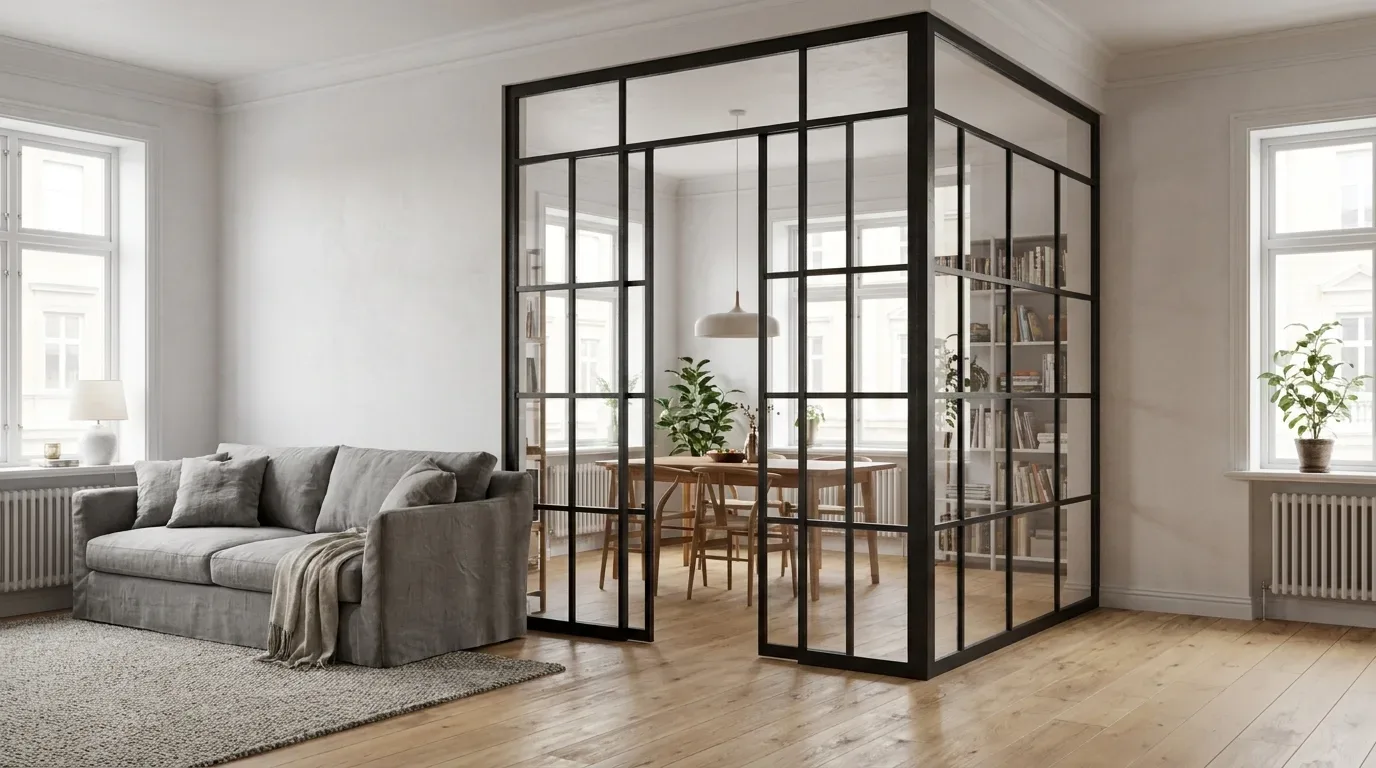
The most common reason custom furniture does not fit is incorrect measurement by the customer, not a production fault. Always measure the actual wall opening at three heights and use the smallest figure.
Plants, Air Quality and the Natural World Indoors
Bringing plants into a bedroom does more than add colour. Several common houseplants - aloe vera, peace lily, ivy - have documented air-purifying properties. Beyond the measurable effect, there is strong evidence that visual contact with natural forms reduces cortisol levels and supports a sense of calm.
Lavender is worth a specific mention: both the plant and its essential oil have a well-established association with improved sleep onset, and it is a natural fit for a bedroom windowsill.
Natural materials more broadly - solid wood furniture, linen textiles, clay or ceramic accessories - tend to off-gas far less than synthetic alternatives and contribute to better indoor air quality over time.
Technology in the Bedroom: A Practical Compromise
The research on screens before sleep is consistent enough to be taken seriously: blue-light-emitting devices in the hour before bed measurably delay sleep onset. That does not mean technology has to be banned entirely from the bedroom - it means thinking about how it is integrated.
Charging cables running across bedside tables are both a visual irritant and a temptation to pick up the phone. A bedside table with a built-in charging drawer, or a small cable box mounted out of sight, removes the friction without requiring willpower. Smart lighting systems that automatically warm and dim in the evening are a genuinely useful tool - they do the right thing without you having to remember.
Small Bedrooms: Working With What You Have
Many British bedrooms - particularly in Victorian terraces and 1930s semis where the secondary bedroom can be quite compact - require a degree of spatial creativity. A few principles that reliably help:
- Pale walls and ceiling make a room feel larger and more open; this is not a myth
- A large mirror on the wall opposite the window reflects light and creates a convincing sense of additional depth
- Furniture with legs (rather than solid plinths to the floor) keeps the eye moving and avoids the room feeling blocked
- Limiting the colour palette to two or three tones reduces visual complexity and makes the space feel more resolved
Making It Personal: What Does Rest Mean to You?
There is no universally correct bedroom aesthetic. The minimalist bedroom - white walls, bare boards, a single pendant, nothing on the surfaces - works extraordinarily well for some people and feels cold and institutional to others. A more layered approach, with books, plants, textiles and personal objects, can be equally restful if it is organised rather than chaotic.
The useful question is not "what does a calm bedroom look like?" but "what do I personally associate with switching off?" For some people that is a hotel-like precision and blankness. For others it is the particular warmth of a room that has clearly been lived in and thought about.
What matters is that the choices are deliberate - that the room reflects considered decisions rather than accumulated compromise.
Frequently Asked Questions About Bedroom Design
How do I separate a home office from a sleeping area in the same room?
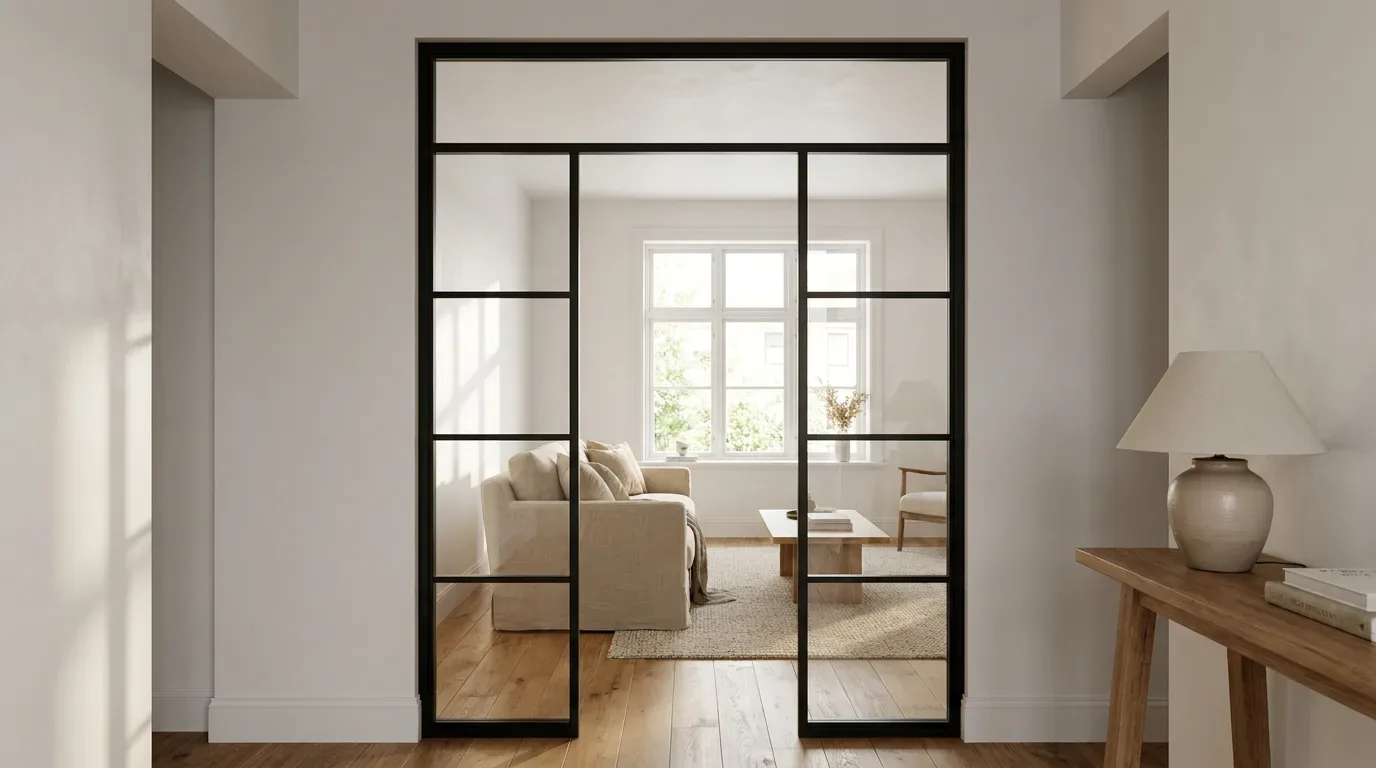
A physical boundary is more effective than a visual one, but both help. A steel-and-glass room divider creates a proper separation without blocking light - useful in a room where losing natural light would make both zones feel smaller. Even a large bookcase or a curtain rail set perpendicular to the wall can create enough psychological distance to make the bedroom feel like a separate space.
What type of curtains work best in a British bedroom?
For most British bedrooms, particularly those in older housing near busy streets, the combination that works best is a blackout or thermal lining behind a fabric outer curtain. Full-length curtains hung from ceiling height (rather than just above the window frame) make the room feel taller and are significantly more effective at blocking both light and noise. Width matters too - curtains should be at least double the window width when closed to hang properly and seal well at the edges.
How do I make the most of a bedroom in a loft conversion with a sloped ceiling?
Sloped ceilings are a genuine challenge for standard furniture but can be turned to advantage. Low-profile furniture - a platform bed, a low chest of drawers - works with the slope rather than against it. The area where the ceiling is lowest is often best used for built-in storage that runs beneath the eaves. For the door opening, which in many loft conversions is non-standard in height or width, a made-to-measure loft door is a far better solution than trimming a standard door blank - you specify your exact desired dimensions and the door is produced accordingly.
What is the lead time for a made-to-measure room divider from Manufaktur X?
Production takes 5-6 weeks from order confirmation. Delivery to the UK is fully handled - Manufaktur X arranges and pays the customs clearance and handling fees, and UK import VAT is collected on import.