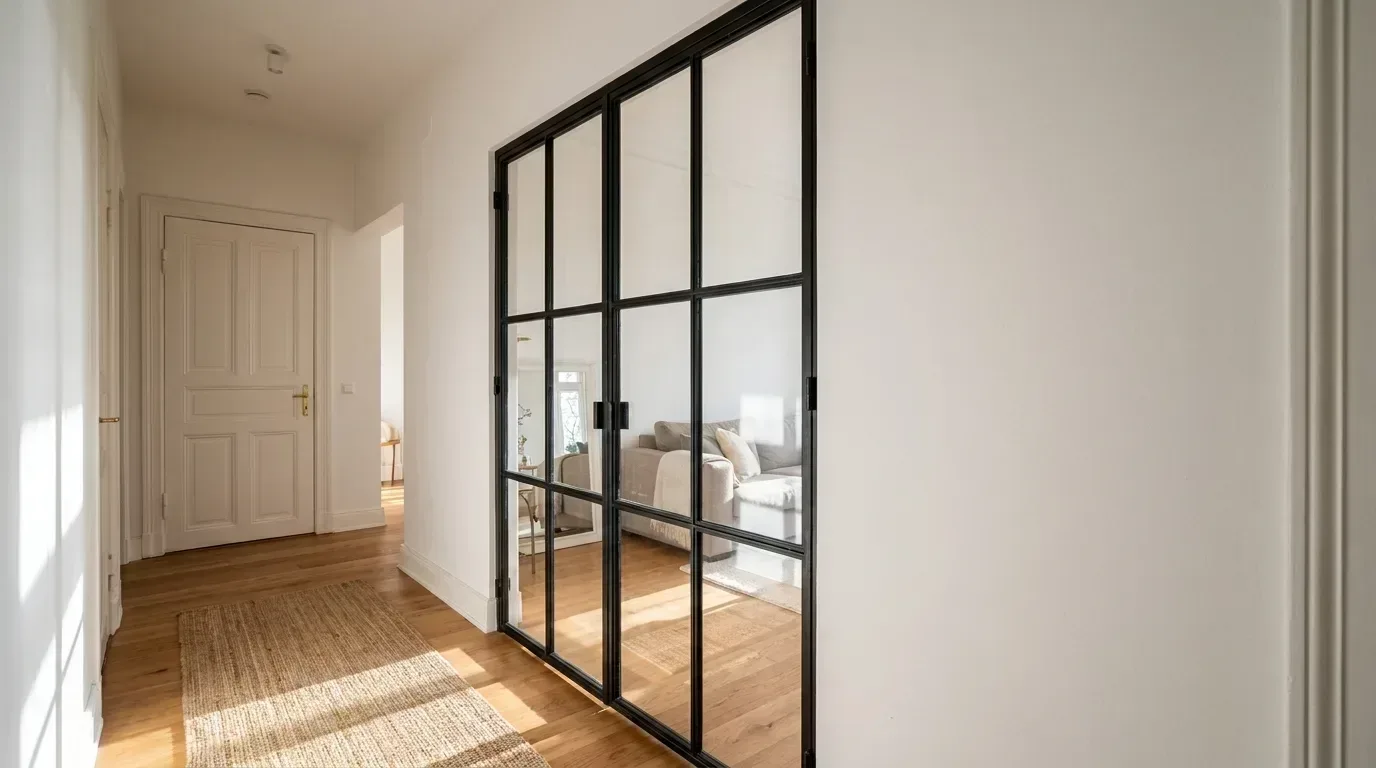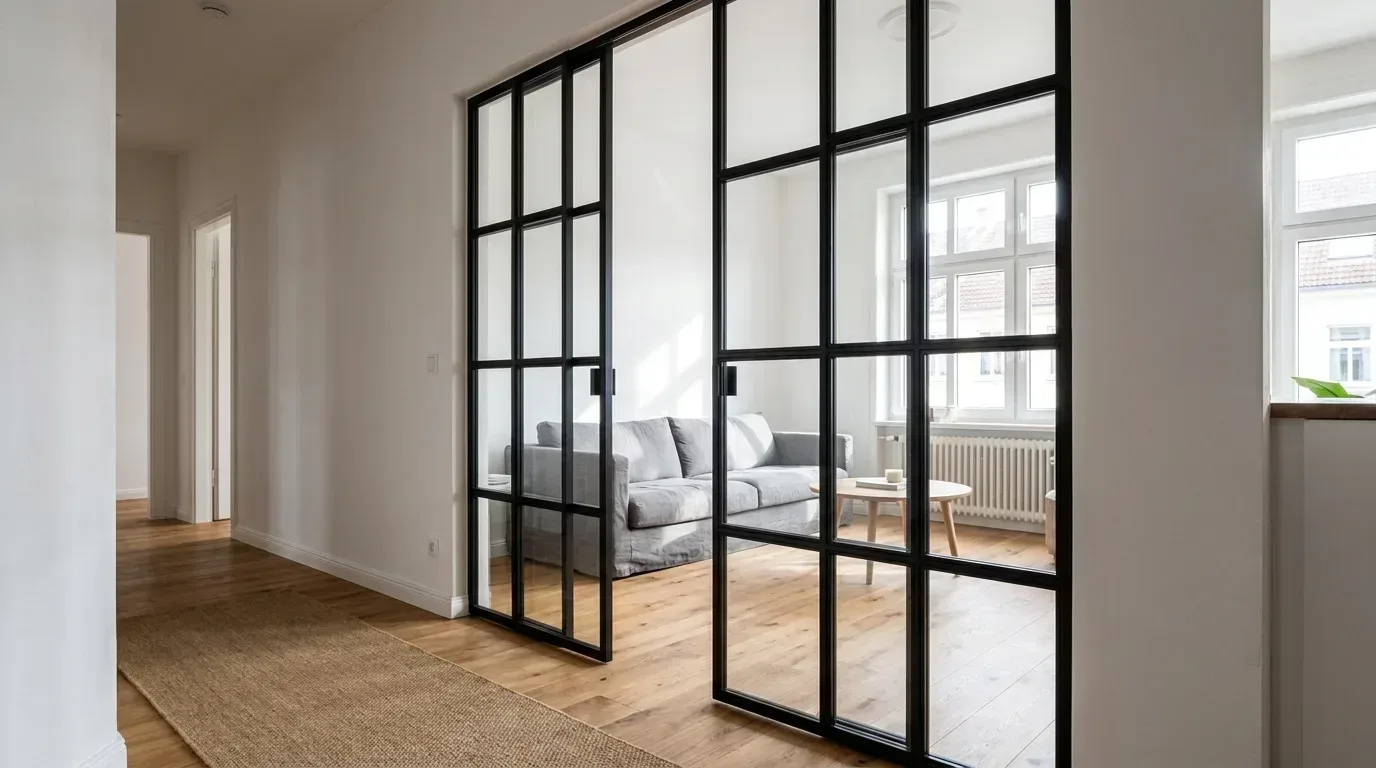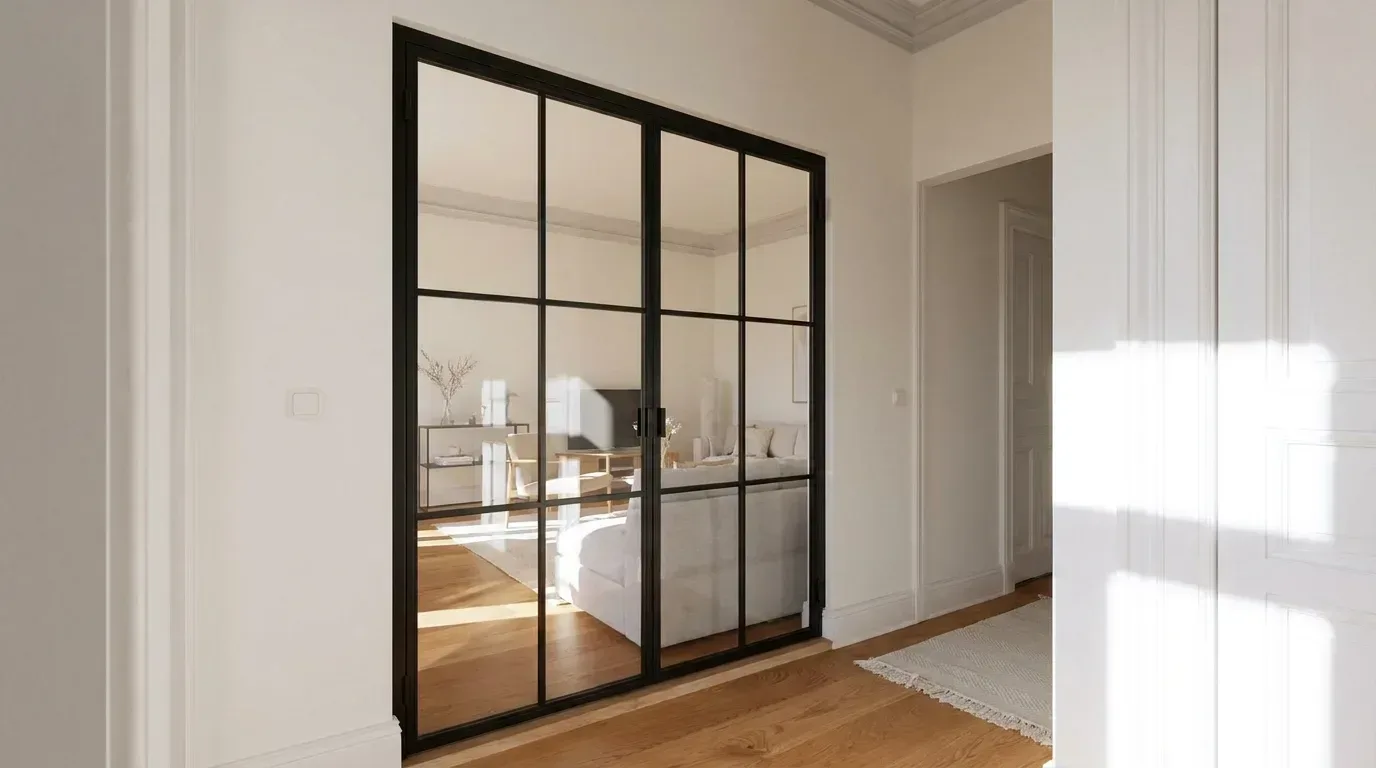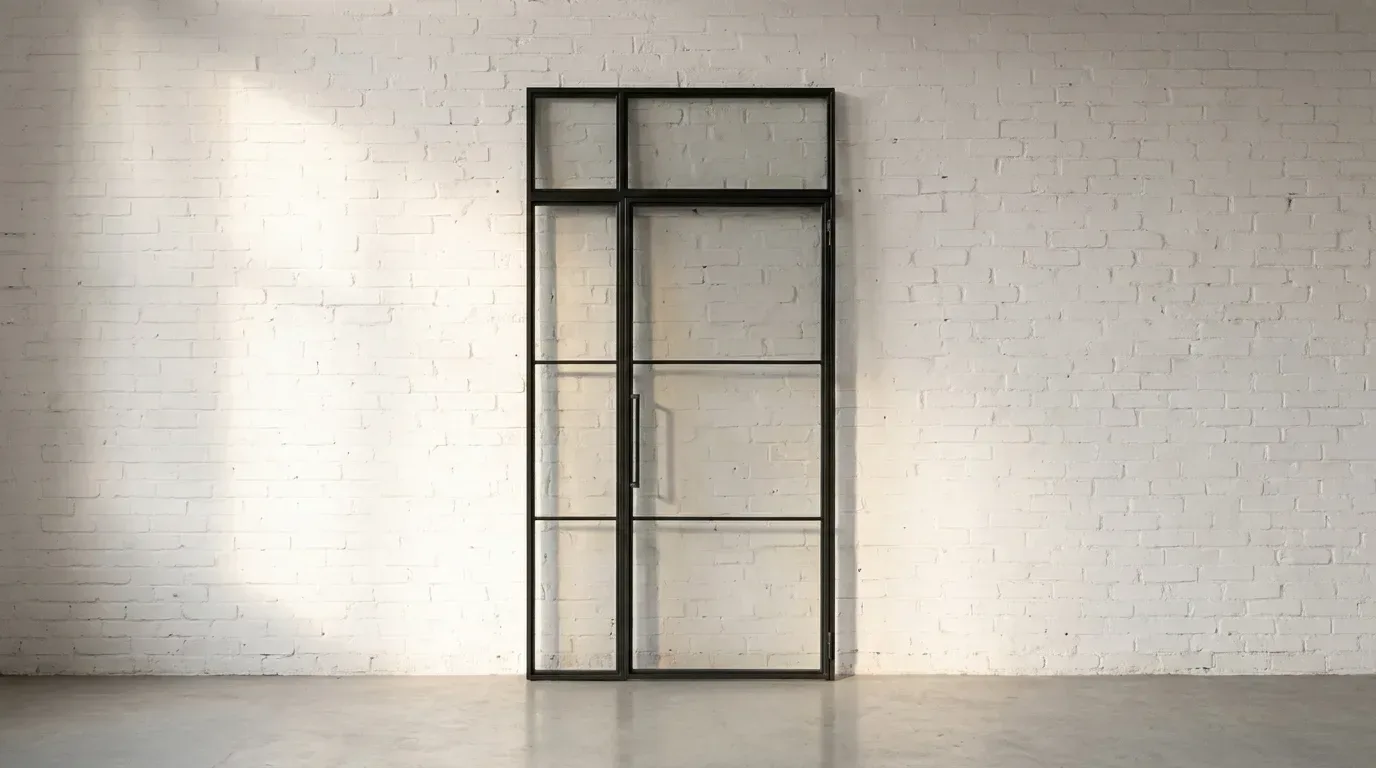
A steel-and-glass loft door does a lot of work in a home. It separates spaces without closing them off, draws light through a Victorian terrace or a converted warehouse apartment, and brings a quietly industrial edge that fits equally well in a new-build flat or a period Edwardian hallway. But to keep it performing and looking its best over the years, a consistent care routine matters. This guide covers everything from measuring your opening correctly to streak-free glass cleaning, frame maintenance, hinge lubrication, and what to do when things go wrong - based on the production standards of Manufaktur X.
Loft Door or Room Divider? Understanding the Difference
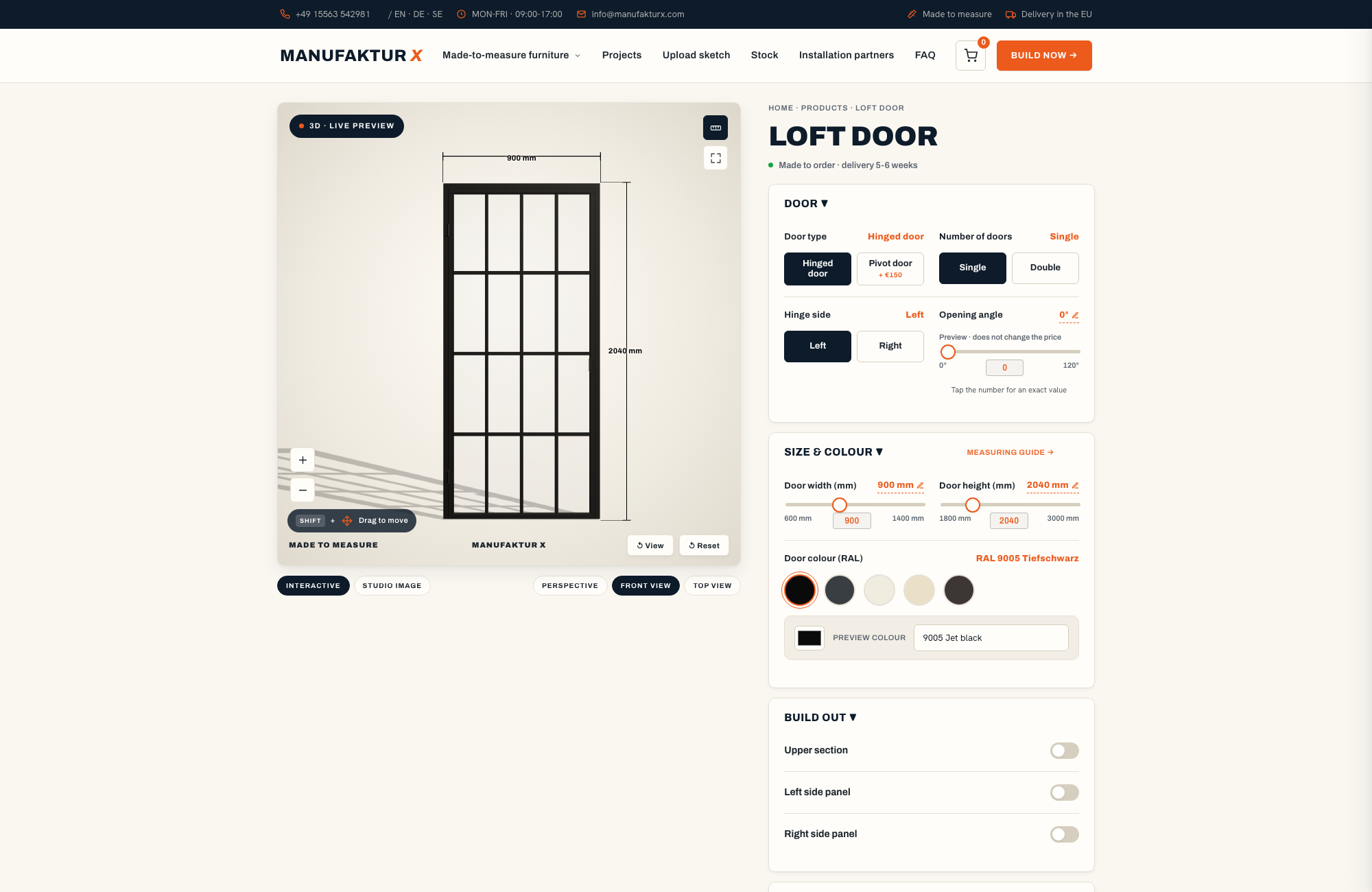
Before diving into care, it helps to be clear about what a loft door actually is - because it is frequently confused with a room divider. A loft door is a fully functional, hinged door. It has a rebate (left- or right-hand, your choice), a defined swing direction and opening angle, hinges, and a door handle. You open it, walk through it, and close it behind you.
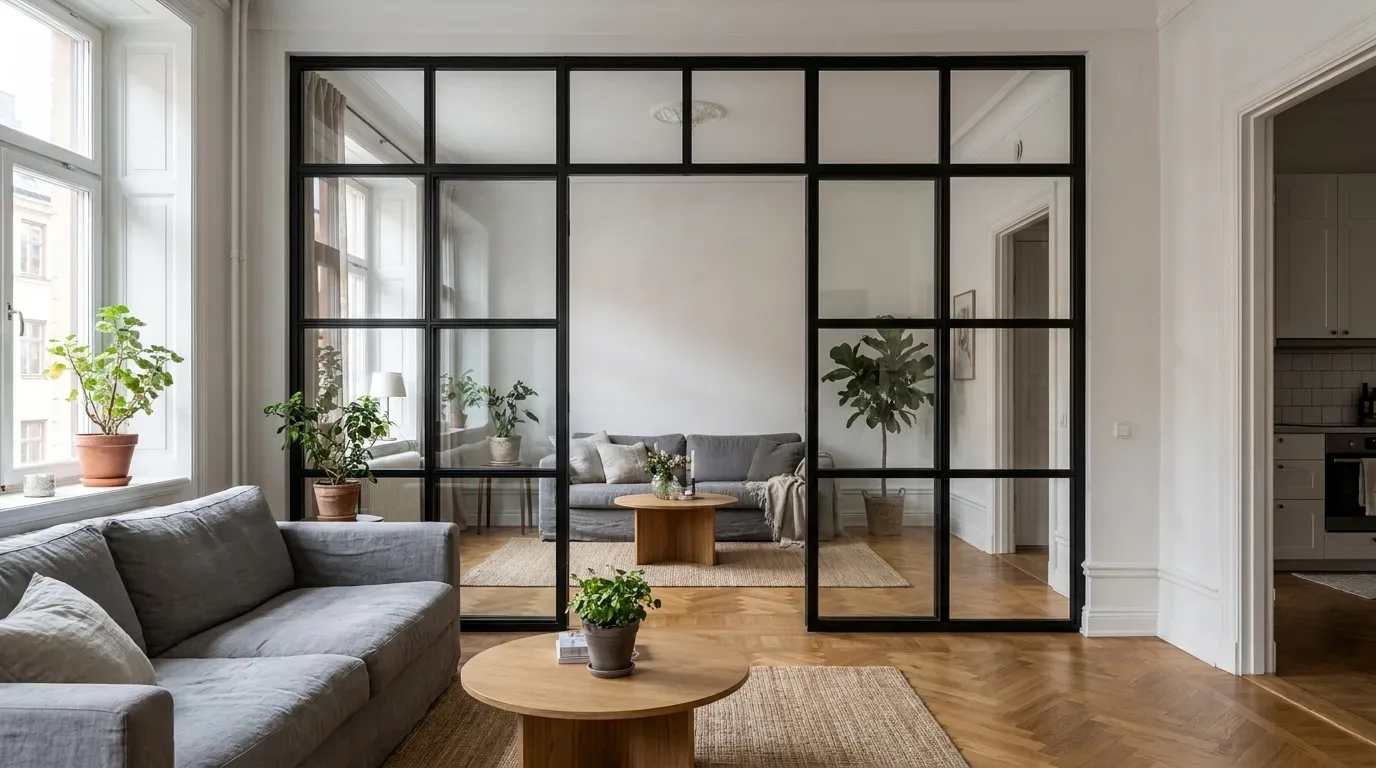
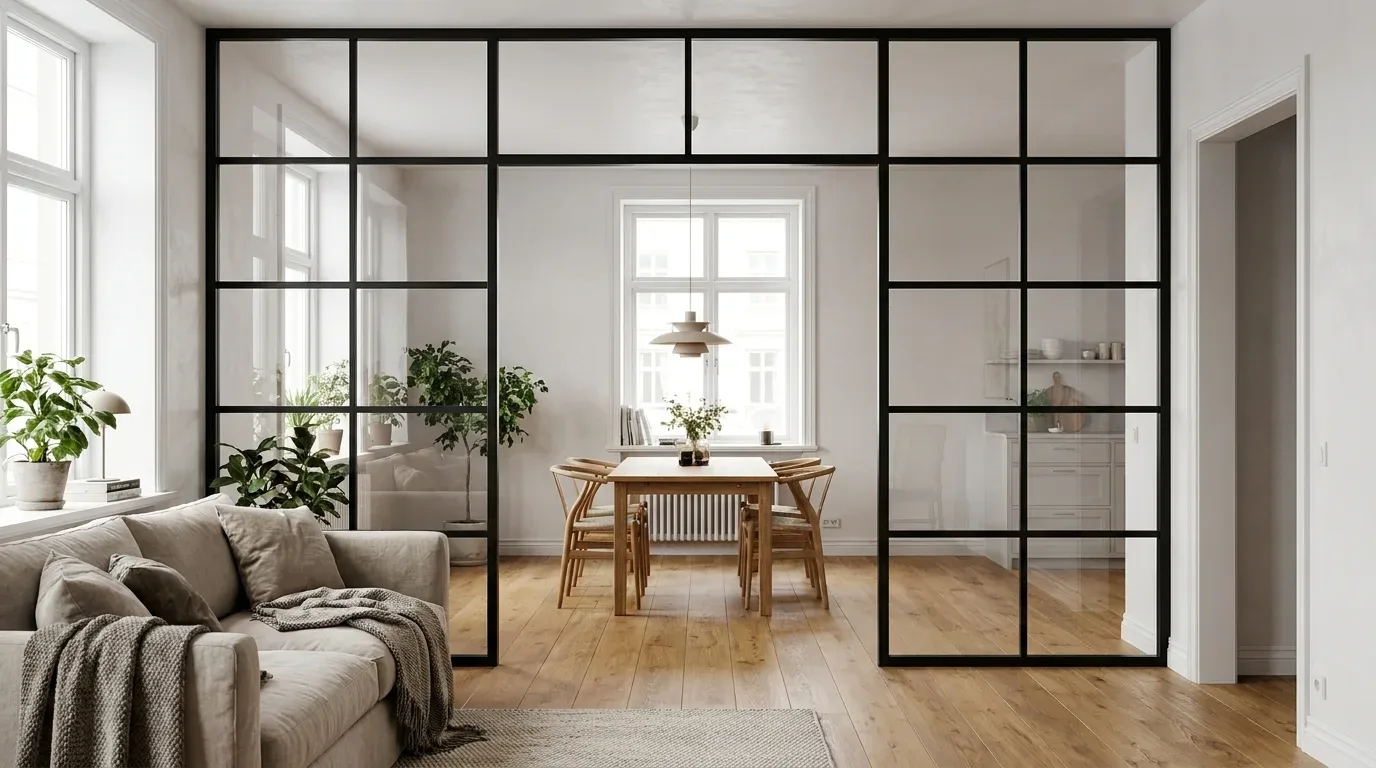
A room divider is a fixed steel-and-glass partition wall. It has no hinges, no handle, and no rebate. It can include a walk-through opening, but that opening is not a door - it has no closing mechanism. The two products serve different purposes, and their care requirements differ slightly as a result.
Every Manufaktur X loft door is built around:
- A precision-welded steel frame, powder-coated in any RAL colour
- Safety glass panels in your choice of type and finish
- High-quality hinges and ironmongery rated for long-term use
- One of three handle designs: Bar, Slim, or Crescent
- A left- or right-hand rebate, swing direction, and opening angle to suit your room
Materials in Detail: Steel, Glass, and How They Are Made
The Steel Frame and Powder Coating
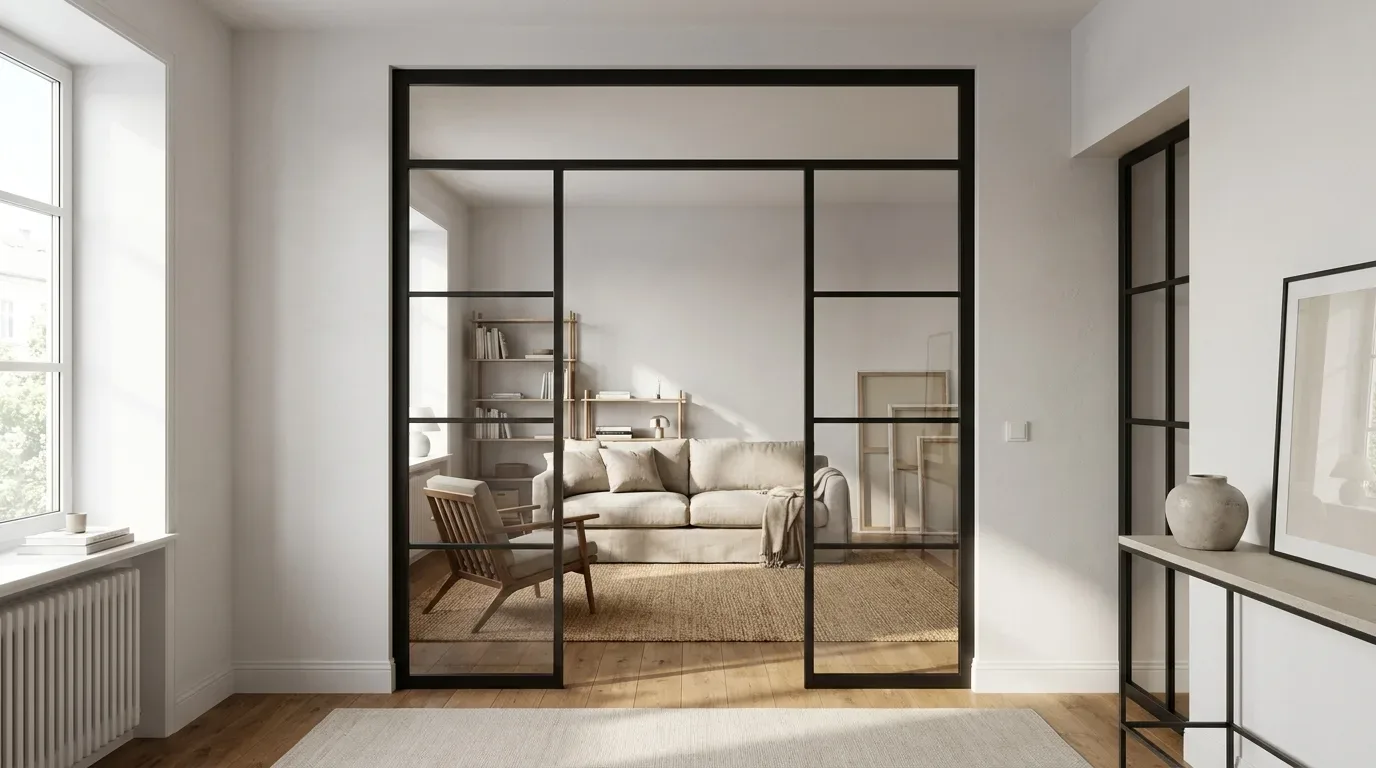
Every frame is powder-coated rather than painted - and that distinction matters in practice. Powder coating is applied electrostatically as a dry powder, then cured under heat to produce a finish that is harder, more even, and more resistant to scratching than liquid paint. It also contains no solvents, making it the more environmentally responsible choice. The result is a finish that holds its colour under daily use without the micro-chipping or peeling that can affect a brushed or sprayed surface.
In our production process, the coating thickness is checked on every frame before dispatch. Classic matte black (RAL 9005) is the most popular choice for UK interiors - it works with both the exposed brick of a converted flat and the white-painted joinery of a 1930s semi-detached - but any RAL colour is available, including warm greys, anthracite, and custom tones matched to your existing scheme.
Glass Options: Five Finishes to Choose From
The configurator offers exactly five glass finishes:
- Clear glass - full transparency, maximum light transmission
- Frosted glass - diffuse light, a degree of privacy without complete opacity
- Smoked glass - tinted transparency that softens glare
- Dark smoked glass - deeper tint for more privacy while retaining light
- Textured glass - a structured surface that scatters light and adds visual depth
There is exactly one frosted glass option - no sub-types, no varying opacity grades. Between them, the five finishes cover every point on the spectrum from completely open to thoughtfully private.
ESG or VSG: Choosing Your Safety Glass Type
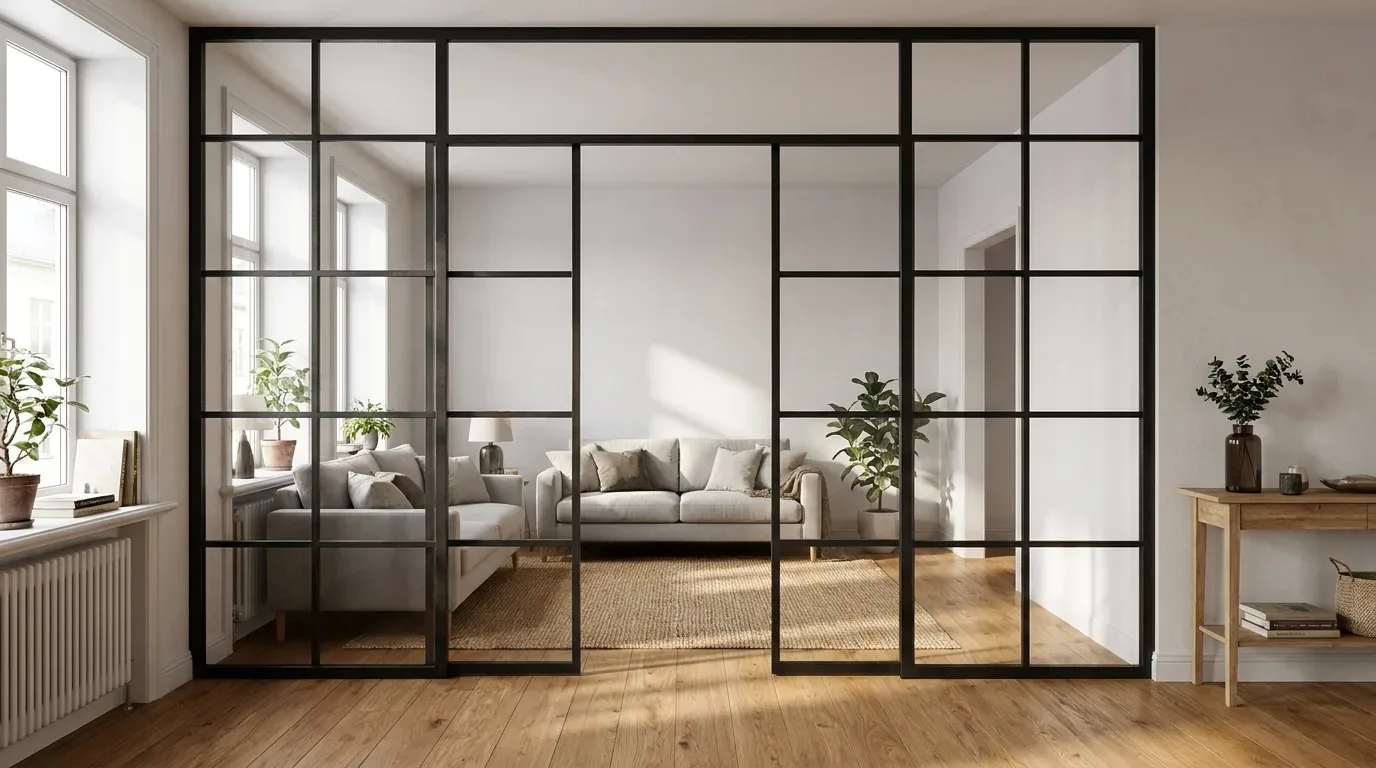
Independently of the glass finish, you select a safety glass type. ESG (toughened safety glass) is thermally prestressed: if it breaks, it shatters into small, blunt fragments rather than dangerous shards. VSG (laminated safety glass) consists of two or more panes bonded by an interlayer film - if broken, the film holds the pieces together, which also provides a meaningful resistance to forced entry. For larger door formats, Manufaktur X recommends VSG as standard.
It is worth noting that glass finish and glass type are independent choices. You can have clear glass in ESG or VSG; the same applies to every other finish. These are two separate decisions in the configurator.
Handle Designs
Three handle styles are available:
- Bar - a classic, full-length pull handle
- Slim - narrow and understated, suited to minimal interiors
- Crescent - a curved form that adds a subtle design accent
How to Measure Your Opening Correctly
The most common reason a custom door does not fit is a measurement error - not a production fault. Walls in British homes, whether a Victorian terrace or a 1960s purpose-built flat, are rarely perfectly plumb or square. Taking an extra ten minutes over your measurements is always worth it.
You enter your exact desired door dimensions into the configurator - not the structural opening size. Here is how to arrive at the right numbers:
- Measure the width and height of your wall opening at multiple points - top, middle, and bottom for width; left, centre, and right for height. Openings are rarely uniform.
- Record the smallest measurement at each axis. This is your raw opening size.
- Subtract your installation gap: approximately 5 mm clearance on each side (left, right, and top). The figure you are left with is what you enter into the configurator.
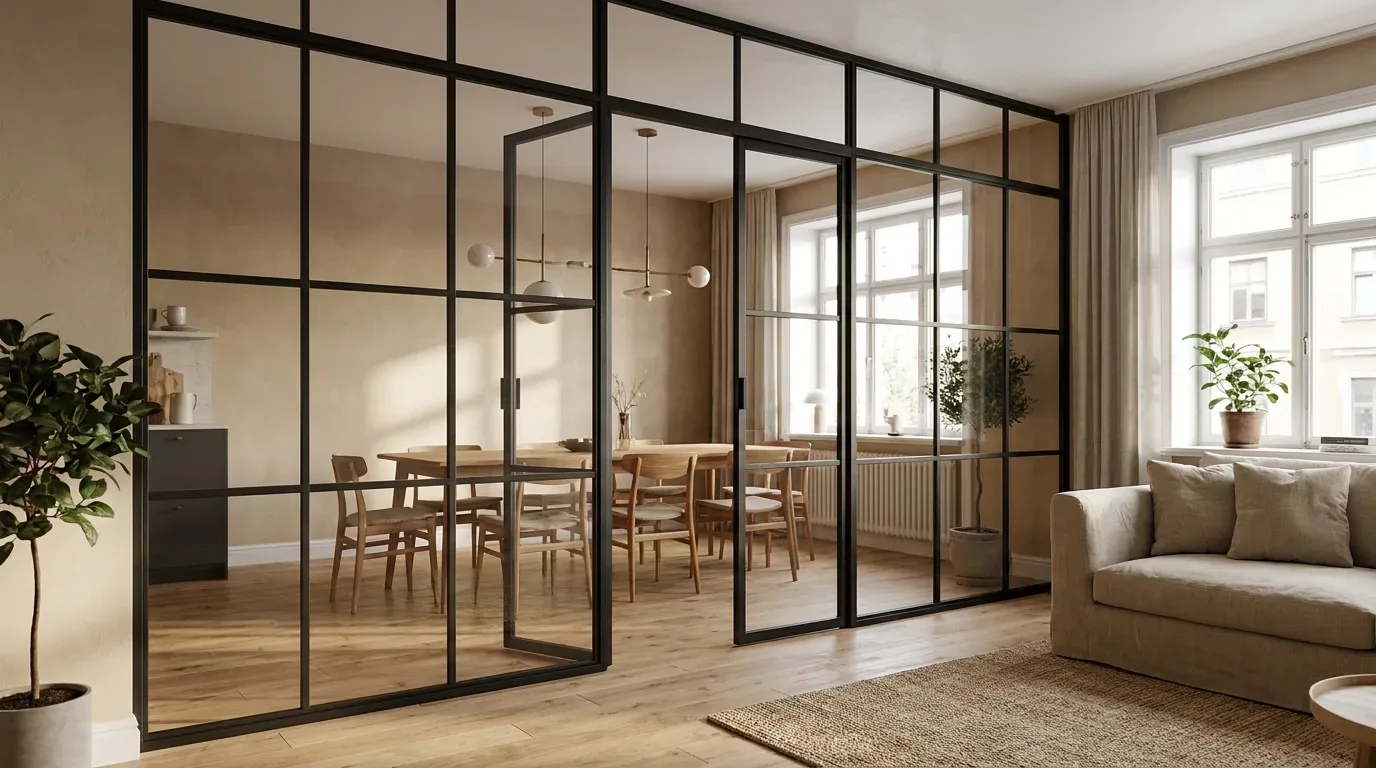
The door is then manufactured exactly to the dimensions you have submitted. If in doubt, a useful rule of thumb from installation experience: measure three times, enter once.
If your project involves an unusual opening - a sloped ceiling in a loft conversion, an arched doorway in a period property, or a non-standard structural situation - you can upload a sketch via manufakturx.co.uk and the team will assess feasibility and provide a bespoke quote.
Using the 3D Configurator
Every decision described above is made inside the online configurator, which shows a real-time 3D preview of your door as you build it. Adjust the dimensions, switch glass finishes, change the RAL colour, or try a different handle - the preview updates instantly, and so does the price. There are no hidden costs: delivery charges and lead times are shown transparently in the basket before you confirm anything.
The loft door price for the most basic configuration is shown in the configurator. The price adjusts in real time as you make selections. Delivery to the UK is invoiced free of German VAT; UK import VAT is collected on import. Manufaktur X arranges and pays the customs clearance and handling fees.
| Product | Default configuration price | Note |
|---|---|---|
| Loft Door | £1,413 | Steel and glass, default configuration 900 × 2,040 mm |
| Room Divider | £1,902 | Steel + laminated glass, custom width |
| Large Shelf | £2,752 | Solid wood, steel frame, floor-to-ceiling |
| Dining Table | £2,038 | Solid wood, steel frame |
| Coffee Table | £1,548 | Solid wood, steel frame |
| Bench | £946 | Solid wood, steel frame |
| TV Stand | £1,324 | Solid wood, steel frame |
| Bedside Table | £856 | Solid wood, steel frame |
| Hallway Wardrobe | £1,608 | Solid wood, steel frame |
| Display Cabinet | £2,533 | Solid wood, steel frame |
| Pipe Shelf | £916 | Modular pipe shelf |
| Desk | £1,561 | Solid wood, steel frame |
| Chest of Drawers | £4,334 | Solid wood, steel frame |
A Practical Care Schedule for Your Loft Door
With a sensible routine, a steel-and-glass loft door requires very little effort to keep in excellent condition. The key is consistency rather than intensive occasional cleaning.
- Daily: Remove visible fingerprints from glass with a dry microfibre cloth
- Weekly: Clean all glass panels; dust the steel frame
- Monthly: Thorough clean including seals and ironmongery
- Every six months: Oil hinges and ironmongery; check that all screws are tight
- Annually: Full visual inspection for damage; carry out any small repairs promptly
Cleaning the Glass Properly
Clear and Smoked Glass
For everyday cleaning, warm water and a lint-free microfibre cloth are sufficient. For a thorough weekly clean:
- Use a standard streak-free glass cleaner available from any hardware or supermarket
- Alternatively, a solution of water with a small amount of white vinegar works well and leaves no residue
- For stubborn marks, apply a small amount of methylated spirits carefully
- Always dry the surface thoroughly afterwards to prevent limescale spots - a persistent issue in hard-water areas across much of England
- For a polished, streak-free finish, buff with a sheet of newspaper after drying
One firm rule: never spray glass cleaner directly onto the steel frame. Even brief contact can affect the powder coating over time.
Frosted, Textured, and Smoked Glass - Special Considerations
- Frosted glass: Avoid any cleaner containing oil or silicone - these leave visible streaks on a matte surface that are difficult to remove. Use a dedicated matt glass cleaner or diluted methylated spirits. Always wipe in overlapping strokes and finish by wiping completely dry.
- Textured glass: Use a soft brush to clean into the recessed areas, then follow with a microfibre cloth on the smoother surfaces.
- Smoked and dark smoked glass: Use mild cleaners only. Avoid cleaning in direct sunlight - fast evaporation on tinted glass causes streaking.
- VSG laminated glass: Do not use abrasive cleaners or sharp implements near the edge bonding. Avoid anything that might scratch the surface.
Caring for the Steel Frame and Powder Coating
The powder coating protects the steel from corrosion and everyday wear. To keep it doing that job effectively:
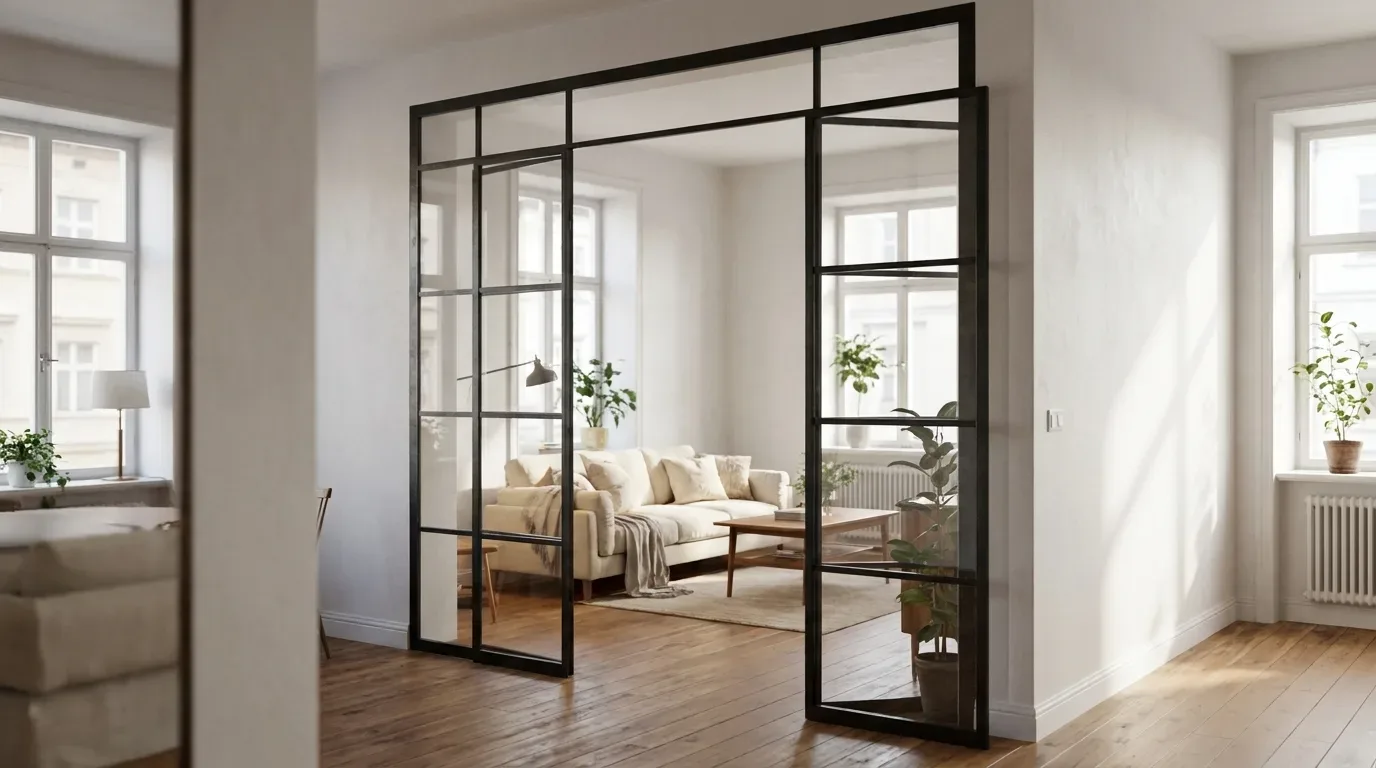
- Dust regularly with a soft, dry cloth
- For heavier soiling, use a lightly dampened microfibre cloth - nothing more
- Never use abrasive cleaners, wire wool, or scouring pads
- Avoid any product containing chlorine, acid, or solvents
- Once a year, apply a specialist care product for powder-coated surfaces - this preserves the sheen and reinforces the protective layer
On black frames especially, even small scratches show clearly against the dark background. It is worth keeping abrasive objects well clear of the frame surface.
Removing Fingerprints and Water Marks from the Frame
Dark powder-coated steel shows fingerprints quickly - this is simply the nature of the finish rather than a quality issue.
Fingerprints on the frame:
- Dampen a microfibre cloth lightly with water; wipe gently without scrubbing
- For persistent marks, a minimal amount of mild washing-up liquid is acceptable
Water marks on the glass:
- Wipe water away promptly after any contact
- For existing limescale deposits - common in London and the South East - treat with a solution of distilled water and a small amount of white vinegar
- Buff with newspaper for a streak-free result
Eco-Friendly Cleaning Alternatives
These options are effective, gentle on surfaces, and kinder to the environment:
- For glass: a mixture of water, white vinegar, and a small drop of washing-up liquid
- For the steel frame: warm water with a pH-neutral soap
- For polishing: reusable microfibre cloths rather than disposable wipes
- Avoid chlorine-based products entirely - they damage the coating and are unnecessary
Hinge and Ironmongery Maintenance
Moving parts need regular attention. Catching wear early prevents more serious problems later.
- Oil hinges every six months using an acid-free oil
- Check that the closing mechanism operates smoothly
- Tighten any loose screws as needed - but do not overtighten
- Inspect seals regularly for signs of wear or compression
A squeaking hinge is the first clear signal that maintenance is overdue. In our experience, most owners notice it and leave it - addressing it promptly takes under five minutes.
Why Is My Loft Door Squeaking? Causes and Fixes
Squeaking when opening or closing is nearly always fixable once you identify the source. There are five common causes.
The Five Most Likely Causes of Squeaking
- Dry or dirty hinges: When hinges lose lubrication or accumulate dust, metal moves against metal - that friction produces the characteristic squeak.
- Misaligned or worn track (sliding loft doors): A track that is not correctly set or has worn over time creates noise when the door moves.
- Floor seal set too low: A bottom seal that presses too hard against the floor drags rather than glides - particularly common on doors that were not made to measure.
- Frame tension from temperature or humidity change: British homes experience considerable seasonal variation. Central heating creates dry conditions in winter; humid summers in older properties without adequate ventilation can cause slight frame movement that generates noise.
- Worn rollers or guides (sliding systems): On sliding door systems, rollers wear gradually with use.
Lubricating Hinges: Step by Step
- Clean the hinges thoroughly with a dry cloth to remove dust and old lubricant
- Apply WD-40 or a dedicated hinge oil
- Open and close the door several times to distribute the lubricant
- Wipe away any excess to avoid staining adjacent surfaces
This should be done roughly twice a year as part of your regular maintenance schedule.
Cleaning and Adjusting the Track (Sliding Doors)
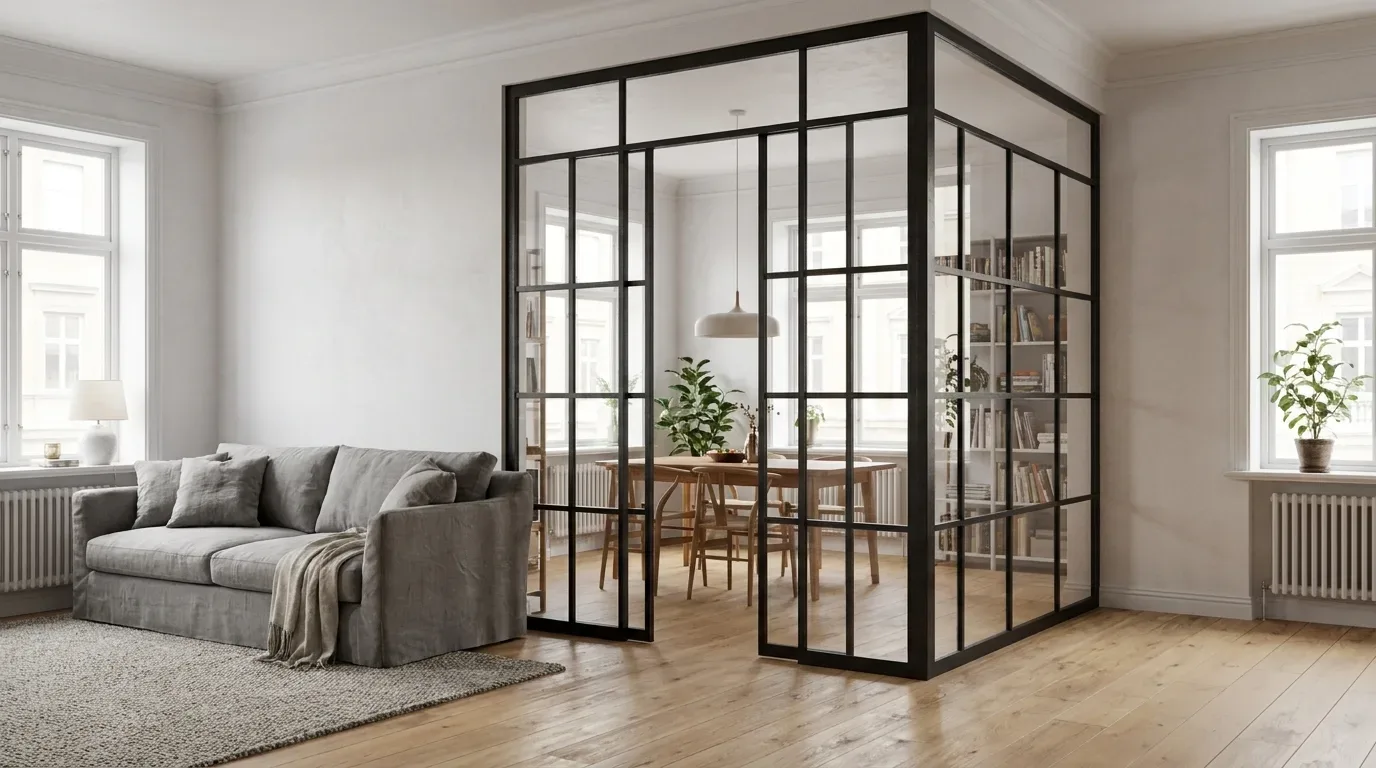
- Remove dust and debris from the track with a vacuum cleaner
- Wipe the track with a damp cloth
- Check that the track fixing screws are secure
- Apply a light coating of silicone spray to the track - avoid oil, which attracts dust
Adjusting the Floor Seal
- Locate the adjustment screws on the side or underside of the door
- Turn gradually to raise the seal slightly
- Test the door's movement after each small adjustment
The seal should just touch the floor surface without pressing against it. Getting this right can make a noticeable difference to both noise and draught.
When to Call a Professional
- If the door has warped or the frame is no longer plumb
- If rollers are damaged or the track is bent
- If squeaking continues after lubrication and adjustment
- If there are structural issues with the fixings or glass installation
Common Care Mistakes - and How to Avoid Them
| Mistake | Likely Consequence | What to Do Instead |
|---|---|---|
| Using abrasive cleaners | Scratches and dull patches on glass and coating | Use mild, pH-neutral cleaners only |
| Using metal tools or blades on glass | Permanent scratches | Soft cloths and soft brushes only |
| Leaving cleaning product residue on surfaces | Surface reactions and staining | Always rinse and dry thoroughly |
| Chlorine-based products on the frame | Corrosion damage to the powder coating | Use a suitable specialist cleaner or neutral soap |
| Spraying glass cleaner onto the frame | Coating damage and potential rust | Apply cleaner directly to the glass surface only |
| Using multipurpose household cleaners | Unsuitable ingredients attack surfaces | Use product-specific cleaners for glass and steel |
| Neglecting hinges | Squeaking and accelerated wear | Oil and clean every six months |
Seasonal Maintenance Tips
Winter: Managing Condensation
The temperature difference between a heated interior and a cold exterior causes condensation to form on glass surfaces. This is particularly noticeable in older British properties where glazing is in unheated corridors or close to external walls.
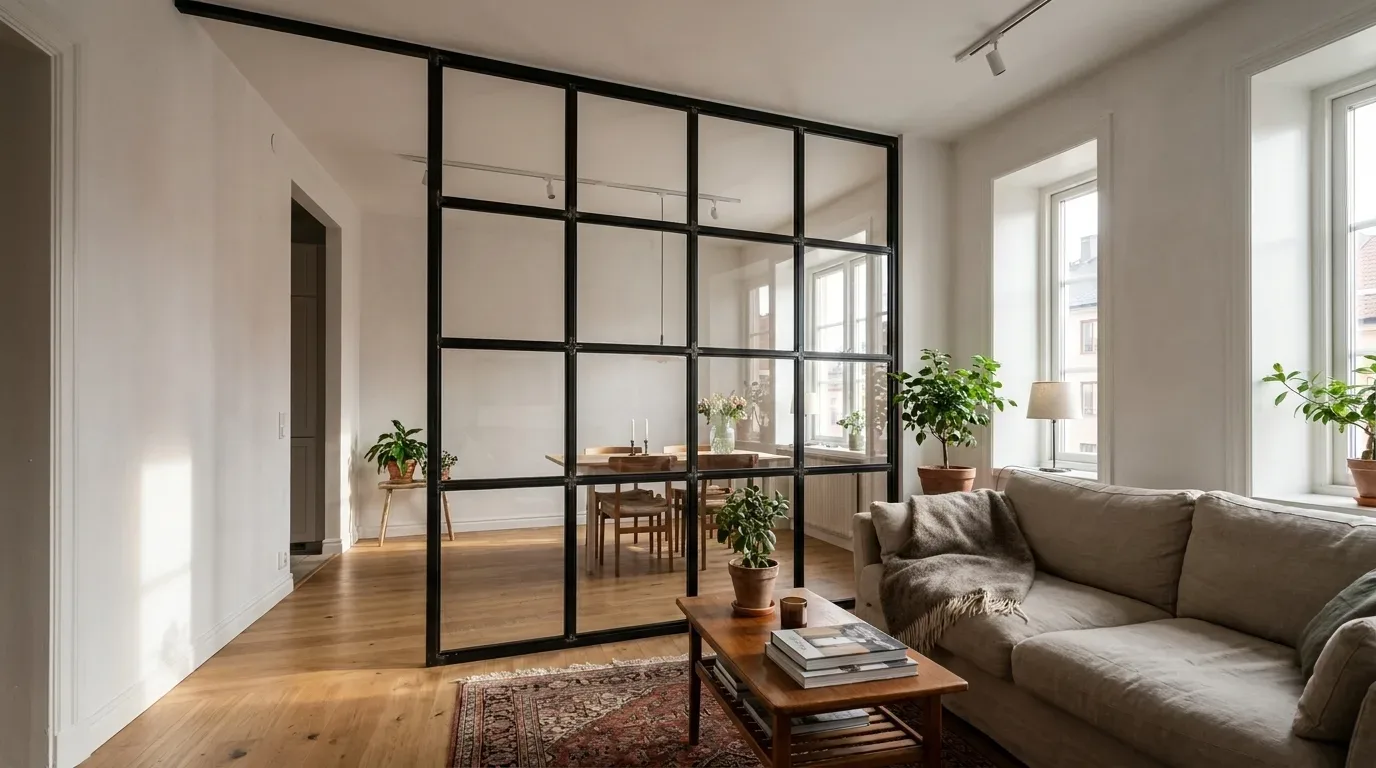
- Wipe condensation away regularly - leaving it standing encourages limescale deposits and, over time, mould at the seals
- Keep indoor humidity between 40 and 60 per cent where possible
- For doors adjacent to external walls or unheated spaces, check seals before the cold season starts
Summer: Dust and Sunlight
- Dust more frequently during summer when windows are open and dust levels rise
- Do not apply glass cleaner in direct sunlight - fast evaporation leaves streaks that are then hard to remove
- Ensure reasonable ventilation around the door to prevent heat build-up in the frame area
Loft Doors in Bathrooms and Kitchens
Bathrooms:
- After showering, wipe condensation from both glass and frame - a bathroom loft door takes on considerably more moisture than one in a hallway
- Dry any splashwater immediately
- Ventilate regularly to prevent mould forming at the seals
Kitchens:
- Remove grease splashes promptly - the longer they are left, the harder they become to shift
- Clean more frequently if the door is close to the hob
- Do not use a steam cleaner on or near the door - steam can damage seals and work into ironmongery
Dealing with Rust Spots on the Steel Frame
The powder coating is the frame's primary defence against corrosion. In normal use it performs reliably, but a significant mechanical impact - a hard knock during a house move, for instance - can chip the coating and expose bare steel underneath.
- Sand the affected area lightly with fine-grit sandpaper (400 grit or finer)
- Remove all sanding dust thoroughly
- Apply a rust-inhibiting primer to the bare metal
- Once fully dry, touch up with a matching powder-coat-compatible paint in the correct RAL colour
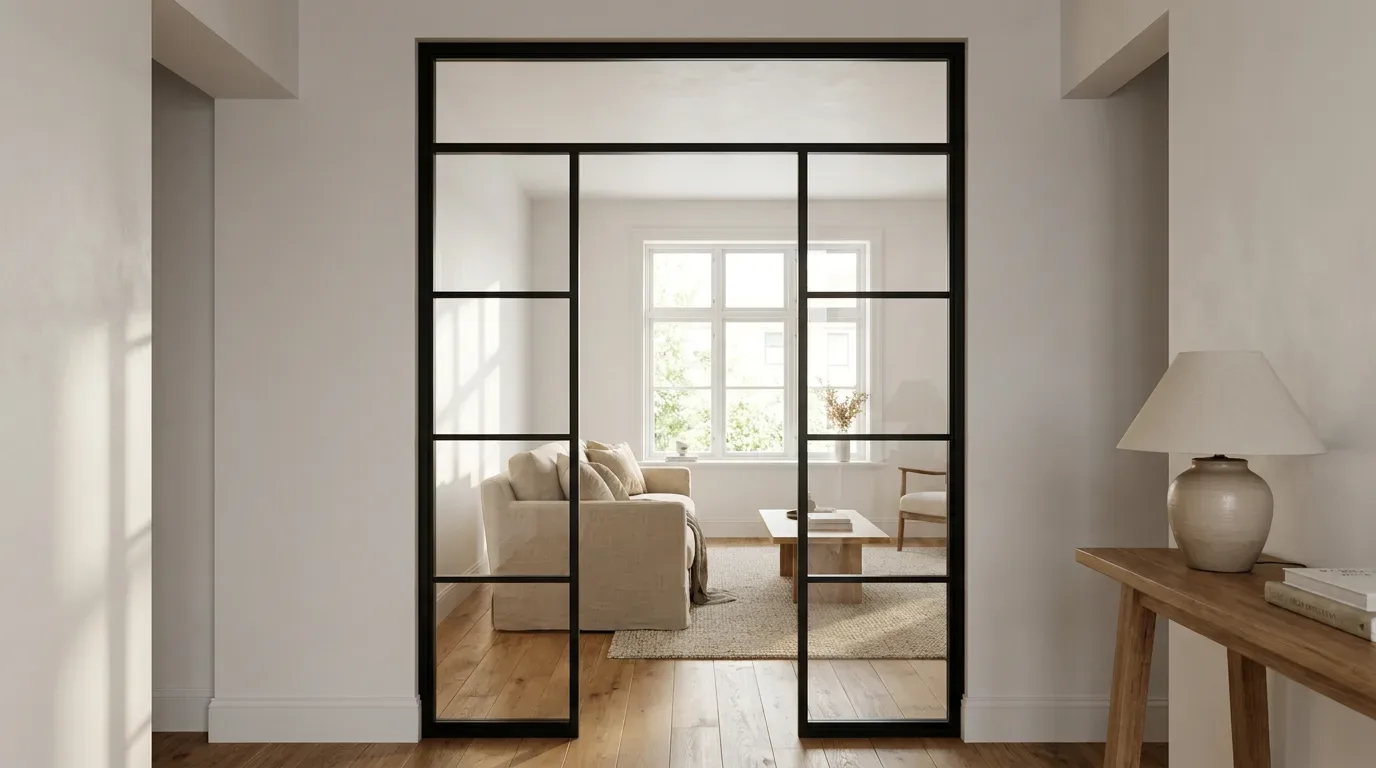
For larger areas of damage or any structural concern, contact the Manufaktur X team via manufakturx.co.uk for guidance.
Preventive Steps for Long-Term Value
- Fit a door stop to prevent the door striking a wall or fixture when fully opened
- Keep abrasive or sharp objects away from the frame and glass
- In households with young children, a fingerprint-resistant film applied at handle height can significantly reduce cleaning frequency
- Carry out a quick visual check every few months - catching a small chip or loose screw early saves a larger repair later
- Avoid prolonged direct sunlight onto frame sections where possible
- Check all fixings and fasteners periodically to ensure nothing has worked loose through normal door movement
Replacing an Old Door with a Made-to-Measure Loft Door
Many enquiries to Manufaktur X come from homeowners who have an existing internal door that no longer fits the room - functionally, aesthetically, or both. A tired solid-panel door in a Victorian conversion feels out of place; a hollow-core door in a contemporary open-plan flat offers no visual interest and blocks light unnecessarily.
Why a Custom Door Makes Replacement Easier
- Manufactured exactly to your opening dimensions, which minimises remedial work on site
- Arrives ready to install - less disruption and mess in the home than a site-made solution
- Glass panels allow light to move through the space, which can make adjacent rooms feel significantly larger
- If only the door leaf has failed while the existing frame is structurally sound, it may be possible to replace the leaf alone
Keeping the Installation Clean
- Mask adjacent walls and floor with decorator's tape and dust sheets
- Use an air purifier to capture dust particles during work
- Close other doors in the property to contain dust to the work area
- Finish with a damp mop to pick up any residual fine dust
Quick-Reference Troubleshooting
Squeaking hinges: Apply hinge oil or silicone spray; wipe away excess.
Stiff latch or lock: Use graphite powder or a dedicated lock lubricant - avoid oil-based products in lock mechanisms.
Floor seal dragging: Adjust the setting screws until the seal just touches the floor without pressing against it.
Frequently Asked Questions
What is the difference between a loft door and a room divider?
A loft door is a fully functional hinged door with a rebate (left- or right-hand), a defined swing direction, hinges, and a handle. A room divider is a fixed steel-and-glass partition with none of those features. A room divider can include a walk-through opening, but it is not a door - there is no closing mechanism.
Which glass finishes are available for the loft door?
The configurator offers five glass finishes: clear glass, frosted glass, smoked glass, dark smoked glass, and textured glass. You also choose the safety glass type - ESG (toughened) or VSG (laminated). These are two separate decisions. For larger formats, Manufaktur X recommends VSG.
How often should I clean and maintain my loft door?
As a guide: remove visible fingerprints from the glass daily; clean glass panels and dust the frame weekly; do a thorough clean including seals monthly; oil hinges and check screws every six months; carry out a full inspection annually. Homes with higher footfall or a bathroom/kitchen location may need a slightly more frequent routine.
What cleaning products are safe to use?
For glass: a standard streak-free glass cleaner, warm water with a microfibre cloth, or a water-and-white-vinegar solution. For the powder-coated steel frame: pH-neutral soap or a specialist cleaner formulated for powder-coated surfaces. Never use abrasive, chlorine-based, acid-based, or solvent-containing products - these damage both the coating and the glass.
From what price is a Manufaktur X loft door available?
The starting price for the most basic configuration is shown in the configurator. The configurator shows the exact price for your chosen options in real time. Delivery to the UK is invoiced free of German VAT; UK import VAT is collected on import. Manufaktur X arranges and pays the customs clearance and handling fees.
Can I submit a sketch if my opening has unusual dimensions?
Yes. If your project involves a non-standard situation - a sloped ceiling in a loft conversion, an arched opening in a period property, or any other unusual constraint - you can upload a sketch via manufakturx.co.uk. The team will assess feasibility and provide a bespoke quote.
My loft door is squeaking - what should I check first?
Start with the hinges: clean them with a dry cloth and apply acid-free oil. On a sliding loft door, check the track for debris and treat with silicone spray. Also check the floor seal adjustment. If squeaking persists after these steps - particularly if the door appears to have warped or there are signs of structural movement - it is worth consulting a professional installer.
What wood species does Manufaktur X use in its other products?
For products such as the large shelf and dining table, Manufaktur X works exclusively with oak, beech, and ash - all hardwoods known for durability and stability. The loft door itself is steel and glass throughout.