Room Divider Without Drilling? The Honest Answer - and What a Fixed Steel-and-Glass Wall Actually Offers
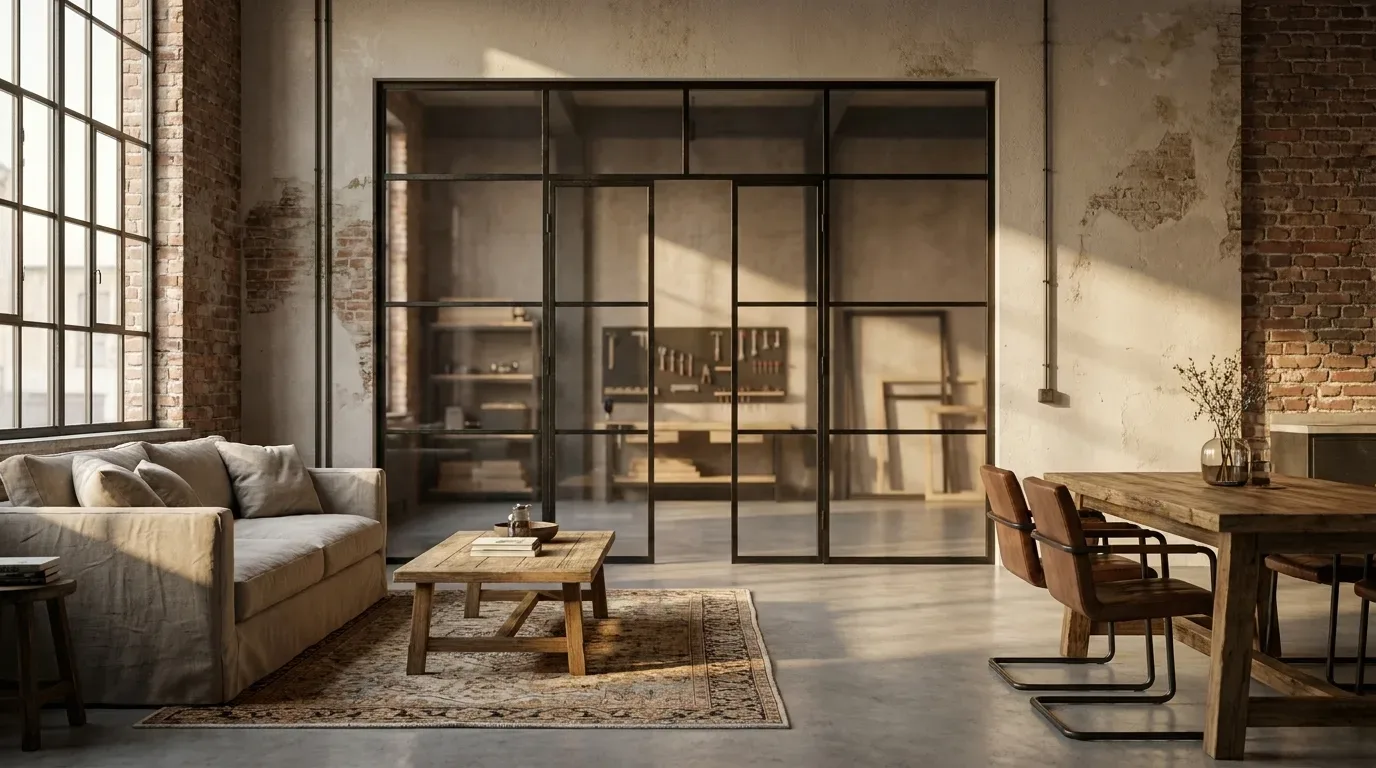
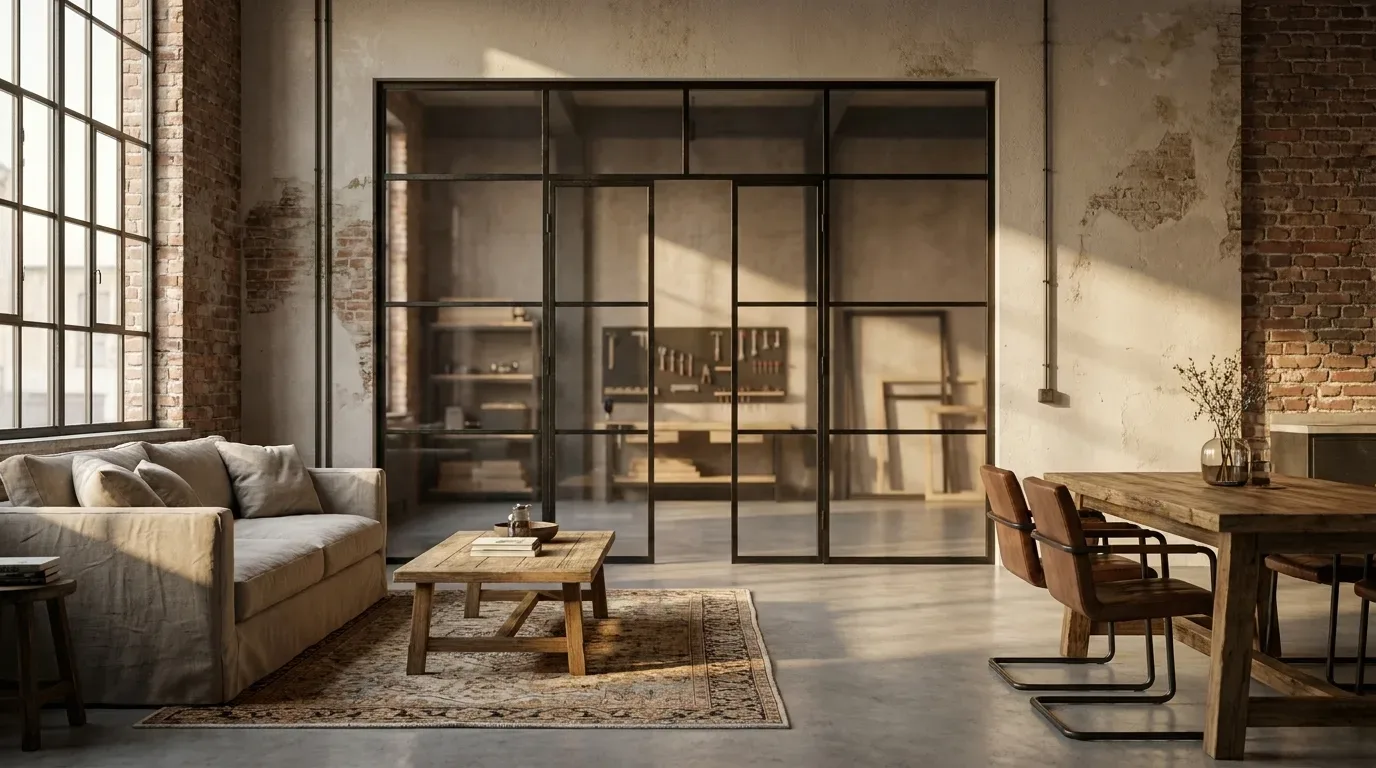
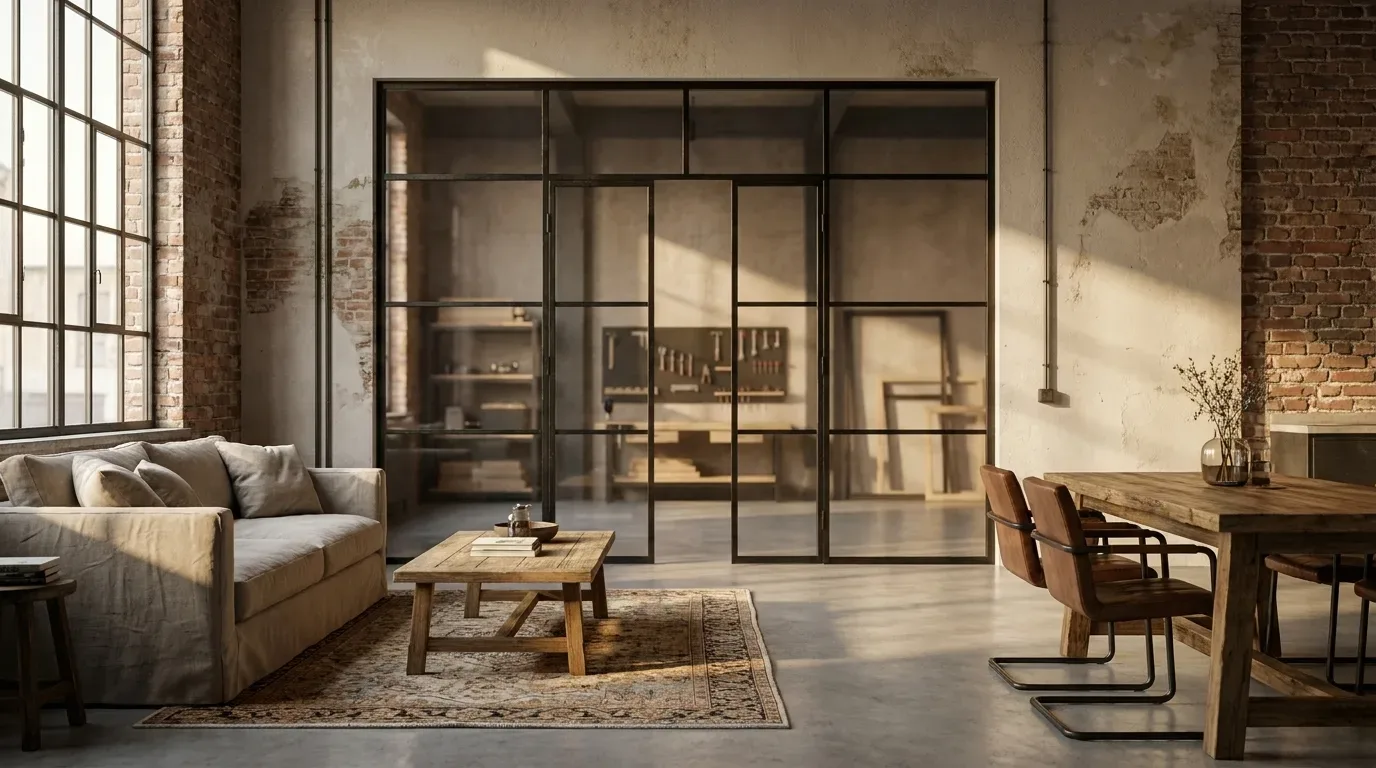
Here is the straight answer: a truly drill-free room divider means a freestanding folding screen or portable partition - a decorative, moveable piece of furniture. A proper, permanent steel-and-glass dividing wall, on the other hand, is always fixed - bolted into floor, wall or ceiling. The made-to-measure room divider from Manufaktur X falls firmly into that second category: custom-built, permanently secured, and built to last. This guide is upfront about when each solution makes sense - and what "without drilling" can realistically deliver.
What "No Drilling" Actually Means in Practice
When people search for a room divider they can install without drilling, they usually have one of two situations in mind: a rented flat where the landlord has not given permission for fixings, or a period property where they are nervous about disturbing original plasterwork or brick. Both are completely understandable concerns - but the solution is the same in either case: a freestanding screen.
A freestanding screen or folding partition stands entirely under its own weight. No wall plugs, no rawlbolts, no fixings of any kind. You can reposition it on a Saturday afternoon and it leaves no trace behind. That flexibility is genuinely useful for certain situations - a temporary dressing area behind a bed, a visual break in a studio flat, or a short-term privacy screen in a shared house.
It is worth being clear, though: Manufaktur X does not manufacture freestanding screens. Our room divider is a fixed steel-and-glass wall that is drilled and bolted into position. If a portable, zero-fixing solution is what you need, that is a different product - and honestly not one we make.
The Freestanding Option: What a Folding Screen Can and Cannot Do
A folding screen has a real place in the right setting. It is immediately usable, costs relatively little compared to a structural partition, and can be moved or removed without a second thought. For renters in a new-build flat or a short-term let, it often makes perfect sense.
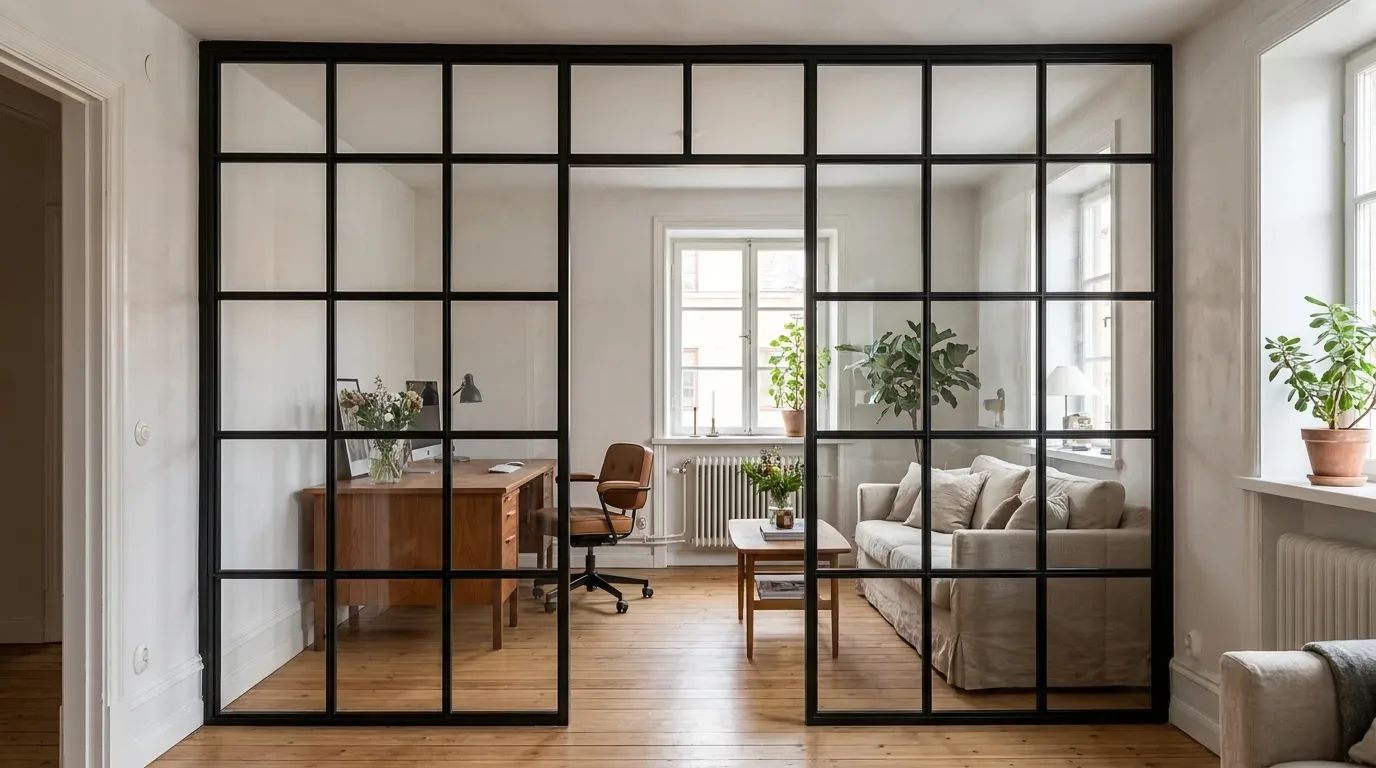
The limitations are just as real, though. A freestanding screen rarely reaches ceiling height - most stop well below the cornice, leaving an open gap at the top that undermines any sense of genuine separation. In a Victorian terrace or Edwardian semi with 2.7 m ceilings and a broad open-plan kitchen-diner, a 1.8 m folding screen can look more like a piece of furniture than a room boundary. It can also be knocked over - a real consideration in homes with young children or large dogs. And it provides a visual softener rather than a clear spatial division: light and sound travel freely around and over it.
For a permanent, clean separation between a home office and a living area - or between a sleeping zone and a sitting room in a converted Victorian warehouse flat - a folding screen simply cannot do what a fixed glass wall does.
Why a Proper Steel-and-Glass Partition Needs to Be Fixed
The fixings are not an inconvenience - they are what makes the partition work. A powder-coated steel frame carrying large panels of safety glass is a substantial structure. Anchoring it properly into the floor and adjacent wall (and optionally the ceiling) is what gives it its permanent, plumb stability. It does not flex, it does not lean, and it does not shift over time.
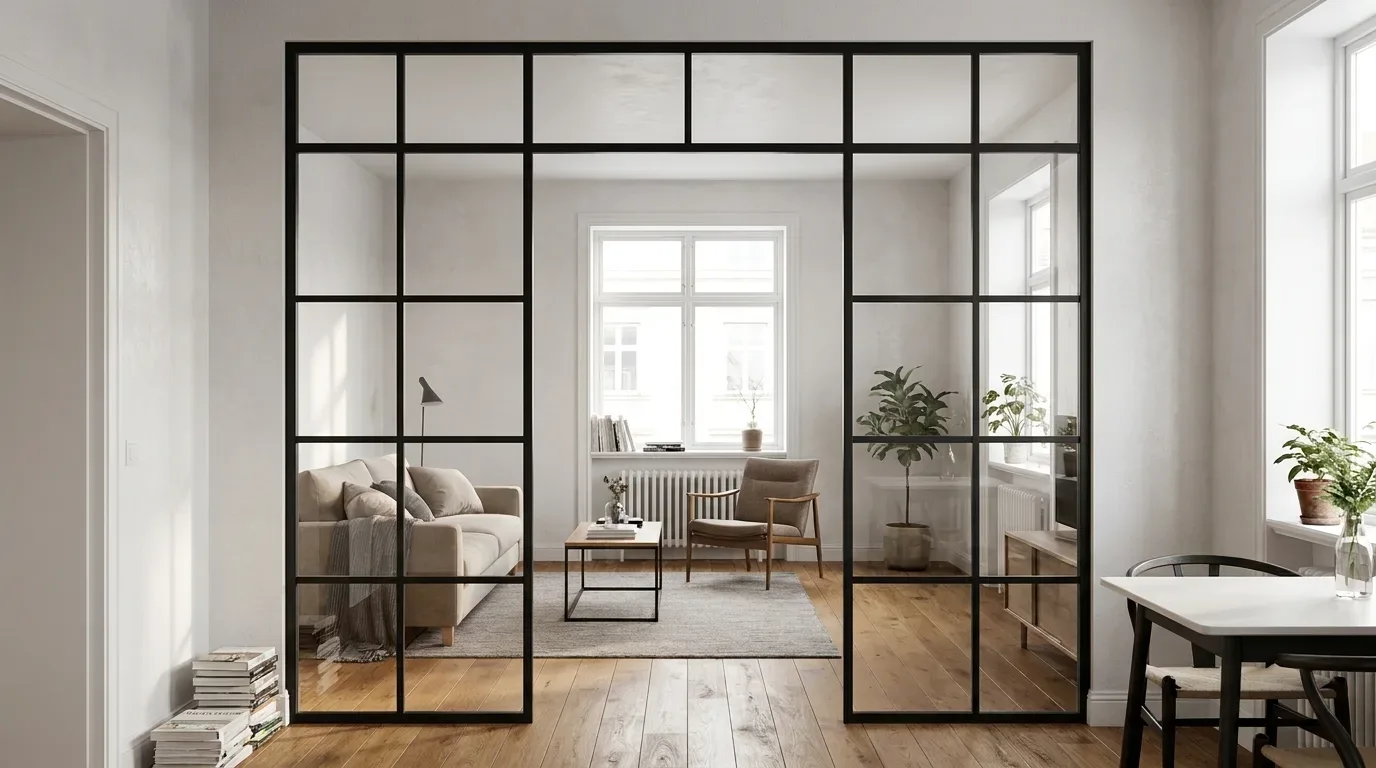
That solidity is the whole point. In an open-plan Victorian conversion or a 1930s semi-detached that has had its ground floor knocked through, you often want a boundary that reads as architectural - something that light passes through but that clearly defines one space from another. A fixed steel-and-glass wall achieves that. A low, freestanding screen does not.
In our workshop, the most common feedback we receive from customers who previously tried a freestanding solution is that it never felt settled - it shifted slightly over time and never quite reached the wall on both sides. A bolted installation, done carefully and plumb from the outset, simply holds.
Freestanding Screen vs. Fixed Steel-and-Glass Wall: at a Glance
| Feature | Folding Screen (no drilling) | Fixed Steel-and-Glass Wall (bolted) |
|---|---|---|
| Fixing method | None - freestanding | Bolted into wall, floor or ceiling |
| Drilling required | No | Yes |
| Stability | Low - can be knocked over | High - permanently stable |
| Height | Usually well below ceiling | Full floor-to-ceiling height, made to measure |
| Room separation | Decorative, loose visual screen | Clear, defined spatial boundary |
| Moveable | Yes - reposition any time | No - fixed in place |
| Available from Manufaktur X | No | Yes |
Rented Property in the UK: Can You Drill for a Fixed Partition?
This is one of the most common questions we hear from UK customers, and the answer is more nuanced than a simple yes or no. Standard tenancy agreements in England, Scotland and Wales generally permit a reasonable number of fixings - wall plugs for shelving, curtain rails, picture hooks - provided any holes are filled and made good before you move out. Drilling for a room divider sits in a similar category: larger in scale, but still a matter of making good on departure.
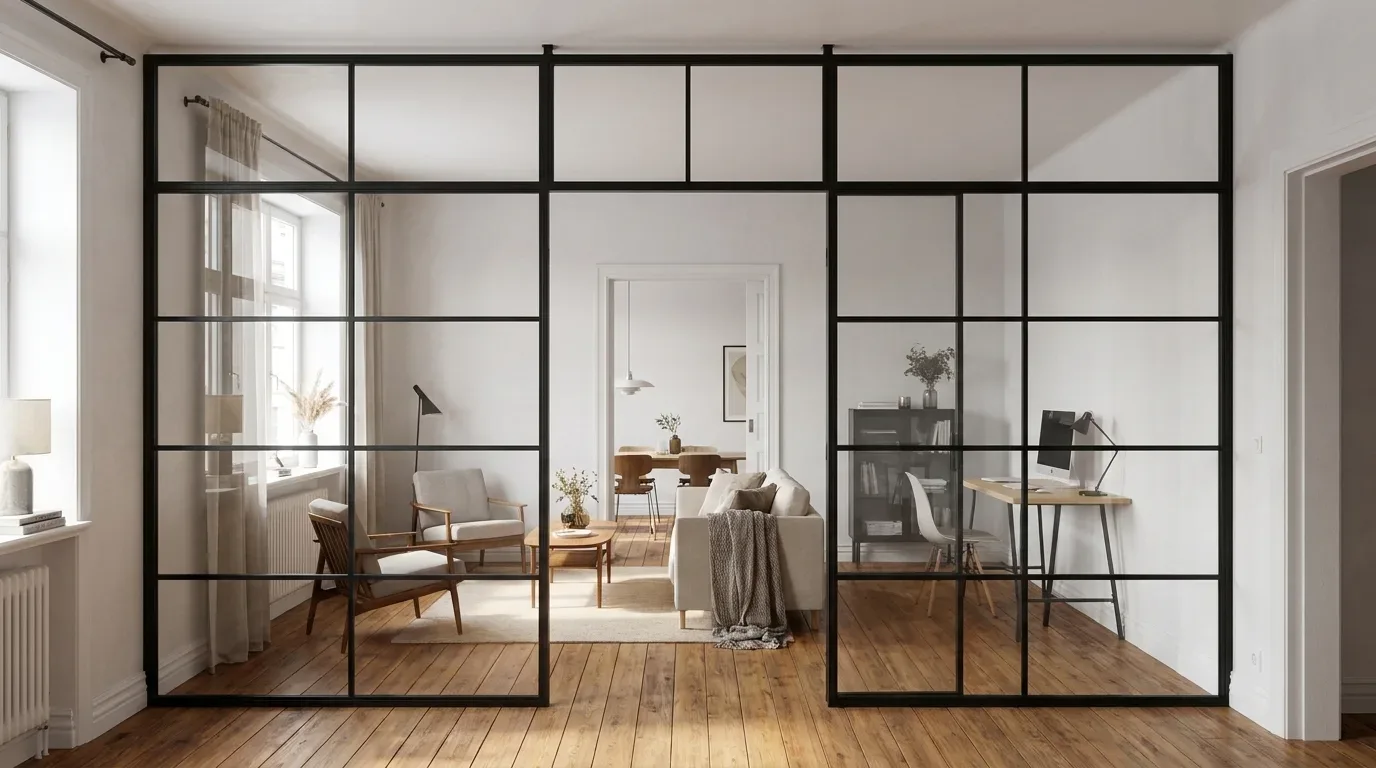
The sensible approach is to speak to your landlord before committing to a fixed installation. Many are perfectly happy once they understand that a properly installed and later removed partition leaves nothing worse than a few filled holes and a lick of paint. Period properties - particularly listed buildings or flats in converted Georgian or Victorian townhouses - may carry specific restrictions, in which case a brief conversation will save everyone time. If permission is not forthcoming, the freestanding screen remains the only drill-free alternative, with the limitations already described.
When a Fixed Steel-and-Glass Wall Is the Right Choice
If you want a genuine, lasting division within an open-plan space - not just a visual hint of separation - a fixed wall is the answer. It works particularly well in situations where light needs to flow through: the glass keeps both zones feeling spacious, while the steel frame gives the partition a defined, architectural presence that reads as intentional rather than improvised.
Common scenarios we see among UK customers include carving a focused home office out of a large open living room, creating a sleeping area in a studio conversion without boxing it in with solid walls, or adding structure to a knocked-through Victorian kitchen-diner that has become too exposed. In all of these, the ability to see through the partition while maintaining a clear boundary is exactly what makes the steel-and-glass format so effective.
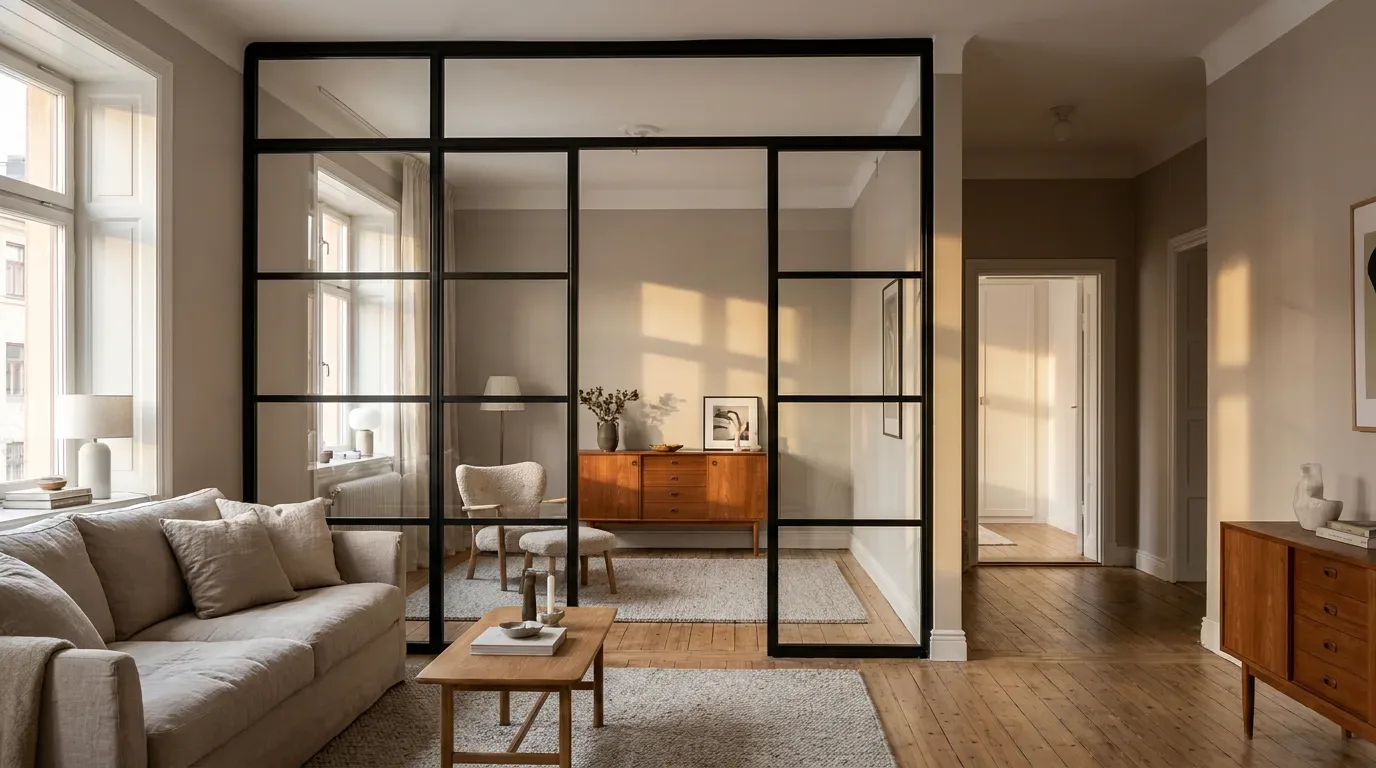
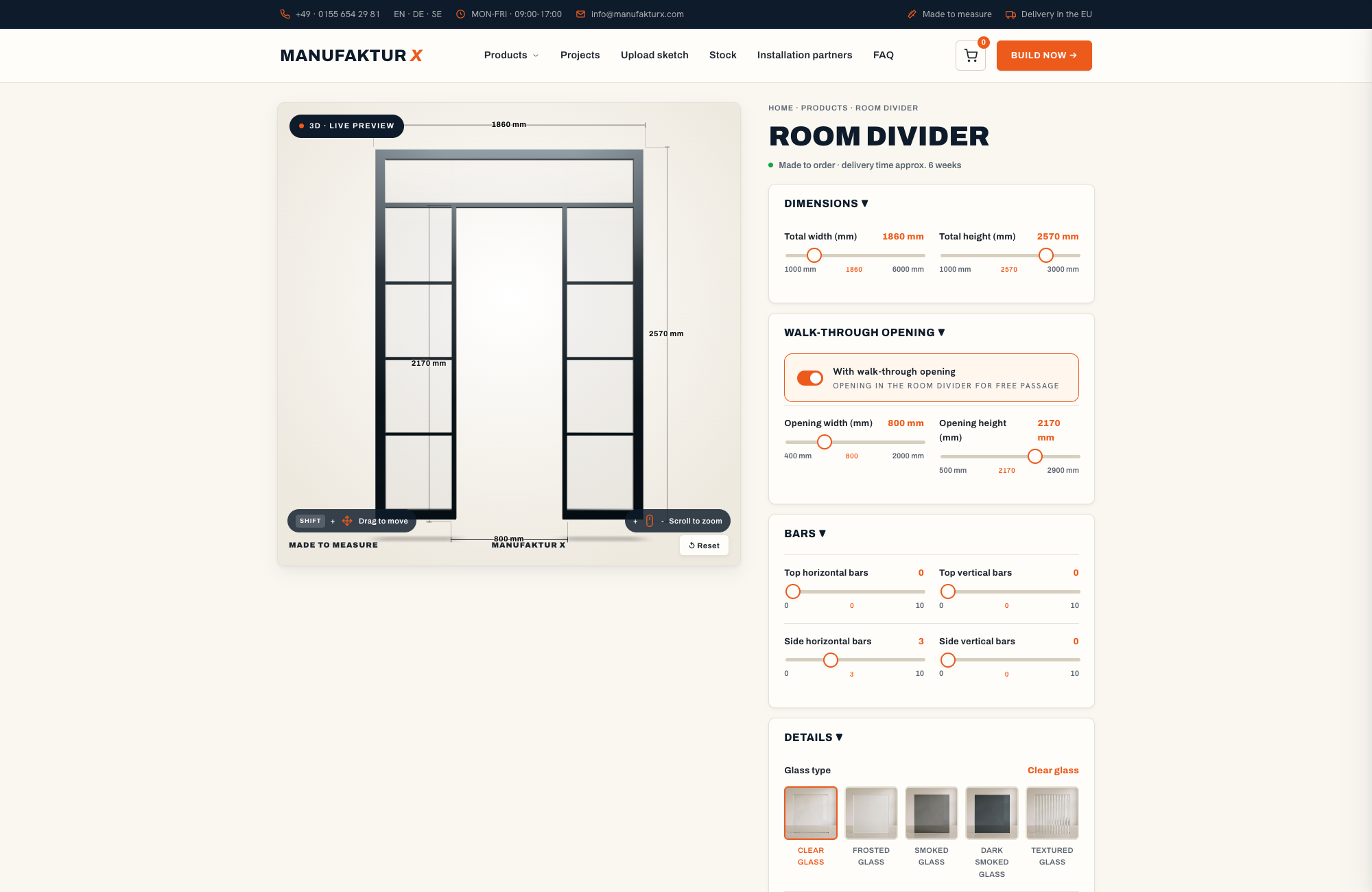
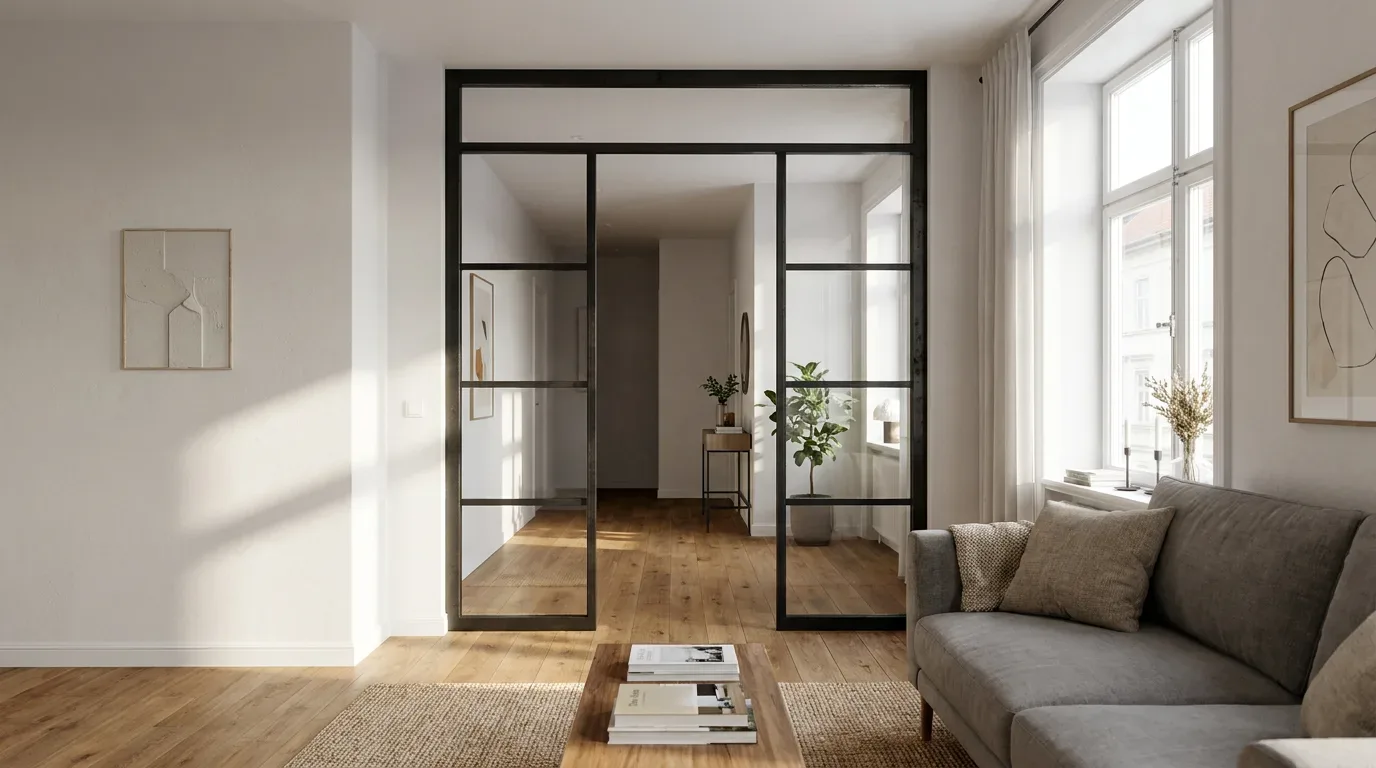
The Manufaktur X room divider is configured entirely to your dimensions. You enter the exact width and height you want - not the structural opening size, but the finished dimensions of the partition itself. An optional walk-through opening can be included within the frame, letting you move between areas without a door leaf. Glass options include clear, frosted milk, smoke or dark smoke; bar patterns (horizontal and vertical, always evenly spaced across the frame) add a classic industrial or period detail that works well in both Victorian conversions and contemporary new-builds. The powder-coated steel frame is available in any RAL colour - matte black tends to be the most popular choice in the UK market, though warm greys and deep greens are increasingly common. Optional side panels and a top section close off any remaining gap to the ceiling or flanking walls. If you also need a door with a handle and latch in the same opening, that is a separate product: the made-to-measure loft door.
Powder coating is worth a mention here. Unlike conventional paint, the electrostatically applied coating on the steel frame is cured at high temperature, producing a finish that resists chips and scratches, carries colour evenly across the entire surface, and involves no solvent emissions during application - a cleaner process for the workshop and a more durable result for you.
What Does a Made-to-Measure Room Divider Cost?
The price is calculated transparently from your dimensions, glass type and RAL colour. There are no percentage surcharges or hidden extras. The base price starts from £2,212 in a standard configuration, and the online configurator shows you the exact fixed price in real time as you adjust width, height, glass choice and bar pattern. Adding a walk-through opening reduces the glass area and therefore reduces the price - the configurator reflects this immediately. Non-clear glass (frosted, smoke or dark smoke) carries a flat addition rather than a percentage uplift, keeping the pricing easy to follow.
| Product | From | Note |
|---|---|---|
| Lofttür | £995 | Lowest possible option |
| Raumteiler | £1.900 | Steel + laminated glass, custom width |
| Großes Regal | £2.750 | Solid wood, steel frame, floor-to-ceiling |
| Esstisch | £1.360 | Solid wood, steel frame |
| Couchtisch | £995 | Solid wood, steel frame |
| Sitzbank | £945 | Solid wood, steel frame |
| TV-Board | £1.325 | Solid wood, steel frame |
| Rohrregal | £915 | Modular pipe shelf |
Every partition is manufactured in the EU and delivered directly to your address in the UK - with all import duties and customs clearance handled. Production takes 5 to 6 weeks from order confirmation. You can configure, preview and price your room divider on the Manufaktur X room divider page before committing to anything.
Frequently Asked Questions
Can I get a Manufaktur X room divider without any drilling at all?
No. The Manufaktur X room divider is a fixed steel-and-glass wall and requires drilling into the floor and at least one adjoining wall or ceiling to install correctly. We do not offer a clamp, tension or freestanding version. If drilling genuinely is not an option, a freestanding folding screen from another supplier would be the drill-free alternative - but that is not something we produce.
How is a folding screen different from a fixed glass partition?
A folding screen stands freely, needs no fixings, and can be repositioned at will. In return, it typically does not reach ceiling height, can be knocked over, and functions more as a decorative screen than a proper spatial boundary. A fixed steel-and-glass wall is bolted into place, reaches full floor-to-ceiling height to your exact specification, and creates a clear, stable room division. One is a flexible, temporary solution; the other is a permanent architectural feature.
Is it acceptable to drill for a partition in a rented UK property?
In most cases, yes - provided you fill and make good any fixings before leaving. Standard assured shorthold tenancies in England and Wales treat reasonable fixings as fair use of the property. For flats in listed buildings, conservation areas, or properties with unusually restrictive tenancy conditions, it is always worth checking with your landlord first. A brief conversation upfront avoids any dispute at the end of the tenancy.
Do I need a professional installer, or can I fit it myself?
Installing a fixed steel-and-glass partition involves drilling into floor and wall, setting the frame plumb in all directions, and fitting the glass panels safely - typically a two-person job. Whether you tackle this yourself or bring in a tradesperson depends on your experience with structural fixings and the specifics of your property (solid brick, stud wall, concrete floor and so on). For a clean, lasting result, accurate installation is as important as the quality of the partition itself. Careful measurement before you order is equally critical - the most common cause of a poor fit is incorrect dimensions, not a manufacturing fault.
What glass options are available for the room divider?
The configurator offers clear glass, frosted milk, smoke, and dark smoke. All glass is safety glass (ESG toughened or VSG laminated). You choose a single glass type for the entire partition - individual panels cannot be mixed. Bar patterns (horizontal and vertical dividing bars, always evenly distributed across the frame) are a separate design choice layered on top of the glass type. There is no mirrored glass, no textured ornamental glass, and no wood-panel infill option.