British homes rarely come with straightforward dimensions. Victorian terraces have alcoves that defeat standard shelving. Edwardian semis hide chimney breasts that push furniture into awkward positions. New-build flats offer ceiling heights that make off-the-shelf room dividers look stubby. If you have spent an afternoon in IKEA only to return home and discover that nothing quite fits, you already understand why bespoke furniture exists. At Manufaktur X, every piece is made to your exact measurements - whether that is a dining table with an oak top and a powder-coated steel frame, a coffee table in ash, a wall-to-wall shelving unit, or a steel and glass loft door. This guide walks you through every decision, from choosing your timber to getting the dimensions right before you order.
Why Bespoke? The Real Difference Between Custom and Off-the-Shelf
Off-the-shelf furniture is designed around a statistical average room. Your room is not average - it is yours. A period conversion with exposed brickwork, a 1930s semi with a through-lounge, a loft flat with a sloped ceiling: each presents proportions that standard ranges simply do not accommodate.
Choosing custom-made furniture removes those compromises entirely. You are not hunting for the closest approximation; you are specifying the exact piece you need.
The main reasons customers choose a bespoke furniture manufacturer:
- Exact fit: Every centimetre of your space is used purposefully, not wasted on a gap or obscured by overhang.
- Personal specification: You choose the timber, the stain, the steel colour, and - where relevant - the glass type.
- Material quality: Solid hardwood in oak, beech or ash only. Steel frames powder-coated in any RAL colour.
- Longevity: Hardwood and steel furniture does not wear out the way flat-pack does. Decades of use, not years.
- A piece that is genuinely yours: Not a product number, but an object made once for your home.
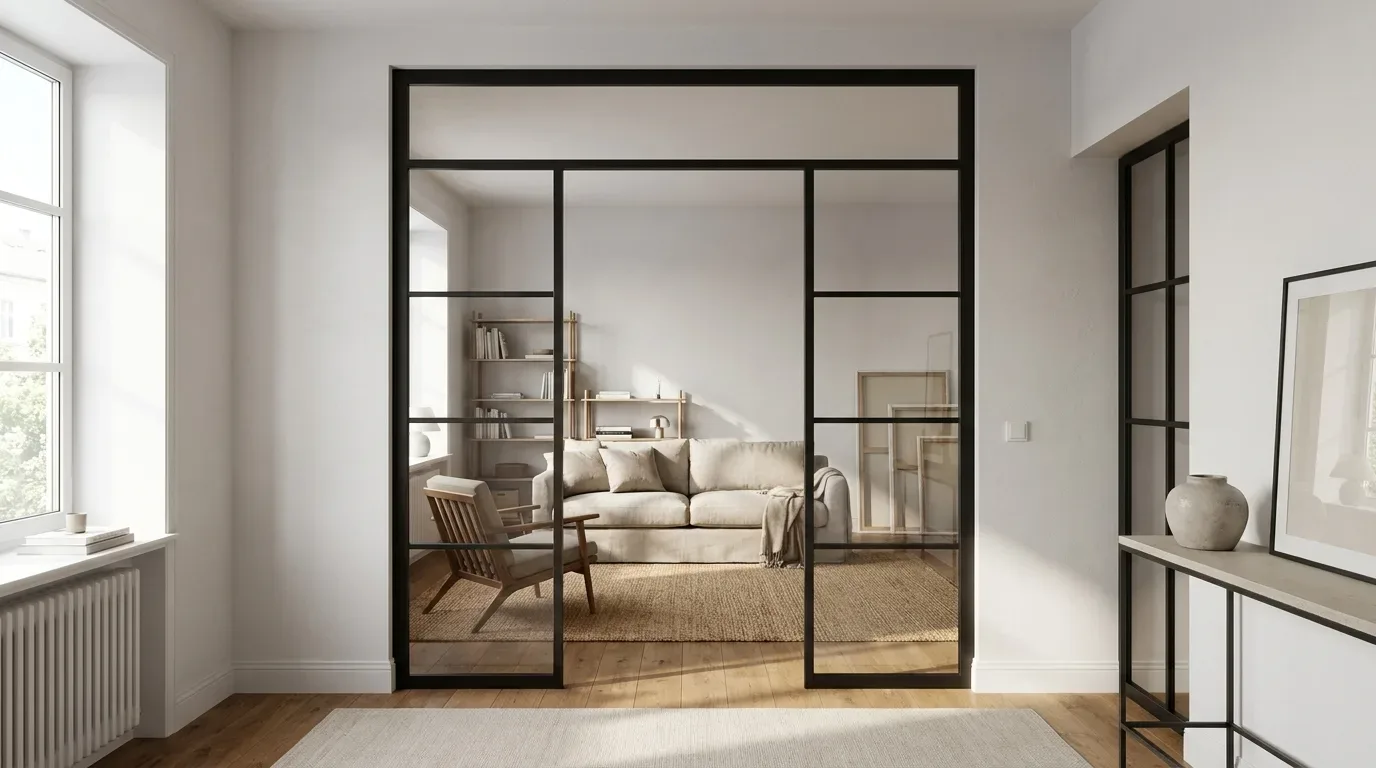
The Manufaktur X Product Range: Steel, Glass and Solid Hardwood
The range divides into two material families: steel-and-glass products, and steel-and-solid-wood products. Which configuration options apply to you depends entirely on which category your chosen piece falls into.
Steel and Glass: Loft Doors and Room Dividers
Both the loft door and the room divider use a powder-coated steel frame with a glass infill - but they serve very different functions:
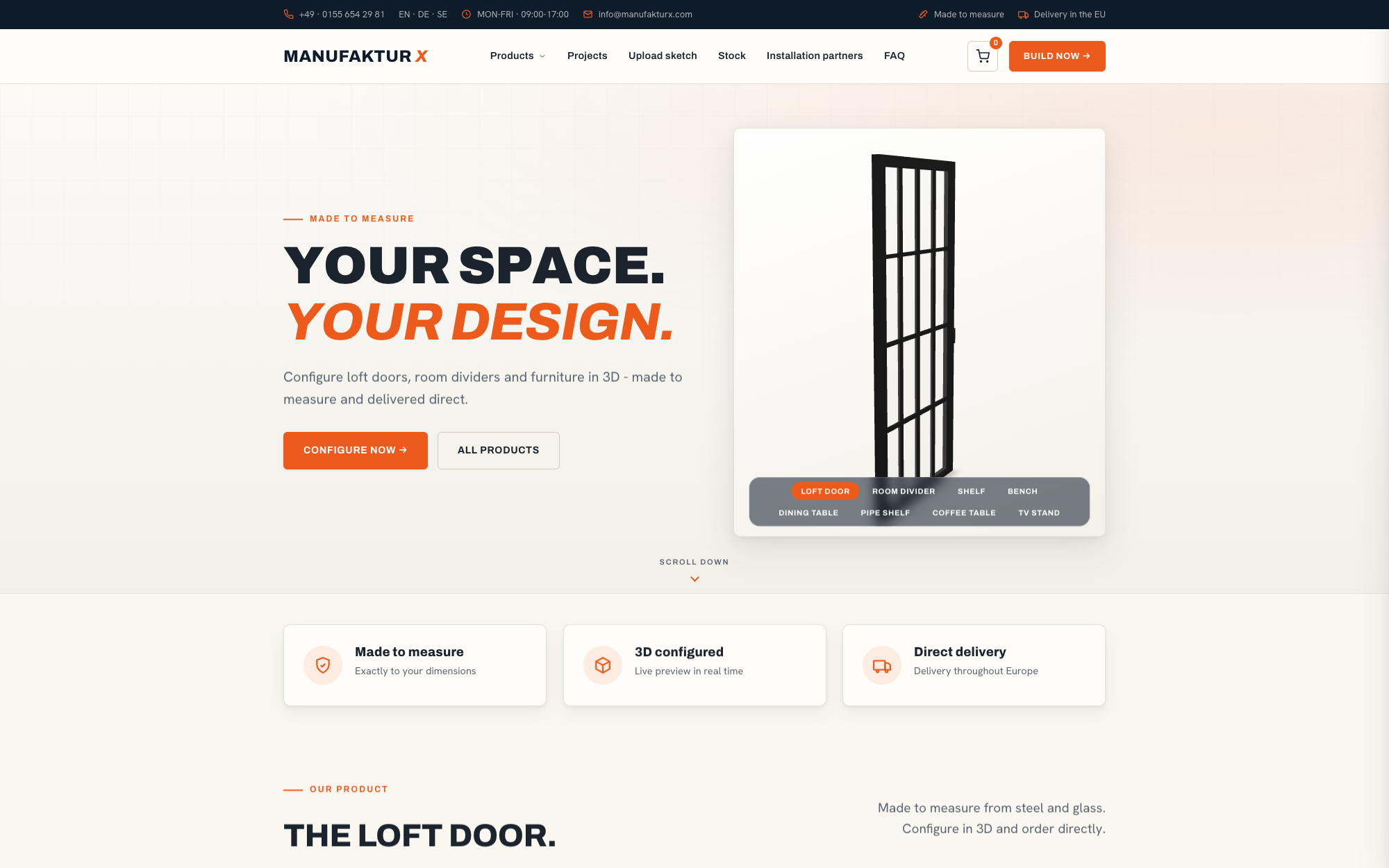
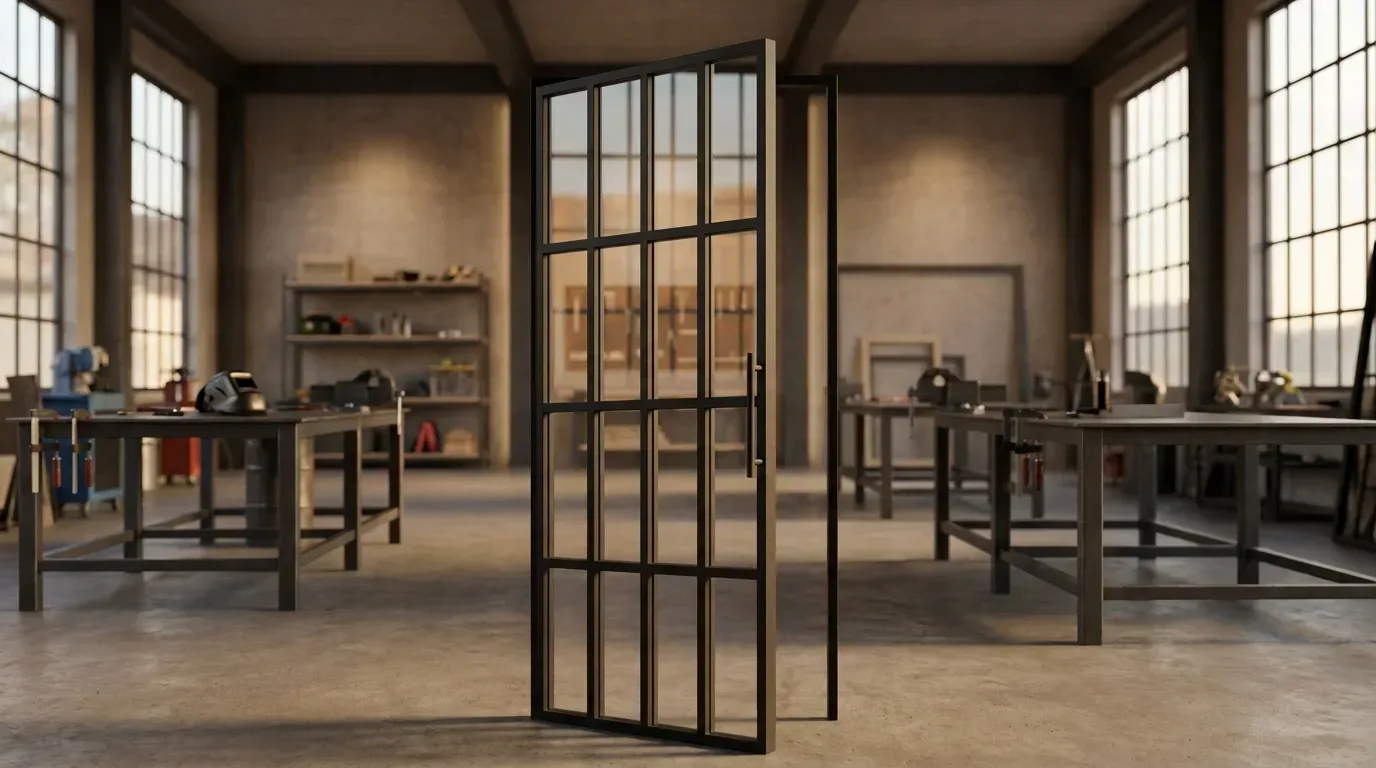
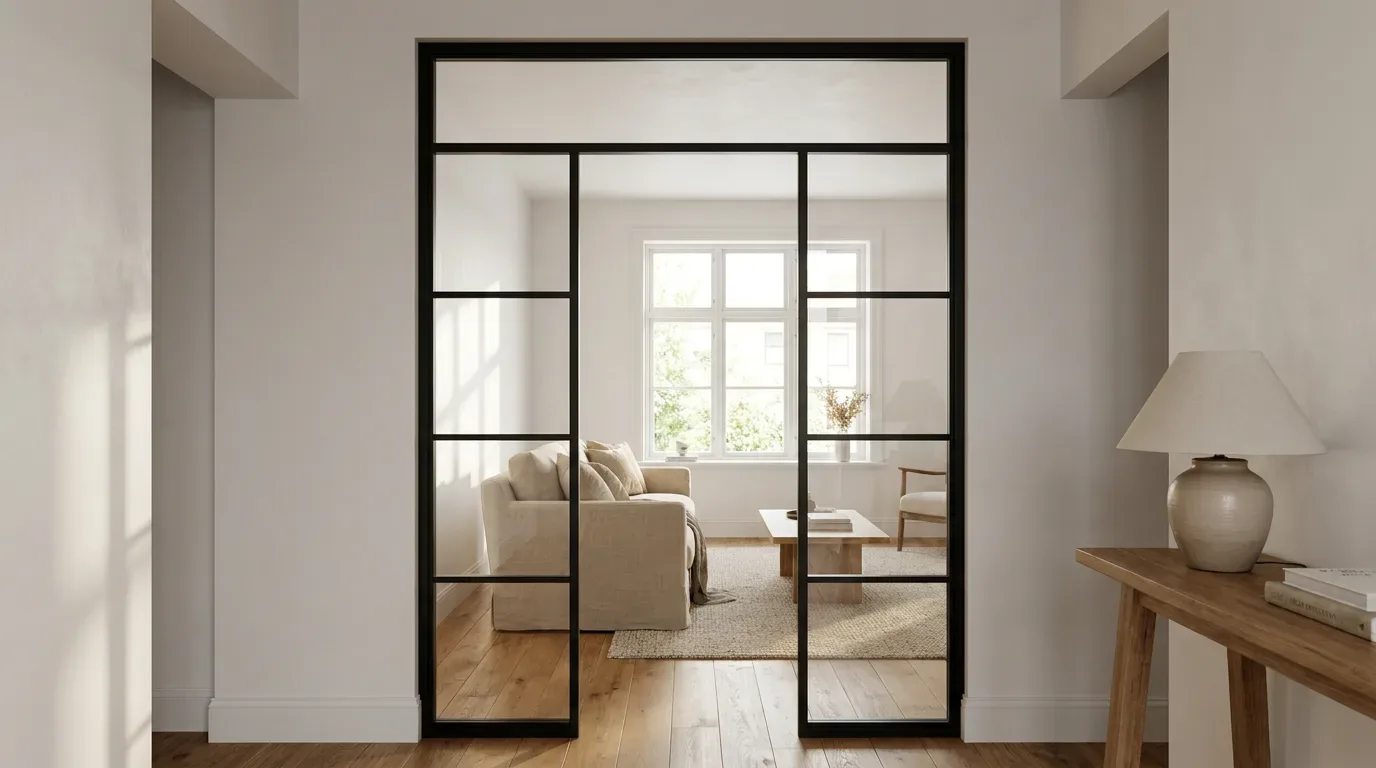
- Loft door: A working door with a chosen hinge side (left or right), opening direction, opening angle, and one of three handle styles (elongated, minimal, or crescent). It moves, it latches, it functions as a door.
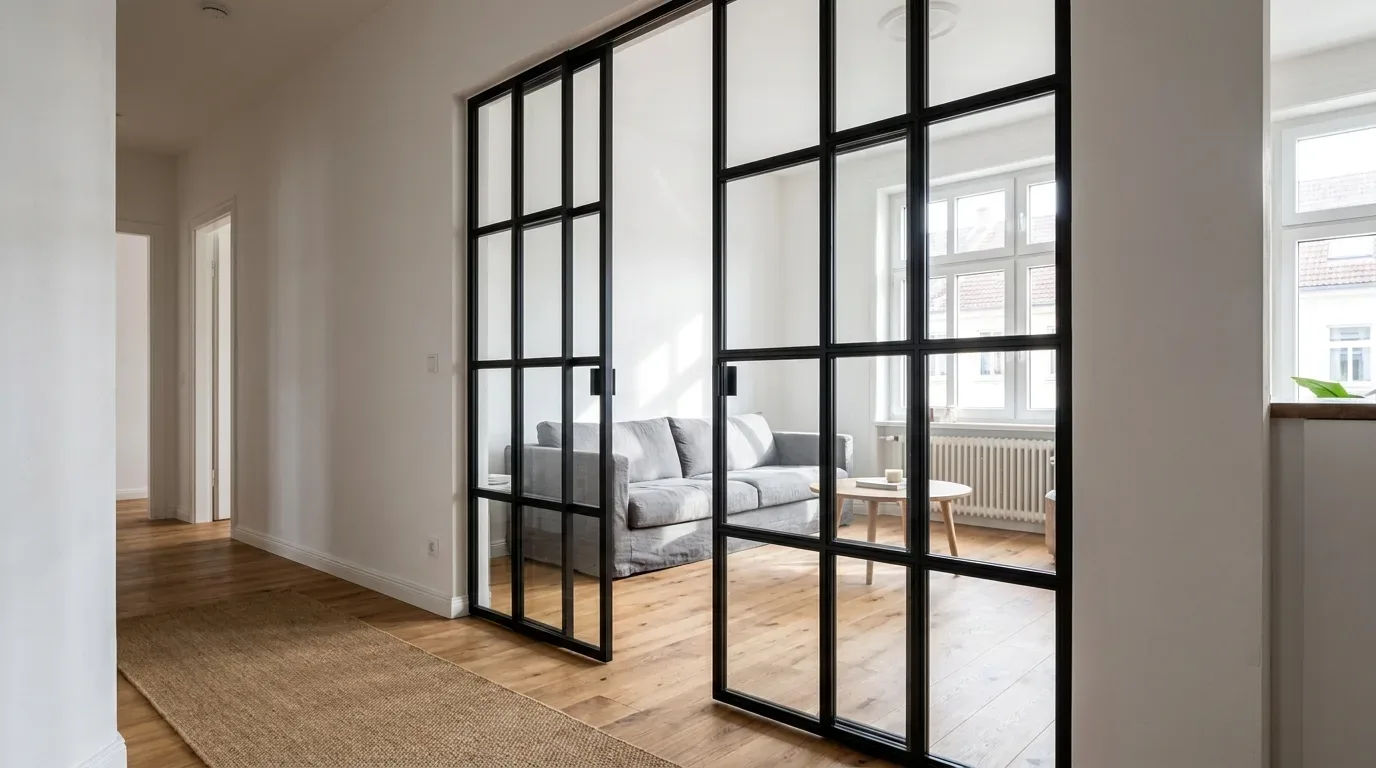
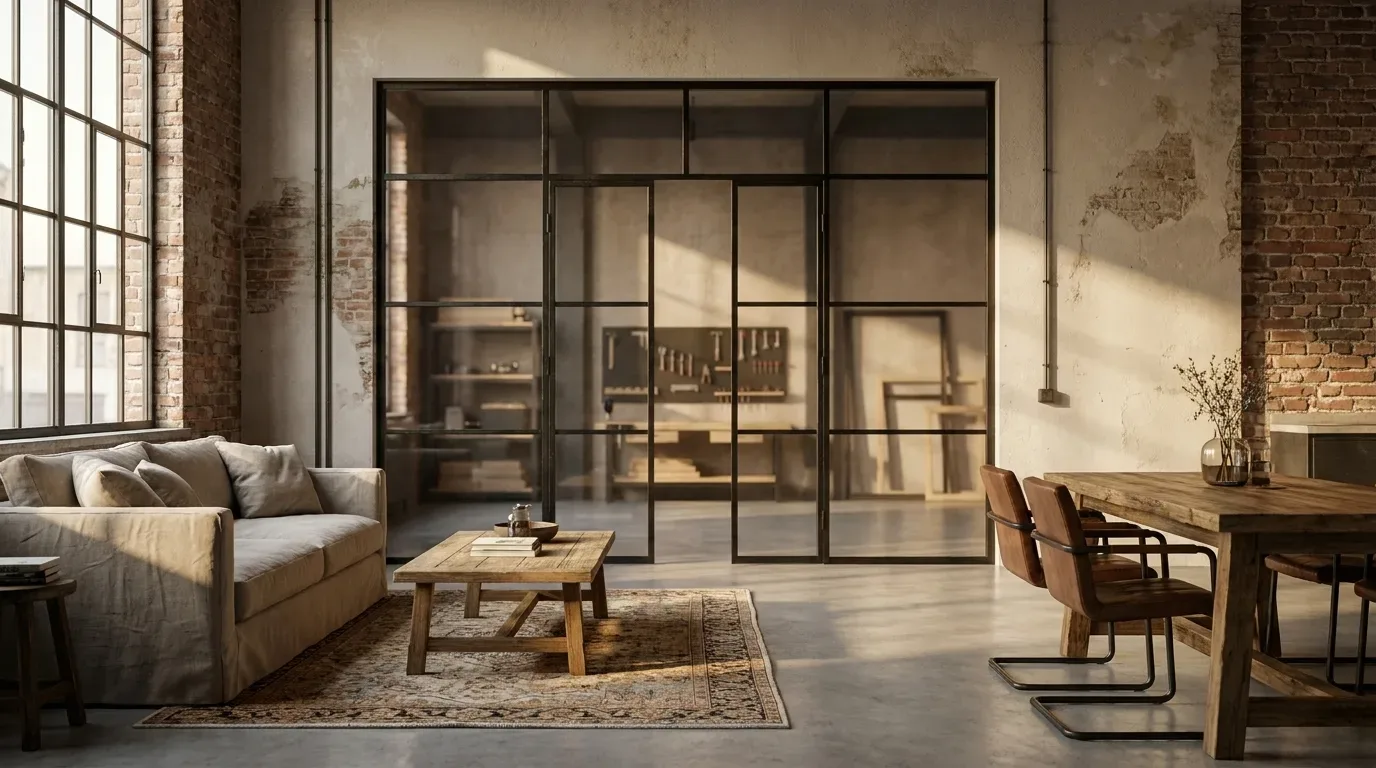
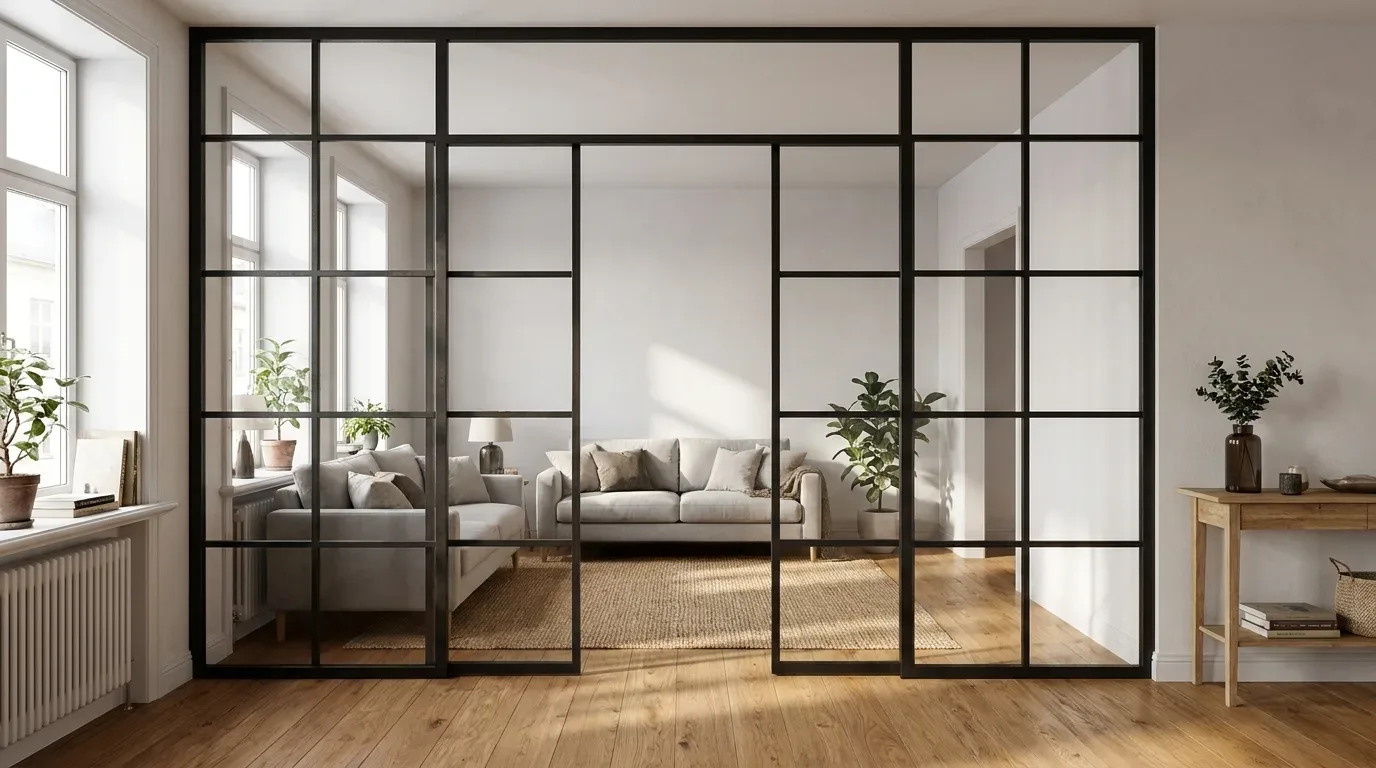
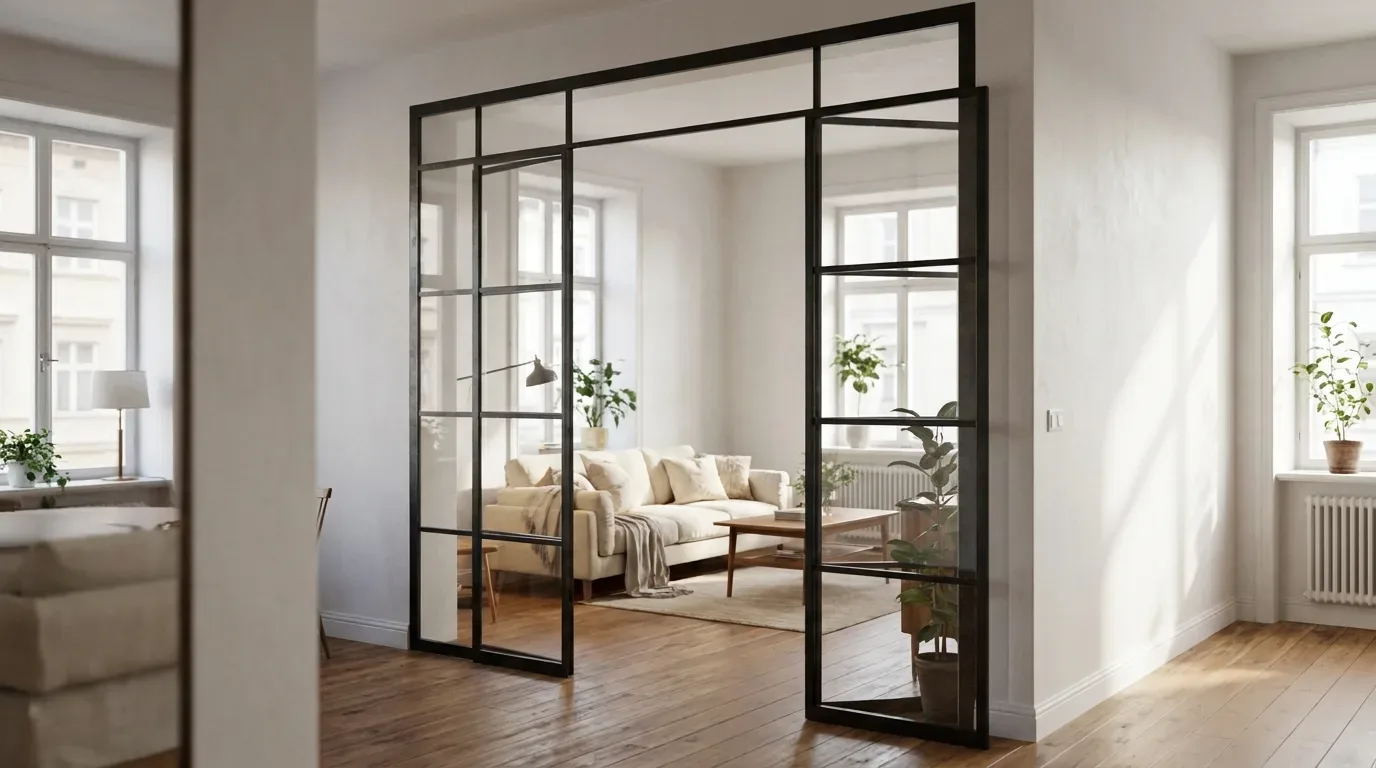
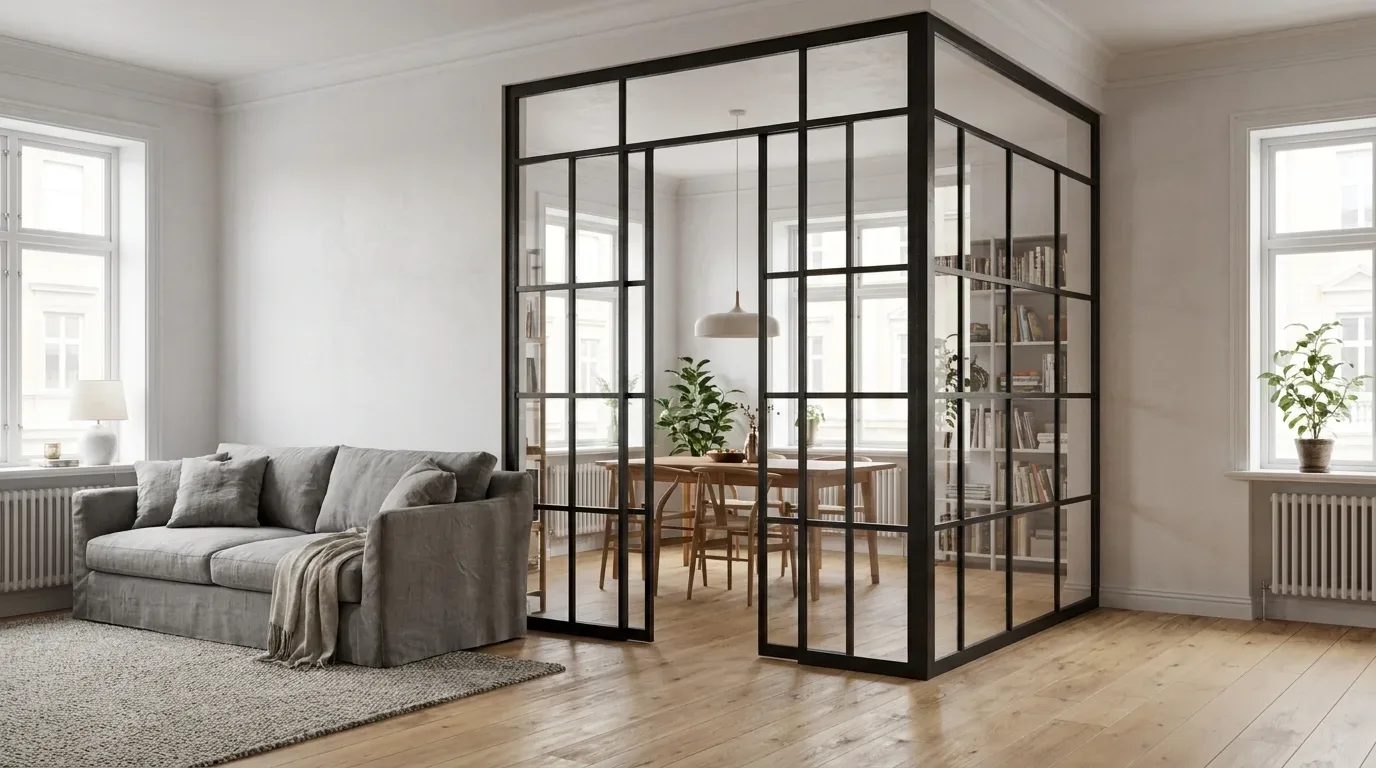
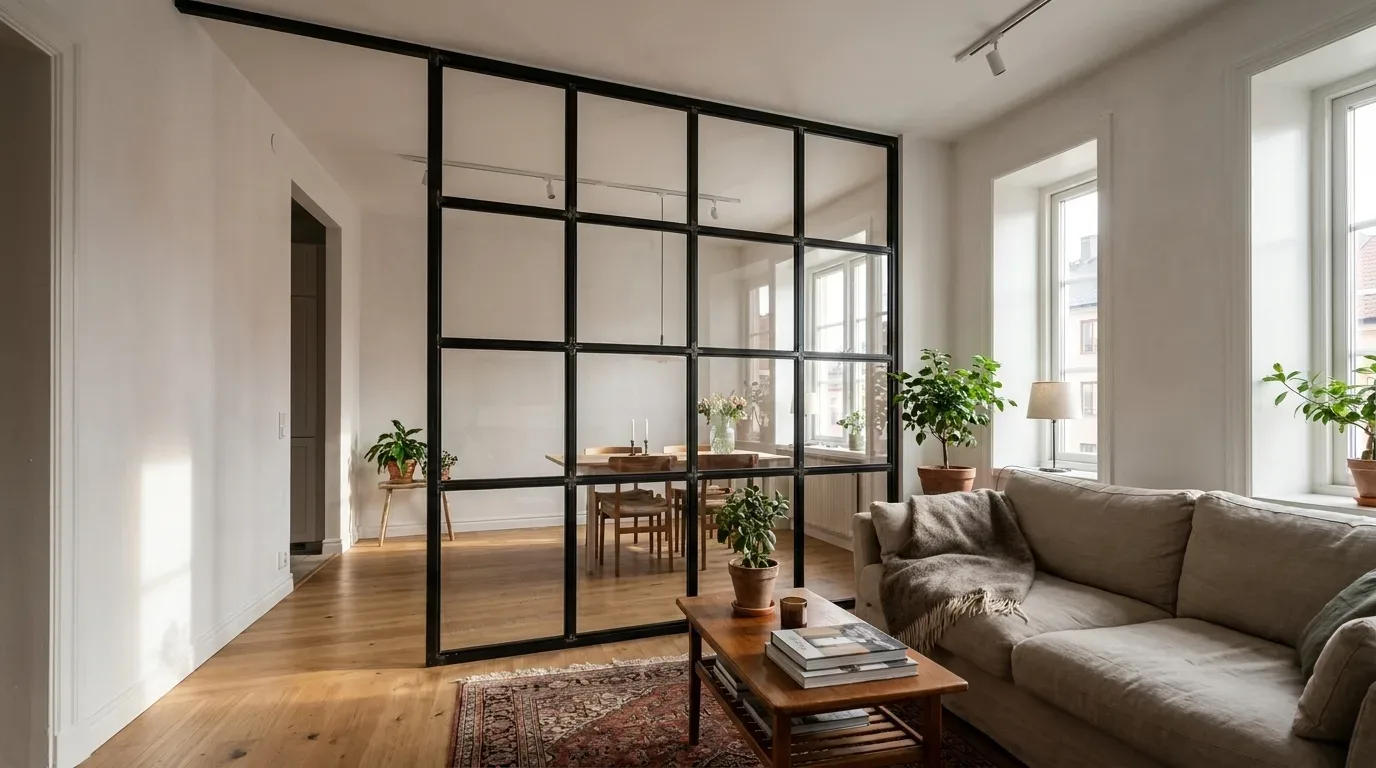
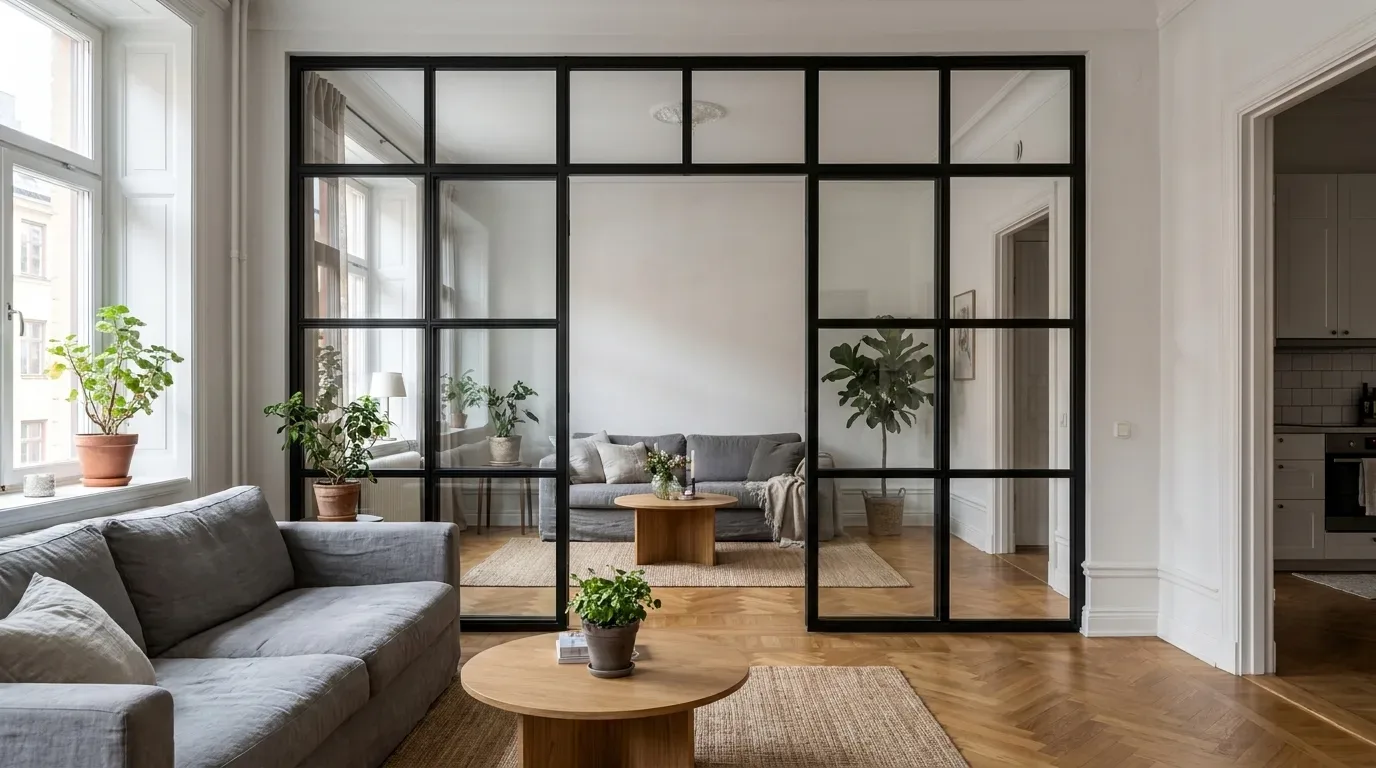
- Room divider: A fixed steel and glass partition with no door mechanism whatsoever - no hinge, no handle, no latch. If you want a walkthrough gap, an open passage can be built into the design instead of a door.
Both products are available in five glass designs: clear glass, frosted glass, smoked glass, dark smoked glass, and textured glass. The steel frame is available in any RAL colour without surcharge.
Steel and Solid Wood: Tables, Shelves and Benches
These products pair solid wood surfaces or shelves with a steel frame or base. No glass is involved.
- Dining table: A solid wood or veneered tabletop in oak, beech or ash on a bespoke powder-coated steel frame.
- Coffee table: Solid wood or veneered top on a steel frame, proportioned for the living room.
- Bench: A solid wood or veneered seat on a steel frame - pairs naturally with the dining table.
- Large shelf: A steel frame with solid wood shelves, configurable with optional wooden cabinet sections.
- Pipe shelf: Steel pipe supports carrying solid wood shelves - the industrial aesthetic where the structure itself is the design statement.
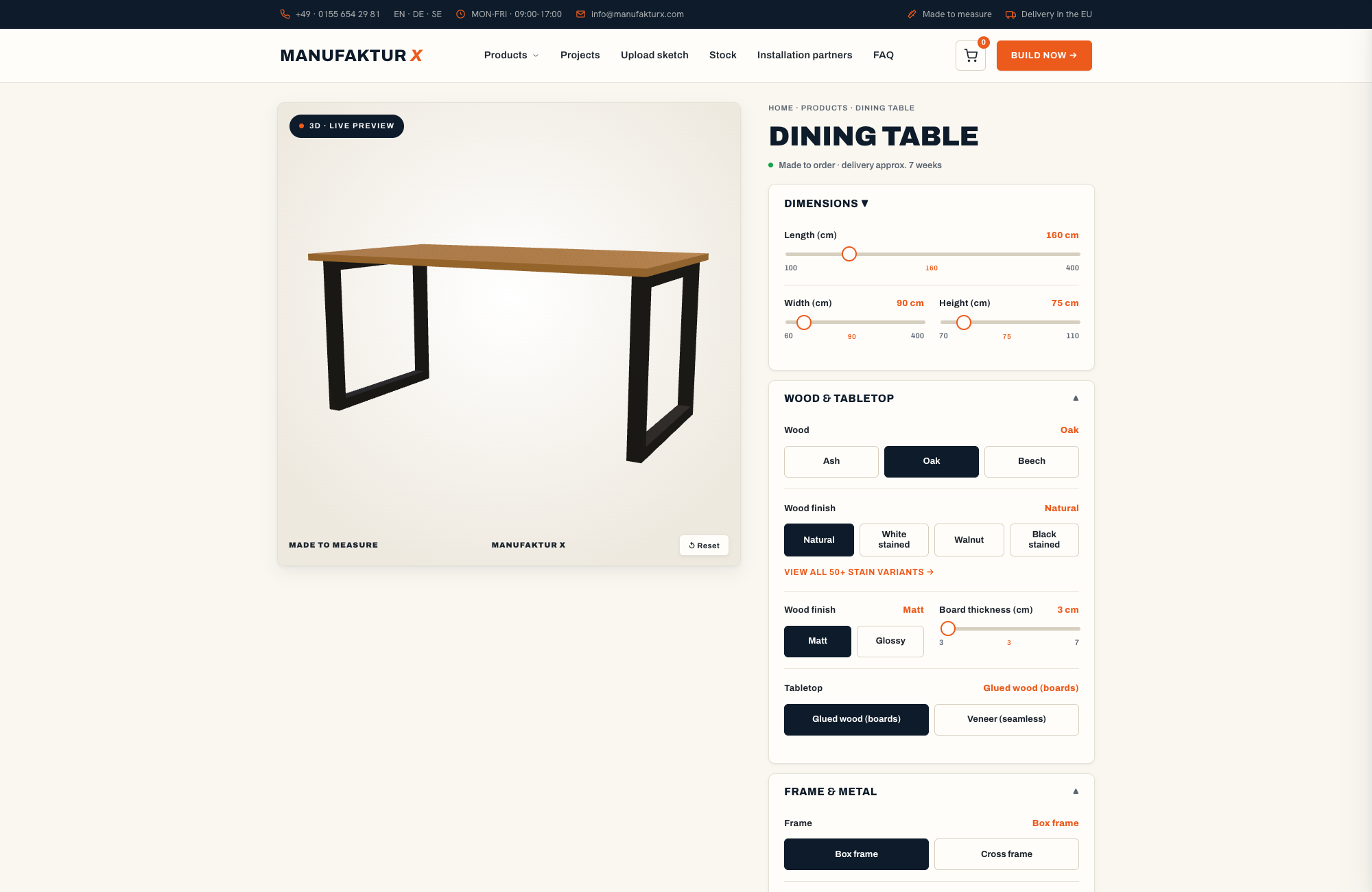
Choosing Your Materials: Timber, Steel and Glass
Oak, Beech and Ash - Understanding the Three Hardwoods
Manufaktur X works exclusively with three European hardwoods. No softwoods, no MDF, no chipboard. The choice between them is primarily visual and tactile - all three are genuinely hard, durable timbers that will outlast you if cared for properly.
- Oak: The most familiar hardwood in British interiors. Pronounced grain, warm mid-tones, outstanding durability. It takes darker stains beautifully, which is why it dominates industrial and vintage schemes. If you are furnishing a Victorian conversion or a warehouse apartment and want the wood to carry visual weight, oak is the natural starting point.
- Beech: Finer, tighter grain than oak, and exceptionally hard. It handles heavy daily use without showing wear quickly, making it a strong choice for benches and shelf boards that carry real loads. The colour is lighter and more neutral than oak.
- Ash: Pale, open-grained, and clean-looking. Ash reads as contemporary rather than rustic, which suits Scandi-influenced or minimalist interiors particularly well. If your home leans towards light, airy colour palettes, ash is worth considering.
For the surface finish, more than 50 stains are available - ranging from near-natural through to very deep, almost ebonised tones. You are not locked into the natural colour of your chosen timber; the stain selection lets you shift the result considerably while keeping genuine solid hardwood throughout.
In our production process, the most common reason a custom piece does not fit is inaccurate measurement by the customer, not a manufacturing fault. Walls and floors in period British properties in particular are rarely true - we consistently advise measuring at three or four points and working from the smallest reading.
Powder-Coated Steel: Every RAL Colour, No Exceptions
Every steel frame and structural element is powder-coated rather than painted. The distinction matters practically: powder coating bonds to the metal through an electrostatic process and is cured at high temperature, producing a finish that is far more scratch-resistant than conventional paint, with an even colour depth that does not thin at edges or corners. It is also a more environmentally responsible process, as it produces no solvent emissions.
Every RAL colour is available - not a curated selection, but the full palette. That means you can match your steel frame precisely to the colour of your skirting boards, your kitchen cabinetry, or the industrial-green window frames that define so many Victorian conversions. Matte black (RAL 9005) and anthracite (RAL 7016) are the most common choices for loft-style interiors, but white, warm grey, and even bronze-effect tones are equally achievable.
Glass Options (Loft Doors and Room Dividers Only)
Glass is only part of the picture for loft doors and room dividers - it does not feature in any of the wood and steel furniture pieces. There are exactly five glass designs to choose from:
- Clear glass - full transparency, maximum light flow between spaces
- Frosted glass - evenly diffused, softens visibility without blocking light
- Smoked glass - lightly tinted, reduces sightlines subtly
- Dark smoked glass - stronger tint, more definite privacy
- Textured glass - structured surface that scatters light decoratively
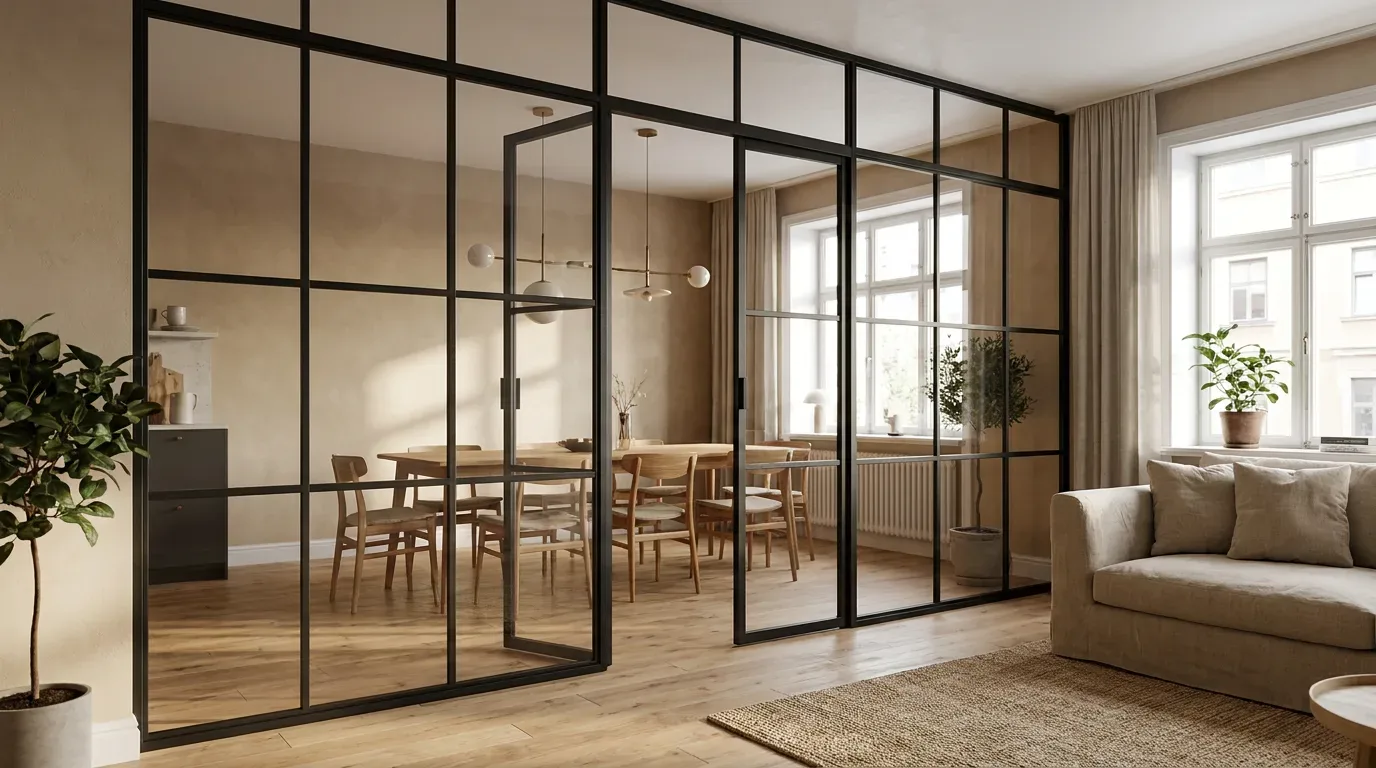
Separately, you choose the glass type: ESG (toughened safety glass) or VSG (laminated safety glass). For larger formats - say, a loft door in a Victorian hallway with ceiling heights above 2.5 m, or a full-width room divider in an open-plan kitchen-diner - VSG offers greater structural stability and is the recommended choice.
Style Directions: From Industrial Loft to Scandi Minimalist
Steel and hardwood do not commit you to a single aesthetic. The same two materials produce very different results depending on how you finish them. A few practical examples for British interiors:
Schemes That Work Well in UK Homes
- Industrial / warehouse: Dark-stained oak, RAL 9005 matt black frame. Robust proportions, visible weld details left as part of the aesthetic. Works well in loft conversions, former commercial buildings turned residential, or any room with exposed brick or concrete.
- Period-property classic: Mid-tone oak stain, warm grey frame (RAL 7030 or similar). Sympathetic to original features in Victorian and Edwardian homes without trying too hard to replicate period joinery.
- Contemporary minimalist: Ash with a light or natural stain, slim steel frame in off-white or pale grey. Clean geometry that suits new-build open-plan spaces or recently renovated period rooms stripped back to plain walls.
- Scandi-influenced: Beech with a natural finish, fine steel legs. The warmth of the timber with restrained detail - relaxed and functional at the same time.
- Modern vintage: Oak with a deep, warm stain, steel in a bronze or rust-effect RAL tone. Pairs well with the copper and botanical trends that have run through British interior design for the past several years.
The contrast between warm wood grain and cool steel geometry is what gives these pieces their visual interest. That tension - organic surface, precise engineered structure - translates across a wide range of interior styles without looking out of place.
Table Shapes and Shelving Configurations
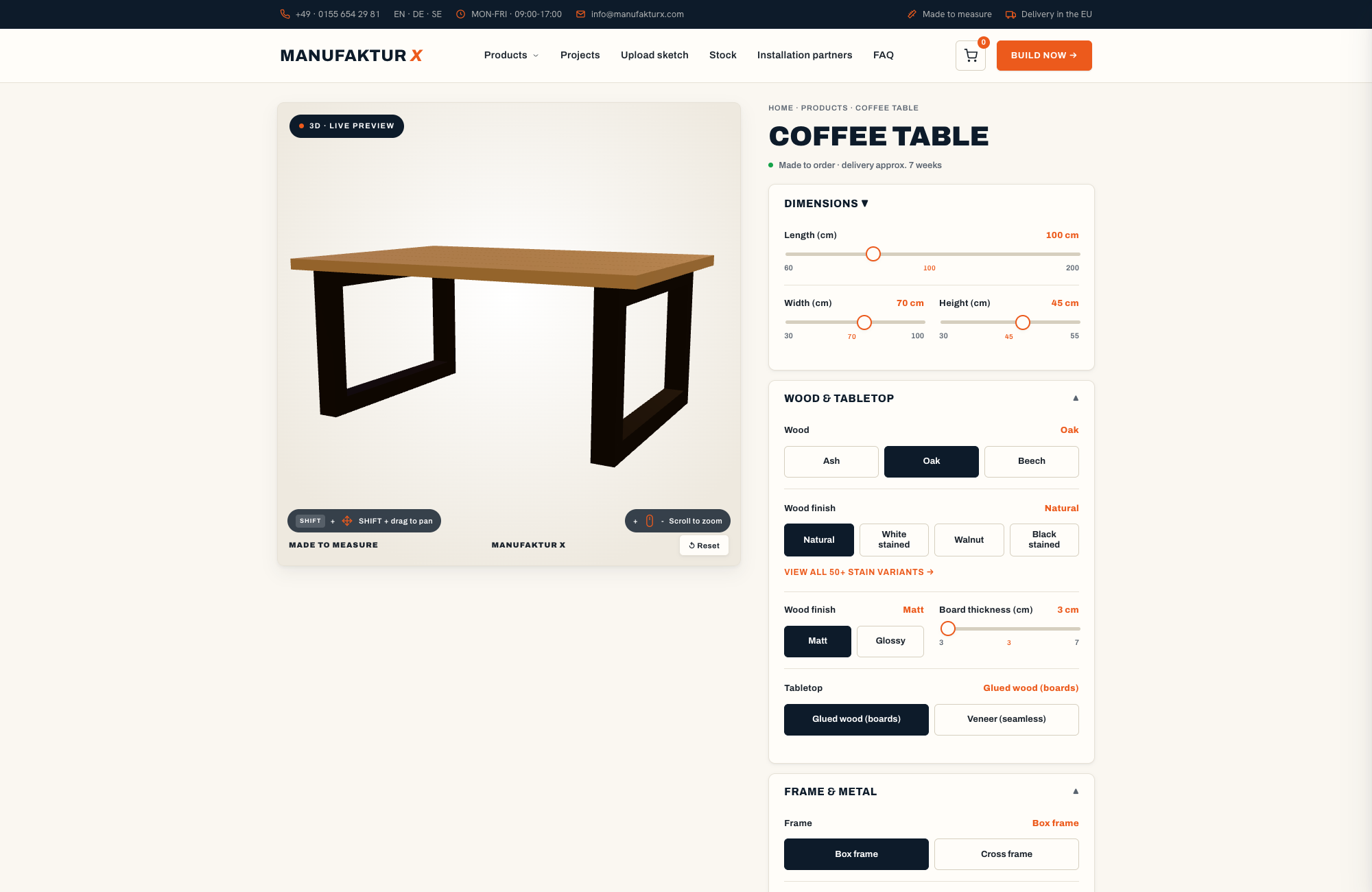
The 3D configurator works with rectangular forms as the default. Round, oval, or otherwise shaped tables can be requested by submitting a sketch - Manufaktur X will assess feasibility and provide a custom quote. For the large shelf, you can specify the number of shelves, their depth, and whether to include optional wooden cabinet sections. The pipe shelf puts its own steel tube structure on show as a deliberate design element, which is why it suits industrial or loft interiors particularly well.
How the Configuration Process Works
The process is straightforward and fully transparent. You see the price update in real time as you configure - there are no hidden charges revealed at checkout.
Step 1: Measure Your Space Carefully
Measure at multiple points before you open the configurator. British period properties in particular - Victorian terraces, Edwardian semis, 1930s semis - have walls and floors that are rarely perfectly plumb or level. Deviations of several millimetres across a wall are normal, not exceptional. Always work from the smallest measurement you record.
For a loft door, add one further step: allow approximately 5 mm clearance on each side (left, right, and top) so the door can be set and adjusted correctly during installation. Forgetting the installation gap is one of the two most common reasons a custom door does not fit - the other is measuring only once. You enter your exact desired dimensions into the configurator, not a construction-opening measurement.
Step 2: Configure in the 3D Tool
The 3D configurator shows every change in real time - visually and in price. Switch timber species, adjust the stain, change the RAL colour on the frame, alter the dimensions: every change is reflected instantly in both the preview and the displayed price. Delivery costs and lead times are shown transparently in the basket before you commit to an order.
Production is to your exact specifications. Check every dimension once more before placing your order - there is no adjustment possible once manufacturing has begun.
Step 3: Non-Standard Requests - Submit a Sketch
If what you have in mind goes beyond the configurator's options - an unusual shape, a combined element, a bespoke construction - you can upload a sketch for review. Manufaktur X will assess whether it is achievable and respond with a quote. If the design cannot be produced as described, you will be offered alternatives or the option to step back from the purchase entirely.
Submit a sketch: manufakturx.co.uk
Step 4: Production and Delivery to the UK
Every piece is produced as an individual, handcrafted item - not taken from stock. Production takes 5 to 6 weeks. Manufaktur X handles delivery across the UK with all customs duties and import costs included, so the price you see is the price you pay. Exact lead times and delivery costs are confirmed in the basket before you place your order.
Where Bespoke Furniture Makes the Most Difference
Dining Rooms and Living Spaces
The dining table is arguably the hardest piece of furniture to get right from a standard range. Too large and the room feels cramped; too small and the table looks lost. A table made to the exact dimensions of your dining room - accounting for the chimney breast, the radiator, the clearance you need to pull chairs out comfortably - solves a problem that browsing John Lewis or IKEA simply cannot. In the living room, a coffee table in solid hardwood and steel brings the same principle to a piece that is on show every day.
Open-Plan Kitchens and Through-Lounges
The open-plan through-lounge is one of the defining features of the British Victorian terrace, knocked through by successive owners over the decades. A loft door or room divider at the point where the two rooms meet gives you the flexibility to close off the space when you want it, while keeping the open feel the rest of the time. A room divider creates distinct zones without the expense or disruption of building a wall - no party wall agreements, no plastering, no repainting.
Alcoves and Chimney-Breast Recesses
Alcoves on either side of a chimney breast are one of the most common pain points in Victorian and Edwardian properties. Standard shelving is almost never the right width. A bespoke shelving unit from the large shelf or pipe shelf range, made to the precise width and height of your alcove, uses every centimetre of that recess purposefully.
Loft Conversions and Rooms with Sloped Ceilings
Loft conversions frequently produce spaces where standard-height doors are the wrong size for the opening, or where a room divider needs to follow a slope. Custom dimensions solve this directly. A loft door made to the exact height of a converted attic opening avoids the awkward gap at the top that a standard door would leave.
Costs and What Affects the Price
Bespoke furniture costs more than flat-pack. That is simply true. The relevant comparison is not the purchase price in isolation but what you get over time: a well-made piece in hardwood and powder-coated steel will still be in good condition twenty or thirty years from now. A flat-pack equivalent will not.
Pricing Transparency and Starting Points
The loft door starts from £1,157 in its most basic configuration (price correct at time of writing - use the configurator for current pricing in GBP). Every option you change is reflected immediately in the displayed price, so you are never presented with an unexpected total at checkout.
Current starting prices for all products:
| Product | From | Note |
|---|---|---|
| Lofttür | £995 | Lowest possible option |
| Raumteiler | £1.900 | Steel + laminated glass, custom width |
| Großes Regal | £2.750 | Solid wood, steel frame, floor-to-ceiling |
| Esstisch | £1.360 | Solid wood, steel frame |
| Couchtisch | £995 | Solid wood, steel frame |
| Sitzbank | £945 | Solid wood, steel frame |
| TV-Board | £1.325 | Solid wood, steel frame |
| Rohrregal | £915 | Modular pipe shelf |
What Drives the Price Up or Down
- Timber species: All three hardwoods (oak, beech, ash) are priced comparably. Your choice affects the look, not primarily the cost.
- Dimensions: Larger pieces require more material and more production time. This is the single biggest variable in most configurations.
- Frame complexity: More intricate steel structures take longer to fabricate and weld.
- Glass type (loft doors and room dividers): VSG laminated glass is slightly more involved to produce than ESG toughened glass but is the right choice for larger formats.
- RAL colour: Any colour in the palette is available at no extra charge.
A practical approach: prioritise the material quality decisions - timber species, glass type, steel gauge - and be more flexible on dimensions if budget is a constraint. The core material choices determine how the piece ages.
Caring for Solid Wood and Powder-Coated Steel
Both materials are low-maintenance in normal use, but they each have specific requirements worth knowing before the piece arrives.
Looking After Your Solid Wood Surface
- Wipe down regularly with a soft, slightly damp microfibre cloth.
- Deal with spills immediately - do not let liquids sit on the surface and soak in.
- Keep the piece away from direct sunlight and heat sources where possible. Both cause solid wood to expand, contract, and eventually crack or warp over time.
- Oil or wax the surface once a year using a product designed for hardwood furniture. This keeps the wood nourished and resistant to moisture ingress.
- Use coasters under glasses and trivets under hot dishes - hardwood is tough but not impervious to heat rings.
Maintaining Powder-Coated Steel
- Wipe with a dry or slightly damp cloth. The powder-coated finish is durable under normal cleaning.
- If the coating is chipped or scratched, address it promptly - exposed steel can begin to rust in a damp British home.
- Avoid abrasive cleaners, bleach, or anything acidic - these will degrade the powder-coated finish over time.
- A dedicated metal polish can restore the surface sheen if needed.
Common Mistakes When Ordering Custom Furniture - and How to Avoid Them
- Measuring only once: Measure at several points across the wall or floor. British period properties are rarely perfectly square. Always use the smallest measurement as your working figure.
- Forgetting the installation clearance for a loft door: Deduct approximately 5 mm per side (left, right, top) from your smallest measurement for the installation gap.
- Underestimating the lead time: Each piece is individually handcrafted. Production takes 5 to 6 weeks. If you are ordering ahead of a move, a renovation, or a specific date, factor this in early.
- Entering dimensions carelessly in the configurator: Production is to your exact inputs. Check every measurement before confirming your order.
- Choosing ESG for a very large loft door or room divider: At larger heights and widths, VSG laminated glass is the safer and more stable choice. The configurator and product pages include guidance on this.
Frequently Asked Questions
Which wood species does Manufaktur X use?
Only three solid hardwoods: oak, beech, and ash. No other species are available, and no softwoods, veneers, or board materials are used. More than 50 stain finishes let you adjust the final colour substantially within your chosen timber.
Are the tabletops and bench seats always solid wood?
Dining tables, coffee tables, and benches are available with either a solid glued-wood top or a veneered top - both options use genuine hardwood (oak, beech, or ash). Shelves in the large shelf and pipe shelf ranges are always solid wood. The configurator will show you which option applies to your chosen product.
Can I order a round dining table?
The configurator handles rectangular shapes as standard. For round, oval, or other non-rectangular forms, submit a sketch via the Manufaktur X website. The team will confirm feasibility and provide a custom quote. If the design is not achievable, you will be offered alternatives or the option to cancel.
What is the difference between a loft door and a room divider?
A loft door is a functioning door - it has hinges, a chosen hinge side, an opening direction, and a handle. A room divider is a fixed steel and glass partition with none of those elements. It does not move and has no door hardware. An open walkthrough passage can be incorporated into a room divider design if required.
What glass types are available for loft doors and room dividers?
There are five glass designs: clear, frosted, smoked, dark smoked, and textured. Separately, you choose the glass type - ESG (toughened) or VSG (laminated). For larger panels, VSG is recommended for additional stability and safety.
How do I measure correctly for a bespoke piece?
Measure at three or four points across the relevant wall, floor, or opening. Take the smallest figure as your working measurement. For a loft door, subtract approximately 5 mm per side (left, right, and top) from that smallest figure to allow for the installation gap. Enter your exact desired final dimensions into the configurator - not the raw opening measurement.
Does Manufaktur X deliver to the UK, and are customs costs included?
Yes. Manufaktur X delivers across the UK. All customs duties and import costs are handled and included - the price you see at checkout is the total price. No unexpected charges on delivery.
How long does production take?
Every piece is made individually by hand. Production takes 5 to 6 weeks. The exact lead time and delivery cost are shown in the basket before you place your order.
Can I submit a sketch for a non-standard design?
Yes. Use the sketch submission option on the Manufaktur X website. The team reviews your design and responds with a quote. If the design cannot be produced as described, you will be offered alternatives or the option to withdraw from the purchase.
Configure Your Piece
Choose your product, enter your exact dimensions, select your timber species, stain, and RAL colour for the frame - and, for loft doors and room dividers, your glass design and type. The 3D configurator shows the result and the price in real time, with no hidden costs and no surprises at checkout.
Browse all products and open the configurator at manufakturx.co.uk. If you have a question before ordering, the team is reachable via the contact page. Further guidance is available in the FAQ section.