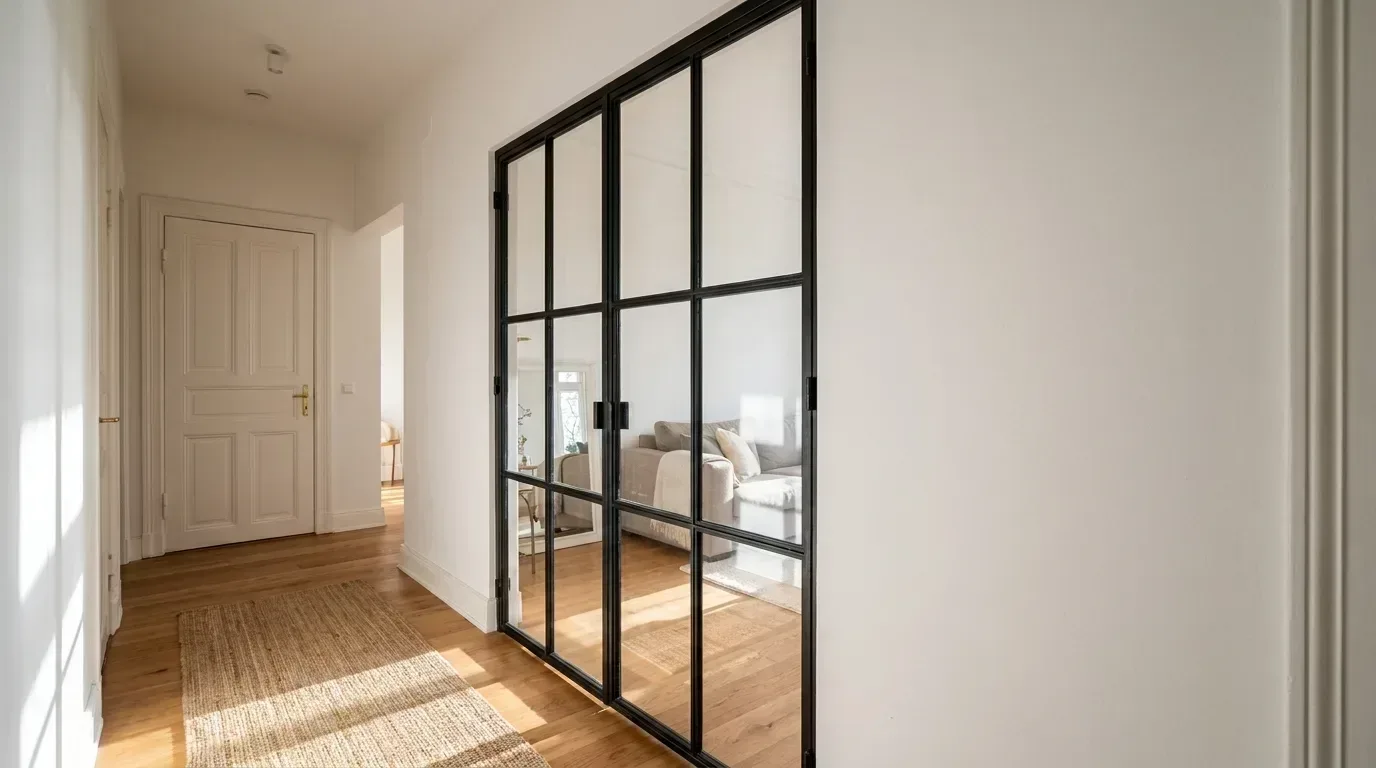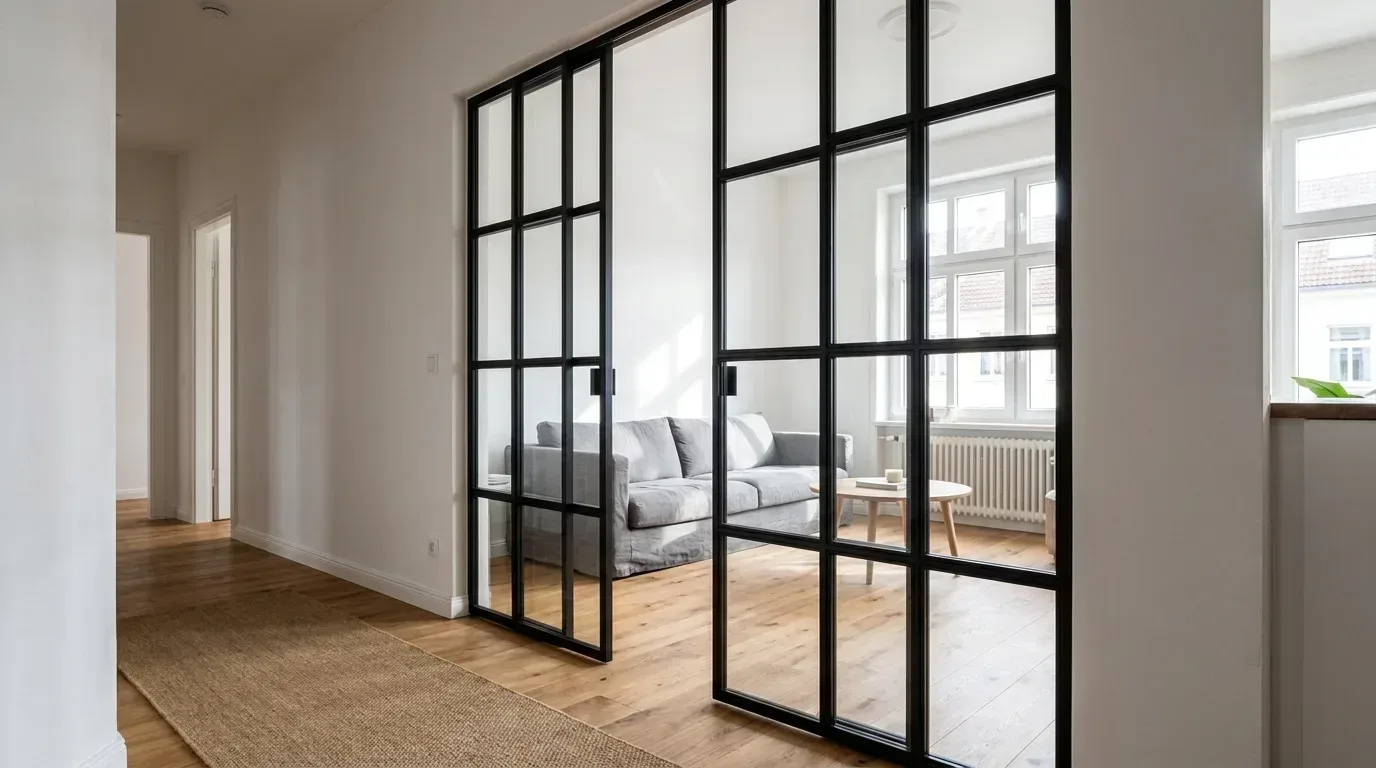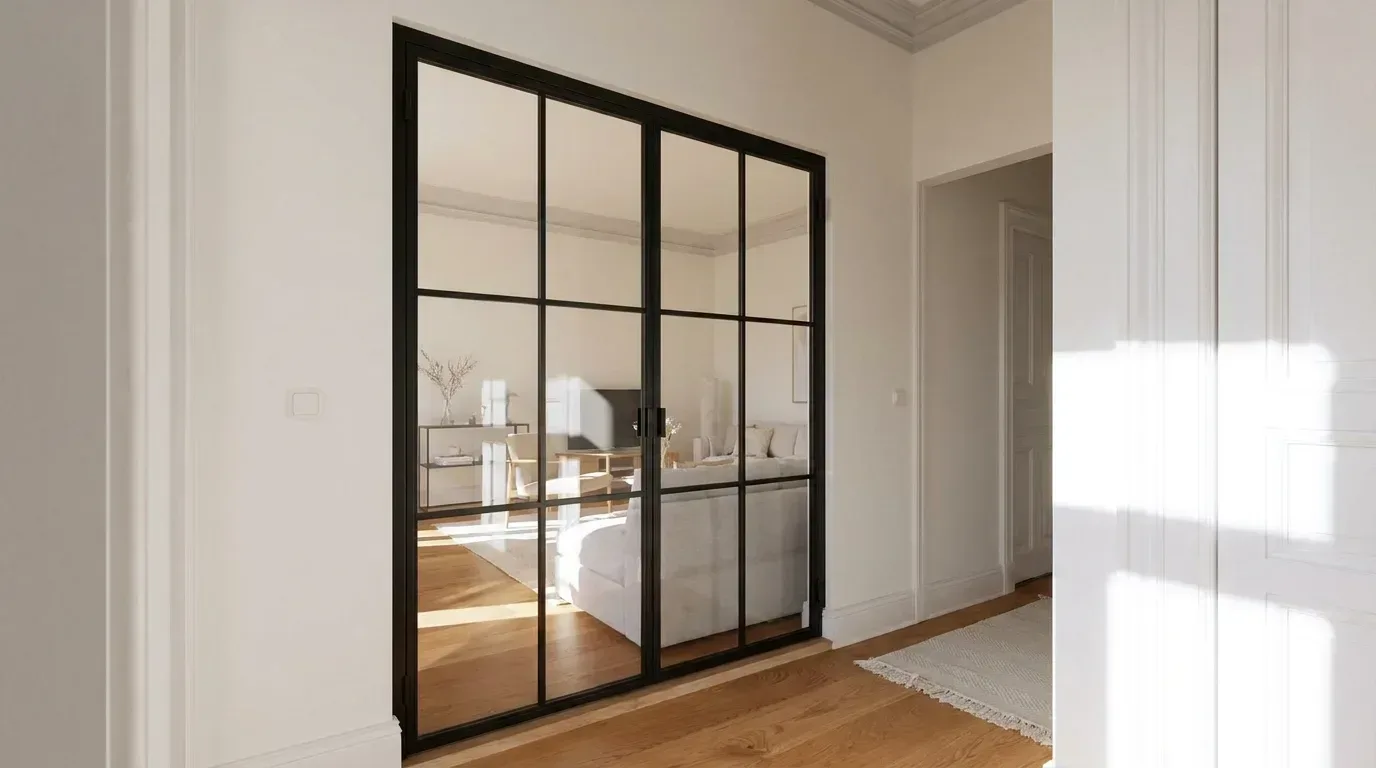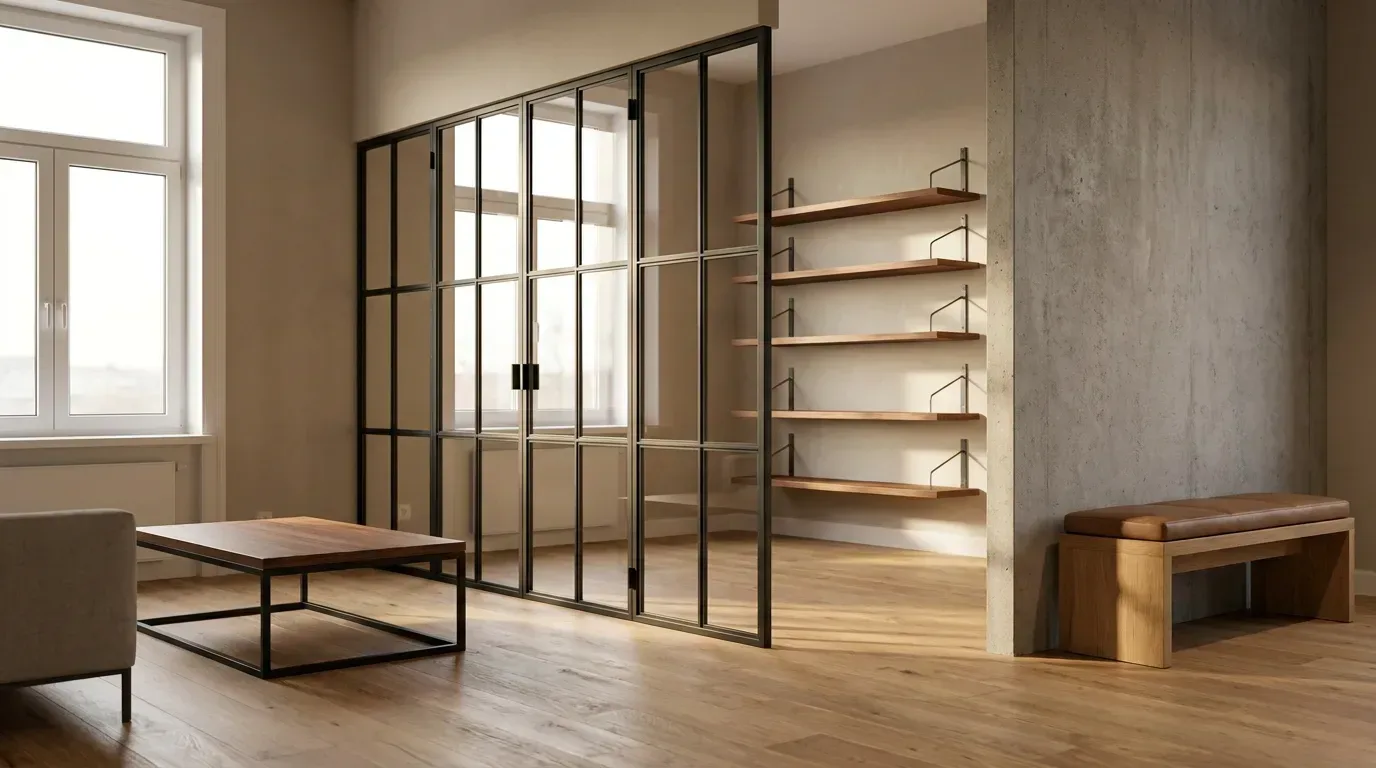
Picking the right fixing for a loft door is less about personal taste and more about what your steel frame will actually accept. Profile depth, glass type, and which side of the door needs to operate all determine which solution is technically feasible. This guide walks through the three main fixing categories - slide bolts, magnetic catches, and keyed locks - explains what the steel frame dictates, and gives realistic price ranges so you can make an informed decision before ordering or retrofitting.
Three Fixing Categories - and When Each One Makes Sense
Slide Bolts: Privacy Without a Security Requirement
A powder-coated slide bolt is the most straightforward way to secure a loft door. It does the job wherever a key is not needed: bathrooms, dressing rooms, and utility spaces are the classic applications. A slide bolt prevents the door from swinging open accidentally - from a draught or a curious child pushing through - but it offers no protection against unauthorised entry, because it cannot be operated from the other side.
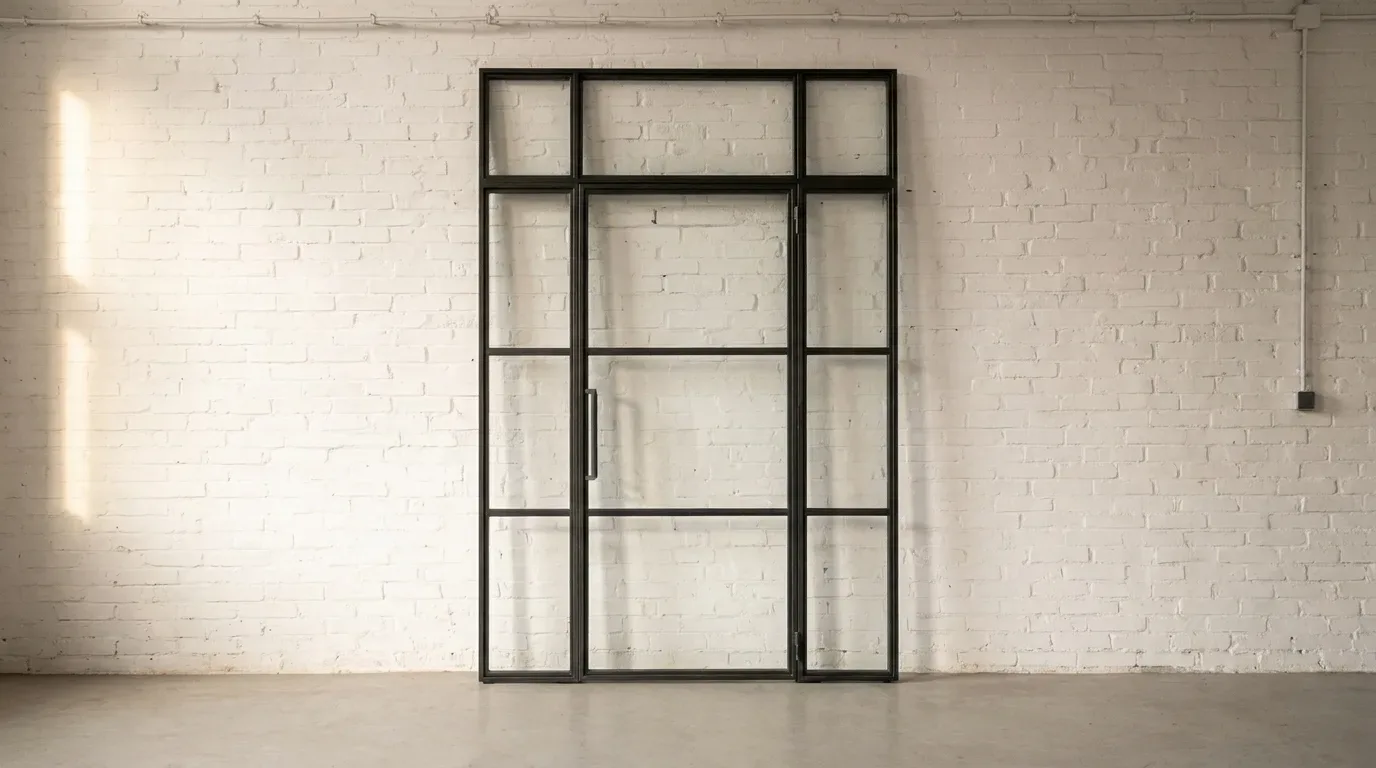
The bolt mounts to the steel frame only - never to the glass. This requires M5 or M6 threaded holes in the profile. In our production process, these are drilled and tapped at the manufacturing stage, before the frame leaves the workshop. Anyone looking to add a bolt to an existing door should check the wall thickness of the hollow section at the intended mounting point first. On hollow profiles thinner than 2 mm, a cut thread will not hold reliably under repeated use - the correct solution is a welded insert nut, which a local metalworker can fit. Powder-coated black slide bolts suitable for steel frames are available from specialist ironmongery suppliers; the cheaper zinc-plated versions found at DIY sheds sit awkwardly next to a RAL 9005 powder-coated frame.
Magnetic Catches: Silent Closing in Open-Plan Spaces
For loft doors used as room dividers between a kitchen and living area - the kind of layout common in Victorian terrace conversions and open-plan new-build flats - a magnetic catch is the cleanest technical solution. There is no visible mechanism, no audible click, and no risk of scratching the frame finish. The one thing that catches people out is holding force. A figure that comes up repeatedly among hardware specialists is that magnetic catches are routinely specified below the minimum useful threshold for interior doors:
"Magnetic catches have established themselves in open-plan living concepts because they close silently and require no visible mechanism - but their holding force is systematically underestimated: below 8 kg, a magnetic catch is not a reliable solution for interior doors in everyday use."
Thomas Weidner, Hardware Technology Specialist, Häfele GmbH - Professional presentation, BAU Munich 2023
For loft door leaves weighing 60 kg or more, 8 kg holding force is the practical lower limit - anything less and the leaf will drift or bang open when a sash window is raised nearby. Magnetic catches are available in holding-force ratings from 3 kg up to 25 kg (Häfele product data, 2023). Design versions in matt black or brushed stainless are available from specialist suppliers; basic versions typically deliver only 3-5 kg and are not suitable for heavy leaves.
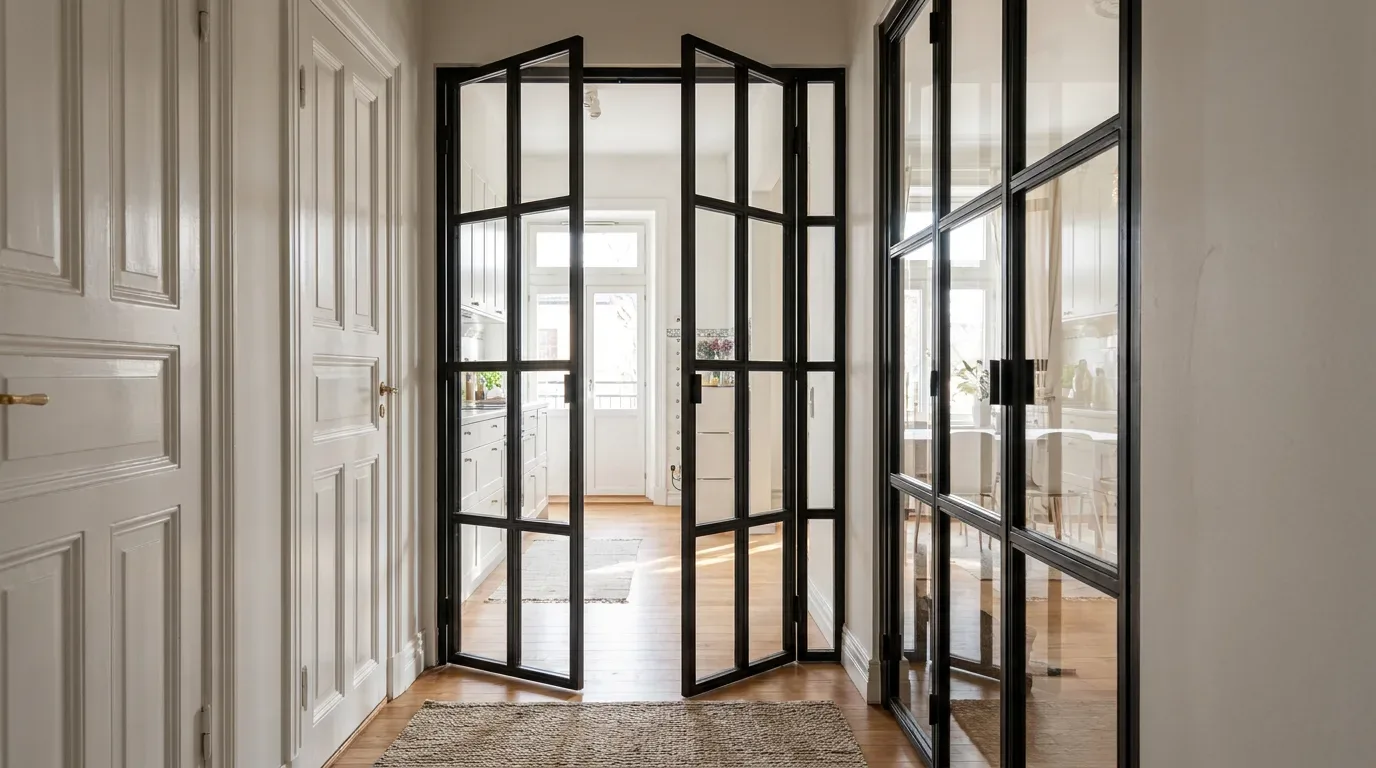
On pivot loft doors - where there is no continuous rebate around the frame perimeter - a magnetic catch is often the only viable option. A conventional slide bolt or mortise lock both require a fixed striker plate on the door lining, which pivot constructions do not have by design. One approach for wider pivot doors is to combine concealed flush bolts top and bottom (securing the leaf to floor and head beam) with a magnetic catch that handles the everyday hold - the bolts provide the structural anchor, the magnet handles day-to-day closing.
Keyed Locks: When a Cylinder Becomes Necessary
A lock cylinder is needed as soon as access control matters. In UK residential property, a home office used exclusively for work and claimed against tax typically needs to be capable of being locked - HMRC guidance on dedicated work spaces implies a level of separation that a simple slide bolt (operable from outside with a credit card or thin object) may not satisfy. The practical solution is either a mortise lock or a rim lock with a key cylinder, chosen based on the profile depth available - more on this in the steel frame section below.
Technically, two lock formats are available: the mortise lock, which sits recessed inside the steel profile's lock pocket, and the rim lock, which mounts on the face of the profile. Which is possible depends entirely on one measurement - the profile depth at the intended lock position.
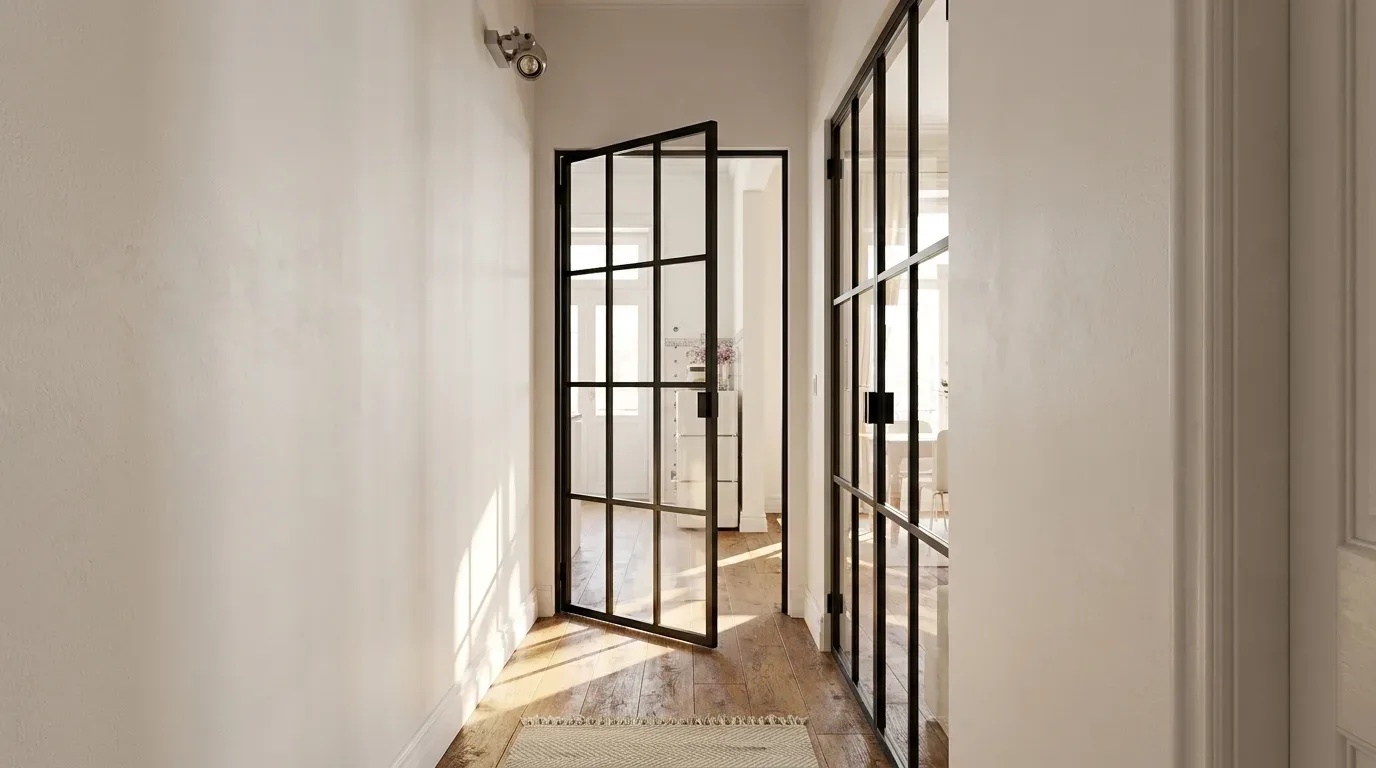
Multi-Point Locking: Consistent Closure Across the Full Door Height
Where a loft door separates a bedroom or home studio and consistent, even closure matters, a single bolt or magnetic catch is not enough on its own. The key factor is how evenly the leaf is pressed against a continuous seal - typically a compression seal running around the rebate. A multi-point lock with bolts at the top and bottom of the leaf, plus a main latch at mid-height, distributes that closing pressure evenly across the full door height rather than concentrating it at one point.
The numbers from a home-studio installation make the difference concrete: a loft door fitted with VSG glass, a multi-point lock, and a lever-and-knob handle set in RAL 7021 (dark grey) only reached its target acoustic performance in combination with a continuous compression seal. Without the seal, the measured value fell well short of the target despite the multi-point lock being correctly fitted. The lesson: the lock and the sealing system need to be designed together from the outset. Retrofitting a compression seal after the frame is installed is technically difficult and often not possible without removing the door.
Loft Door Handle Options: Pull Bar, D-Handle and Escutcheon Set
Pull Bars: Proportion and Ceiling Height
A long pull bar is the most frequently chosen handle format for loft doors in an industrial aesthetic. Available from 300 mm up to floor-to-ceiling lengths of 1,000-2,000 mm, pull bars fix exclusively to the steel frame - never to the glass. The length should be chosen in proportion to both the door height and the ceiling height of the room.
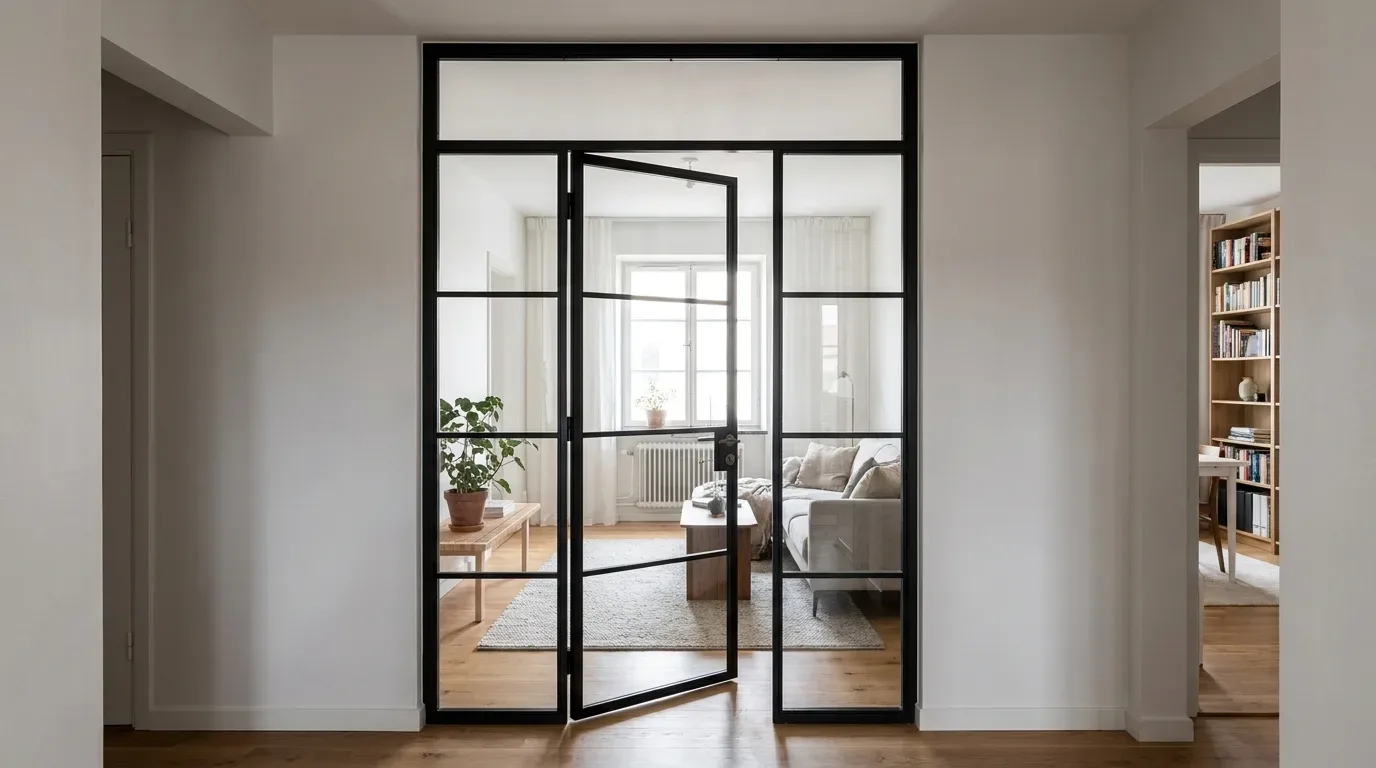
In a Victorian terrace or Edwardian semi with original ceiling heights around 2.7-2.9 m, a pull bar under 400 mm can look undersized and interrupt the vertical line of the frame. From 600 mm upwards the bar reads as a deliberate design statement. Floor-to-ceiling pulls work best on doors from 2,400 mm in height. In a period conversion with high ceilings - the kind of former warehouse or commercial building increasingly found in cities like Manchester, Leeds, or Bristol - a 1,200 mm pull bar in RAL 9005 alongside a magnetic catch at 8 kg holding force is a clean solution: strong visual impact, reliable closing, no audible clatter.
Pull bars attach via two or more threaded holes in the steel profile. The centre-to-centre fixing distance - the hole spacing - must be confirmed before ordering, because this is not the same as the overall bar length. Standard spacings are 300 mm, 400 mm, and 500 mm; a bar specified with the wrong spacing simply cannot be fitted to an existing frame. In our workshop, fixing positions and hole spacings are confirmed in writing before production begins, so there is no ambiguity when the door arrives on site. Powder-coated steel pull bars are available in the 300-600 mm range, with floor-to-ceiling versions also available from specialist suppliers.
D-Handles: Frame-Mounted, No Glass Drilling Required
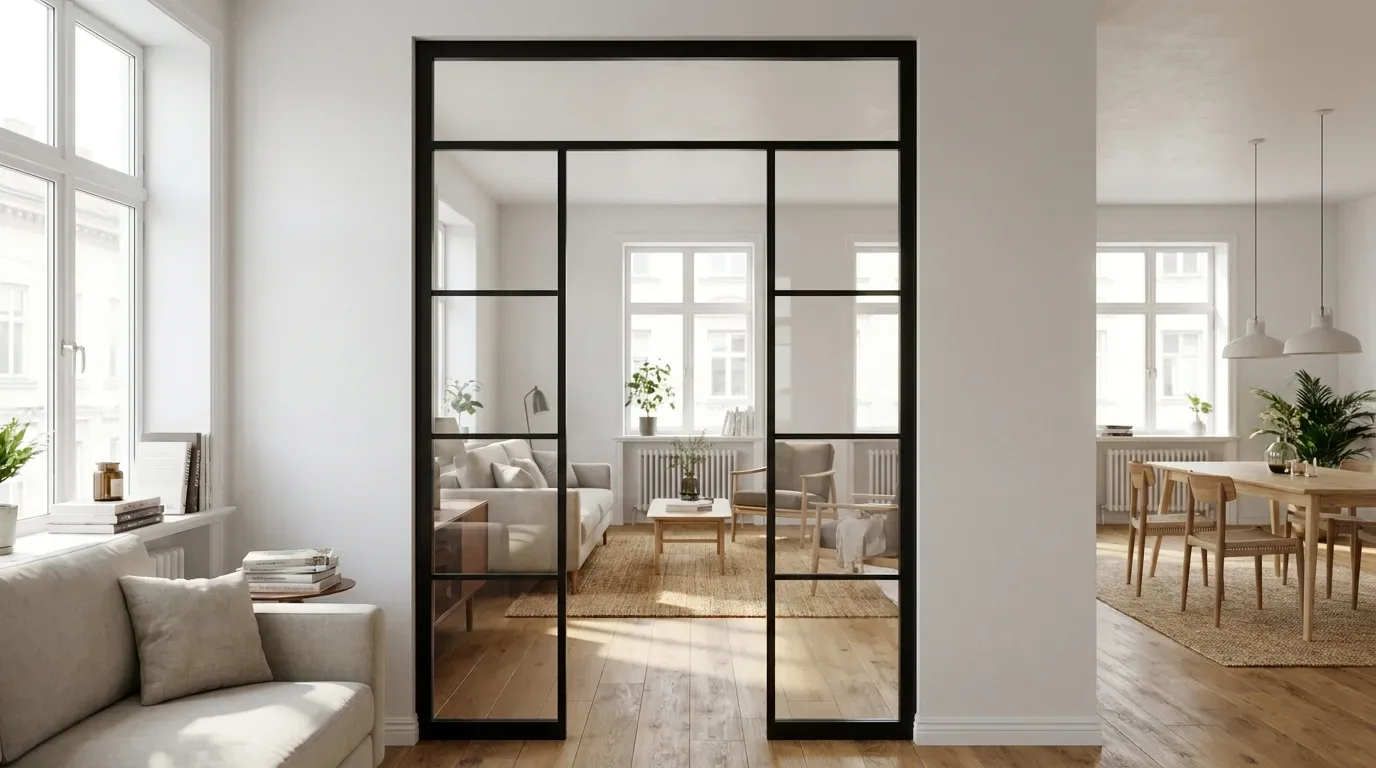
The D-handle - sometimes called a bow handle or half-moon pull - mounts entirely on the steel frame and requires no through-drilling of the glass. On a loft door with a glass insert, this is a significant practical advantage that is easy to overlook at the planning stage. Because drilling toughened safety glass (ESG) after the tempering process is physically impossible - the internal stress built up during tempering means any post-process notch will cause the pane to shatter instantly - a frame-mounted D-handle is the only handle format that can be added retrospectively without replacing the glass panel.
This matters particularly in 1930s semi-detached conversions or Edwardian properties where a loft door might be added to an existing frame. A door with an oak panel insert rather than glass, fitted with a D-handle in burnished brass alongside a concealed slide bolt, shows how the same steel frame concept shifts register entirely from industrial to residential - same structural logic, completely different atmosphere. D-handles are available in powder-coated black steel, brushed or polished stainless steel, and burnished brass from specialist ironmongery suppliers.
Escutcheon Sets: Lever, Rose and Cylinder in One Unit
An escutcheon set combines the lever handle, back plate, and lock cylinder into a single continuous plate, reducing the number of visible fixing points to a minimum. Compared with separately mounted components - lever, rose, cylinder guard - the escutcheon reads as quieter and more resolved. On a door with a narrow steel profile, it is often the only way to accommodate all the required functions within the available surface area.
"The combination of an escutcheon plate and integrated cylinder is the most design-consistent solution for loft doors in an industrial aesthetic - it reduces the number of visible fixing points to a minimum."
Sandra Koch, Product Designer, Griffwerk GmbH - Product Catalogue 2024
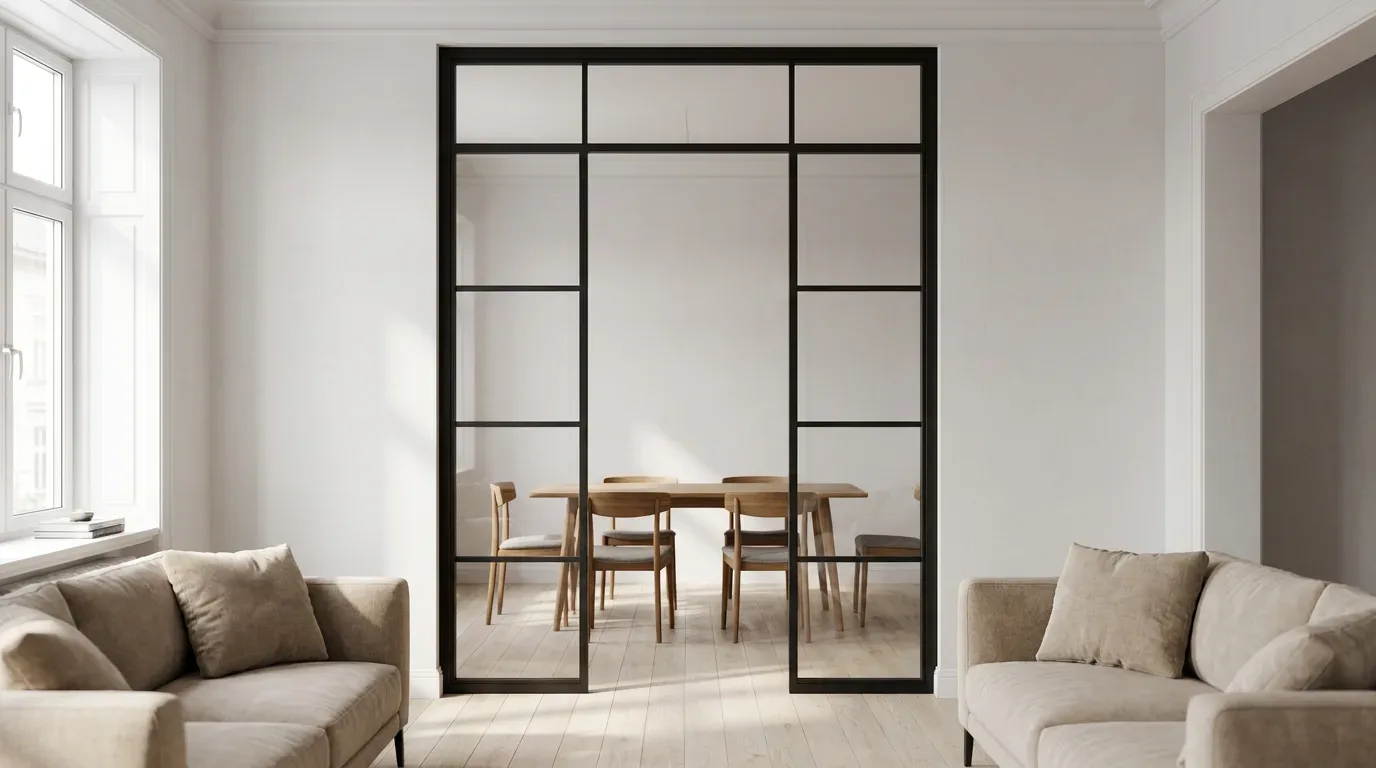
For a loft door used as a room divider with two-sided operation, a through-escutcheon - carrying a lever on both faces - is the correct choice: it allows the door to be operated from either side without a second separately mounted handle. The standard fixing dimension between lever spindle and cylinder centre (PZ measurement: 72 mm) is an industry norm, but must be matched to the lock you specify. Escutcheon sets in the design segment, matt black, are available from specialist suppliers depending on manufacturer.
Ergonomics and Weight: Handle Choice on Heavy Leaves
A handle bar diameter of 30-40 mm sits noticeably more comfortably in the hand than a flat pressed-metal pull under 15 mm thick - especially on a heavy leaf that requires some effort to move. On leaves above 80 kg, the handle itself should weigh under 800 g so it does not add unnecessary load to the hinges. Full solid-steel pull bars in floor-to-ceiling lengths can weigh 600-1,200 g depending on diameter and length. On a leaf near the 80 kg threshold, checking the manufacturer's weight specification before ordering is a practical step, not a formality.
What the Steel Frame Determines: Measurements and Installation
Centre-to-Centre Spacing: Overall Length Is Not the Same as Hole Spacing
The single most common ordering mistake with pull bars is confusing the overall bar length with the centre-to-centre fixing distance. A 600 mm bar may have a fixing spacing of 300 mm, 400 mm, or 500 mm depending on the manufacturer - and these three spacings are not interchangeable. Order the wrong spacing and the bar cannot be fitted, because the holes in the steel frame will not align with the fixing points on the bar. The result is a return, a reorder, and a delay on site.
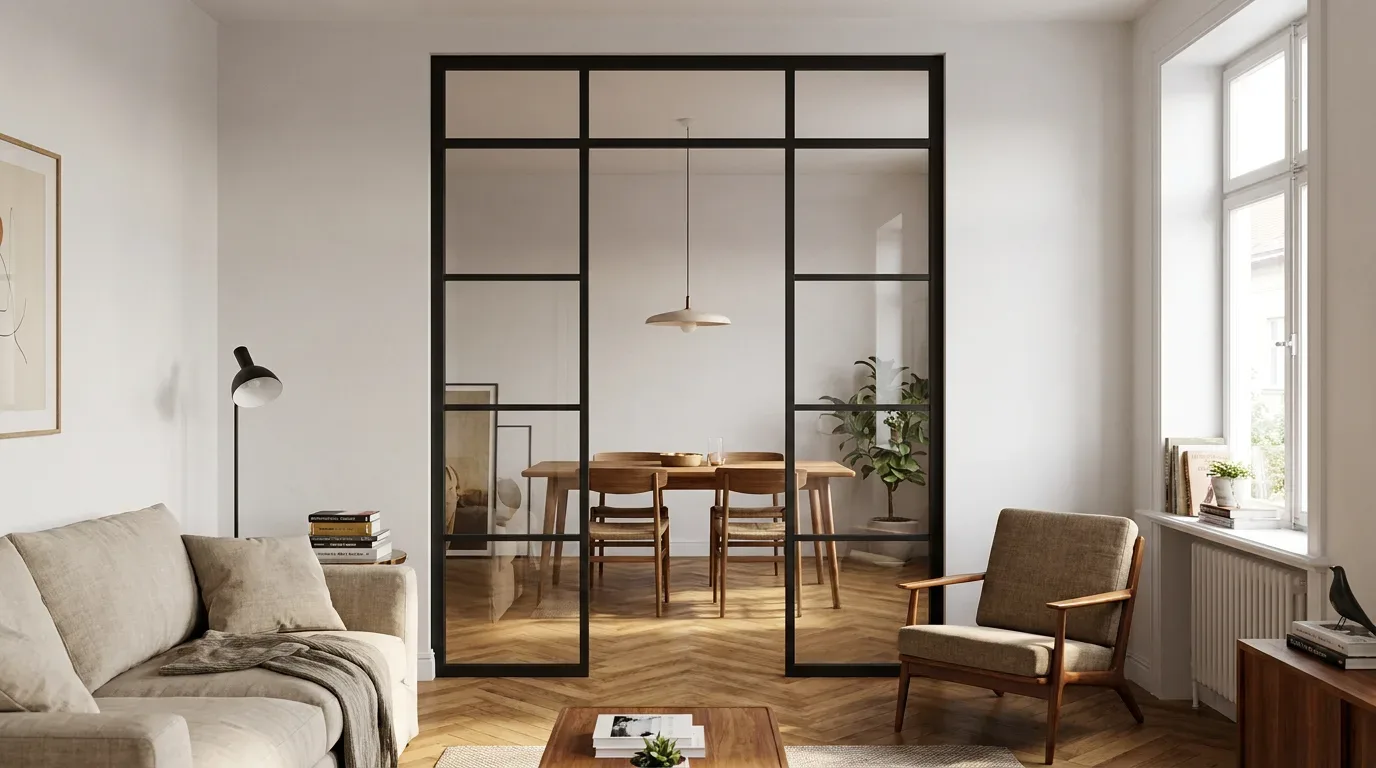
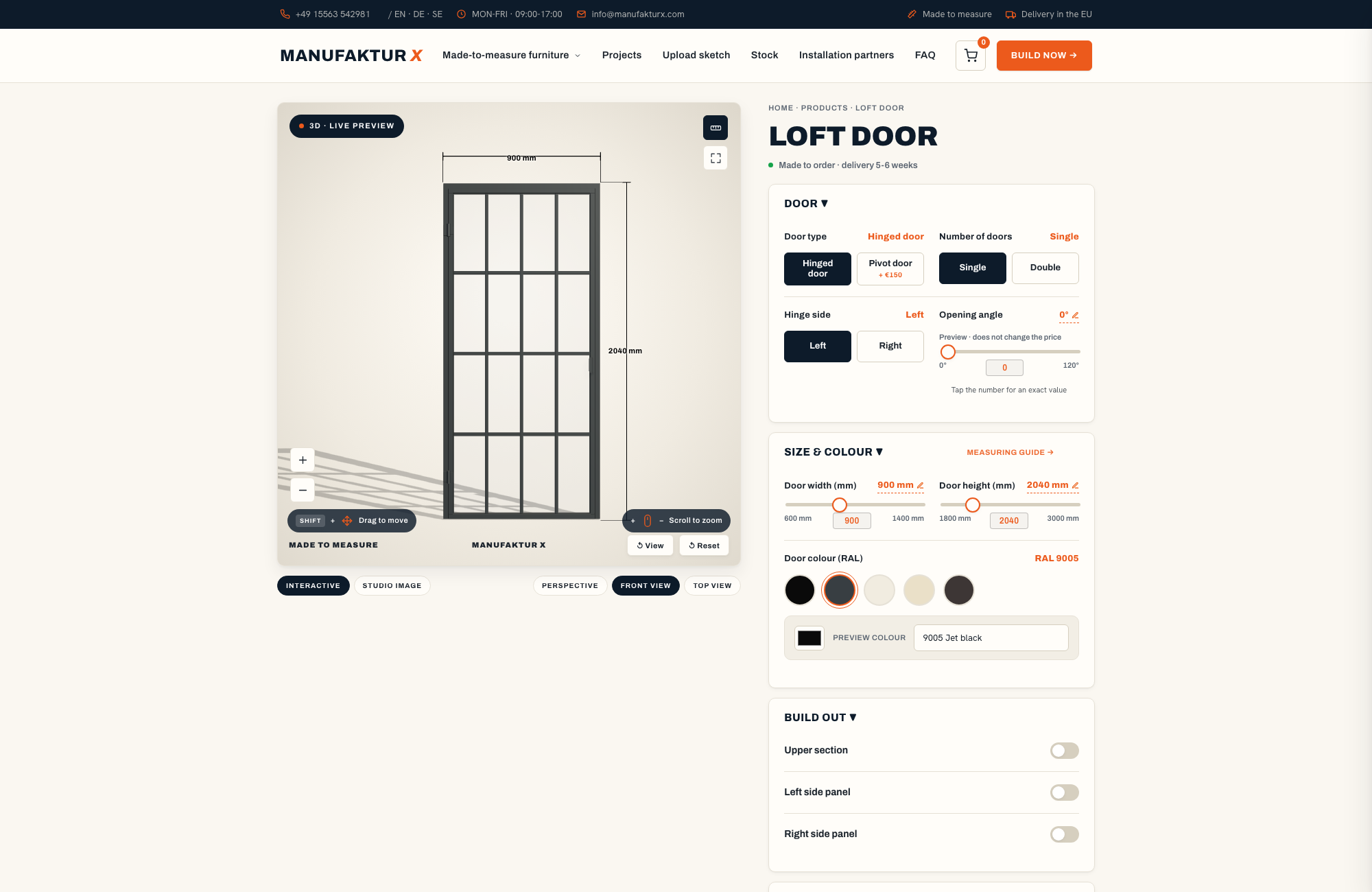
Before ordering, measure the existing hole spacing in your steel frame with a vernier calliper - centre of hole to centre of hole, not edge to edge. If you are ordering a new door from Manufaktur X and have not yet decided on a handle, specify the desired fixing spacing in the configuration at the time of order, so the threaded holes are drilled at the correct positions in the workshop before the frame is powder-coated. Production takes 5-6 weeks; changes to hole positions after production has started are not possible within that window.
Profile Depth and Lock Pocket: What Is Structurally Feasible
Whether a mortise lock will fit inside your steel frame comes down to a single measurement: the profile depth at the intended lock position. A standard mortise lock requires a pocket depth of at least 35-40 mm. At shallower depths the bolt throw cannot extend far enough to engage the striker reliably, and the lock body itself will not sit flush. As one specialist in steel and glass construction has noted:
"In steel-and-glass residential construction, hardware planning is not an afterthought - it is part of the structural logic: every hole drilled in a profile reduces its cross-section, and that has to be calculated in from the start."
Dipl.-Ing. Markus Fehr, Master Metalworker - Metallbau-Magazin, Issue 02/2024
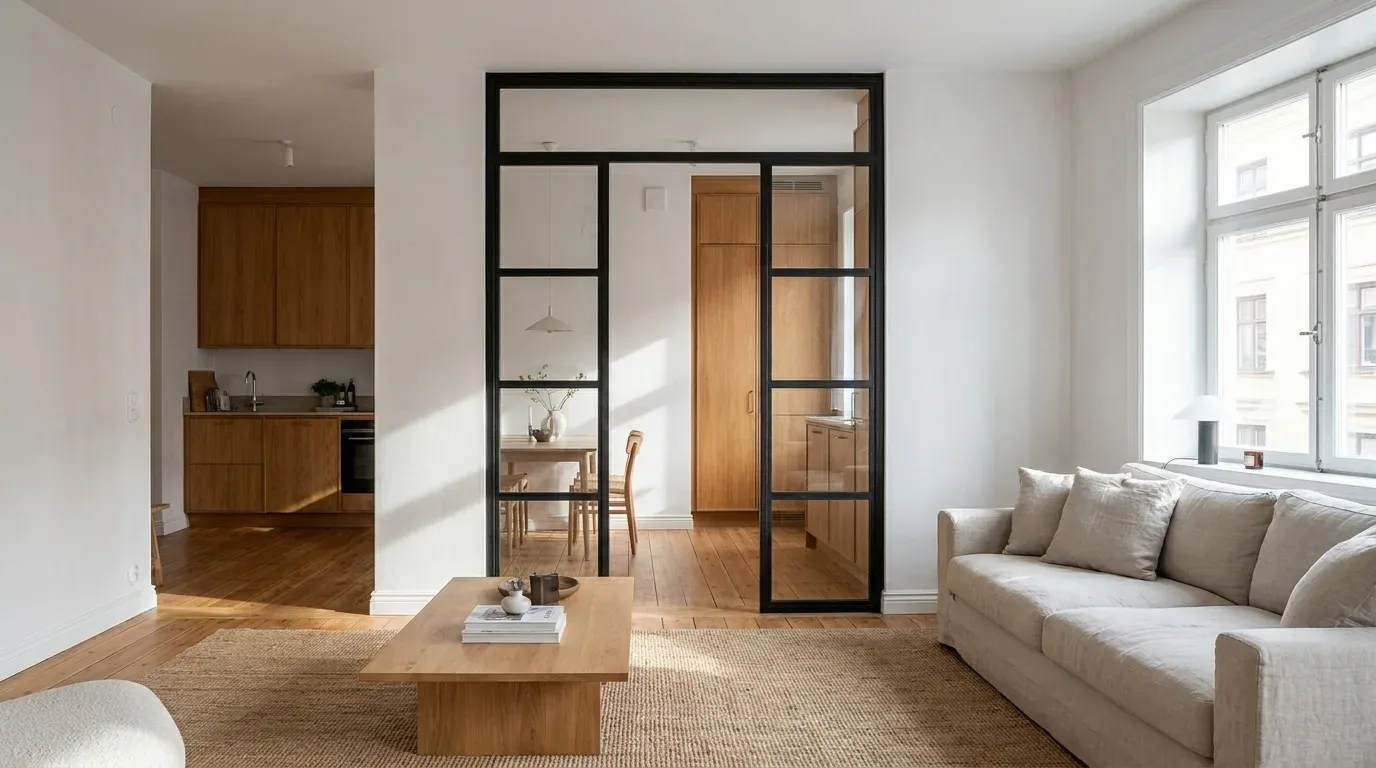
If your profile depth measures less than 35 mm, a mortise lock is ruled out. The straightforward alternative is a rim lock, which mounts on the face of the profile without any milling. It is visible, but functionally equivalent - and on slender steel profiles in a loft or industrial-style interior, a surface-mounted lock is an accepted and widely used approach. A wine bar conversion in a Victorian railway arch, for instance, used exactly this solution: a rim lock on a 28 mm profile, with a brushed stainless escutcheon chosen as a deliberate contrast to the black powder-coated frame.
Safety Glass: All Drilling Must Happen Before Toughening
ESG toughened safety glass has a bending tensile strength of at least 120 N/mm² - compared with roughly 45 N/mm² for standard float glass. That internal stress is what makes it robust against impact, but it also means any notch or hole introduced after the toughening process causes the pane to disintegrate completely. There is no partial drilling of toughened glass. Every hole for a handle, fitting, or fixing point must be specified and drilled before the glass goes into the tempering oven.
The same principle applies to VSG laminated safety glass: in a 2 x 4 mm laminate with a 0.76 mm PVB interlayer, all holes must be planned before lamination. The practical consequence for handle selection is straightforward: on any loft door with a glass panel, all handle fixings must go through the steel frame - not the glass. When you configure a loft door with glass and want through-glass fittings, specify this in the 3D configurator and the holes will be drilled at the correct stage in production, before toughening.
Threaded Holes and Insert Nuts: Planning at the Manufacturing Stage
Fixing handles, bolts, or escutcheon plates to a steel profile requires either M5 or M6 threaded holes tapped directly into the section, or welded insert nuts. Both must be incorporated during manufacture. In our production facility, fixing positions and hole spacings are entered in the configurator and confirmed in writing before the frame goes into fabrication - they are welded, drilled, and powder-coated as a single sequence. Post-production tapping into a finished welded frame is slow work, risks damaging welds, and invariably costs more than planning the holes in the first place.
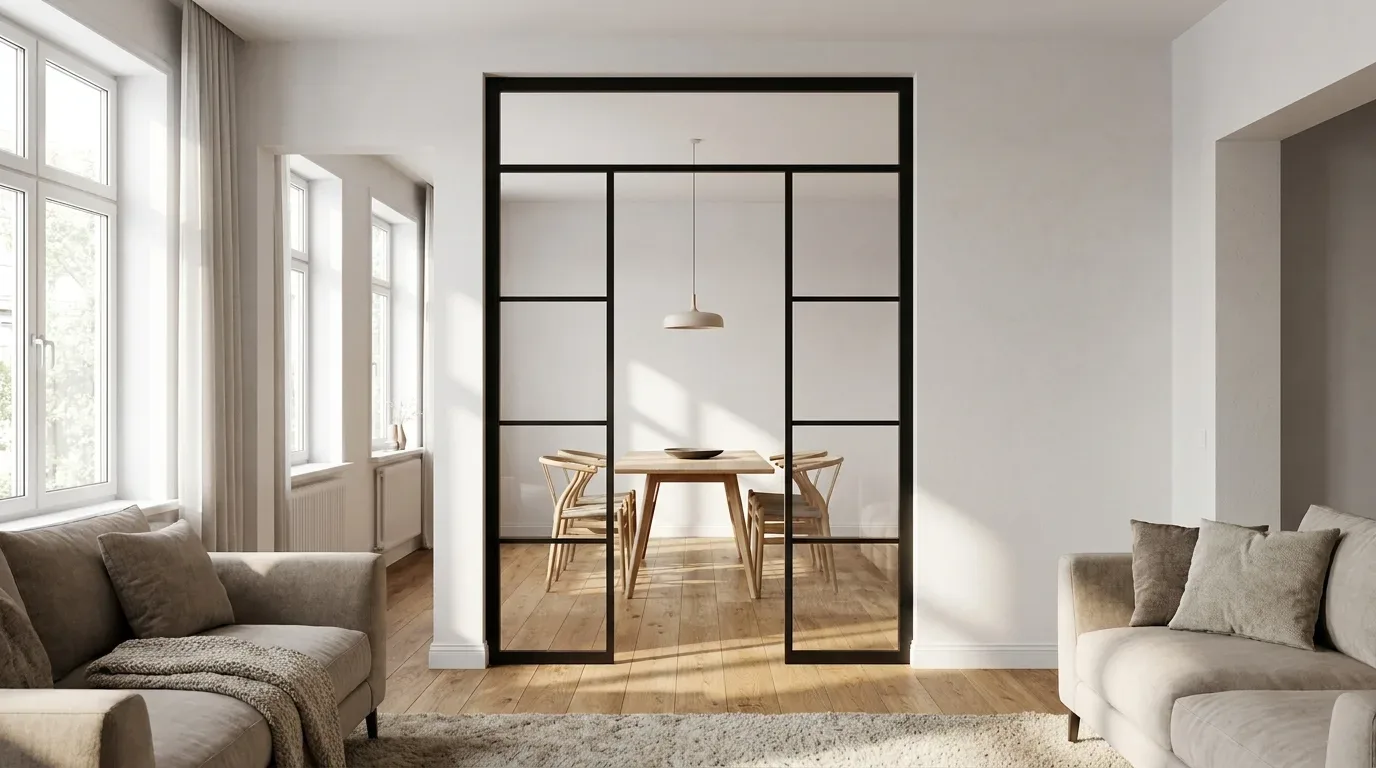
For anyone retrofitting fixings to an existing loft door, check the wall thickness of the hollow section at the mounting point with a vernier calliper. On hollow profiles thinner than 3 mm, a tapped thread will not carry a repeatedly loaded handle reliably. The correct approach is to have a local metalworker weld in an insert nut. As a direct manufacturer with EU production, Manufaktur X passes all hardware specifications straight to the workshop with no intermediary; customers who configure online at manufakturx.co.uk can specify fixing positions in the same session as dimensions and finish.
Adding a Lock to an Existing Loft Door: What Is Technically Possible
Checking Feasibility: Profile Depth First
Retrofitting a keyed lock is possible in many cases without replacing the door - provided the profile depth at the intended lock position is at least 40 mm. If that condition is met, a metalworker can mill the lock pocket and fit a mortise lock. Anyone who plans the lock pocket at the manufacturing stage avoids this cost entirely.
Where the profile depth falls short, the decision tree is straightforward:
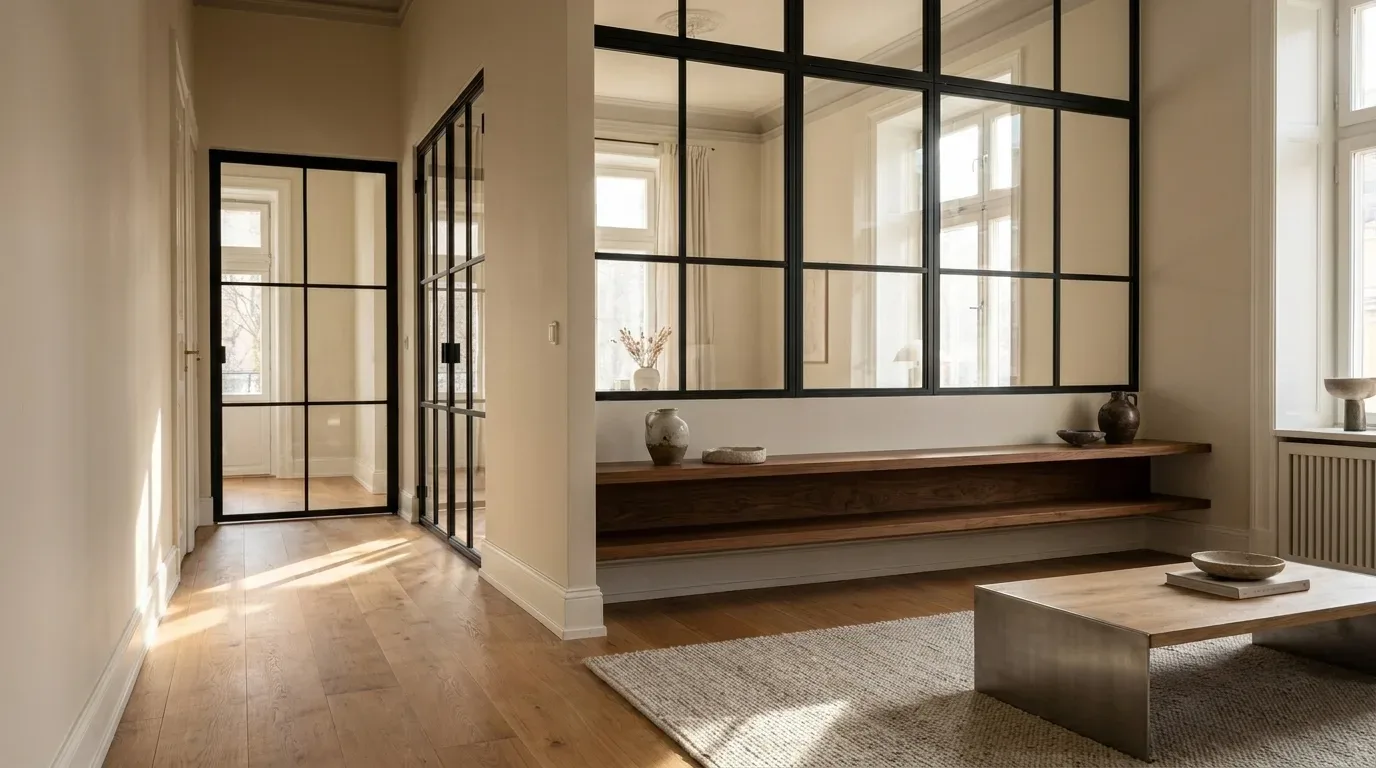
- Profile depth 40 mm or more: standard mortise lock is feasible
- Profile depth 35-39 mm: mortise lock requires a bespoke solution; rim lock recommended
- Profile depth below 35 mm: rim lock or magnetic bolt only
A period warehouse conversion in a northern English city - a loft door used as the entrance to a wine store within a Victorian railway arch - illustrates the rim lock approach in practice: a surface-mounted lock in a 28 mm steel profile, with a brushed stainless escutcheon that reads as a deliberate design contrast against the RAL 9005 frame finish.
Key Cylinders: Cost and Replacement Logic
For residential loft doors in the UK, a thumbturn cylinder is the most practical format: operated by key from outside, and by a simple thumbturn from inside - so no key is needed when you are in the room. Replacement cylinders are available from ironmongery specialists and larger hardware retailers depending on security grade and brand. When a tenant moves out or a key is lost, only the cylinder needs replacing - the full lock body, escutcheon, and lever set remain in place.
If future flexibility matters - particularly in a rental property or a home office that may change use - choose a lock with a replaceable euro cylinder. The cylinder can be swapped in minutes without removing the lock body, which keeps costs low when security needs to be updated. For a home office or storage room, a security grade equivalent to a standard room lock is generally sufficient.
Electronic Cylinders: NFC and Bluetooth Options
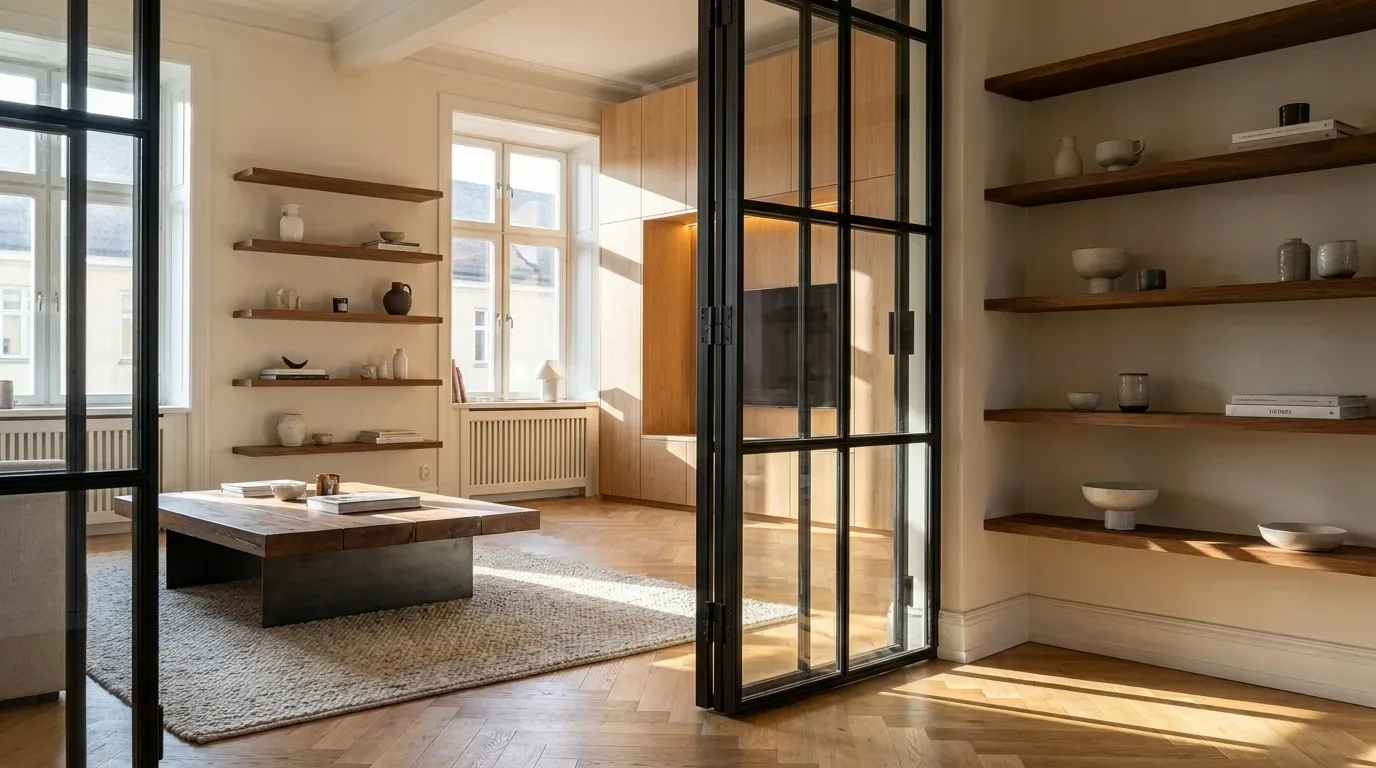
Electronic cylinders from manufacturers such as Assa Abloy or SimonsVoss drop into any standard euro-cylinder mortise lock without mechanical modification. Costs vary depending on system and connectivity (NFC card, Bluetooth, or app-controlled). The main practical advantages over a mechanical cylinder are keyless entry and access logging - useful for a home studio shared between multiple users, or a practice room in a period conversion. The trade-off is battery dependency: typical battery life is one to two years. Specify a system with a mechanical override key as standard - most current models from Assa Abloy and SimonsVoss include this as a default feature.
Magnetic Bolts as a Middle Ground: Room Dividers Without a Key
A magnetic bolt closes silently, holds the leaf in position without any visible mechanism, and requires no key management. For a loft door used as a room divider in an open-plan layout - the kind of Victorian terrace through-room conversion where two reception rooms have been opened up, or a new-build flat where the kitchen flows into the living space - a magnetic bolt at the correct holding force is a clean, low-maintenance solution. No audible click, no handle to snag on when carrying plates from the kitchen, and nothing to lock yourself out of.
The condition, as noted above, is that the holding force must be matched to the leaf weight. For leaves above 60 kg, a minimum of 8 kg holding force is the practical threshold. Specify this correctly in the configurator and the result is a door that stays closed through the draught of an opening sash window - which, in a Victorian terrace with original single-glazed windows still in place, is not a minor consideration.
Frequently Asked Questions: Loft Door Fixings
Can I add a lock to my loft door after installation?
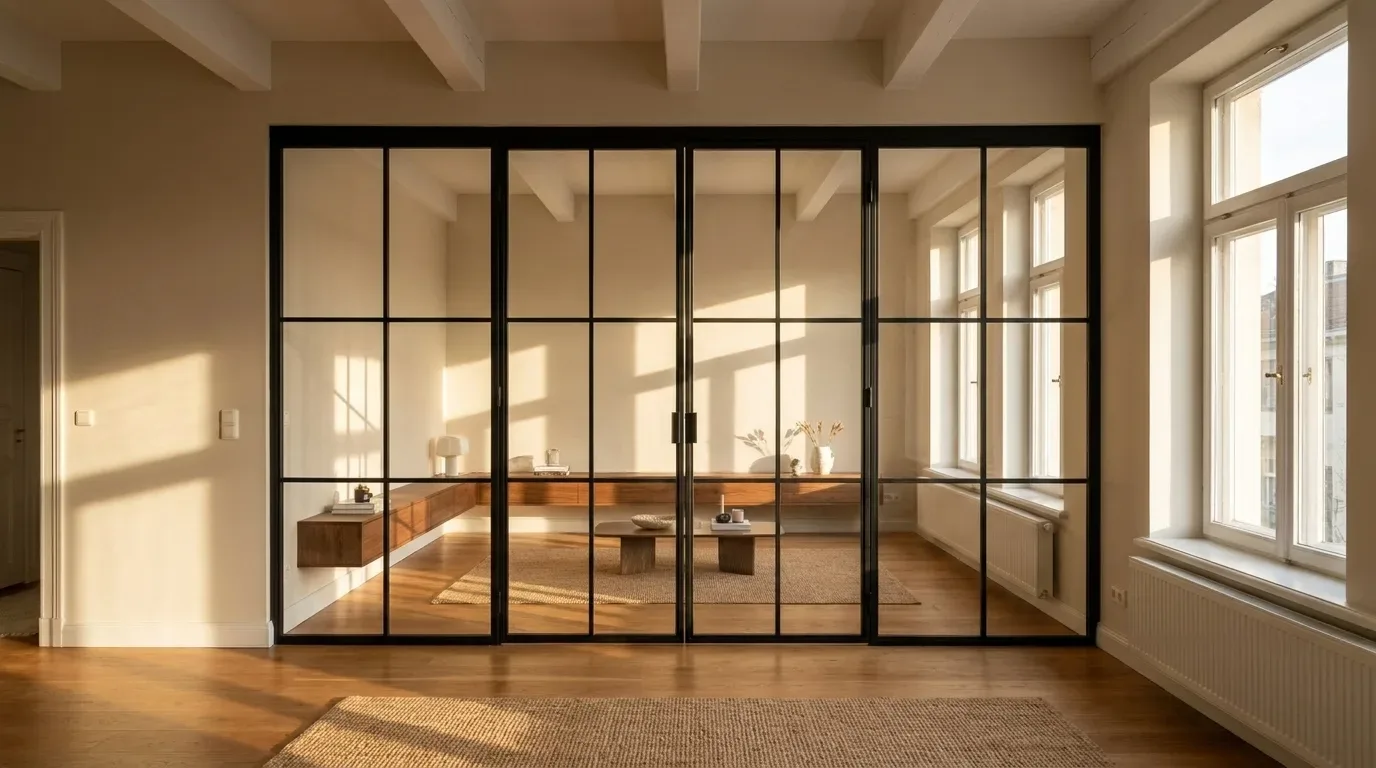
Yes, in most cases - provided the steel profile is at least 35-40 mm deep at the lock position. Shallower profiles need a surface-mounted rim lock instead of a recessed mortise lock. A local metalworker can assess and carry out the work. Planning the lock pocket at the manufacturing stage avoids this cost entirely.
Can I drill into the glass panel to fix a handle?
No. Toughened safety glass (ESG) and laminated safety glass (VSG) cannot be drilled after manufacture - any attempt will shatter the pane. All holes must be specified before the glass is toughened. On an existing loft door, the only frame-safe option is to mount handles on the steel frame, not the glass. If you need through-glass fixings on a new door, specify them in the configurator before ordering.
What holding force do I need for a magnetic catch?
A minimum of 8 kg for any leaf weighing 60 kg or more. Leaves below 60 kg can work with a 5-6 kg catch, but erring towards a higher rating costs very little extra and prevents the leaf from drifting open in draughty Victorian or Edwardian properties. Avoid catches rated below 5 kg for any interior loft door.
How do I measure the correct handle fixing spacing?
Use a vernier calliper to measure from the centre of one fixing hole to the centre of the other - not edge to edge, and not the overall length of the bar. Standard spacings are 300 mm, 400 mm, and 500 mm. Order the spacing that matches your frame holes exactly; the overall bar length is a separate measurement and the two are not the same figure.
How long does a custom loft door take to manufacture?
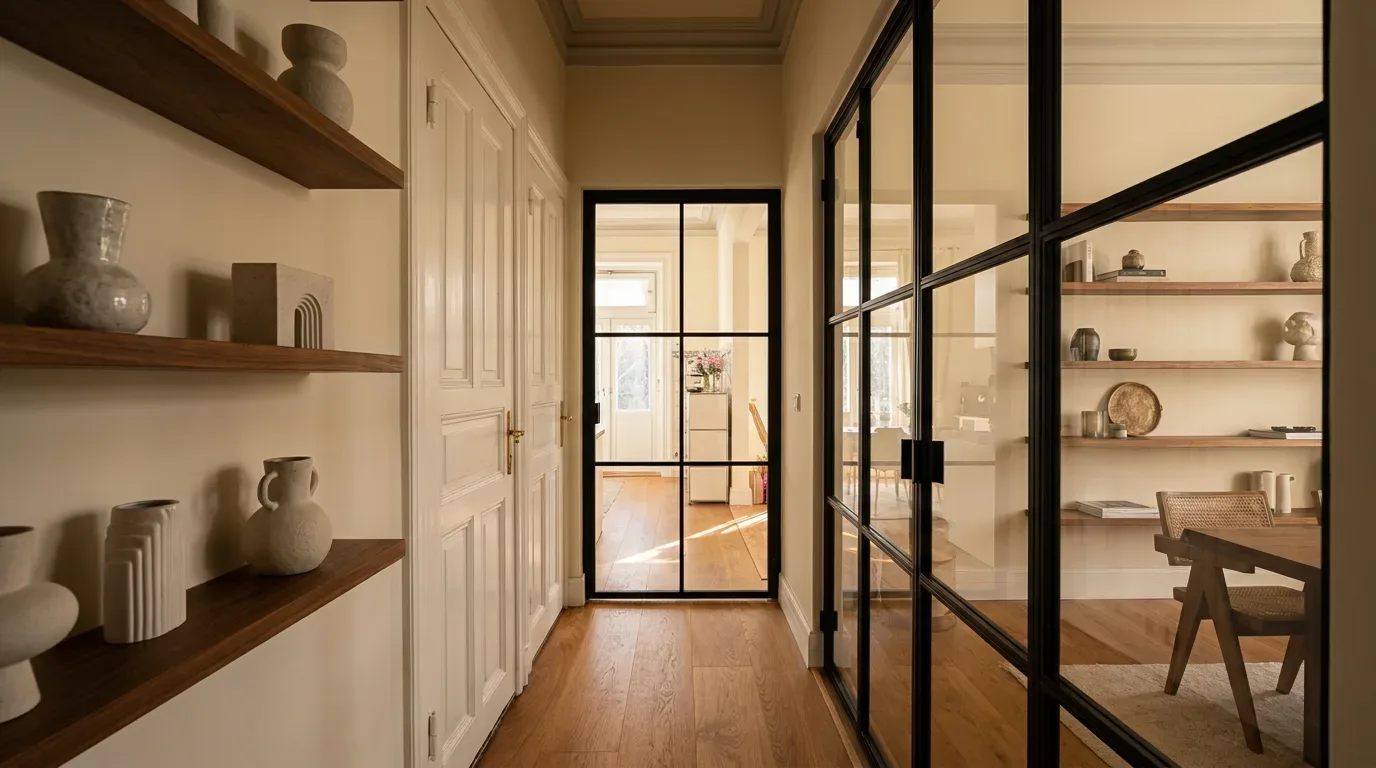
Production at Manufaktur X takes 5-6 weeks from confirmed order. Delivery to the UK is at a flat rate per order, shown in the basket. The invoice carries no German VAT - UK import VAT is collected on import, and Manufaktur X arranges and pays the customs clearance and handling fees. All fixing positions, hole spacings, and hardware specifications are confirmed in writing before production begins.