British homes rarely come with straightforward dimensions. Victorian terraces have chimney breast alcoves that no standard shelf will ever fill properly. Edwardian semis often have reception rooms that are just a touch too long or too narrow for anything from the high street. And in a period conversion or a new-build open-plan flat, the space between kitchen and living area almost never matches a catalogue size. That is the whole point of made-to-measure furniture - and it is exactly what Manufaktur X specialises in. Every piece is built to your exact dimensions: dining tables in oak, coffee tables in beech, wall-to-wall shelving in ash, loft doors with powder-coated steel frames, and more. This guide walks you through everything from choosing your wood species to submitting your order.
Why Bespoke Furniture Makes Sense - and When It Is Worth the Investment
Off-the-shelf furniture is designed around an imaginary average room. If your room happens to match that average, you are in luck. Most of the time, it does not - and the result is a table that sits awkwardly far from the wall, a shelf that leaves a 12 cm gap, or a room divider that simply does not exist in the size you need.
Custom-made furniture removes those compromises entirely. You specify the exact dimensions you want, choose your materials, and receive a piece that was built for your space and no other.
The main reasons customers choose bespoke over standard:
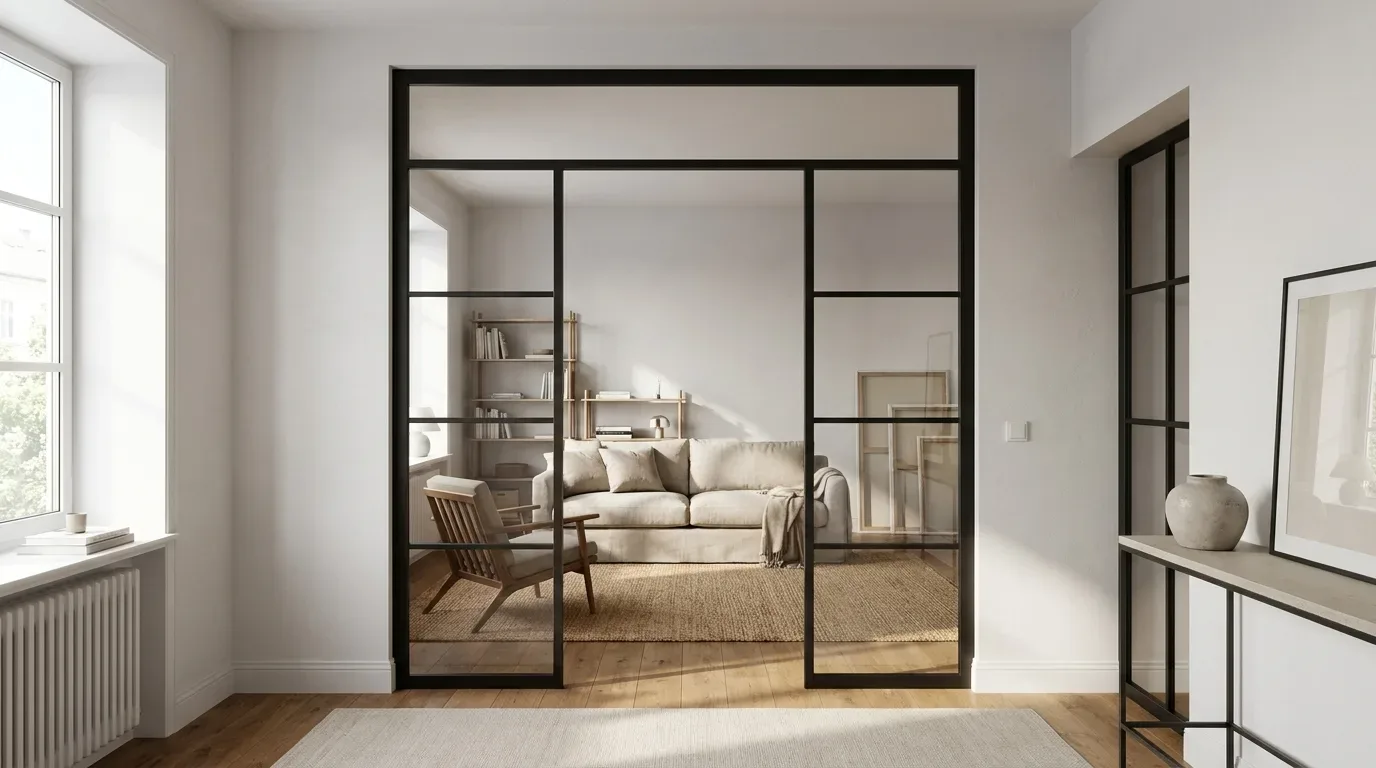
- Perfect fit: Every centimetre of your room is used as intended, not wasted around an ill-fitting piece.
- Complete design control: Wood species, stain, steel colour, glass type - you decide each detail.
- Material quality: Solid hardwood in oak, beech or ash; steel finished in powder coating across the full RAL colour range.
- Longevity: Hardwood and steel do not degrade the way MDF or chipboard do. A well-built piece can last decades without needing replacement.
- Something genuinely unique: Not a showroom piece that your neighbour might also own.
In our workshop, the most common reason a custom piece does not fit is not a production fault - it is a measurement error at the customer's end. We will come back to how to avoid that.
The Product Range: What Manufaktur X Makes
The range divides into two material groups. Which configuration options apply to you depends entirely on which group your chosen product sits in.
Steel and Glass: Loft Doors and Room Dividers
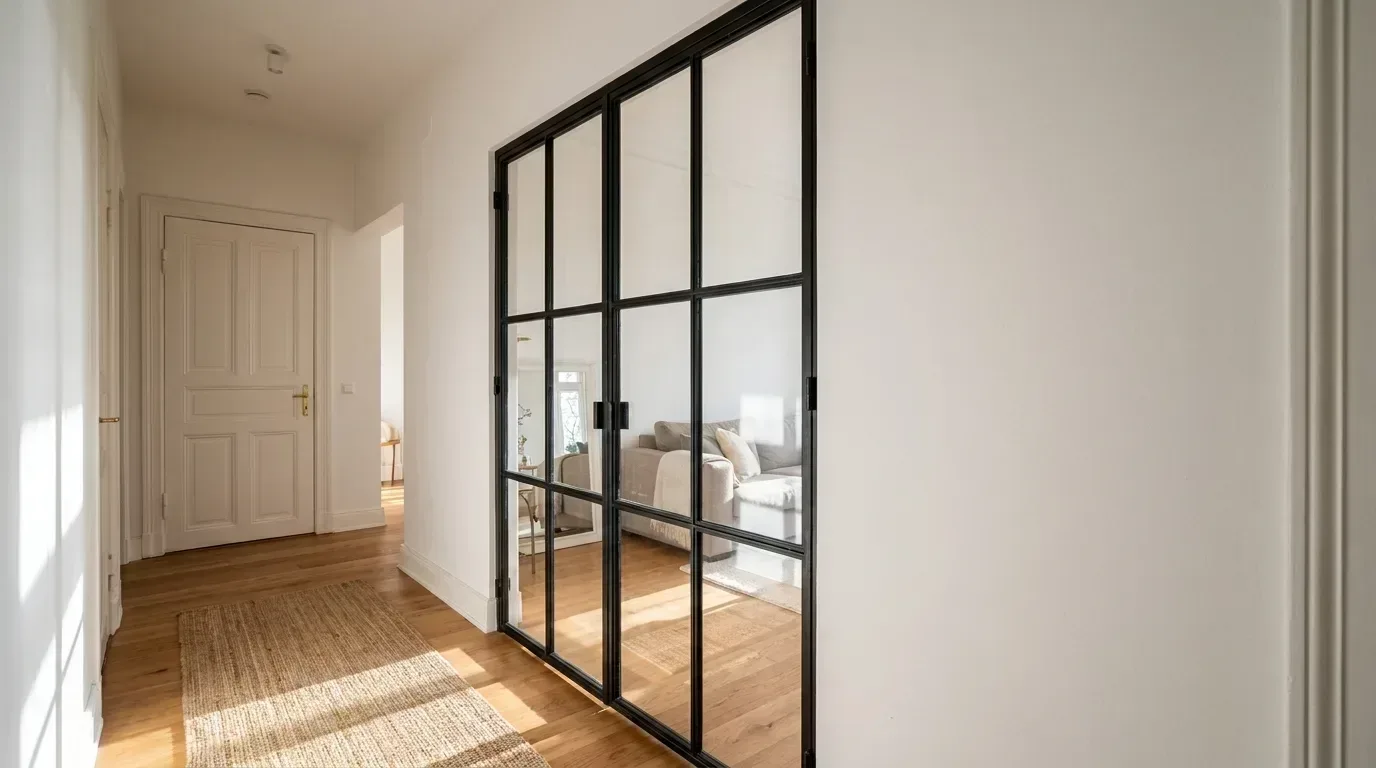
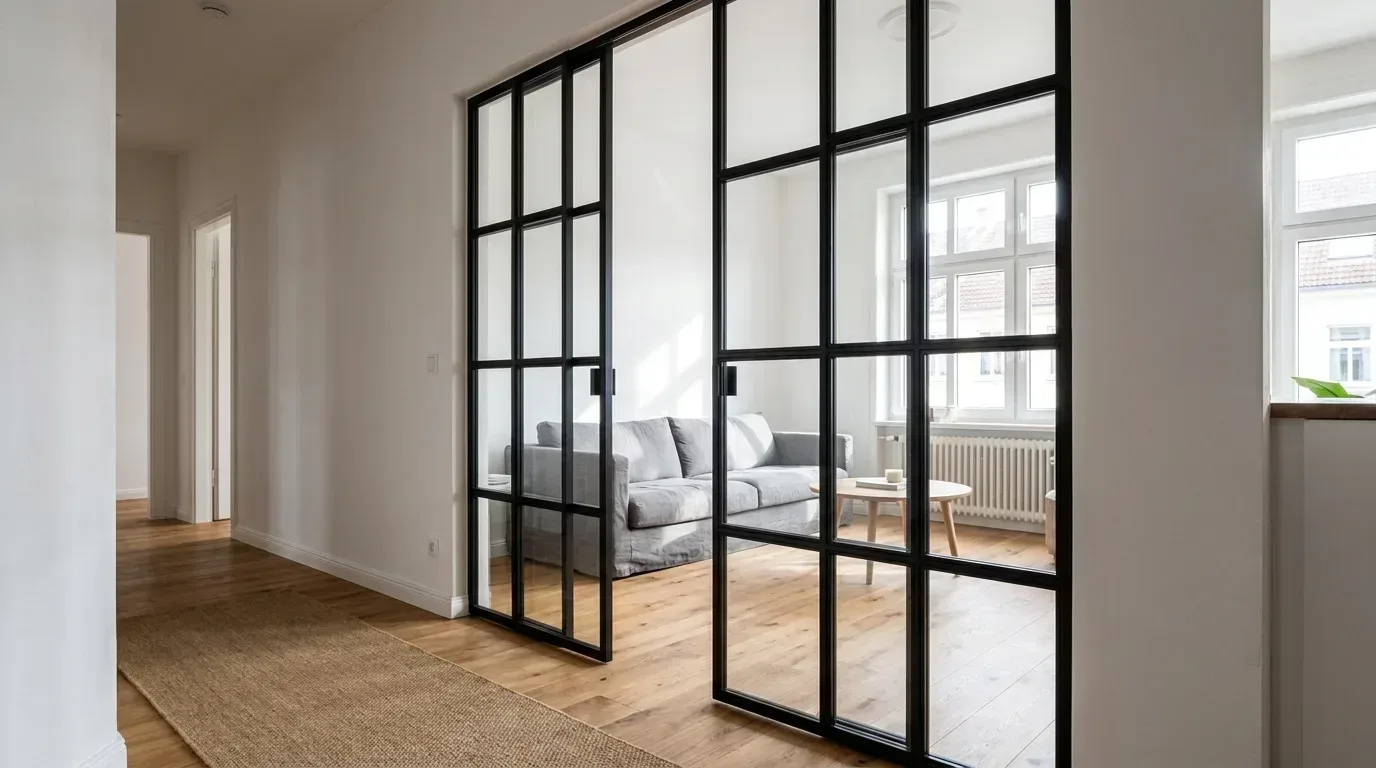
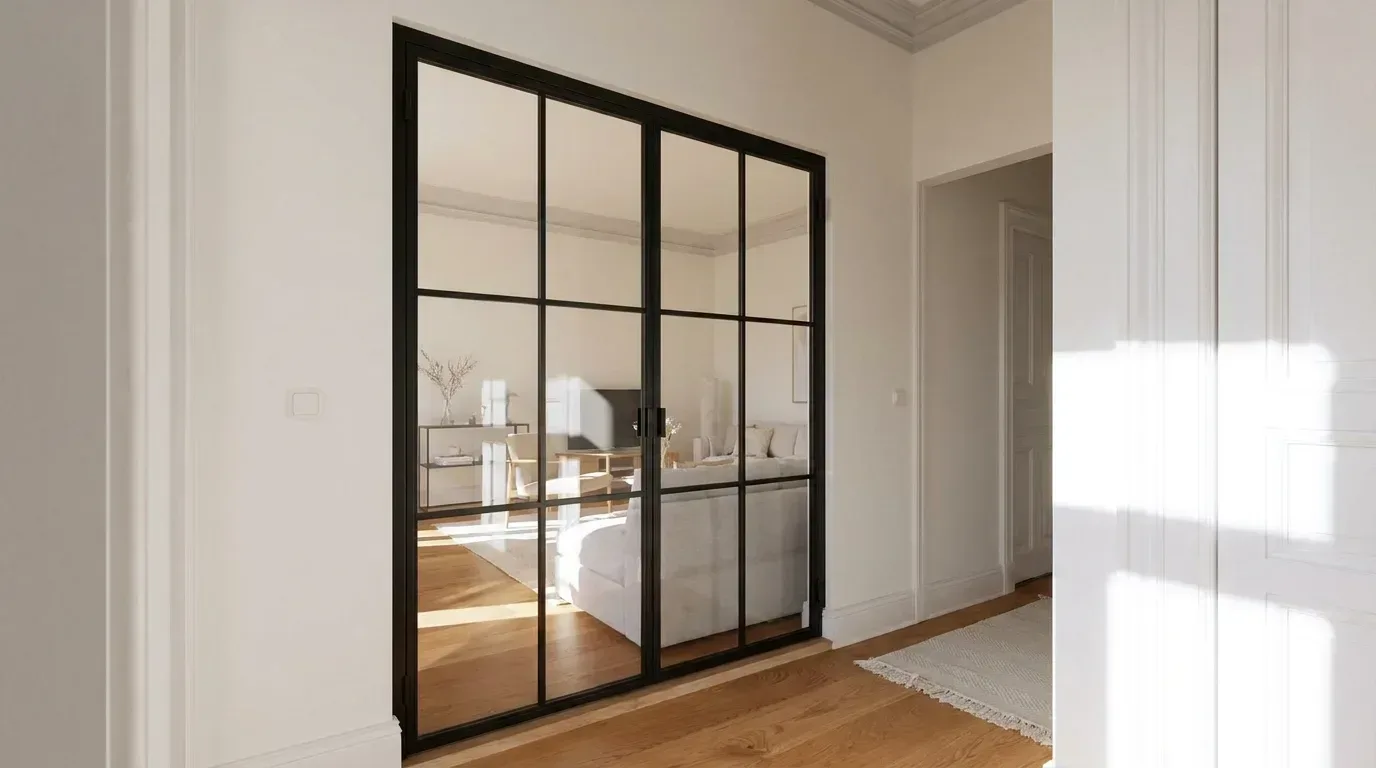
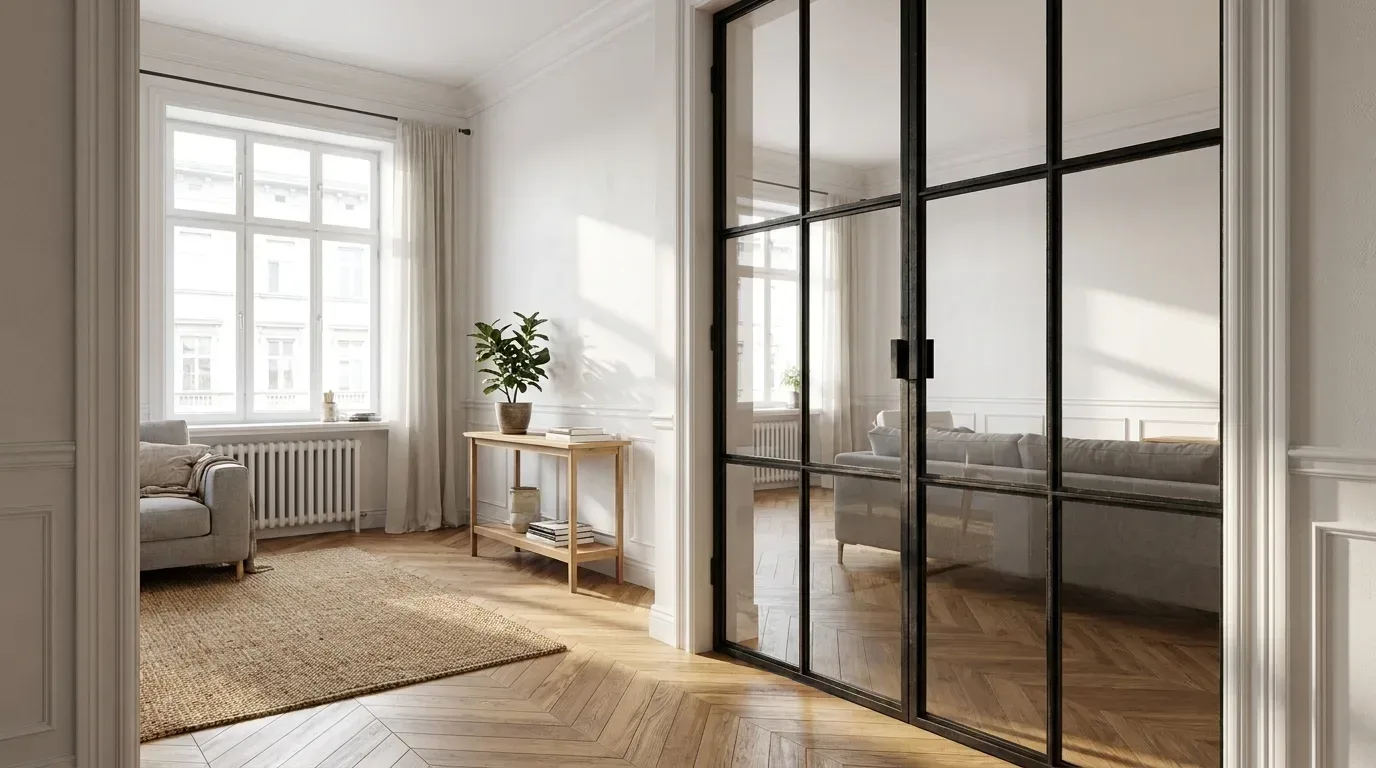
The loft door and the room divider both use a powder-coated steel frame with a glass infill - but they are fundamentally different products:
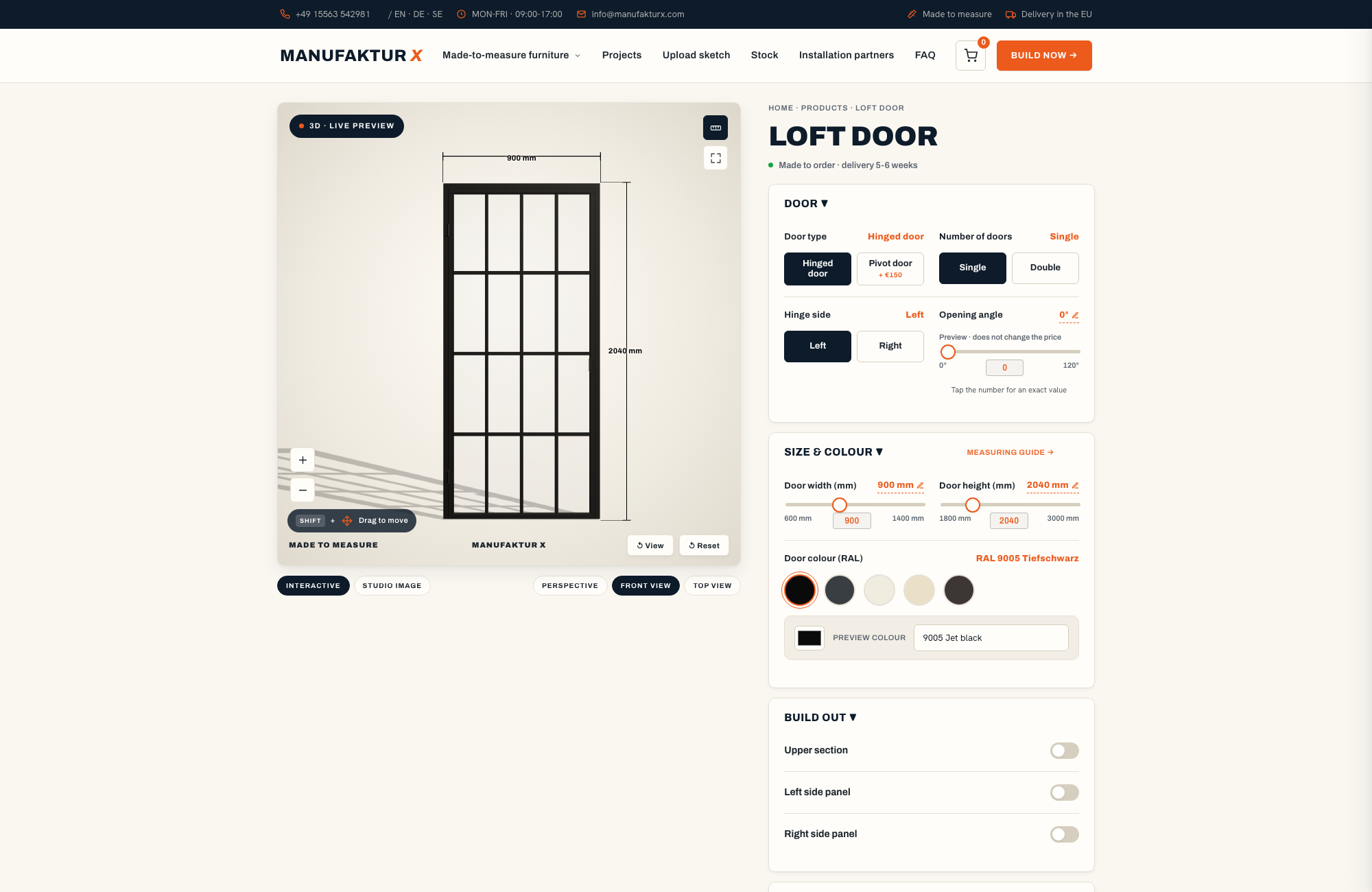
- Loft door: A functioning door with a chosen hinge side (left or right), opening direction, opening angle, and a choice of three handle designs - Elongated, Discreet, or Crescent. It opens and closes.
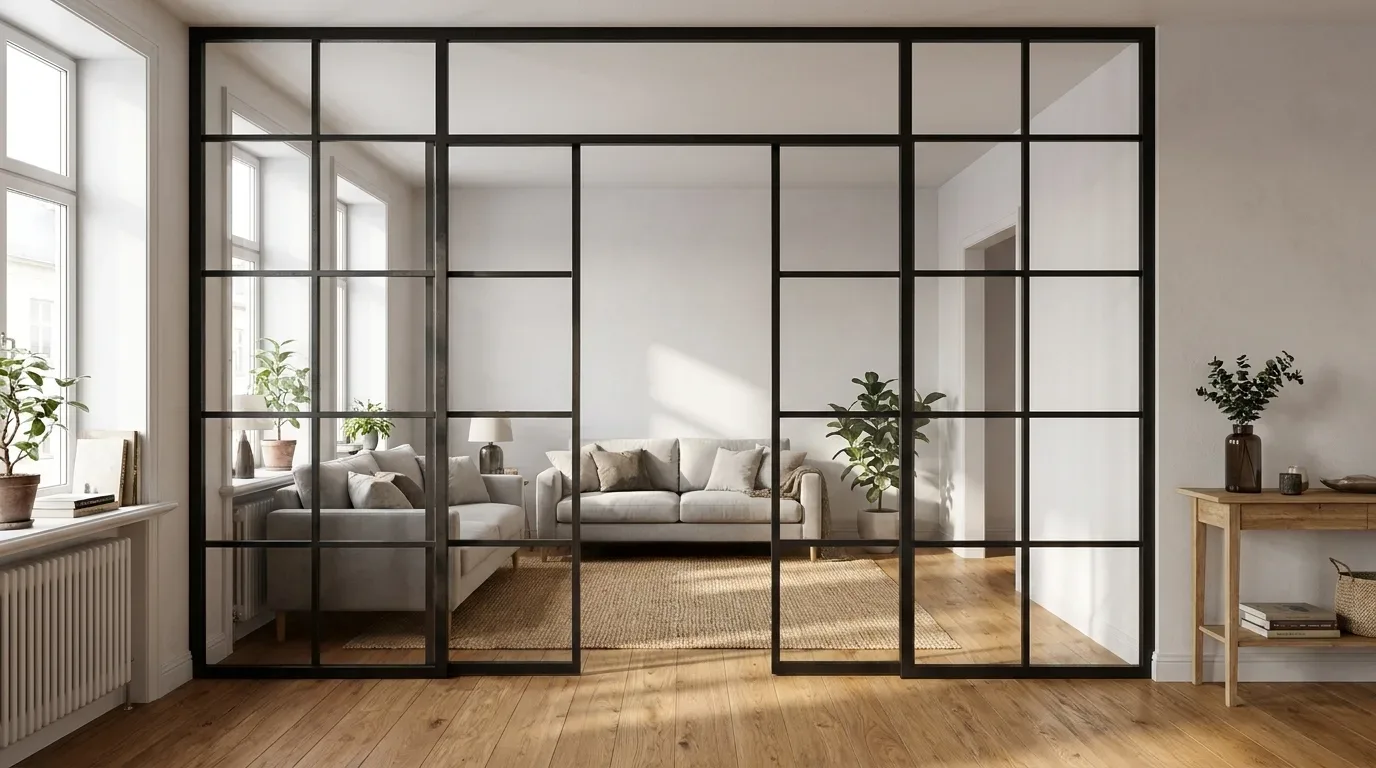
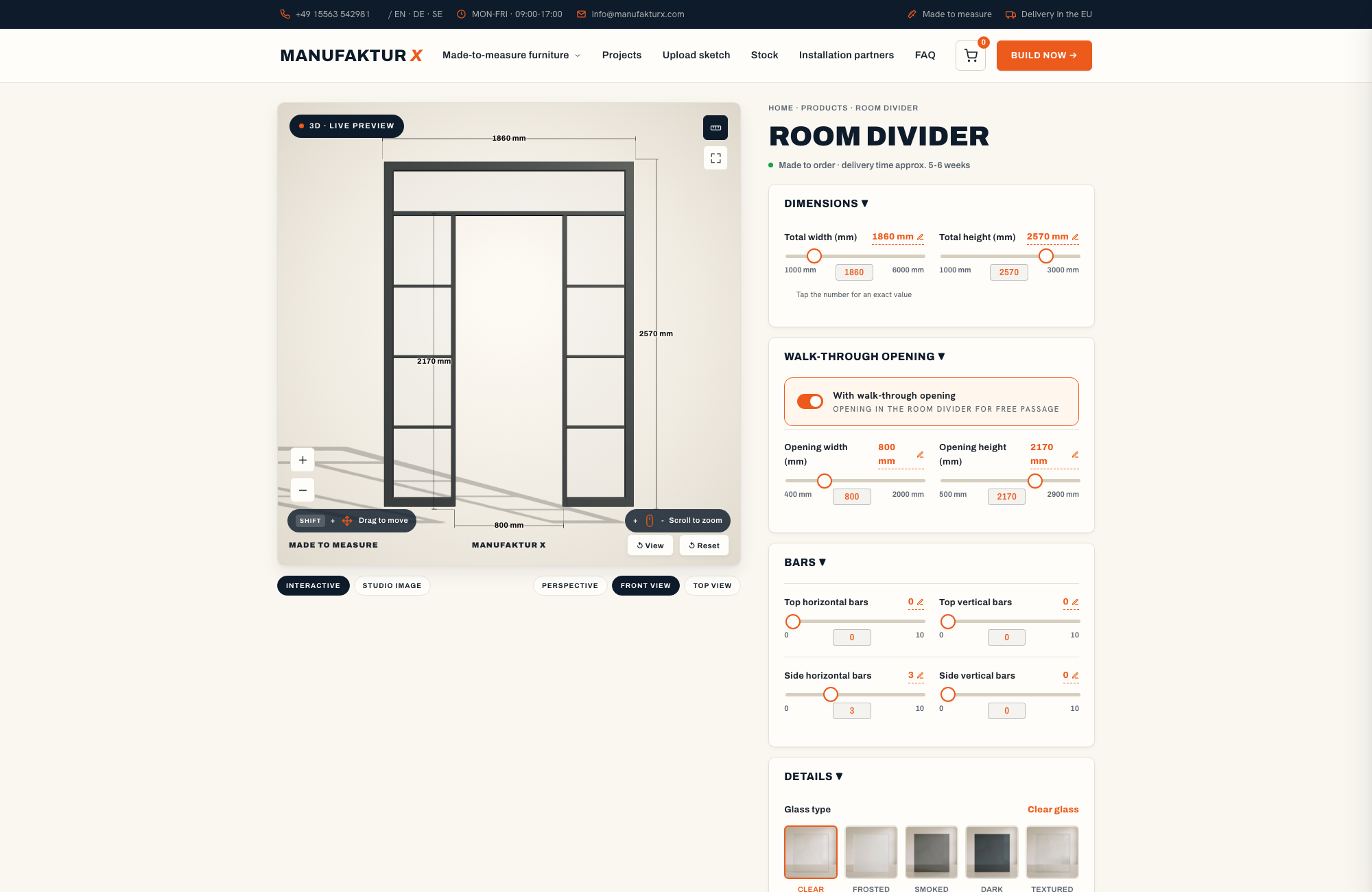
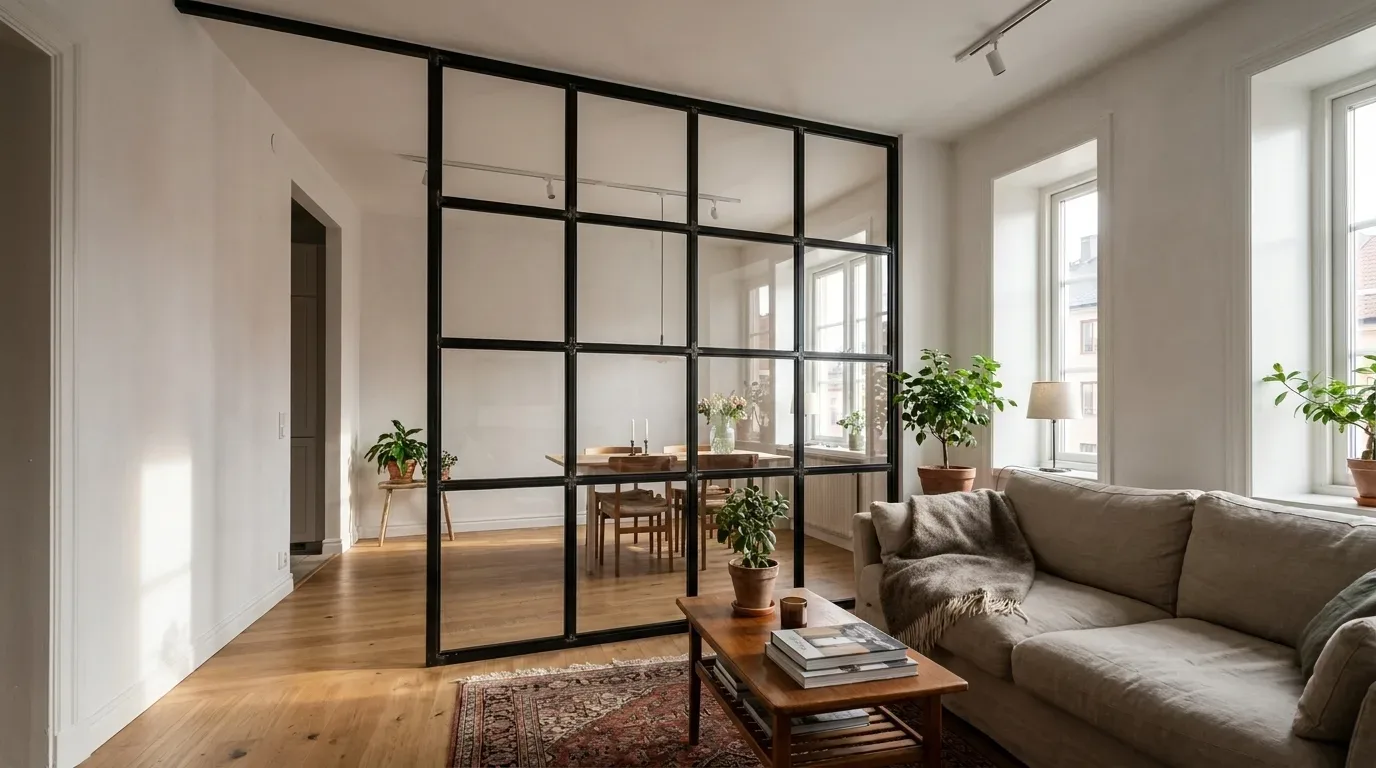
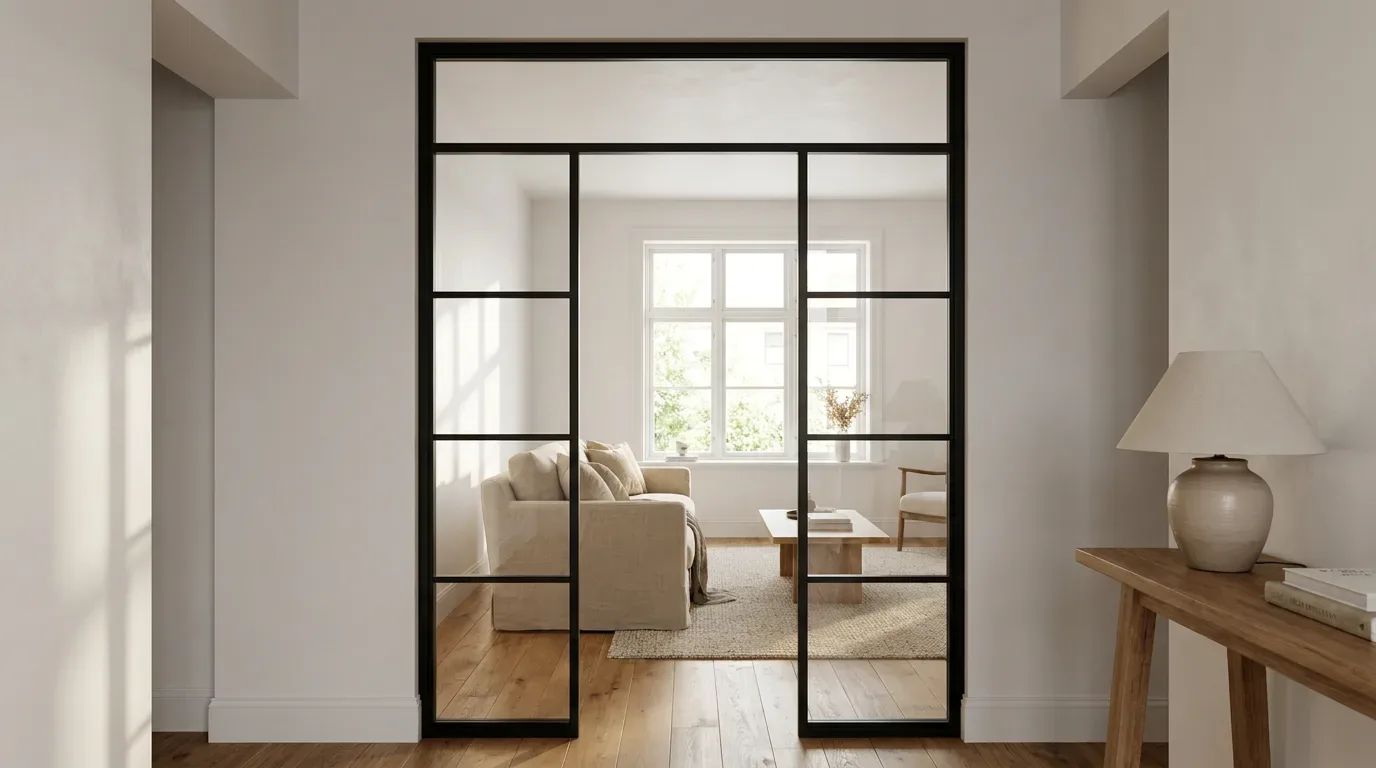
- Room divider: A fixed steel and glass partition wall with no door function. No hinge, no handle, no rebate. An open walkthrough - a frameless gap built into the structure - can be included if you want a passage without a door.
Both products are available in five glass designs: clear glass, frosted glass, smoked glass, dark smoked glass, and textured glass. The steel frame can be powder-coated in any RAL colour.
Steel and Hardwood: Tables, Shelving and Benches
These pieces combine hardwood surfaces or shelves with a steel frame or structure. No glass is involved.
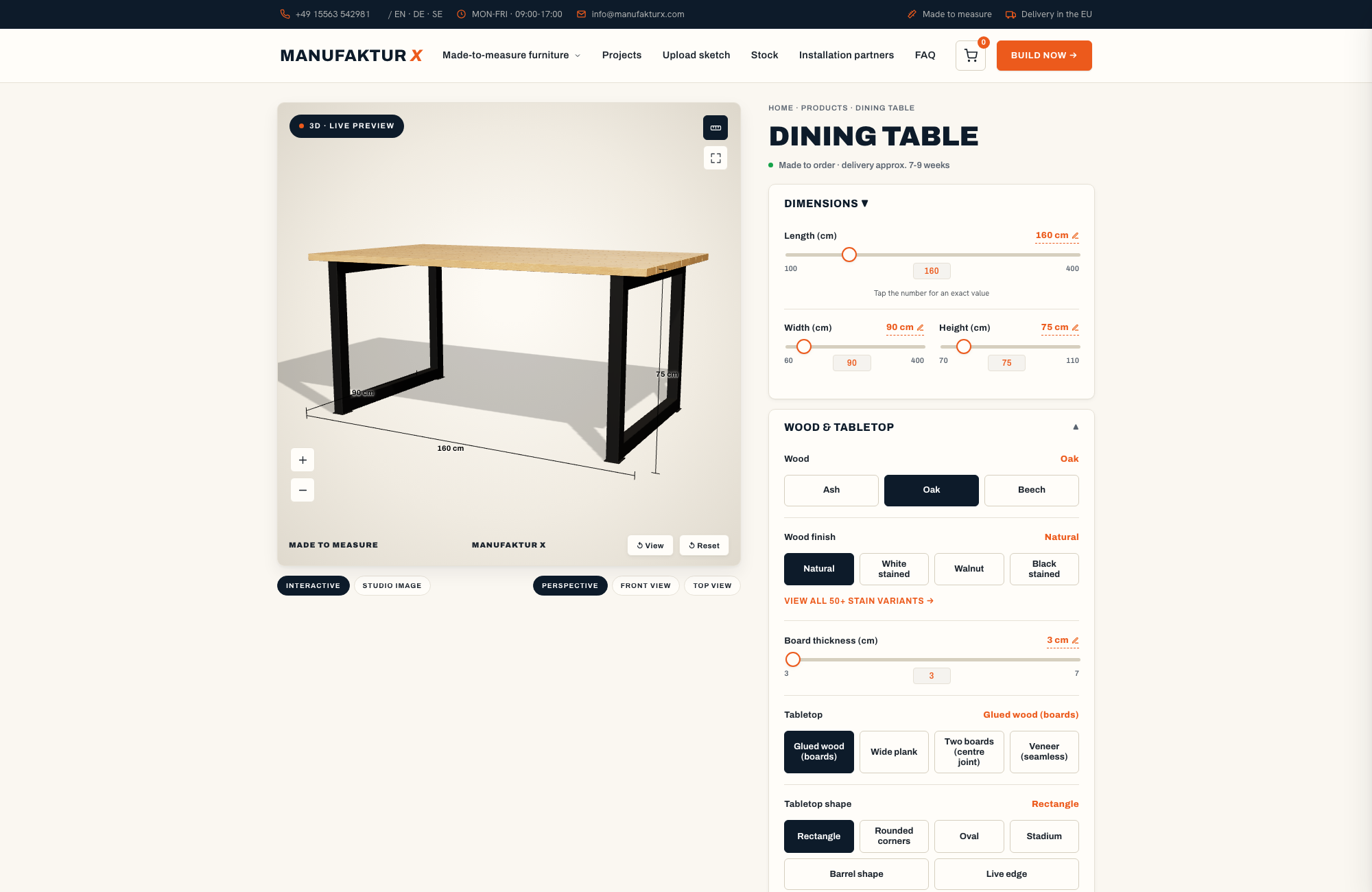
- Dining table: A hardwood top in oak, beech or ash on a custom steel frame.
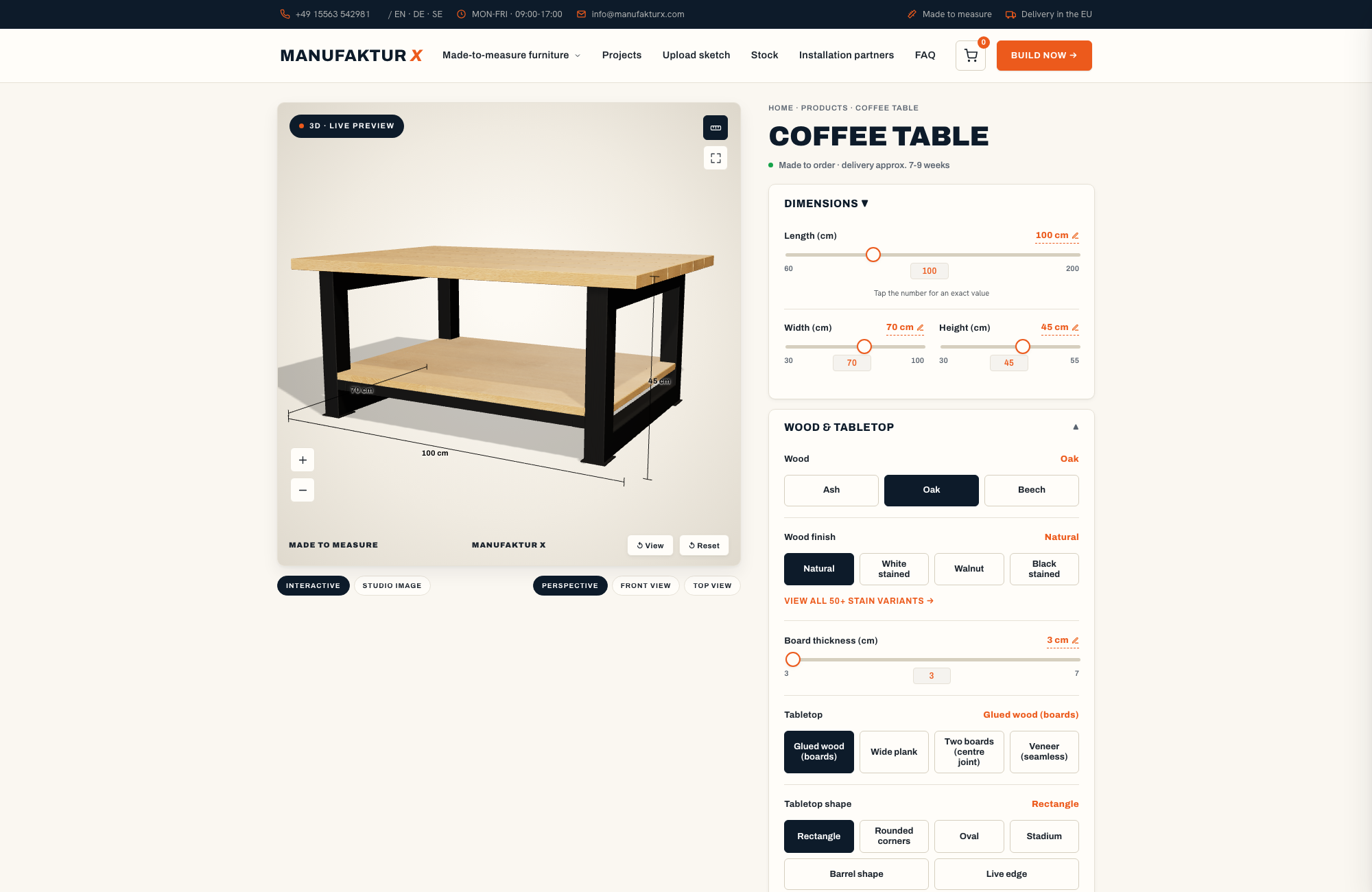
- Coffee table: A hardwood top on a steel frame, configured for the living room.
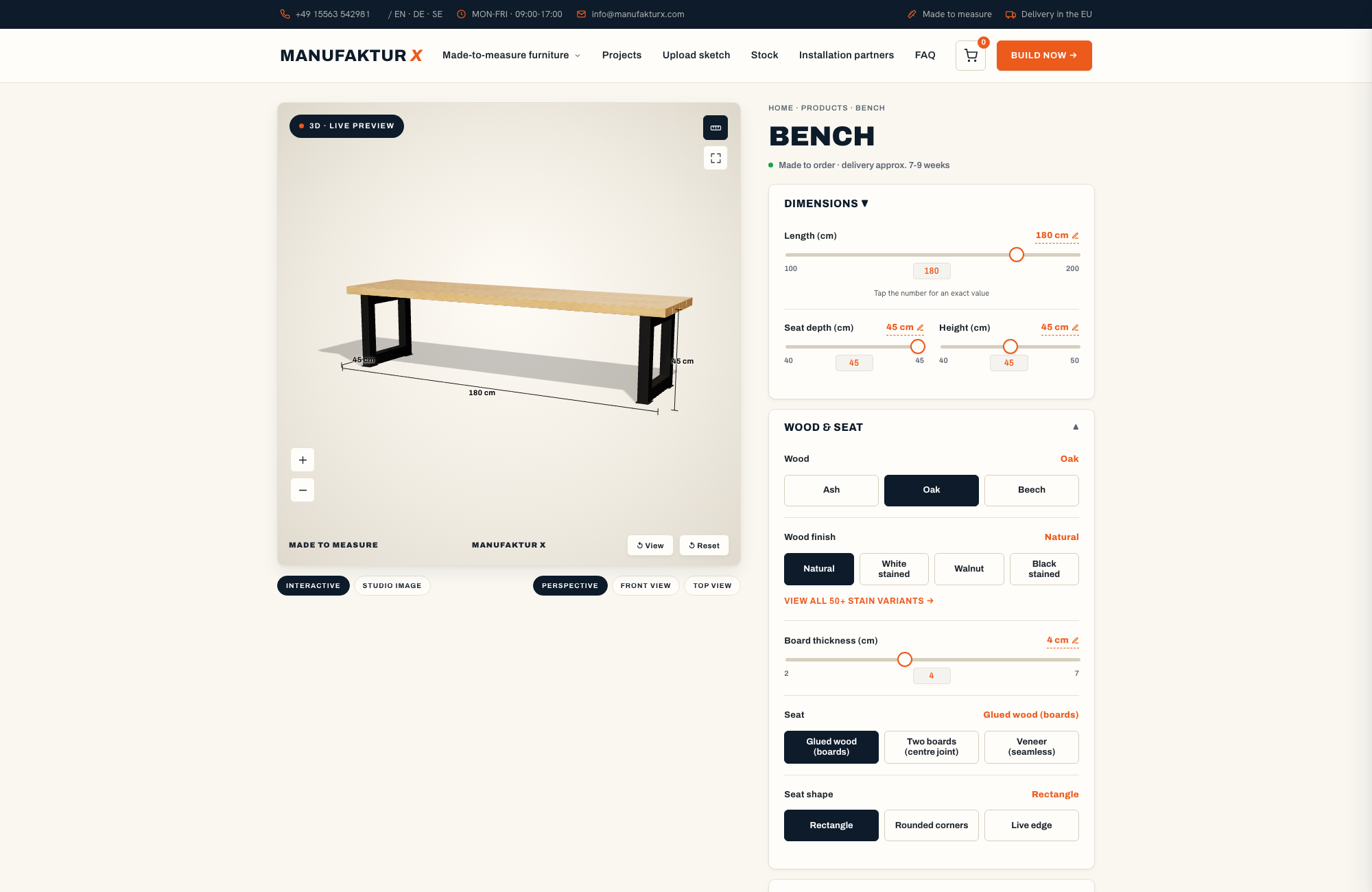
- Bench: A solid hardwood seat on a steel frame.
- Large shelf unit: A steel frame with solid hardwood shelves, with optional integrated wooden cupboards.
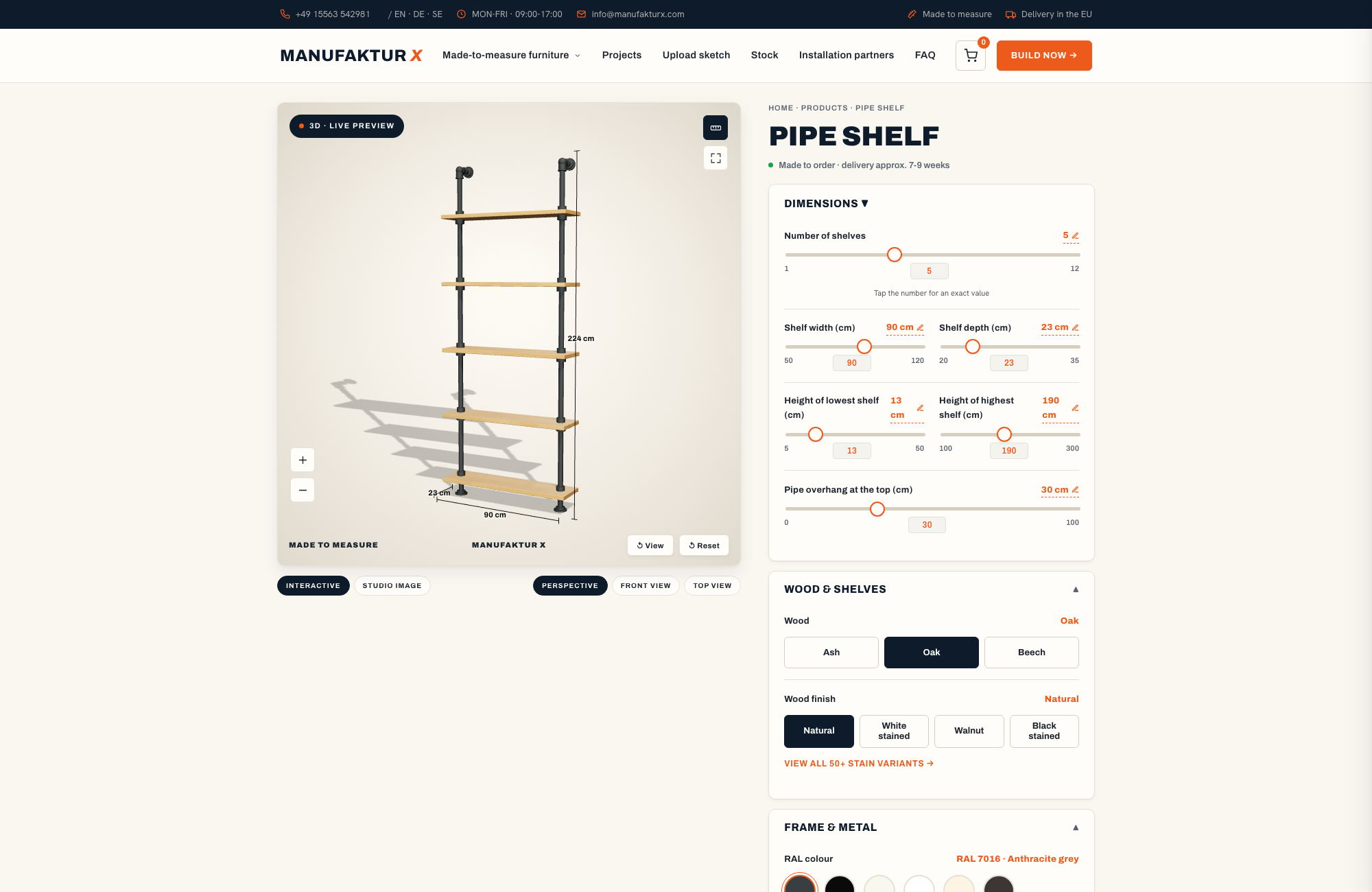
- Pipe shelf: Industrial-style steel pipe supports with solid hardwood shelves.
Materials in Detail: Hardwood, Steel, and Glass
Solid Hardwood: Oak, Beech, and Ash
Manufaktur X works exclusively with three hardwood species. No softwoods, no pine, no MDF, no chipboard - and no other species beyond these three:
- Oak: The most recognisable hardwood in British interiors. Pronounced grain, exceptional durability, and a warmth that works equally well in a Victorian terrace dining room and a contemporary open-plan kitchen. The go-to choice for dining tables where both aesthetics and structural integrity matter.
- Beech: A finer, more even grain than oak, and extremely hard. Beech handles heavy daily use without complaint, which makes it particularly well-suited to bench seats and shelf boards that carry real weight.
- Ash: Pale, subtly grained, and distinctly modern in feel. If you are fitting out a 1930s semi that has been opened up into a contemporary living space, or a new-build flat where you want the furniture to read as light and current rather than traditional, ash is usually the right call.
Dining table and coffee table tops, as well as bench seats, are available either as solid glued-board panels (genuine through-and-through hardwood) or as a veneered option. Shelf units - both the large shelf and the pipe shelf - are always solid hardwood, with no veneer option. Whichever you choose, the surface is finished from a selection of over 50 stains, ranging from almost-natural through to deep, rich darks.
Powder-Coated Steel in Any RAL Colour
All steel frames and structures are powder-coated rather than painted. The practical difference matters: powder coating is applied as a dry powder and cured under heat, which produces a finish that bonds to the steel rather than sitting on top of it. The result is a surface that is scratch-resistant, colour-consistent from edge to edge, and more environmentally friendly to produce than wet paint. Every RAL colour is available - which means you can match the steel precisely to your walls, your floor, or other furniture in the room. There is no additional charge for colour choice.
Glass Options (Loft Doors and Room Dividers Only)
Glass is only used in the loft door and room divider. There are exactly five glass designs to choose from:
- Clear glass - full transparency, maximum light passage
- Frosted glass - evenly diffused, softens light without blocking it
- Smoked glass - lightly tinted, provides a degree of visual privacy
- Dark smoked glass - stronger tint, more pronounced privacy effect
- Textured glass - patterned surface that refracts light decoratively
Alongside the glass design, you choose the glass type: toughened safety glass (ESG) or laminated safety glass (VSG). For larger formats - taller or wider panels - VSG is the recommended choice. It offers greater structural stability and, if it does break, it holds together rather than shattering.
How the Configuration Process Works
The entire process is designed to be transparent. You see the price update in real time as you make changes, and there are no hidden costs waiting in the checkout.
Step One: Measure Your Space Carefully
Before you open the configurator, measure your space at multiple points. Walls in older British properties - Victorian, Edwardian, interwar - are rarely perfectly plumb or straight. A gap that measures 180 cm at floor level might measure 178.5 cm at head height. Always take the smallest measurement as your working dimension.
For a loft door specifically, you also need to account for installation clearance: plan for approximately 5 mm of space on each side - left, right, and top - to allow the door to be set correctly and levelled during fitting. Customers who measure only once, or who forget to allow for that clearance, are the ones who end up with a piece that will not go in. The production will be exactly right; the responsibility for accurate measurement sits with whoever measures the space.
You enter your exact desired dimensions into the configurator - not the rough structural opening. What you type is what gets built.
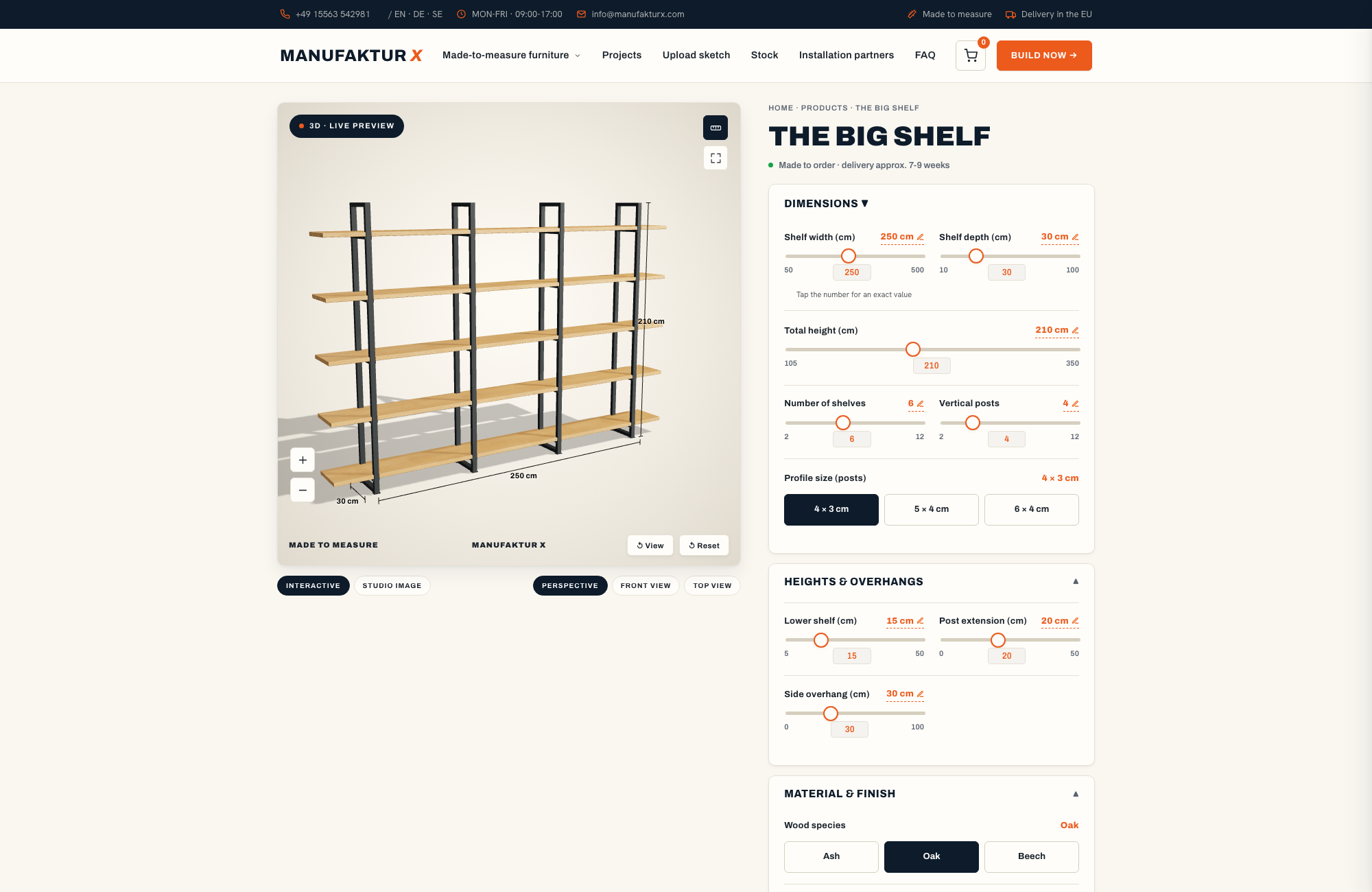
Step Two: Configure Using the 3D Tool
The 3D configurator shows you every change in real time - visually and in price. Switch from oak to ash, change the steel colour from anthracite to matt black, adjust the width by 10 cm - you see the effect on the final look and the final price immediately. Delivery costs and lead times are shown clearly before you confirm your order; nothing appears as a surprise at the checkout.
Step Three: Special Requests - Submit a Sketch
If what you have in mind falls outside the standard configurator options - an unusual shape, a combination of elements, or a specific structural detail - you can upload a sketch. Manufaktur X will assess the feasibility and respond with a quote. If the piece cannot be built as requested, you will be offered alternatives or the option to withdraw without obligation.
Submit a sketch: manufakturx.co.uk
Step Four: Production and Delivery to the UK
Each piece is made individually by hand. Production takes 5 to 6 weeks. Delivery to the UK is fully handled - the invoice carries no German VAT, UK import VAT is due on import, and customs clearance and handling fees are covered. Exact lead times and shipping costs are displayed in the basket before you complete your order.
Every piece is made in the EU to consistent quality standards.
Interior Styles: From Industrial Loft to Classic British
Steel and hardwood do not prescribe a single aesthetic. The same material combination can read as stripped-back industrial or as warm and traditional, depending entirely on how you configure it.
Style Examples That Work Well in British Homes
- Industrial: Dark-stained oak, steel frame in matt black (RAL 9005) or anthracite. Bold proportions, with visible weld lines as a deliberate design feature. Suits converted warehouse flats and open-plan living in Victorian commercial conversions.
- Minimalist: Ash with a pale, near-natural stain, slimline steel legs in white or light grey. Clean geometry, nothing decorative. Works well in new-build flats where the architecture is already simple.
- Warm Contemporary: Beech with a mid-tone natural finish, fine steel frame. Comfortable and functional without being cold - a good fit for a 1930s semi that has been modernised without losing its character.
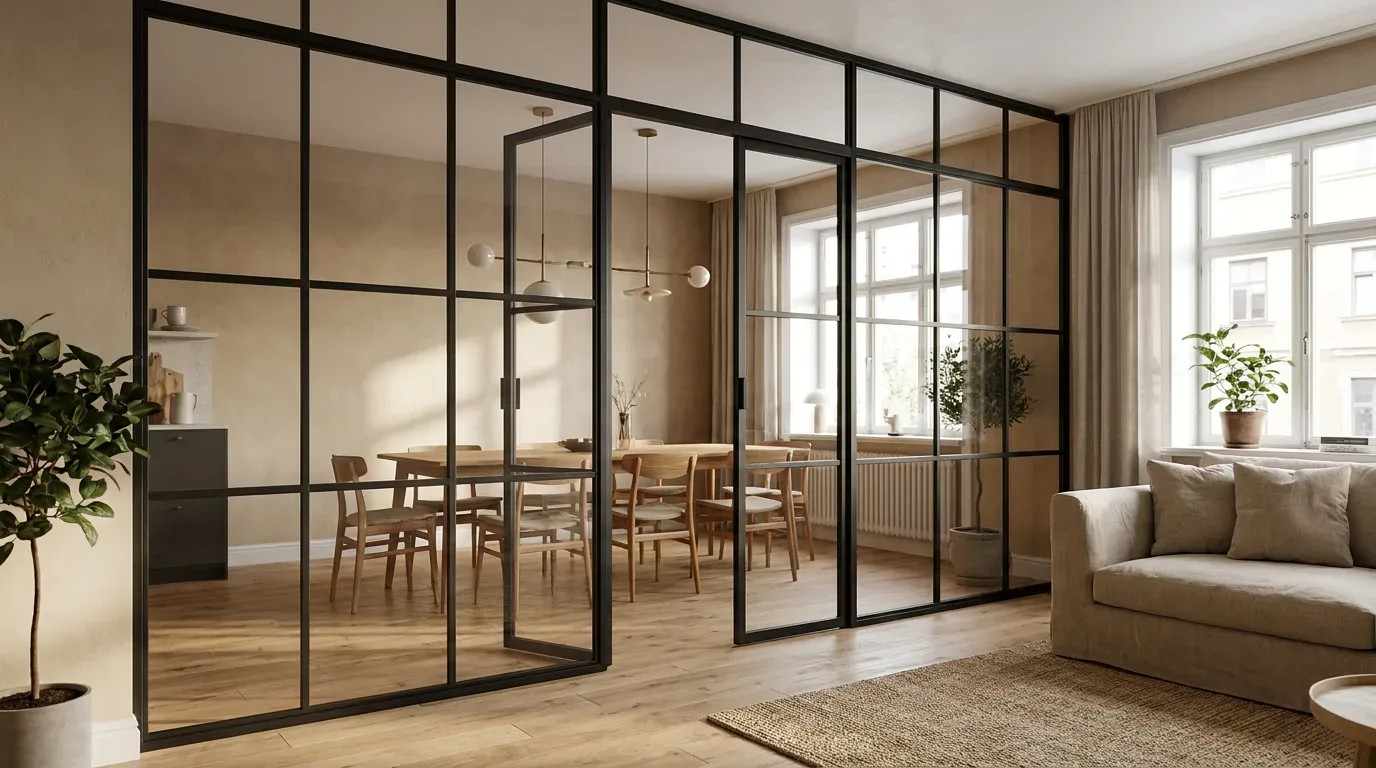
- Loft Modern: Mid-toned oak top, loft door with clear glass and a black powder-coated frame used as a divider between a kitchen and a sitting area. A particularly popular configuration for period conversions where you want to create zones without building walls.
- Vintage or Antique-Adjacent: Deeply stained oak, steel finished in a bronze or aged-iron tone via RAL. Pairs naturally with original Victorian or Edwardian architectural details.
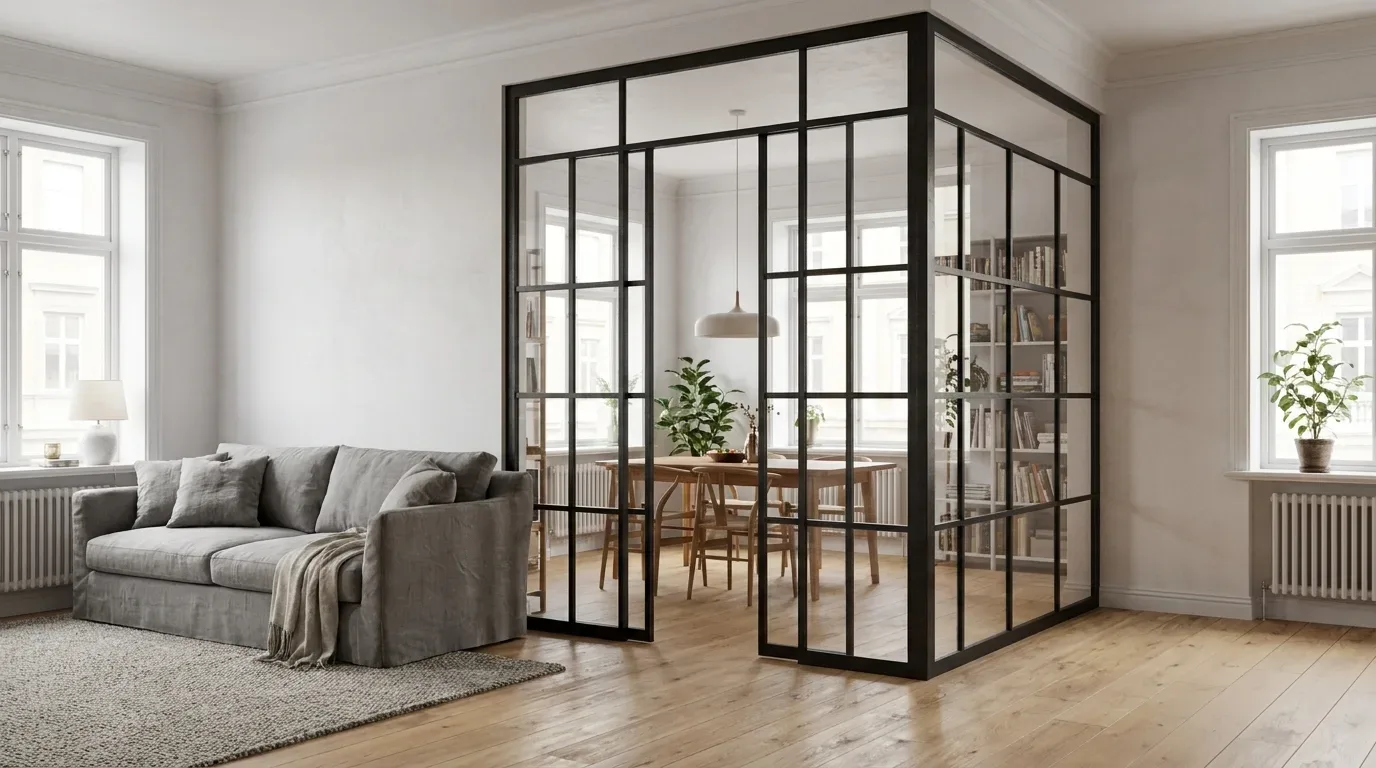
The contrast between warm wood grain and cooler, geometric steel is what gives these pieces their visual interest. They work across a wide range of interior styles precisely because neither material is trying too hard.
Table Shapes and Shelving Configurations
The standard configurator works with rectangular forms. Round, oval, or irregular shapes are available by submitting a sketch - Manufaktur X will confirm whether the design is feasible and provide a bespoke quote. For the large shelf unit, you can configure the number of shelves, their depth, and whether to include optional wooden cupboard sections. The pipe shelf makes the steel tube structure itself part of the aesthetic - it works particularly well in industrial and loft-style interiors.
Costs and Budget Planning
Bespoke furniture costs more than flat-pack or showroom-standard pieces. The relevant comparison is not the purchase price in isolation - it is the purchase price against the expected lifespan. A solid hardwood and steel piece built to your exact specification does not need replacing. The same cannot be said for chipboard furniture from a volume retailer, which typically degrades within a few years of daily use.
Starting Prices and Price Transparency
The loft door starts at a base price in its most basic configuration. The price adjusts as you change dimensions, glass type, and other options - and every adjustment is visible in real time in the configurator.
Current starting prices for all products:
| Product | Default configuration price | Note |
|---|---|---|
| Loft Door | £1,413 | Steel and glass, default configuration 900 x 2040 mm |
| Room Divider | £1,902 | Steel + laminated glass, custom width |
| Large Shelf | £2,752 | Solid wood, steel frame, floor-to-ceiling |
| Dining Table | £2,038 | Solid wood, steel frame |
| Coffee Table | £1,548 | Solid wood, steel frame |
| Bench | £946 | Solid wood, steel frame |
| TV Stand | £1,324 | Solid wood, steel frame |
| Bedside Table | £856 | Solid wood, steel frame |
| Hallway Wardrobe | £1,608 | Solid wood, steel frame |
| Display Cabinet | £2,533 | Solid wood, steel frame |
| Pipe Shelf | £916 | Modular pipe shelf |
| Desk | £1,561 | Solid wood, steel frame |
| Chest of Drawers | £4,334 | Solid wood, steel frame |
What Affects the Final Price
- Wood species and stain: Oak, beech, and ash are priced comparably - the choice affects the look, not significantly the cost.
- Dimensions: Larger surfaces require more material and more production time.
- Frame complexity: More intricate steel structures take longer to fabricate.
- Glass type (loft doors and room dividers): VSG costs slightly more than ESG but is the right choice for larger formats.
- RAL colour: Any colour, no surcharge.
If you are working to a budget, prioritise the structural elements - wood species, steel gauge, glass type. These affect durability. Decorative choices can be adjusted without compromising the quality of what you are buying.
Caring for Your Furniture
Both hardwood and powder-coated steel are straightforward to maintain, provided you know the basics.
Looking After Solid Hardwood
- Wipe down regularly with a soft, lightly damp microfibre cloth.
- Deal with spills immediately - do not let liquid sit and soak in.
- Avoid placing hardwood furniture in direct, sustained sunlight or near a radiator. Both cause the wood to expand and contract unevenly, which can lead to cracking over time.
- Oil or wax the surface once a year with a product formulated for hardwood. This keeps moisture out and maintains the natural appearance of the grain.
- Use coasters and table mats. Hardwood is durable, but it is not impervious to ring marks or heat from a casserole dish.
Looking After Powder-Coated Steel
- Wipe down with a dry or very slightly damp cloth as part of regular cleaning.
- If the coating is chipped or scratched, address it promptly - exposed steel can begin to rust if left untreated.
- Do not use abrasive cleaners or anything acidic. Both will damage the coating.
- A specialist metal polish can be used occasionally to maintain the sheen if needed.
Where Custom Furniture Makes the Most Difference
Dining Rooms and Living Rooms
The dining table is typically the hardest-working piece of furniture in any home - it is used every day, and it anchors the whole room visually. A table that is the right length for your dining room (not approximately right) makes a genuine difference to how the space feels. In the living room, a coffee table in solid hardwood and steel adds a material presence that mass-produced pieces rarely achieve.
Home Offices and Study Spaces
A dining table configured as a large desk, or a custom-width surface sized for two people working side by side - bespoke sizing answers ergonomic questions that standard desks leave open. The exact height, the right depth for your monitor setup, the precise width for your alcove.
Open-Plan Spaces: Loft Doors and Room Dividers
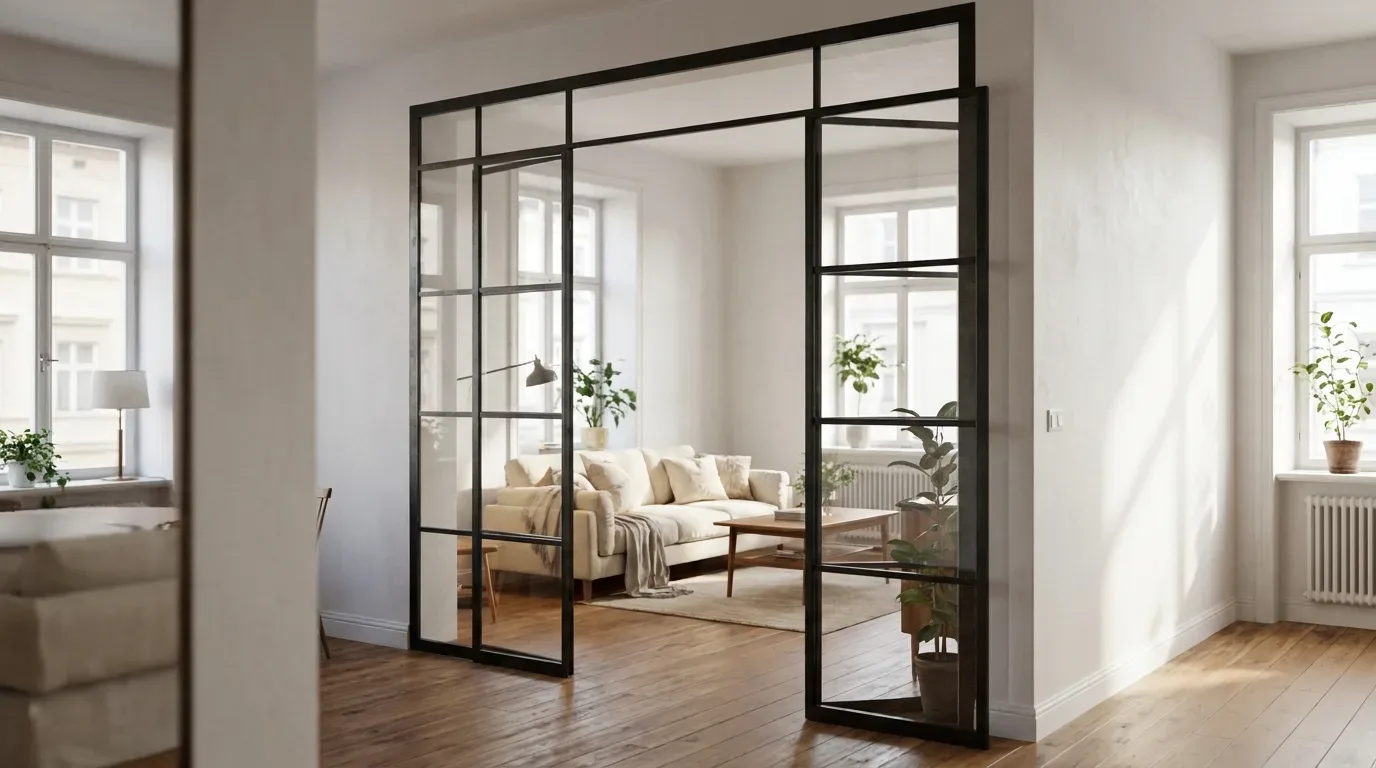
Open-plan living is common in British period conversions and in newer flats alike. A loft door creates a visual boundary between, say, a bedroom and a home office, while still allowing light to pass through - more or less, depending on your glass choice. A room divider achieves the same zoning effect as a fixed partition, without the cost and disruption of building an actual wall. Both are available in any RAL colour and in all five glass designs.
Shelving as Architecture
The large shelf unit, with its steel frame and solid hardwood shelves, can fill an entire chimney breast wall or run floor to ceiling in a Victorian reception room - spaces that no standard shelving unit is designed to serve. The pipe shelf, with its exposed steel tube structure, suits industrial-style spaces or any room where you want the structure of the furniture to be part of the visual statement.
Common Mistakes When Ordering Bespoke Furniture
- Measuring only once: Always measure at multiple points - floor and ceiling heights, left and right wall distances. Take the smallest figure as your working dimension.
- Forgetting installation clearance (loft doors): Subtract approximately 5 mm per side - left, right, and top - from your smallest measurement to allow for fitting and levelling.
- Underestimating the lead time: Production takes 5 to 6 weeks. If you are timing a delivery around a house move or a renovation, order well in advance.
- Rushing through the configurator: Every measurement you enter is what gets built. Double-check all figures before you confirm.
- Choosing ESG for a large-format door or divider: For tall or wide panels, VSG provides better stability and is the safer choice.
Frequently Asked Questions
Which wood species does Manufaktur X use?
Only three hardwood species: oak, beech, and ash. No other species are used - no pine, no walnut, no softwoods. Over 50 stain finishes are available to adjust the final colour and tone of whichever species you choose.
Can I order a round or oval dining table?
The standard configurator handles rectangular shapes. For round, oval, or non-standard forms, submit a sketch via the homepage at manufakturx.co.uk. Manufaktur X will confirm feasibility and provide a bespoke quote. If the shape cannot be produced, you will be offered alternatives or the option to step back from the enquiry.
What is the difference between a loft door and a room divider?
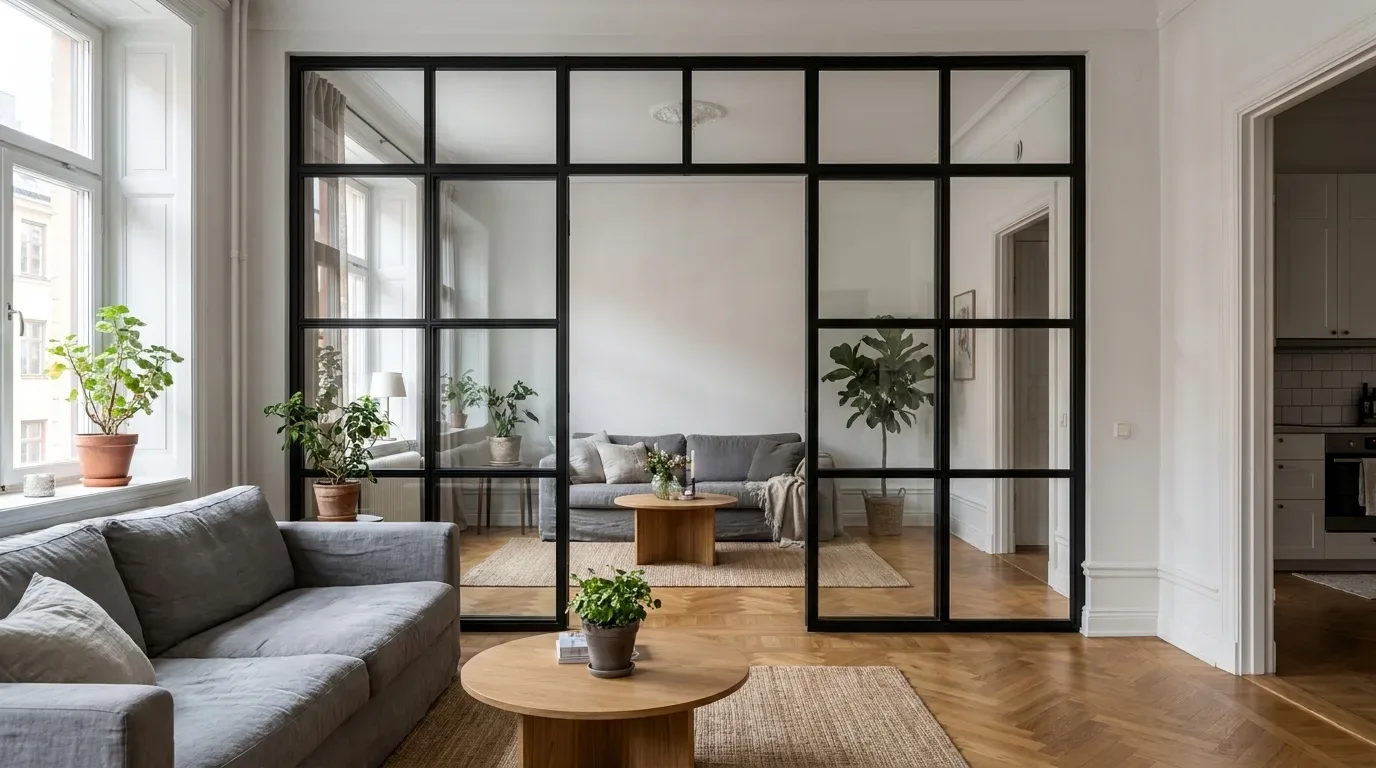
A loft door is a functioning door - it opens and closes, has a hinge side, a rebate, and a handle. A room divider is a fixed steel and glass partition wall that does not move. It has no hinges, no handle, and no rebate. If you want a passage through the divider, an open walkthrough gap can be designed into it.
What is the starting price for a loft door?
The exact price for your configuration is shown in real time in the configurator as you adjust dimensions and options - no hidden charges, no surprises at checkout.
What glass options are available?
There are five glass designs: clear glass, frosted glass, smoked glass, dark smoked glass, and textured glass. You also choose the glass type - toughened (ESG) or laminated safety glass (VSG). For larger panels, VSG is recommended.
How should I measure for a custom piece?
Measure at several points across the width and height of your space - do not assume walls are straight or floors are level, particularly in older British properties. Use the smallest measurement as your base dimension. For a loft door, deduct approximately 5 mm on each side - left, right, and above - to allow for installation clearance and levelling.
Can I submit a sketch for a non-standard design?
Yes. Visit manufakturx.co.uk to upload your sketch. The team will assess whether the design is buildable and follow up with a quote. If it cannot be done as drawn, you will receive alternative suggestions or a straightforward option to withdraw.
How long does production take, and how is delivery to the UK handled?
Every piece is handmade individually, which takes 5 to 6 weeks. Delivery to the UK is fully managed - the invoice carries no German VAT, UK import VAT is due on import, and customs clearance and handling fees are covered. Exact lead times and delivery costs are shown in the basket before you complete your order.
Configure Your Piece
Choose your product, enter your exact dimensions, and select your wood species, stain, and steel colour - plus glass design and glass type if you are configuring a loft door or room divider. The 3D configurator shows you the result and the price in real time, with nothing hidden.
Browse all products at manufakturx.co.uk. For questions or sketch submissions, the team is reachable via the contact page on the same domain.