White and Beige Loft Doors - RAL Shades and Powder Coat Finishes
Planning a white loft door involves a decision that goes well beyond picking a frame colour. Which of the standard white RAL shades actually matches your radiators, window profiles, and wall paint - and what does a matt finish do that a gloss finish cannot in everyday use? This article walks through the most relevant RAL tones, explains the real technical differences between fine-texture matt and high-gloss powder coating, and gives you concrete cost figures so you can lock in the right frame colour, glass type, and dimensions in the 3D configurator with confidence.
Choosing the Right White: RAL 9003, 9010, or 9016?
Same Brightness, Very Different Undertones
The three most popular white RAL shades for steel-framed loft doors are not distinguished by how light they are - they differ in undertone. RAL 9003 (Signal White) carries a faint blue cast. Under natural daylight it reads as crisp and high-contrast, but in a north-facing room or under cool LED lighting it can feel clinical. RAL 9010 (Pure White) is fractionally warmer due to a barely perceptible yellow tint; it matches the standard radiator colour specified under EN 442, which means it is already present in a large proportion of period properties across the UK. RAL 9016 (Traffic White) sits between the two and is widely regarded as the most neutral of the three - it is the default shade for most uPVC and aluminium window profiles supplied in Britain.
The combined side gaps must not exceed nine millimetres in total.
Quelle: DIN 18101 für Türen | Türen-Wiki Wissen
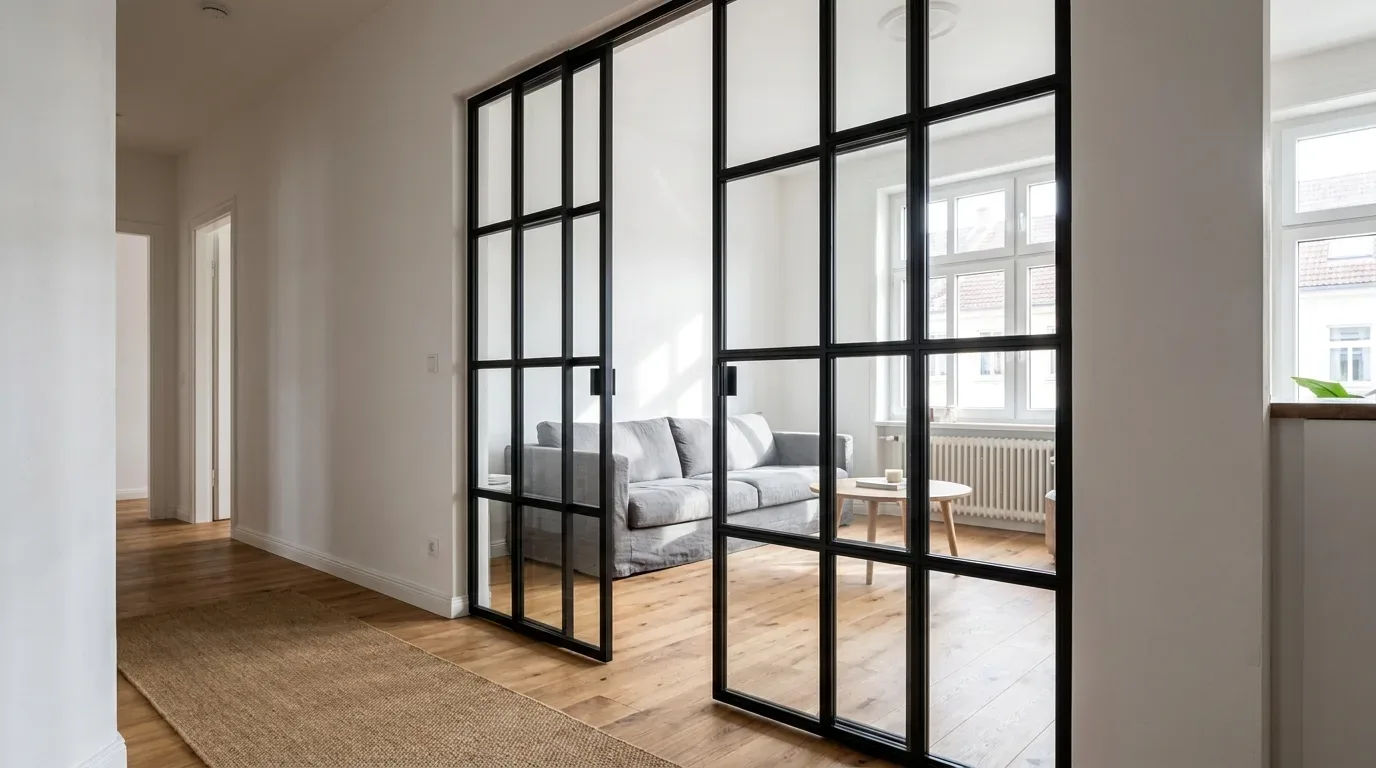
"White is not a colour - it is a family of colours. In an interior, the yellow or blue bias of a white shade determines whether the entire room feels warm or cold."
- Architects' Journal, March 2024, feature on interior colour planning
Viewing all three tones side by side under the actual lighting conditions of your installation point will reveal measurable differences. Under warm-white LED (2,700-3,000 K), RAL 9010 reads noticeably yellower than it does in daylight. One interior designer working on a Victorian conversion in Bristol ordered powder coat samples in RAL 9010, RAL 9016, and RAL 1013 simultaneously, then compared them under the room's 3,000 K downlights. She chose RAL 9016 because RAL 9010 looked visibly warm under that colour temperature - a difference that was invisible on a printed colour fan.
Matching White Elements Already in the Room
A white loft door only reads as cohesive when its RAL number is coordinated with the other white surfaces in the space. UK-supplied radiators typically follow RAL 9010 under EN 442, while uPVC and aluminium window profiles are predominantly delivered in RAL 9016. Architraves, skirting boards, and built-in joinery may carry RAL 9010 or RAL 9003. A loft door in RAL 9016 positioned beside radiators in RAL 9010 will be noticeable - not dramatically, but visibly so under direct daylight or a cool overhead light.
"Colour consistency between door frames, window profiles, and radiators is a frequently underestimated planning variable. RAL numbers are the only reliable communication tool across different trades and suppliers."
- Architects' Journal, Interior Specification feature, 2023
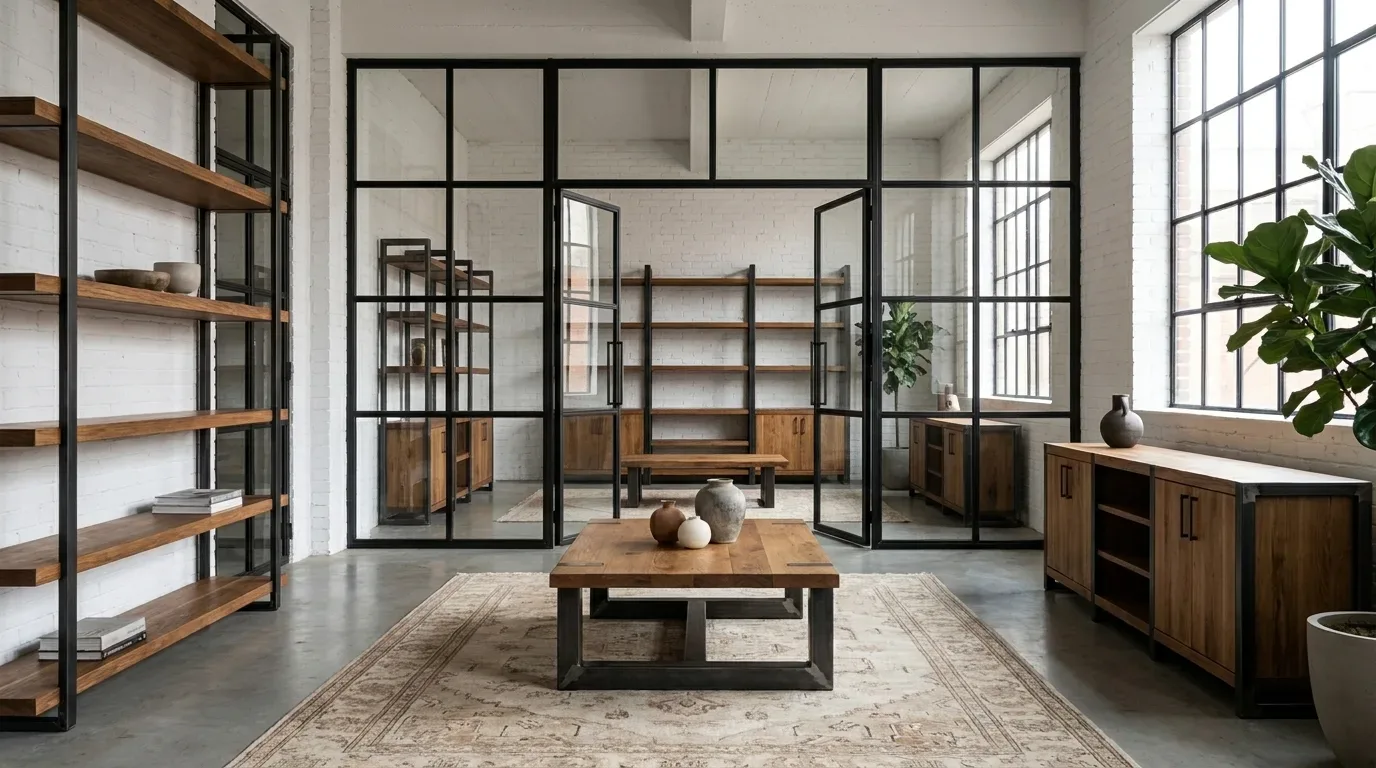
Always request a physical powder coat sample before committing to an order. Printed RAL fan decks differ from powder-coated steel surfaces because printing ink and powder lacquer have fundamentally different light-reflection properties. The same RAL 9010 looks different on a paper swatch than on a steel frame with a fine-texture matt finish - especially under artificial light.
Beige as a Considered Alternative to Pure White
If pure white feels too stark or too high-contrast for your space, RAL 1013 (Pearl White) and RAL 1015 (Light Ivory) offer genuinely distinct alternatives. Both tones sit between white and beige. They work particularly well in south-facing rooms, spaces lit with warm-white bulbs, or rooms with light oak flooring, where a pure white would look harsh. In an Edwardian semi in Edinburgh that had been opened up into a large kitchen-dining room, a beige loft door in RAL 1013 Pearl White was used as a bridging colour between warm oak boards and off-white lime plaster walls - finished in fine-texture matt so the warm tone reads as deliberate rather than as an indecisive white. These shades need to be a conscious design decision: chosen without a coherent colour scheme, they risk looking like a white that simply has not made up its mind.
The Right Starting Point for Colour Planning
Start by identifying the RAL shade of the dominant white element in the room - usually the window profile or the radiator. Request a physical powder coat sample in that shade and the two nearest related tones. Hold them against the wall under the room's actual lighting - not by a window, not under a phone torch. Only once you have done that comparison in situ should you set the frame colour in the 3D configurator and treat it as final.
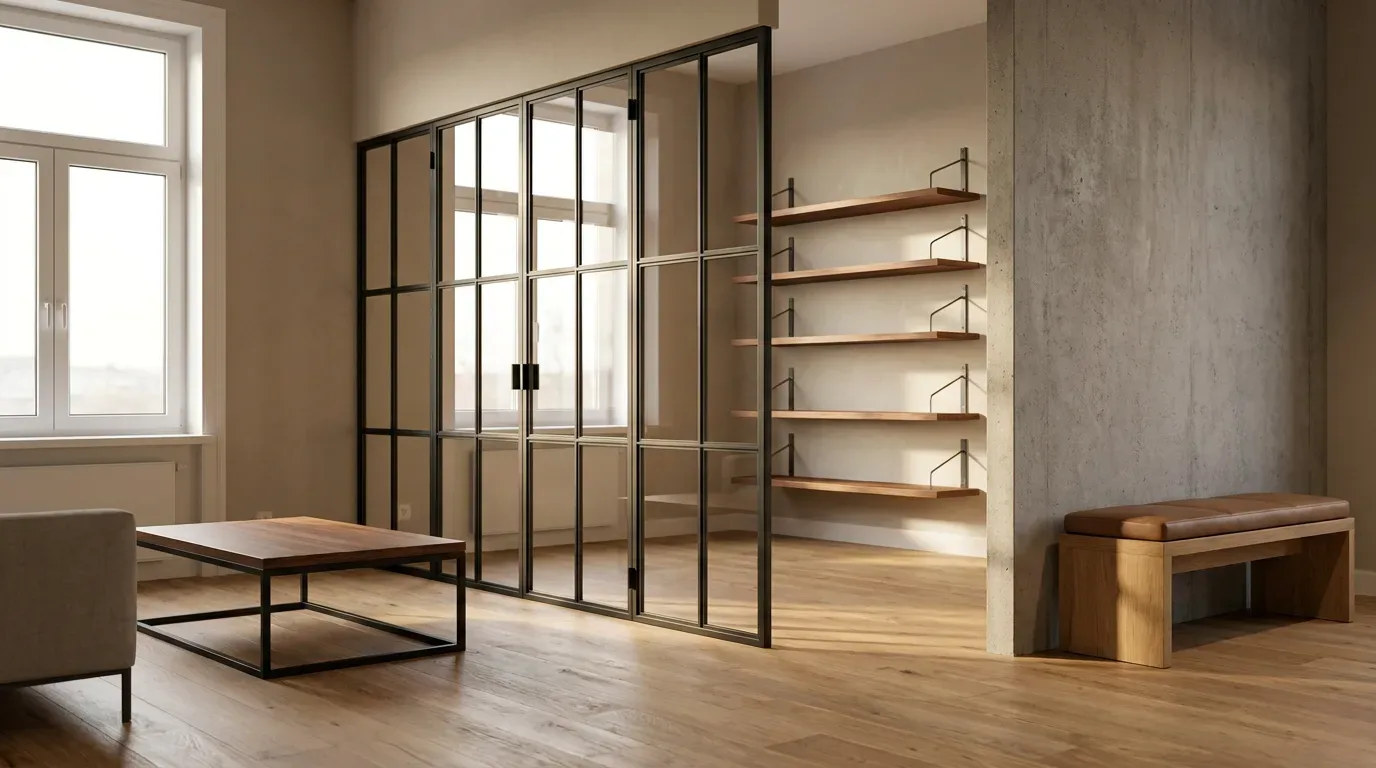
Matt or Gloss: What the Finishes Actually Deliver
Fine-Texture Matt: Everyday Performance
Fine-texture matt powder coating produces a surface roughness of Ra 3-6 µm. That micro-texture scatters incoming light diffusely, which means fingerprints, light scuffs, and wipe marks are visually absorbed rather than highlighted. Industry research from Germany's IFH Cologne (2023) found that approximately 68% of interior door orders specified a matt finish - and the reason is largely practical: structured matt surfaces require noticeably less maintenance than gloss, because dirt bonds less readily and cleaning traces do not show. Fine-texture matt is also more resistant to surface abrasion than smooth matt finishes without the micro-structure. For a white frame, this matters more than for darker colours: pale surfaces like RAL 9016 or RAL 9010 show daily wear far more readily than anthracite grey or black frames.
High-Gloss Powder Coat: Impact and Upkeep
High-gloss powder coating achieves a surface roughness of Ra below 1 µm - roughly a quarter to a sixth of the texture in a fine-structure matt finish. The smooth surface reflects light directionally rather than scattering it. In a smaller room, this can create an impression of greater space, particularly when the door faces a window. In one loft conversion in a 1930s semi in Manchester, a door in RAL 9003 Signal White gloss was used as a deliberate counterpoint to exposed brick - the bright, reflective white frame against raw brickwork created the kind of crisp contemporary contrast the homeowner was after.
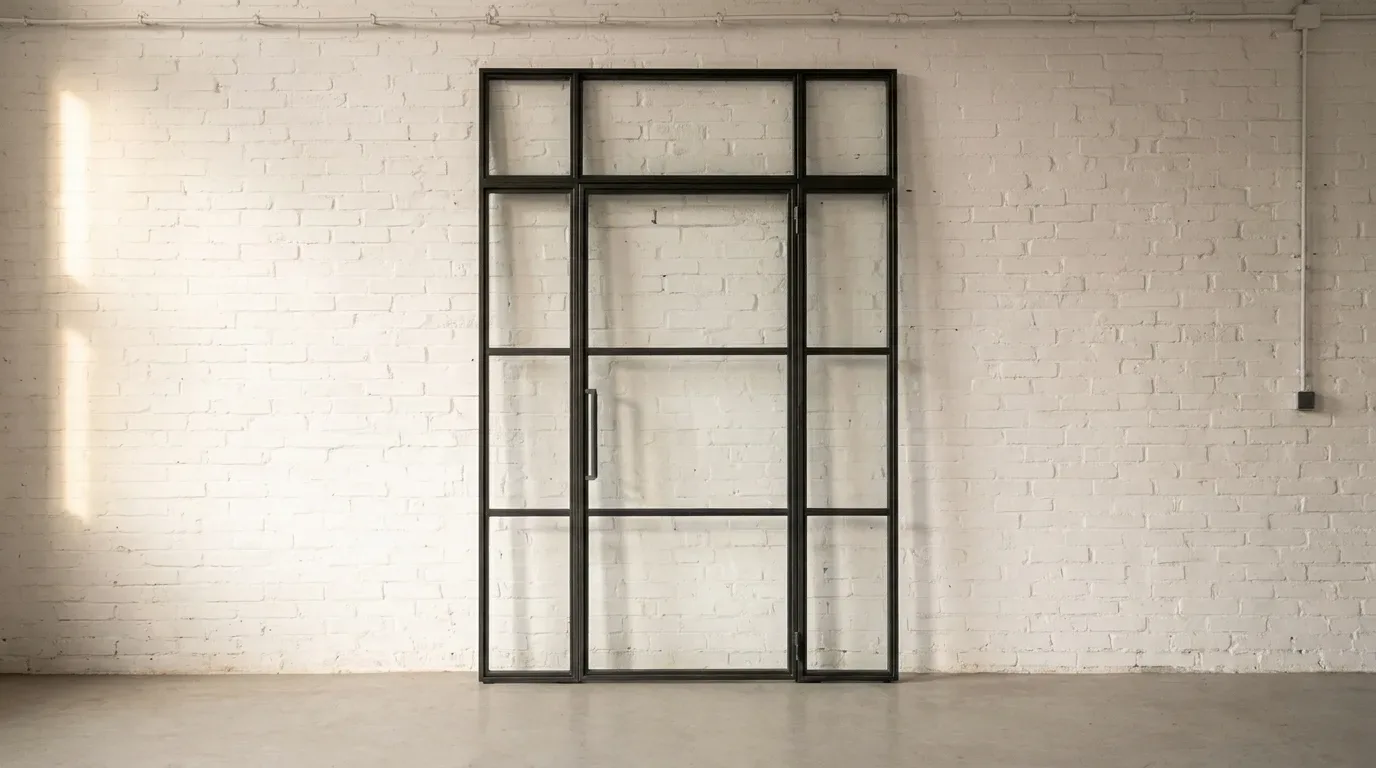
The trade-off is maintenance. High-gloss white shows every fingerprint, every wipe streak, and fine scratches far more visibly than fine-texture matt. In busy areas - kitchen openings, hallways, a child's bedroom - that means a genuine increase in cleaning effort: microfibre cloths only, regular buffing. The additional sanding and polishing required on the steel frame before the powder coating is applied is reflected in the price. High gloss typically costs 8-12% more on the frame price than fine-texture matt - that is a direct expression of the manufacturing process, not a design premium.
Coating Thickness and What It Means in Practice
Regardless of finish choice, powder coating on steel achieves a layer thickness of 60-80 µm under DIN EN ISO 2360 - more consistent than liquid paint, which typically delivers 40-60 µm with a wider variation across the surface. In our production process, every frame is checked for coating uniformity before it leaves the factory. From 60 µm upwards, corrosion resistance class C3 under DIN EN ISO 12944 is reached - relevant if your loft door opens onto a kitchen, utility room, or any space with periodic humidity.
"For steel surfaces used indoors, powder coating is the technically and environmentally superior alternative to liquid paint: no solvent emissions, higher impact resistance, more consistent layer thickness."
- Association of the German Paint and Printing Ink Industry (VdL), Technical Data Sheet on Powder Coating, 2022
These specifications apply equally to every RAL shade we offer - whether matt, gloss, or fine-texture. The coating process does not change based on colour choice.
Coordinating Frame Colour and Glass Together
What "Powder-Coated Loft Door with Glass" Actually Means
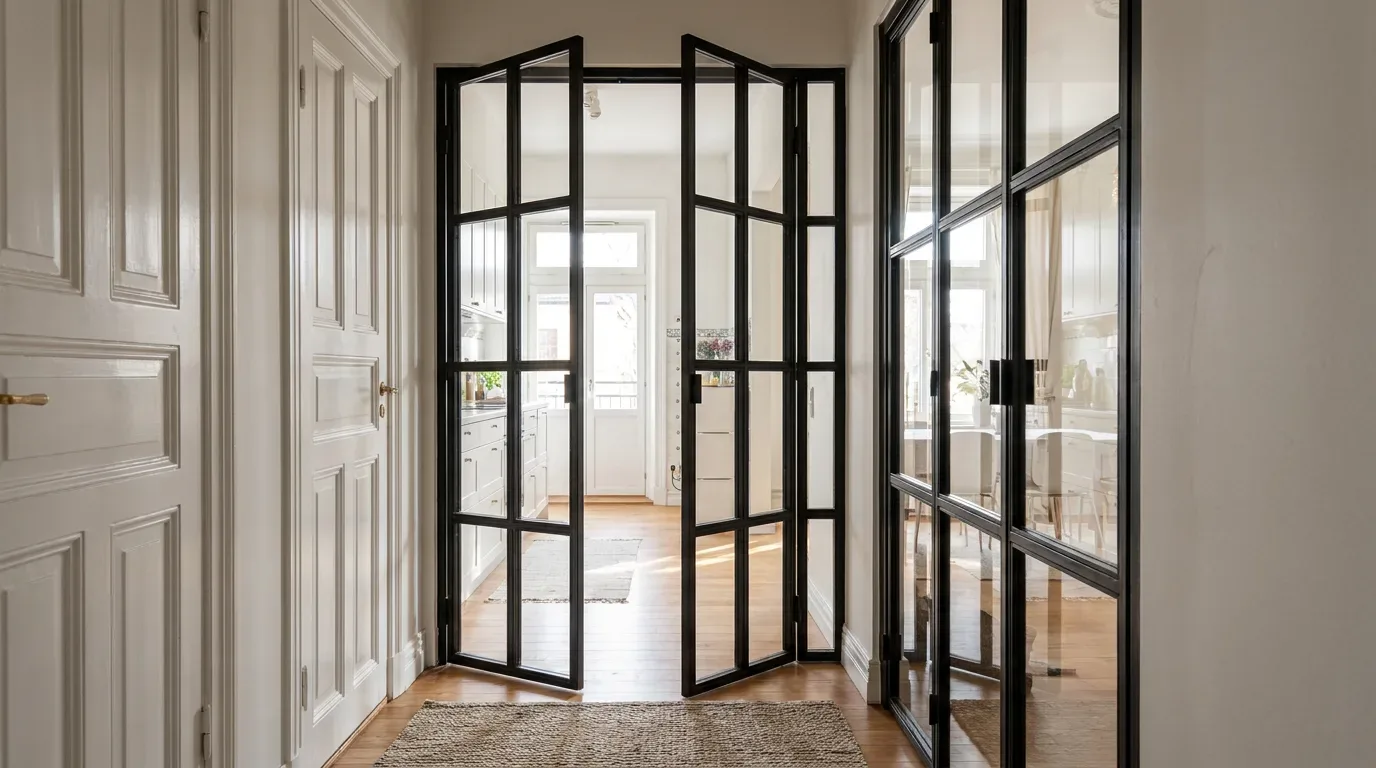
A common source of confusion is the phrase "powder-coated glass loft door." To be precise: the powder coating sits on the steel frame only. The glass itself is not coated or tinted unless you specifically choose a patterned or frosted glass option. Customers who assume the glass will carry the frame colour are often surprised by the clear or satin insert in the finished door. In the configurator, frame colour and glass type are two independent variables - they need to be chosen together, but they are controlled separately.
Clear Safety Glass vs. Laminated Safety Glass
Clear toughened safety glass (ESG) shatters into blunt granules rather than sharp shards when broken - the standard requirement for door glazing - and maximises light transmission. Laminated safety glass (VSG) holds together as a single unit even when broken, thanks to a bonded PVB interlayer. Depending on the interlayer thickness, VSG can improve sound reduction by 2-5 dB compared with toughened glass of the same thickness (Bundesverband Flachglas, Technical Data Sheet 2022). Satin-finish VSG combines privacy with even light diffusion - useful if the loft door opens into a bedroom or a quiet study. VSG adds 20-40% to the glass cost compared with toughened glass, depending on interlayer specification and glass thickness.
White Frames and Glass as a Visual Whole
A white loft door fitted with tinted or bronze glass loses the sense of lightness that the pale frame creates. The white border becomes a bright outline around a dark pane - the door reads as heavier than intended. Clear toughened glass or satin VSG, by contrast, reinforce the transparency and brightness that a white frame establishes. In a period flat conversion in a Victorian terrace in Bristol, a room divider in RAL 9016 Traffic White was paired with satin VSG: the white frame against the original lime-plastered walls created a clean, minimal contrast, while the frosted glass kept the original cornice visible as a background detail without visually cutting the room in two. Frame colour and glass type should be decided together in the configurator - not sequentially.
White Loft Doors in Period Properties and New Builds
Victorian and Edwardian Homes: Where White Makes Sense
In a Victorian terrace or Edwardian semi, the existing white elements are rarely consistent. Cornicing, skirting boards, and window frames may each carry a slightly different white - often the result of successive redecoration cycles. A black steel frame would sharpen every contrast and visually compress the room. A white frame in RAL 9010 or RAL 9016 acts as a unifying element, bridging the steel-and-glass construction to the existing architectural language without pretending the door is not a contemporary piece. RAL 9010 tends to sit more comfortably in these properties because its faint warmth harmonises with the slightly cream tone that aged plasterwork and period joinery take on under warm-white lighting - a nuance that matters in rooms with 2.7-3.2 m ceiling heights, where the frame occupies a significant portion of the wall plane.
New Builds and Open-Plan Spaces: Consistency Above All
In a new-build flat - particularly the open-plan ground floors common in UK volume housebuilding from the 2000s onwards - a white loft door in RAL 9016 reads as clean and architectural, especially when the window profiles carry the same number. The key discipline here is specifying RAL 9016 as a fixed reference across every supplier: the door manufacturer, the kitchen fitter, the electrician supplying white socket faceplates. In a top-floor flat in a converted warehouse in Leeds, an open-plan room divider in RAL 9016 with satin VSG was used to separate the sleeping area from the living space without reducing the sense of volume - the specified RAL number was shared with every trade on site so the white reads as intentional rather than approximate.
Office and Studio Conversions in Listed or Period Stock
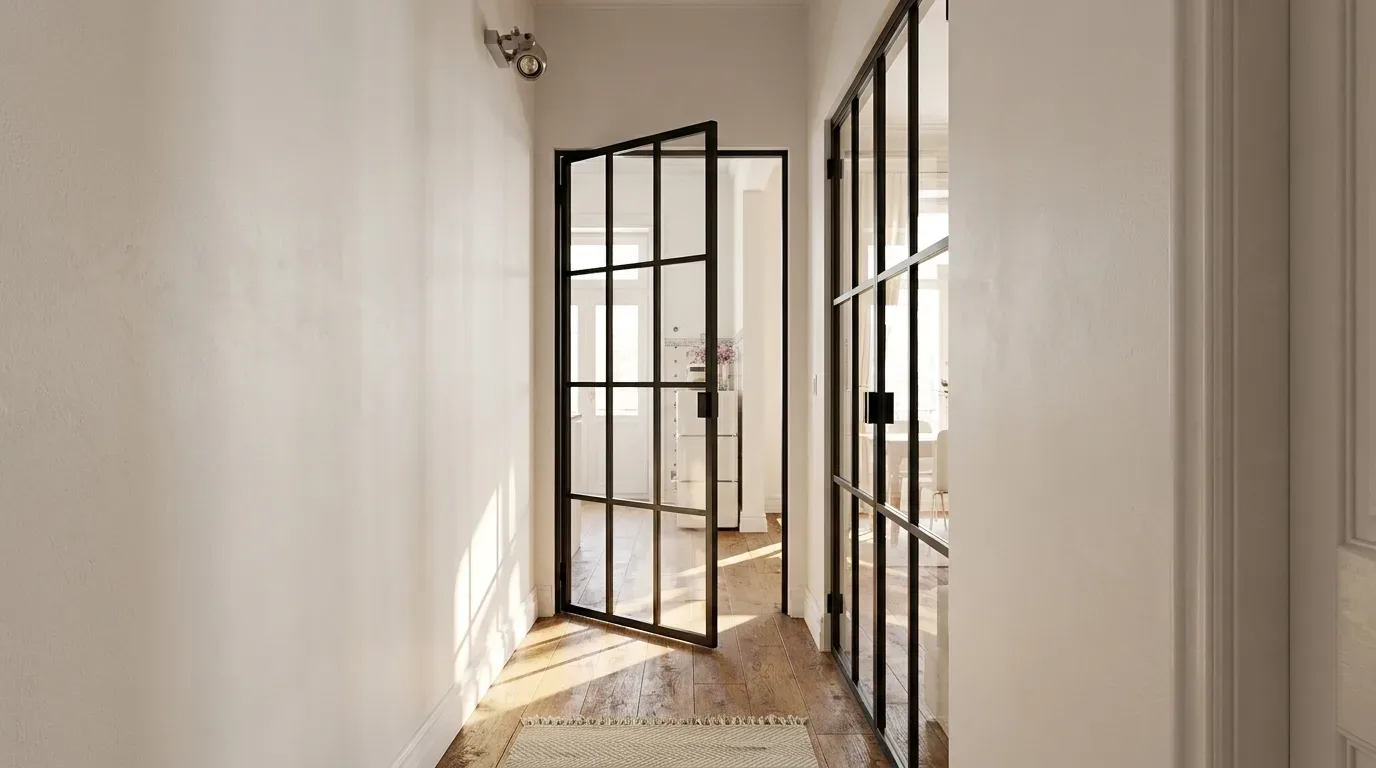
In a brick-built mill or warehouse converted to studio use - a common typology across Northern England and the Scottish Central Belt - a white steel frame prevents the already-dark brickwork from visually absorbing more light. Three loft doors in RAL 9010 Pure White with clear toughened glass were installed as room dividers in a studio conversion in a 1890s mill building in Sheffield: the choice of white rather than black was explicitly motivated by retaining the daylight that reached the interior through high industrial windows. A powder-coated steel frame in that context functions as a room divider without reducing the perceived ceiling height or overpowering the raw brick character.
RAL Numbers as a Coordination Tool Across Trades
Anyone managing multiple suppliers - a door manufacturer, a window company, a radiator supplier, a decorator - needs a shared colour reference. RAL Classic covers 215 shades; in practice, loft door orders concentrate around 20-30 standard tones. RAL numbers are manufacturer-independent and internationally recognised, which makes them the only reliable means of ensuring colour consistency when different trades are buying from different catalogues.
Record the specified RAL number in writing on the order confirmation and in any specification document shared with trades. Powder coating batches can show minimal colour variation even at the same RAL number. If you are ordering a second door or a room divider to match an existing frame, include both in a single production run to eliminate batch variation between pieces.
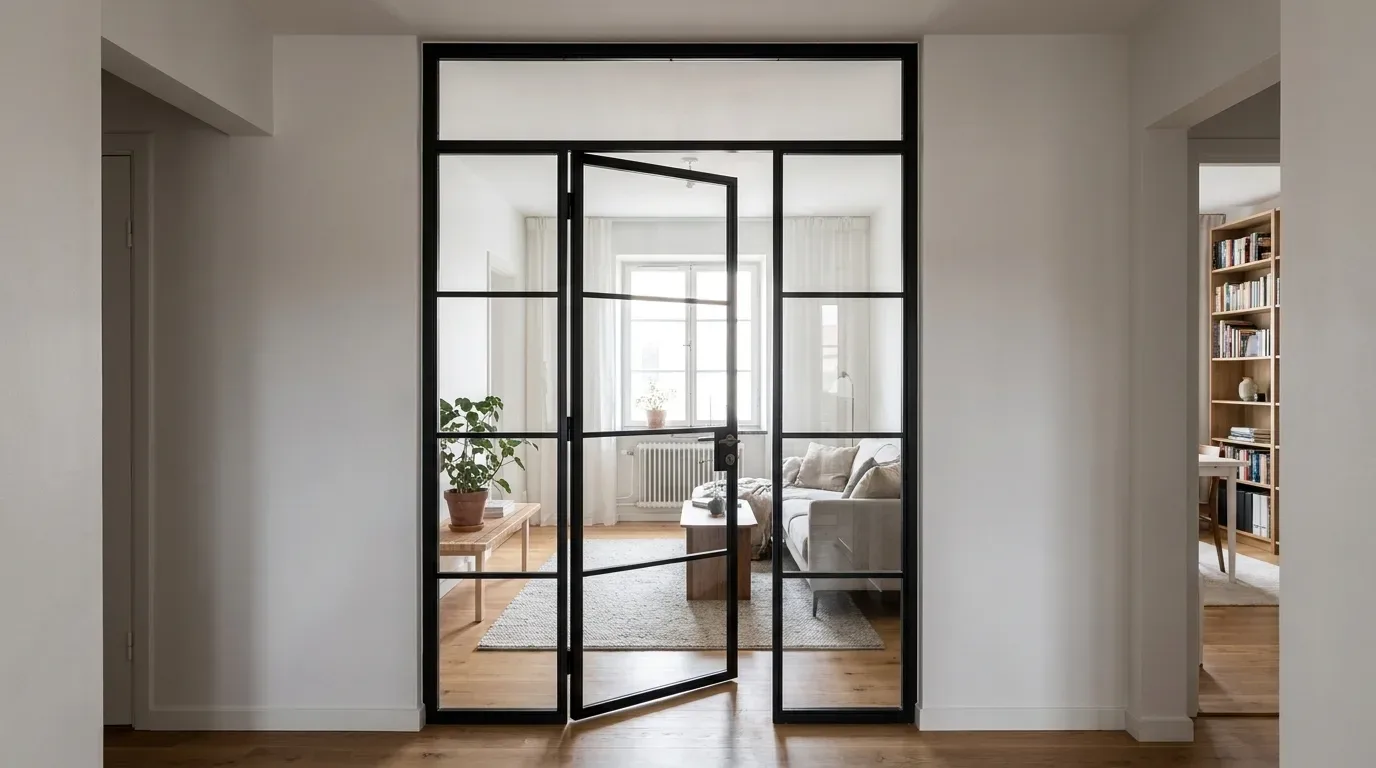
On every loft project I have worked on, the lesson is always the same: glass choice cannot be made independently of the frame colour. A white door with dark glass reads as heavy - frame and glass have to work as a unit if you want to keep the lightness the design promises.
Lukas Brandt
Interior architect specialising in loft conversions
Pricing: What Determines the Cost of a White Loft Door?
Entry Prices and Standard Colours
Steel-framed loft doors with toughened safety glass start from £845 at Manufaktur X. Standard colours - including RAL 9005 Jet Black, RAL 9010 Pure White, and RAL 7016 Anthracite Grey - are included in the base price without a surcharge. A white loft door in any of these standard tones costs exactly the same as the equivalent black version. Custom dimensions and individual RAL shades beyond the standard palette shift the total towards £1,200-£1,900 depending on glass type, hardware choice, and door size. Non-standard colours typically carry a 5-15% surcharge on the frame price.
What Drives the Uplift on Base Price
Two variables have the most significant effect on price above the base figure:
- Finish: High-gloss powder coating costs approximately 8-12% more on the frame price than fine-texture matt, because the additional sanding and polishing of the steel substrate before coating is more labour-intensive.
- Glass specification: Laminated safety glass (VSG) adds 20-40% to the glass element compared with toughened glass (ESG), depending on interlayer thickness and overall glass depth. On a door with 60% glazed area, this is a noticeable uplift on the total price.
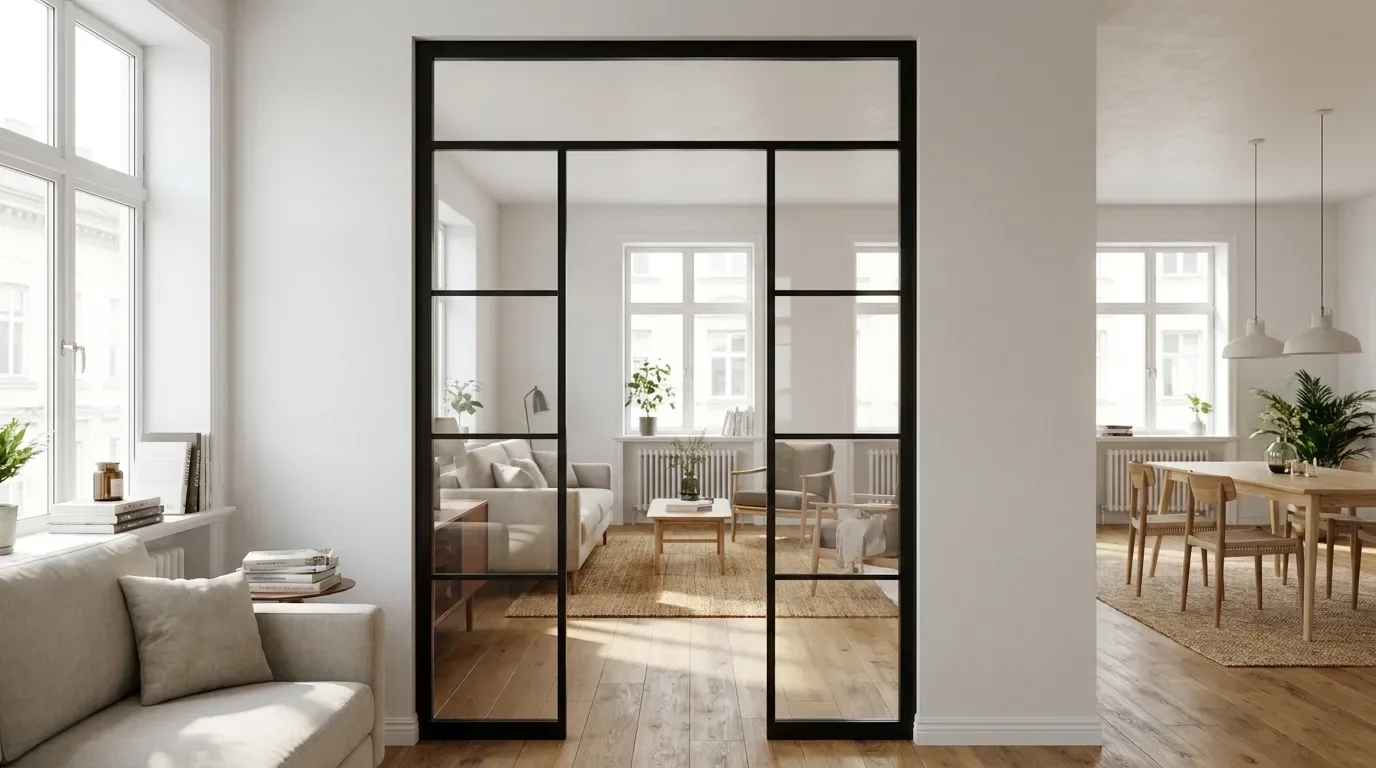
Both uplifts are visible in real time in the configurator on manufakturx.co.uk - the displayed price reflects the chosen finish and glass type before you place an order, with no hidden additions at checkout.
Direct Manufacturer vs. Retail Intermediary
When ordering bespoke sizes through a retailer or intermediary, custom dimensions typically attract a surcharge of 15-30% above the standard size list price - a cost structure that mirrors what you would encounter at John Lewis or a kitchen showroom when specifying non-standard sizes. Manufaktur X manufactures every piece to order: the measured dimensions you enter in the configurator are the dimensions produced. There is no bespoke surcharge because every order is bespoke by default. As a direct-to-consumer manufacturer producing in the EU, there is no retail margin to absorb. The configurator price is the final price.
Any price comparison with other suppliers needs to include the made-to-measure specification. A lower headline figure for a standard-size door is not a valid comparison point if your opening requires a custom size. Measure the clear opening width and height at a minimum of three points - top, middle, and bottom - because period properties in particular can vary by 10-20 mm across a single opening. Those are the dimensions you enter directly into the configurator: your exact desired dimensions, not a construction-opening measurement.
Lead Time, Delivery, and Installation
Installation is not included in the product price. Qualified installers typically charge £300-£500 for fitting a single loft door including glazing, depending on location and complexity. Production and delivery takes 5-6 weeks from order confirmation - whether you choose a standard colour or a bespoke RAL shade. Delivery to the UK is handled with all customs duties and import costs included, so there are no unexpected charges on arrival.
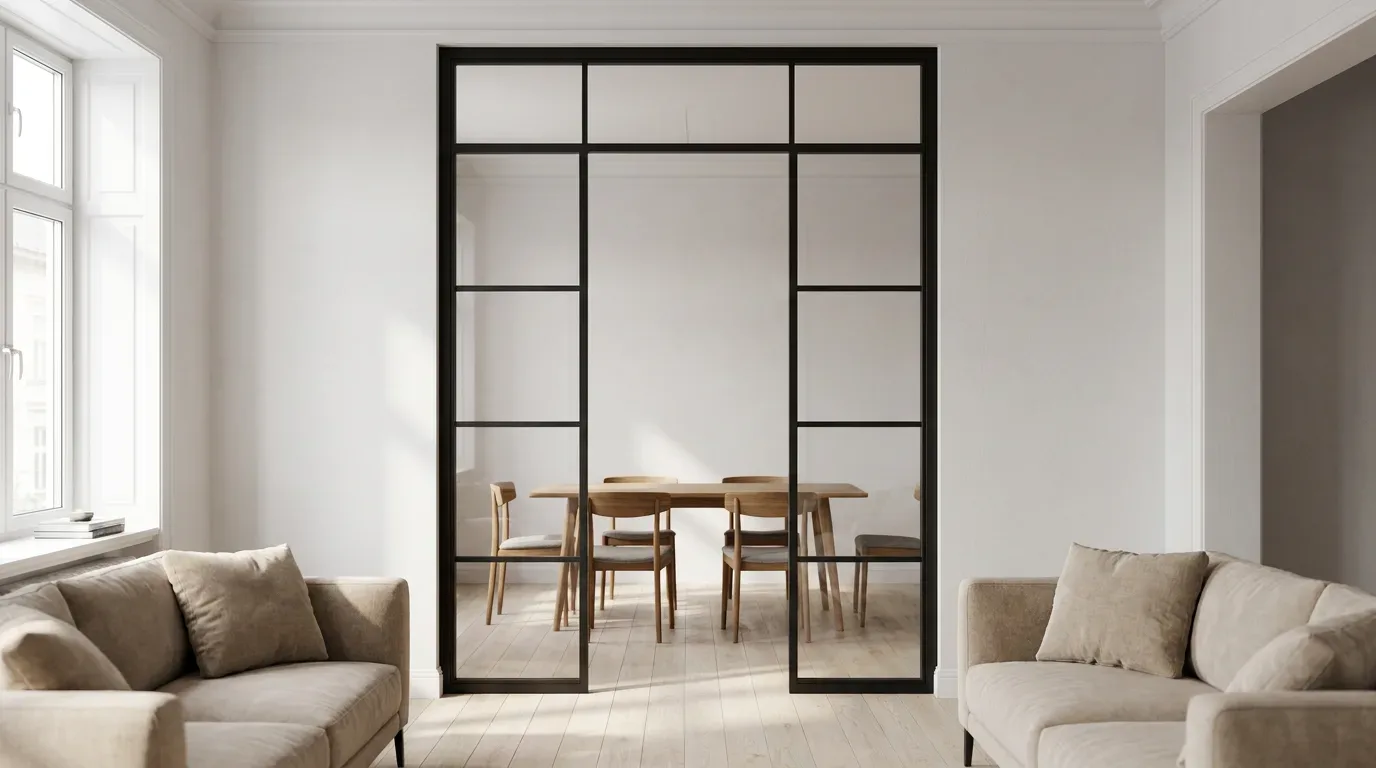
If that lead time is not built into your project schedule, it will delay subsequent trades: decorating and floor finishing both depend on the frame being in place. For projects involving more than one door, consolidating all pieces into a single order ensures they are produced in the same batch, which eliminates any risk of colour variation between frames.
Common Planning Mistakes with White Loft Doors
Using a Printed Colour Fan as a Final Reference
Printed RAL fan decks are not a reliable reference for powder-coated steel. Printing ink absorbs light; a powder-coated steel surface reflects it - directionally if gloss, diffusely if matt. The same RAL 9010 looks different on a paper swatch than on a finished frame, particularly under warm artificial light. Request a physical powder coat sample and hold it in the room where the door will be installed, under the actual lighting you use day-to-day. That is the only comparison that is genuinely planning-safe.
Treating All Whites as Interchangeable
RAL 9003, RAL 9010, and RAL 9016 are measurably different when placed side by side. This is not a theoretical distinction - it becomes visible in the finished room, especially under warm-white LED or direct afternoon sun. Radiators (often RAL 9010), window profiles (often RAL 9016), architraves, and built-in joinery may each carry a slightly different white. Choosing a frame colour without cross-referencing these elements leads to visible inconsistency. The solution is straightforward: identify the RAL number of the dominant white element in the room, order a sample in that shade and the two nearest alternatives, and compare them in situ before finalising.
Deciding on Glass Independently of the Frame Colour
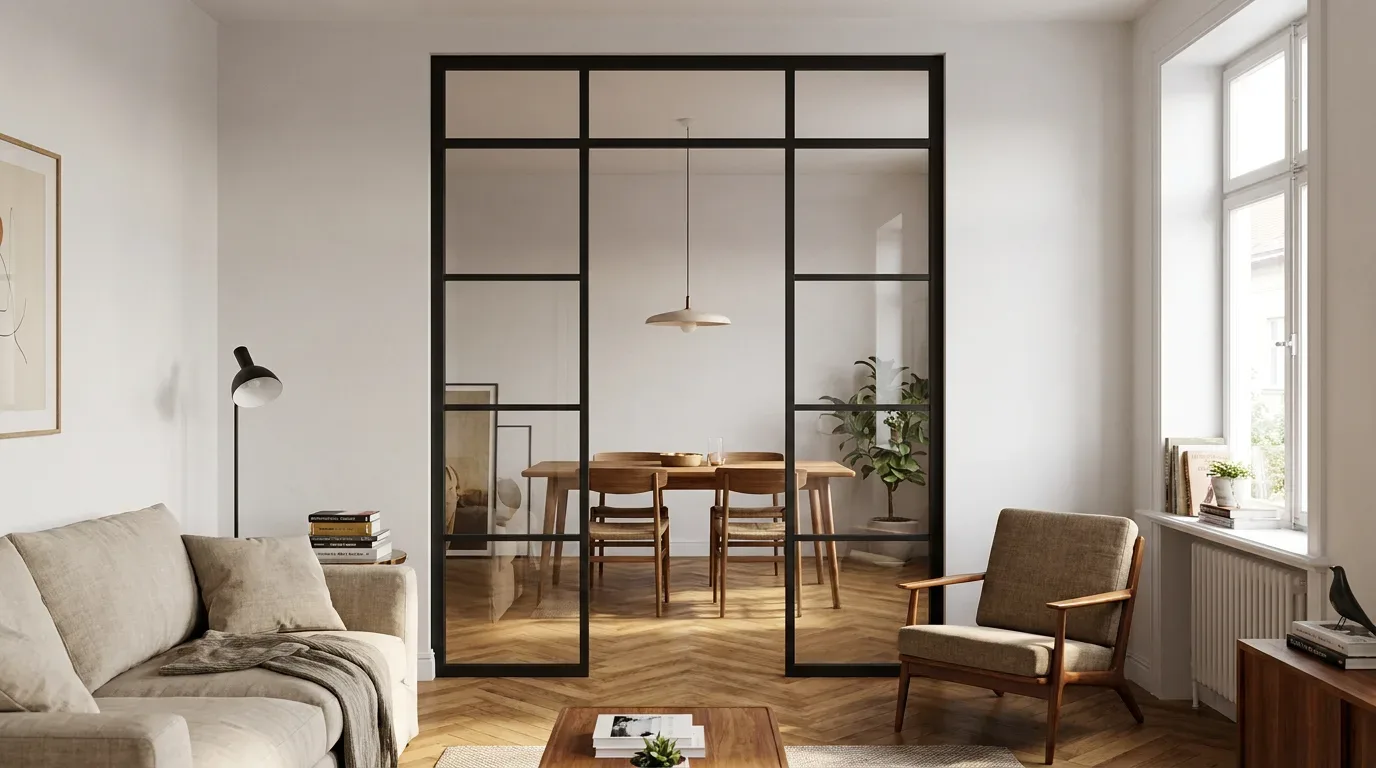
In the configurator, frame colour and glass type are separate choices - but visually they need to be treated as a single decision. A white loft door with bronze or tinted glass loses the sense of lightness that the pale frame creates. The white border becomes a bright surround to a dark pane, and the door reads as heavier than intended. Clear toughened glass or satin VSG are the natural partners for a white frame: they reinforce the transparency and brightness the pale colour establishes rather than working against it.
Not Accounting for the Production Lead Time
Five to six weeks from order confirmation is standard for made-to-measure loft doors. In a renovation project with multiple trades, the door is frequently on the critical path: it needs to be in place before the decorator can finish the reveals and before the floor layer can cut in the threshold. Ordering all doors in a single batch is particularly important for white finishes - a second batch ordered months later may show a marginal colour difference against the original frames, which is far more visible in pale tones than in dark ones.
Maintaining a White Powder-Coated Frame
Day-to-Day Cleaning
Two rules cover routine maintenance of a white powder-coated steel frame: pH-neutral cleaners only, and soft microfibre cloths. Abrasive products, alkaline household cleaners, and solvents attack the coating and create dull patches that cannot be reversed - the only remedy is a full strip and re-coat. For fine-texture matt surfaces, regular wiping with a slightly damp microfibre cloth is sufficient; the micro-texture keeps surface dirt from bonding into the coating. High-gloss surfaces require more frequent attention: any smear or fingerprint is immediately visible, and buffing with a dry cloth after every damp wipe is the only way to keep the surface looking intentional rather than neglected.
White frames require more consistent maintenance than dark frames simply because marks show. If the door is in a busy location - a kitchen opening, a main hallway in a family home - fine-texture matt is the more practical finish. If it is in a low-traffic space where the visual impact of gloss is the priority, the maintenance commitment is manageable. That trade-off is worth making explicit before the finish is chosen in the loft door configurator.