There is a particular satisfaction in a room where everything fits - not roughly, not with a filler strip tacked on at the end, but properly. When the shelf sits flush to the alcove wall, when the loft door swings into a Victorian archway without a gap you could post a letter through, when the dining table is exactly the right length for a narrow kitchen diner. That kind of precision does not come from a showroom floor. It comes from a maker. Manufaktur X produces individual pieces from steel, glass and solid hardwood, built to the millimetre dimensions you specify, by hand.
What Is Industrial-Style Custom Furniture?
The industrial aesthetic is not a passing trend borrowed from a mood board - it is a coherent design philosophy rooted in authenticity, material honesty and function. When former warehouses and mill buildings across British cities were converted into residential lofts during the 1980s and 1990s, the first occupants did not strip out what was there. They kept the exposed brick, the steel columns, the worn timber floors - and built their lives around them. That instinct became a style.
What sets industrial design apart is that it refuses to hide its structure. Weld seams, bolt heads, visible grain in timber, the depth of a steel frame - these are not flaws to be concealed behind MDF cladding. They are the point. Every mark and texture tells you something true about the material.
The Core Principles of the Industrial Look
- Raw materials: Steel, solid wood, concrete, glass - used with their natural character visible, not sanded away
- Structural honesty: Joints, fixings and frames left exposed as deliberate design features
- Form follows function: Every element earns its place - nothing decorative for its own sake
- Patina as a virtue: Wear over time adds character rather than signalling neglect
- Restrained palette: Anthracite, black, rust, raw steel, earth tones - colours that let the material speak
| Characteristic | What it means in the industrial style |
|---|---|
| Material character | Steel, solid wood, glass - natural textures and structures emphasised |
| Structural openness | Visible joints, bolts and frames used as design elements |
| Colour palette | Grey, rust, anthracite, black, earth tones - authenticity over decoration |
| Surface treatment | Minimally processed, natural patina, raw aesthetic |
| Functional aesthetic | Every element has a practical purpose - no superfluous decoration |
Variations on a Theme
The industrial style is broad enough to suit everything from a converted Edwardian warehouse flat to a new-build open-plan living room. The main variants tend to sit somewhere on a spectrum between rawness and warmth:
- Classic Industrial: Maximum rawness - exposed brick, heavy steel frames, unclad structural elements
- Modern Industrial: Cleaner, more restrained interpretation with slim profiles and considered proportions
- Urban Loft: Softer forms, textile accents, lighter surfaces - the warehouse look made genuinely liveable
- Rustic Industrial: Heavy emphasis on reclaimed-feel timber and aged materials
- Industrial-Scandi: The warmth and lightness of Scandinavian interiors tempers the harder industrial edges
- Industrial-Vintage: Raw materials combined with nostalgic finds and period pieces
Why Custom-Made Rather Than Off the Shelf?
If you have ever lived with furniture that genuinely fits your space - no awkward gap beside the radiator, no shelf that stops 30 cm short of the ceiling because that was the next standard size up - you already know the answer. Custom furniture is not about spending more for its own sake. It is about not settling for a compromise in a room you live in every day.
Precision That Standard Sizes Cannot Deliver
British homes are famously varied in their proportions. A 1930s semi-detached has different ceiling heights and alcove depths to a Victorian terrace conversion or a modern new-build flat. Standard furniture is sized for a statistical average that rarely matches your actual room. Made-to-measure industrial furniture is sized for your room alone - the loft door that sits exactly in your period doorway looks fundamentally different from one that required packing pieces to fill the gap.
In our production, the most common reason a custom piece does not fit perfectly on installation is not a manufacturing fault - it is a measurement taken at only one point in an opening that is not perfectly square. The correct approach is always to measure at multiple heights and widths, then work from the smallest figure. For loft doors, allow approximately 5 mm clearance per side - left, right and top - for fitting tolerance. You enter your exact desired dimensions into the configurator; we build to those numbers precisely.
Material Quality That Lasts Decades
Solid oak, beech or ash alongside powder-coated steel age completely differently to the chipboard and foil-wrapped board found in mass-market flat-pack furniture. Solid hardwoods develop a richer patina with use - a table that has hosted ten years of Sunday lunches looks better for it, not worse. The steel frames are powder-coated rather than painted: the process bonds colour evenly into the surface, making it scratch-resistant, durable and more environmentally sound than liquid paint. Compare that to the scratched edges and swollen corners that characterise a flat-pack unit after a few years of ordinary use.
Sustainability Through Longevity
Buying a piece of furniture once and keeping it for thirty years is inherently more sustainable than replacing a flat-pack unit every five. Solid hardwood and powder-coated steel are materials chosen because they last - that is not a marketing claim, it is straightforward materials science. A single investment in quality custom furniture displaces several rounds of mass-produced replacements.
| Aspect | Custom industrial furniture | Off-the-shelf furniture |
|---|---|---|
| Fit | Built to your exact dimensions - no compromises | Standard sizes that may not suit your space |
| Material quality | Solid hardwood (oak, beech, ash) and powder-coated steel | Often chipboard, veneer or lower-grade materials |
| Design approach | Authenticity, raw beauty, function - built around your brief | Trend-driven or purely functional, standardised design |
| Longevity | Decades of use, patina improves with age | Short lifespan, replacement driven |
| Production | Skilled handcraft with precision CNC machining | Industrial mass production |
Materials, Finishes and Colours
The material choice is what separates industrial furniture that convinces from industrial furniture that merely gestures at the style. Manufaktur X works exclusively with solid hardwood, powder-coated steel and - for loft doors and room dividers - safety glass.
Solid Wood: Oak, Beech and Ash
Three species, all hardwoods, all chosen for the right reasons. Oak brings the most pronounced open grain and the greatest natural variation in tone - it is the most popular choice for dining tables and shelving where the wood itself is the visual centrepiece. Beech is denser and more even-grained, with a slightly warmer, tighter appearance. Ash has a distinctive pale, flowing grain that suits lighter, more contemporary interpretations of the industrial look. All three have the natural hardness to hold up to daily use without rapid wear.
More than 50 stain finishes are available, ranging from light natural tones through warm mid-oak shades to deep, near-black finishes. The grain remains visible through the stain - you are colouring the wood, not covering it.
A note on construction: dining table and coffee table tops, as well as bench seats, are available either as solid glued board (genuine solid wood throughout) or as a veneered construction. Shelving - both the large shelf and the pipe shelf - is always solid wood, with no veneer option.
Steel Frames: Powder-Coated in Any RAL Colour
All steel frames are powder-coated - not painted. Powder coating involves electrostatically applying dry powder to the steel and curing it at high temperature, creating a finish that bonds to the surface rather than sitting on top of it. The result is a colour that is even, scratch-resistant and far more durable than conventional liquid paint. Any RAL colour is available: anthracite (RAL 7016) and matt black (RAL 9005) are the most popular choices for the industrial look, but clean white (RAL 9010) works well for the Scandi-industrial variant, and the full RAL range is open to you.
Glass: Five Options for Loft Doors and Room Dividers
Glass features only in the two steel-and-glass products - the loft door and the room divider. Five glass designs are available in the configurator:
- Clear glass - maximum transparency, ideal for borrowing light between rooms
- Frosted glass - soft privacy with continued light transmission
- Smoked glass - tinted appearance with a degree of visual screening
- Dark smoked glass - stronger tint for greater privacy
- Textured glass - patterned surface that scatters light attractively
For glass type, you can specify either ESG (toughened safety glass) or VSG (laminated safety glass). For larger panels - particularly taller or wider configurations - VSG is recommended for additional rigidity and safety performance. ESG thickness is typically 6 mm for standard configurations; VSG panels use two bonded panes, making them the appropriate choice where panel area or aspect ratio demands greater structural integrity.
The Manufaktur X Product Range
Every product in the range is built from the same core materials - powder-coated steel, solid hardwood in oak, beech or ash, and where relevant, safety glass. The range divides naturally into steel-and-glass products and steel-and-timber products.
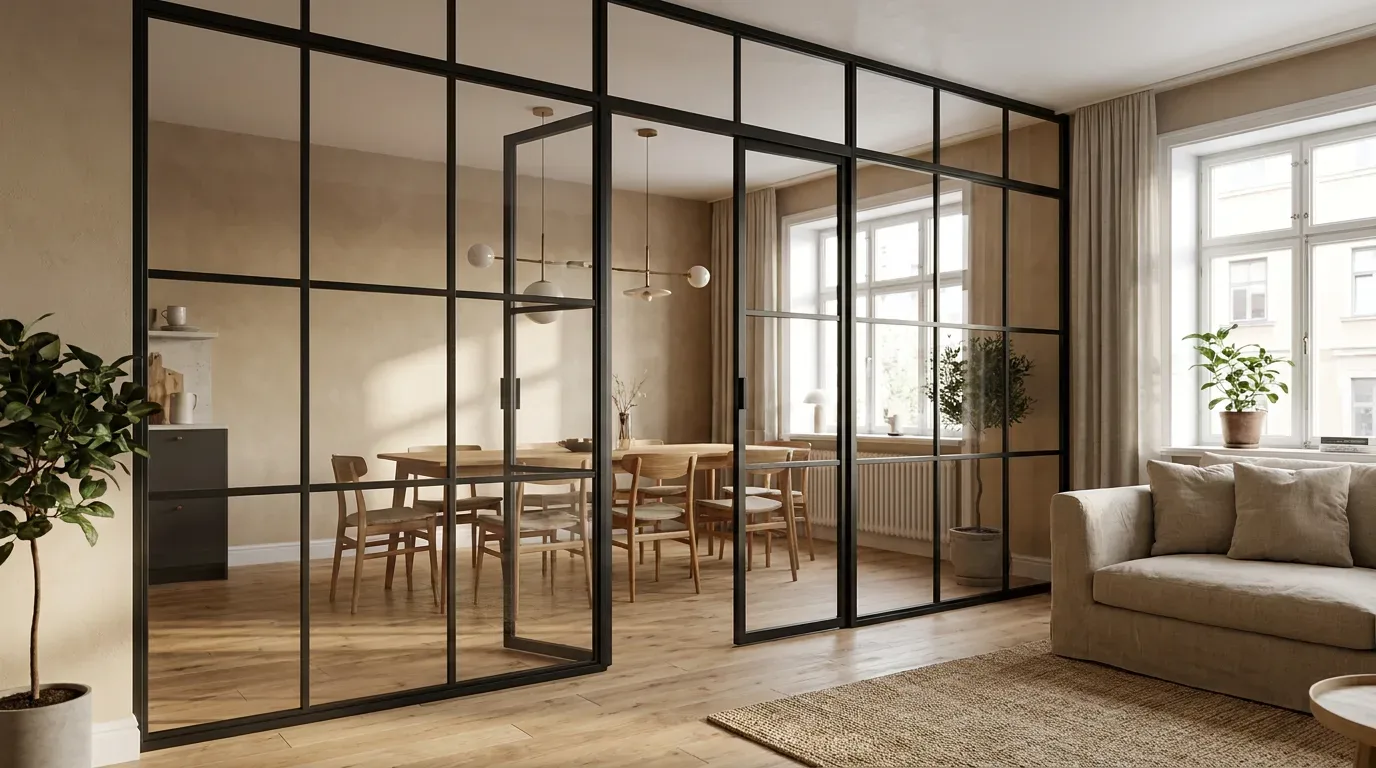
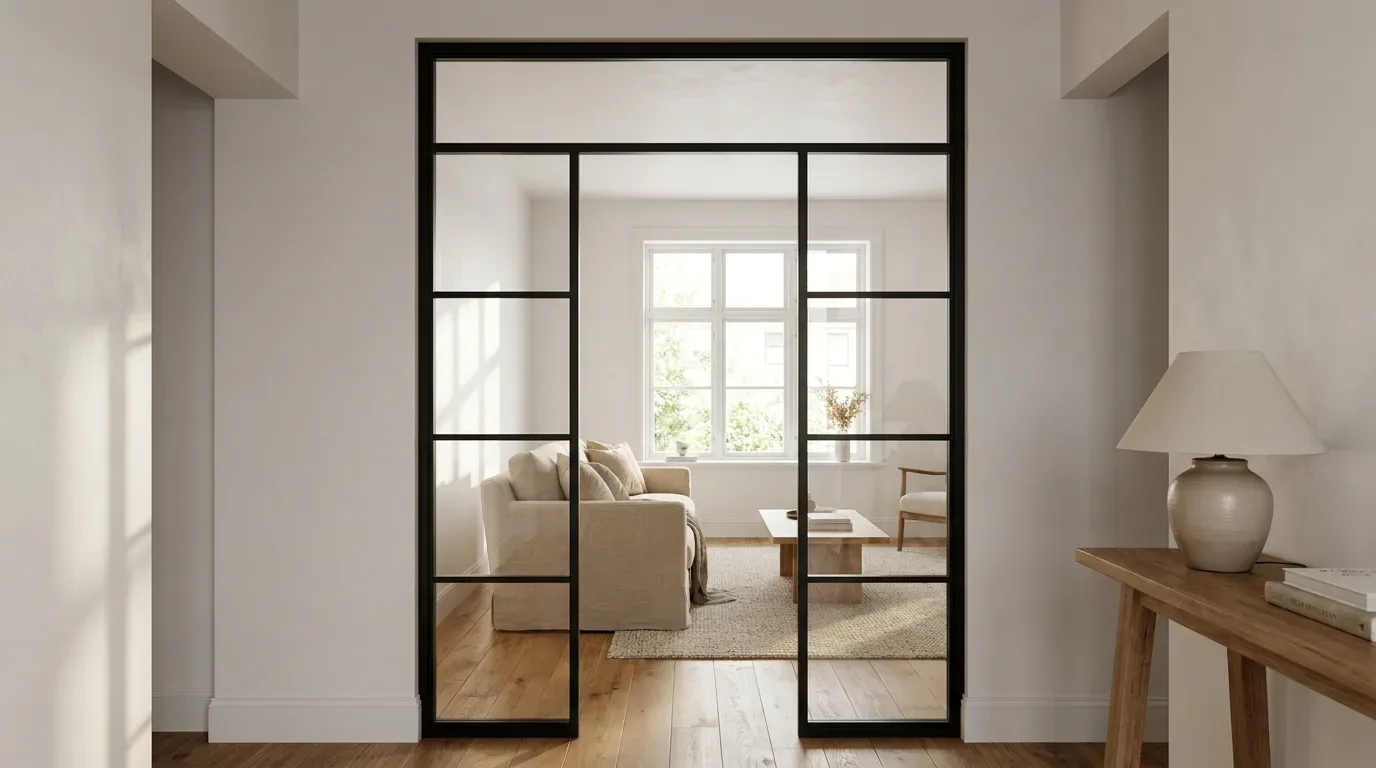
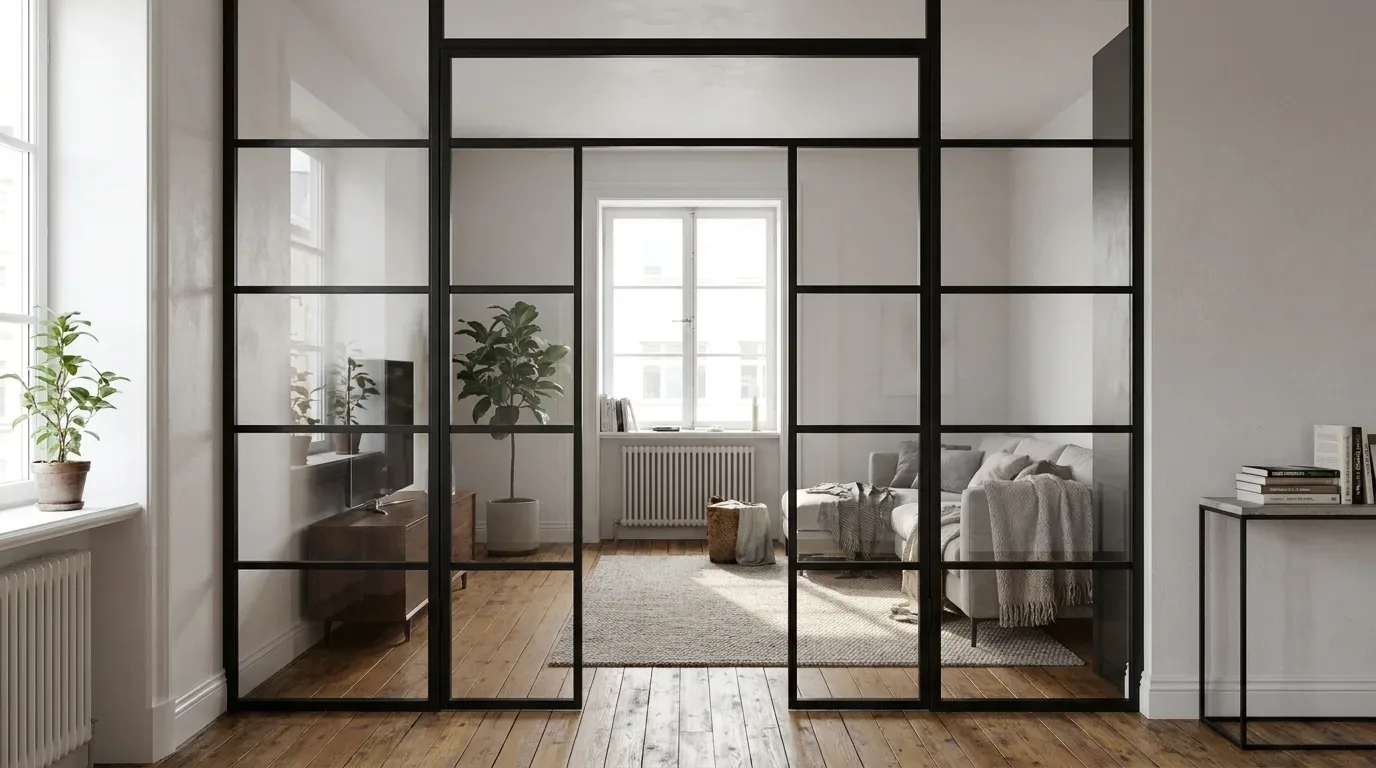
Loft Doors - Custom Steel and Glass Doors
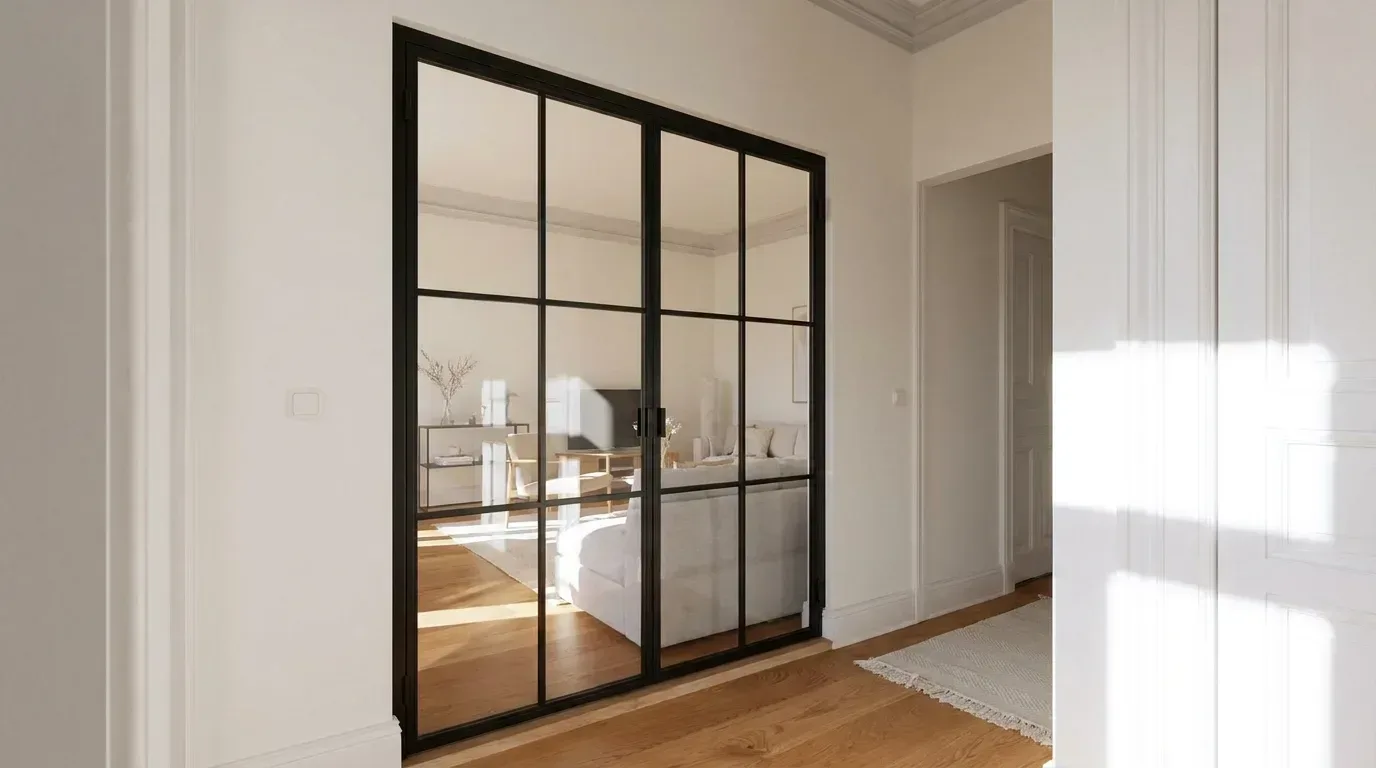
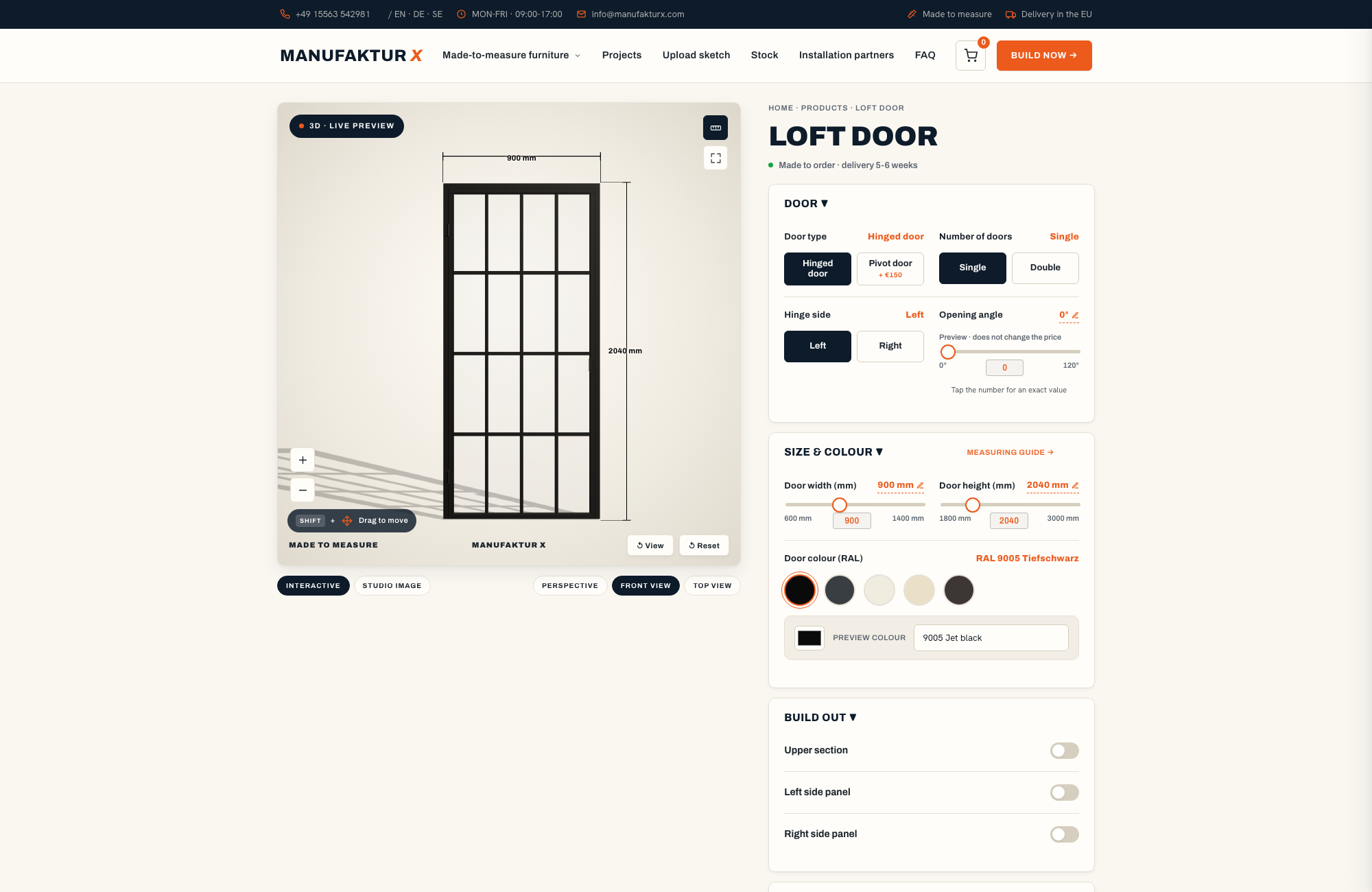
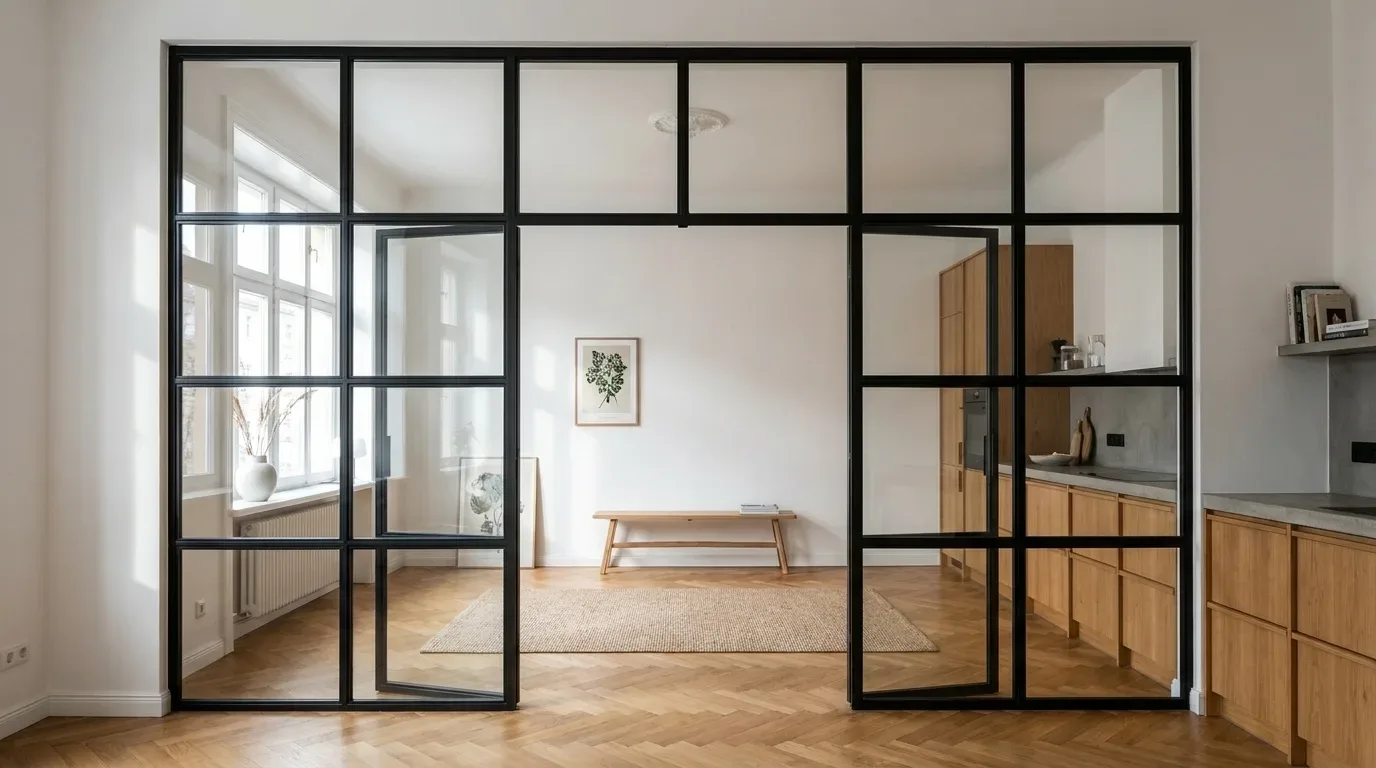
The loft door is a proper hinged door: it has a defined door stop (left or right hand), a configurable opening direction and opening angle, and working hinges. Three handle designs are available - Long, Discreet and Half-Moon. Slim steel profiles, generous glazed panels, that unmistakable factory aesthetic - with the final price depending on dimensions, glass type, handle choice and finish, updated in real time as you configure.
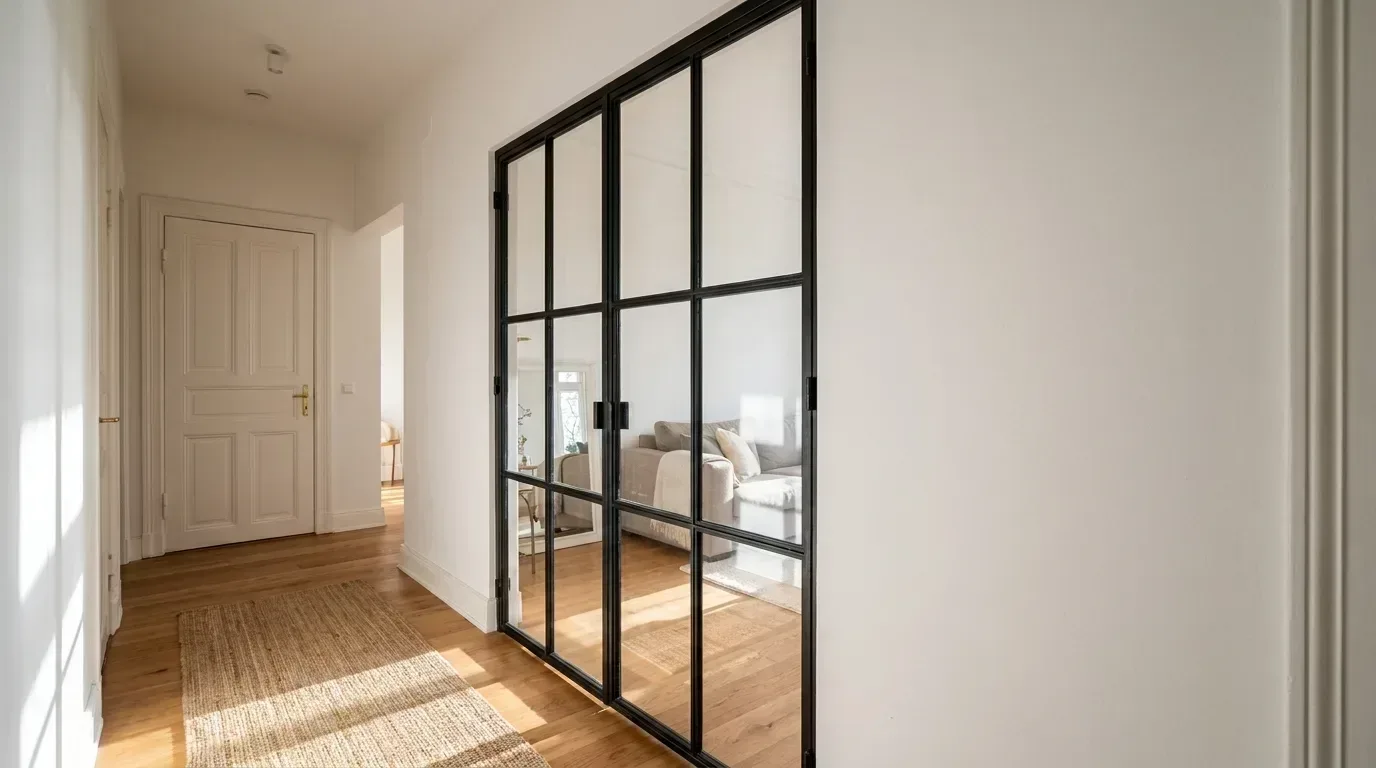
Loft doors work particularly well in period properties - a steel-and-glass door fitted into a Victorian or Edwardian doorway creates a genuinely striking contrast between the building's original character and a clean, contemporary intervention.
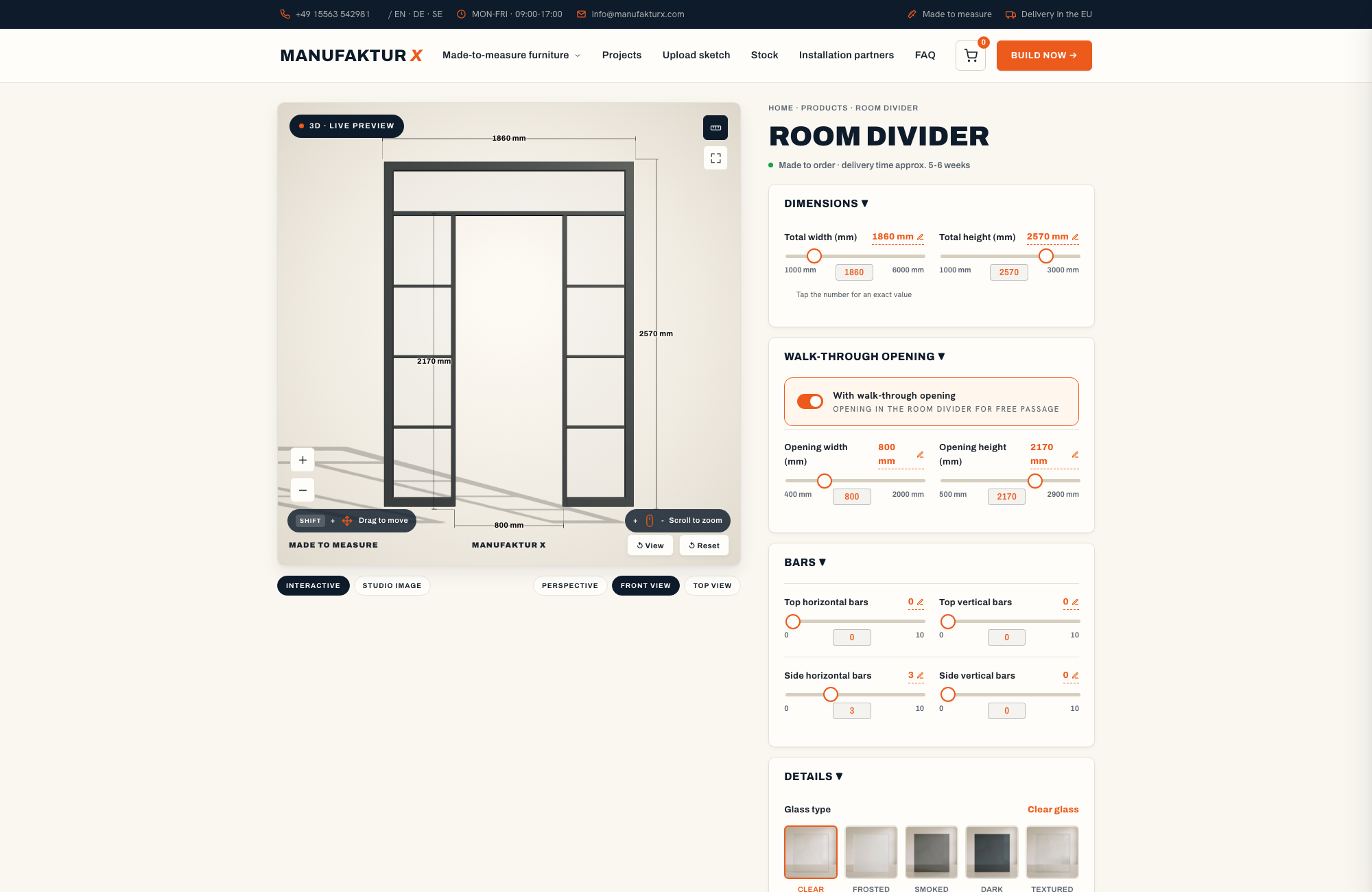
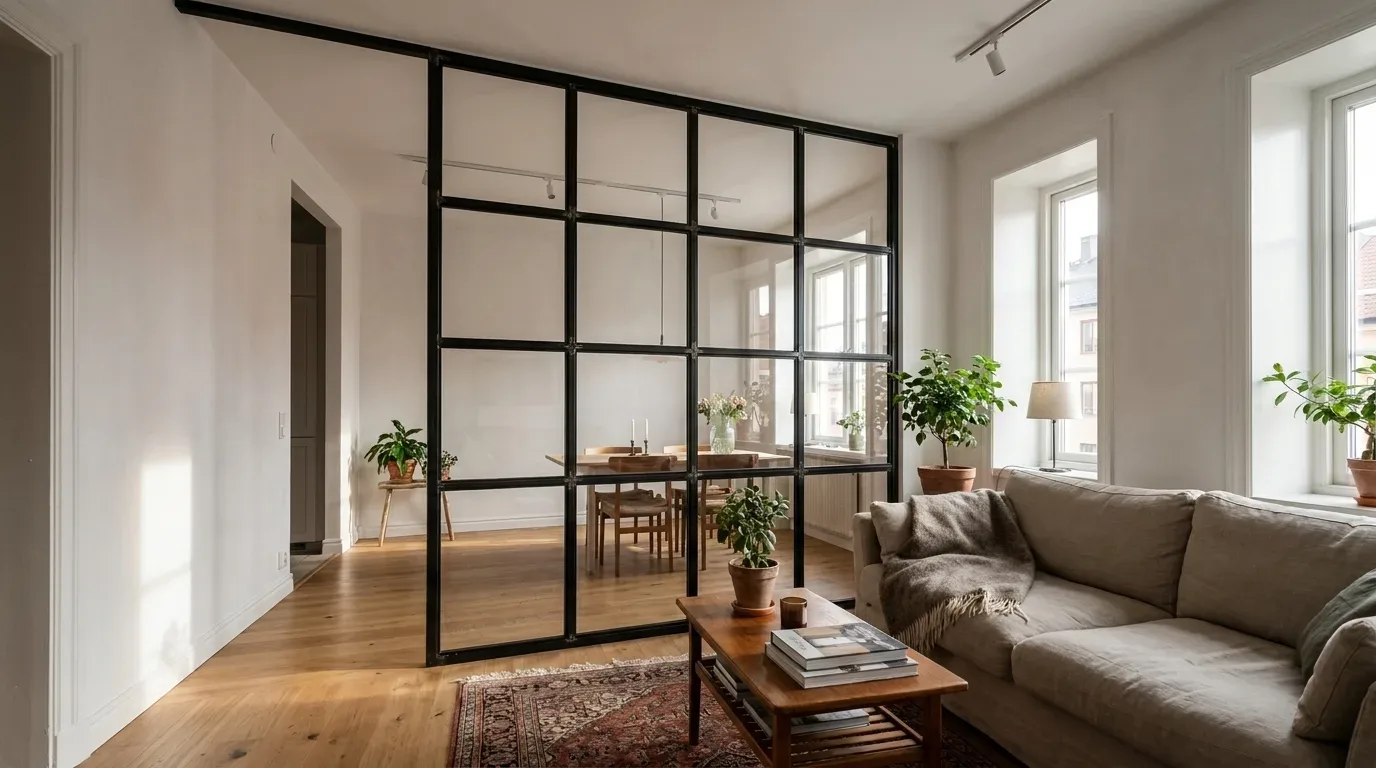
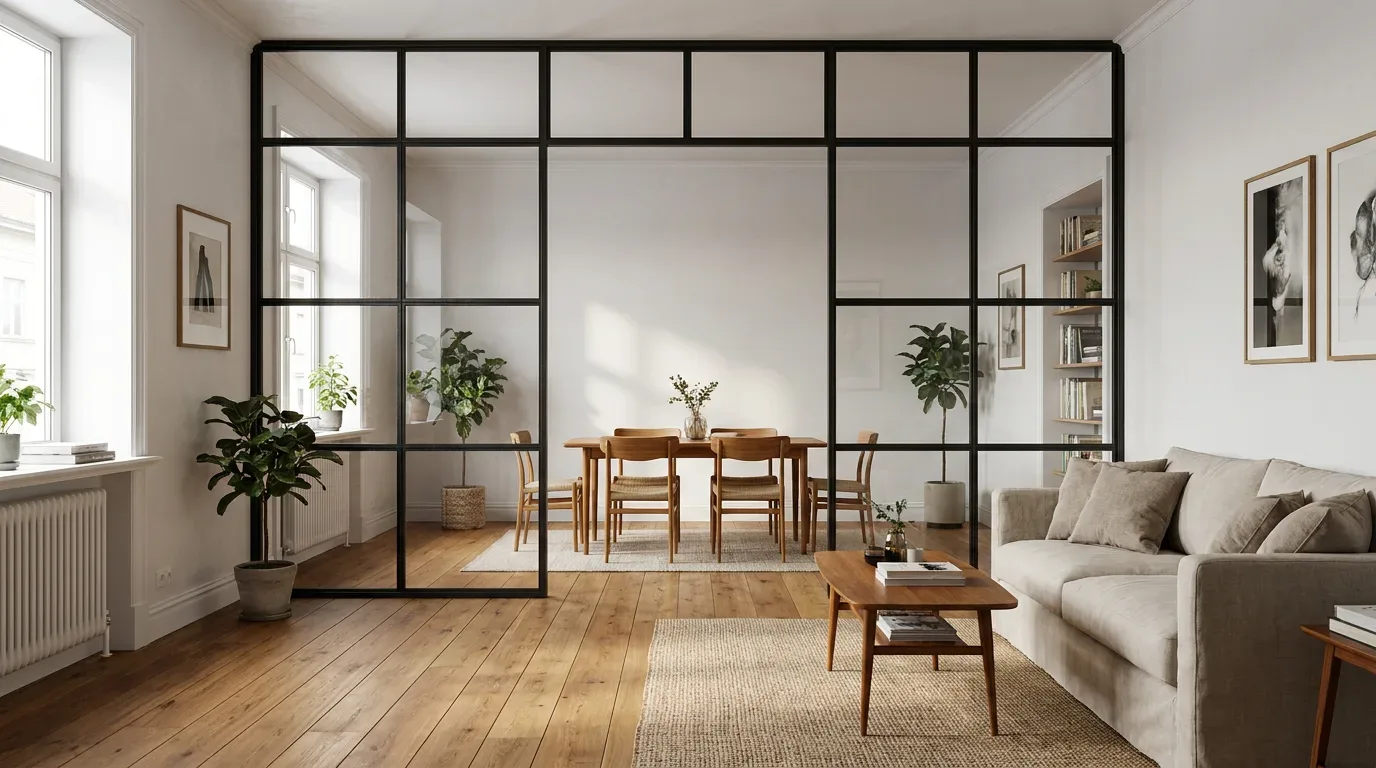
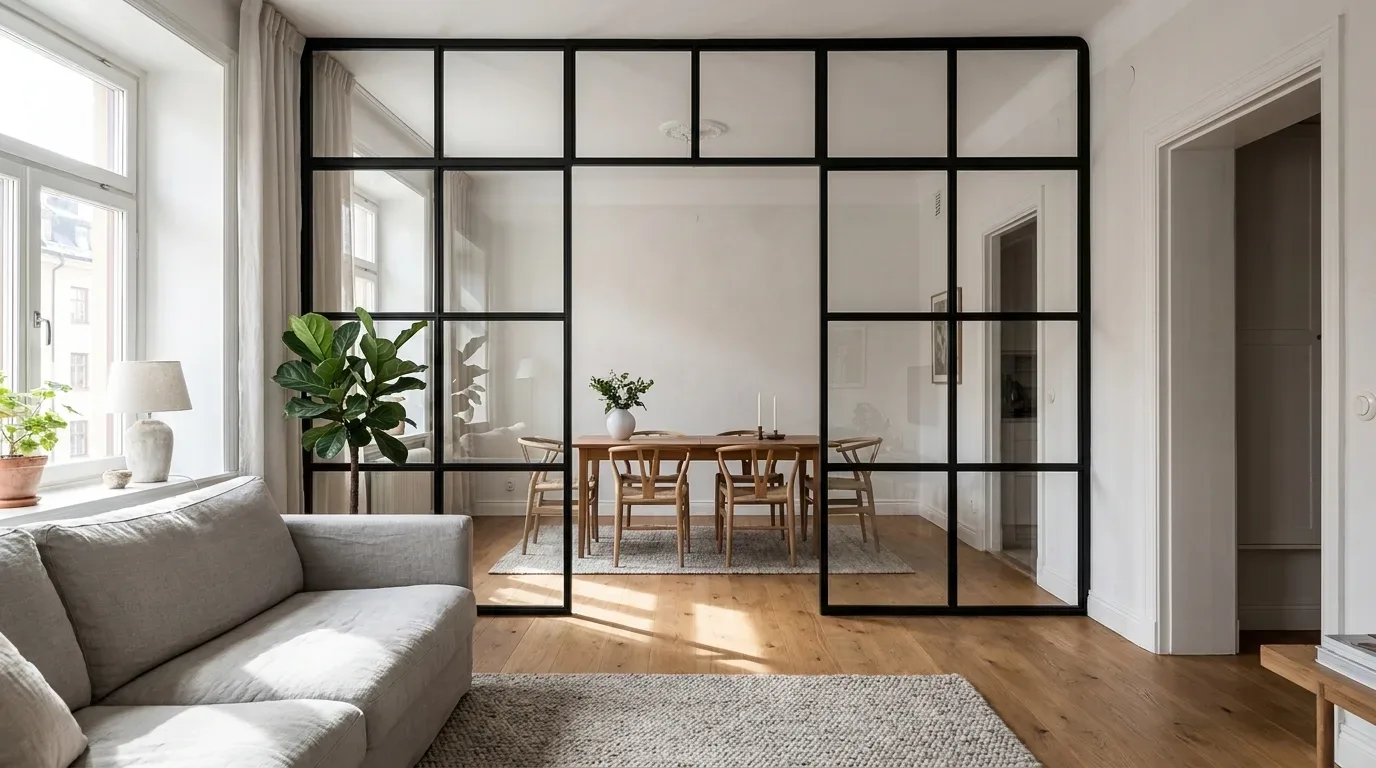
Room Dividers - Fixed Steel and Glass Partition Walls
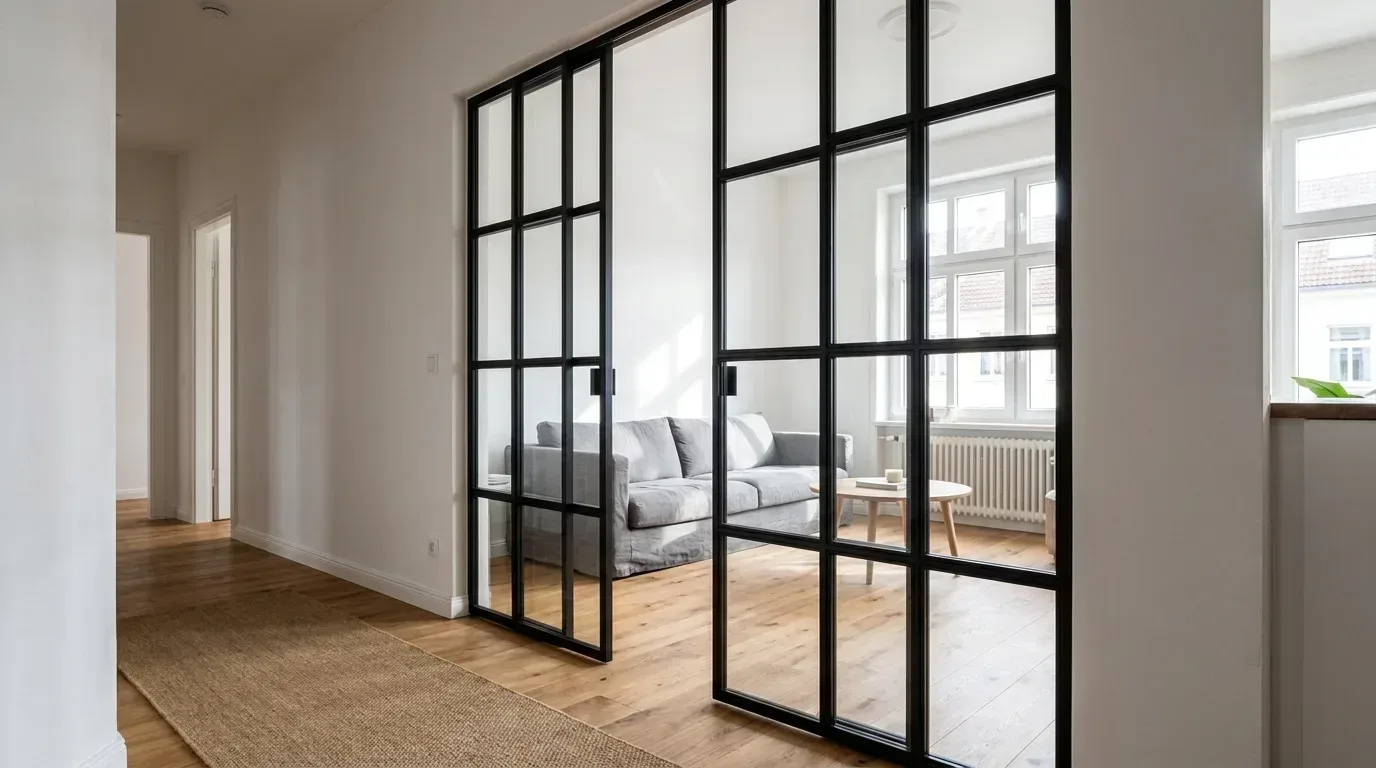
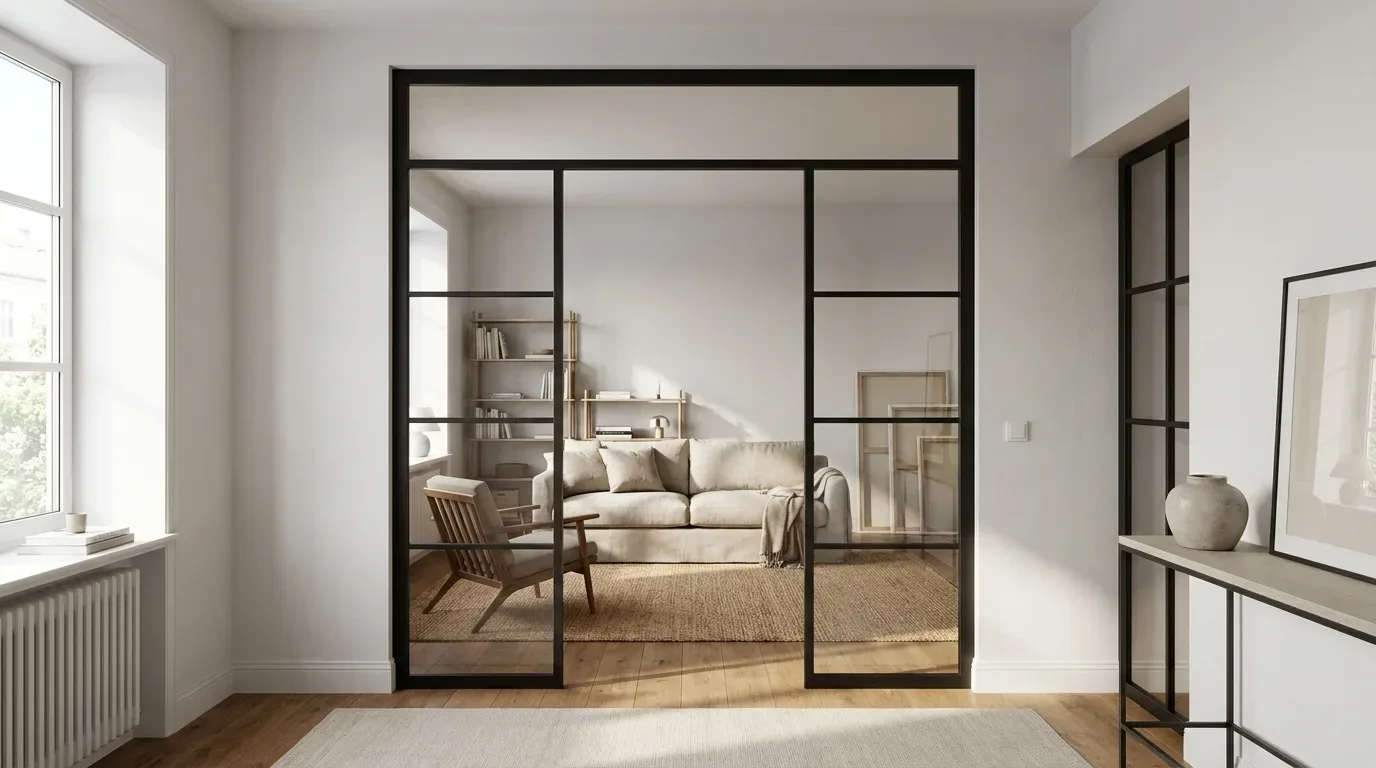
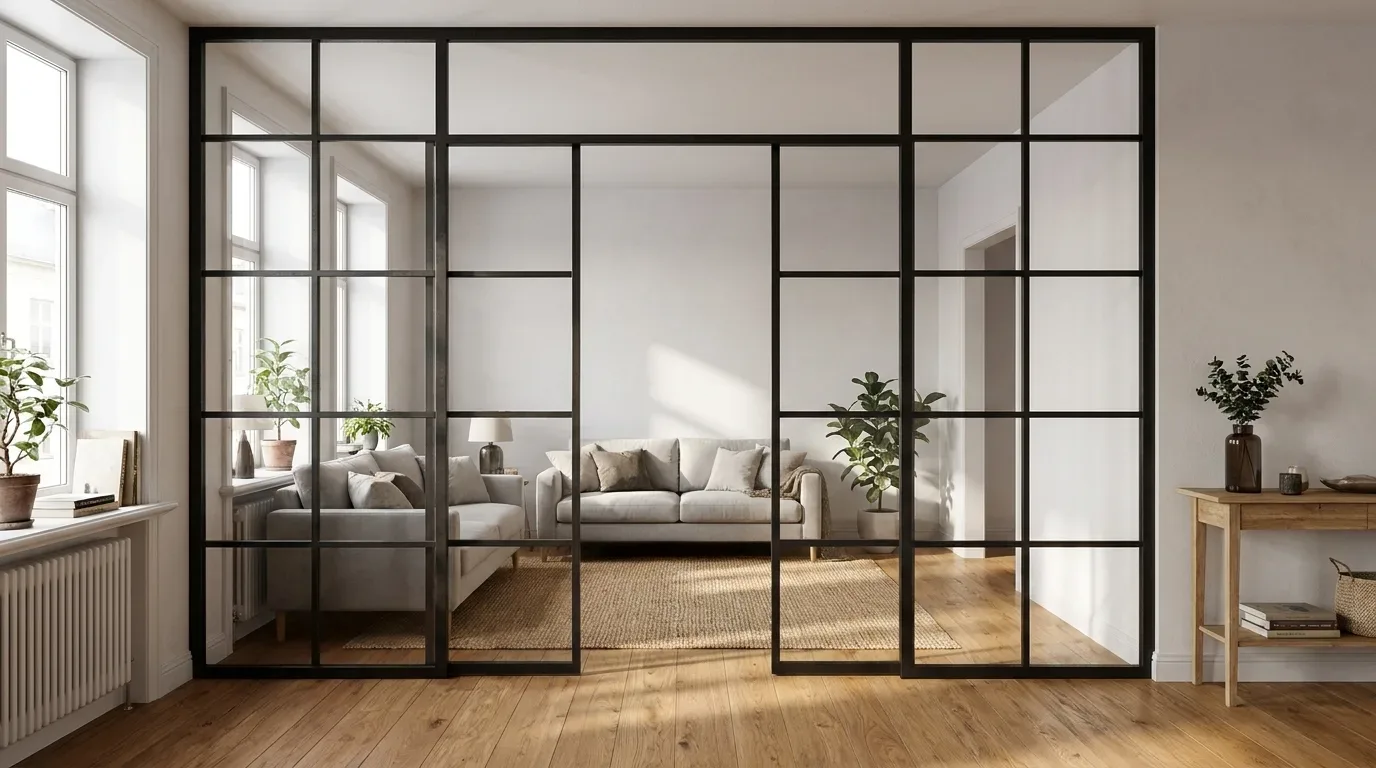
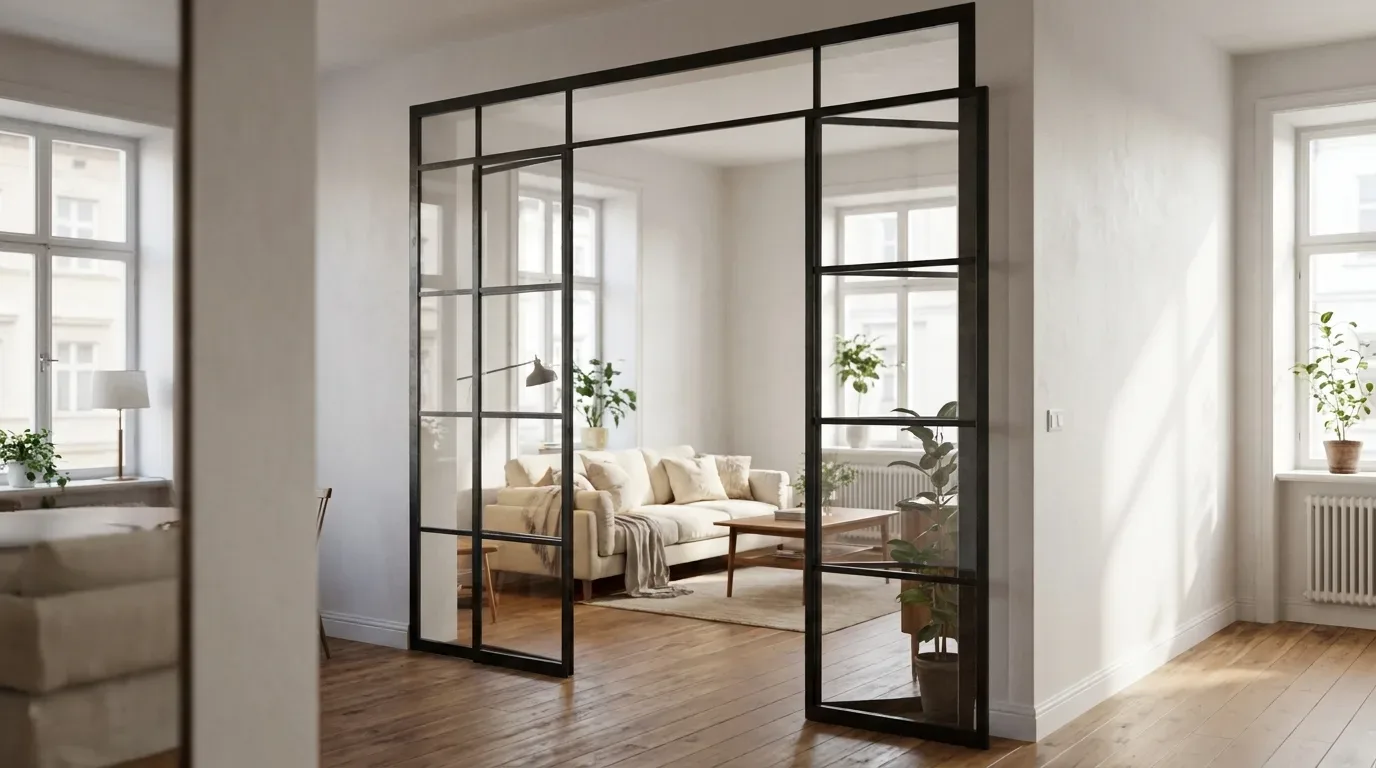
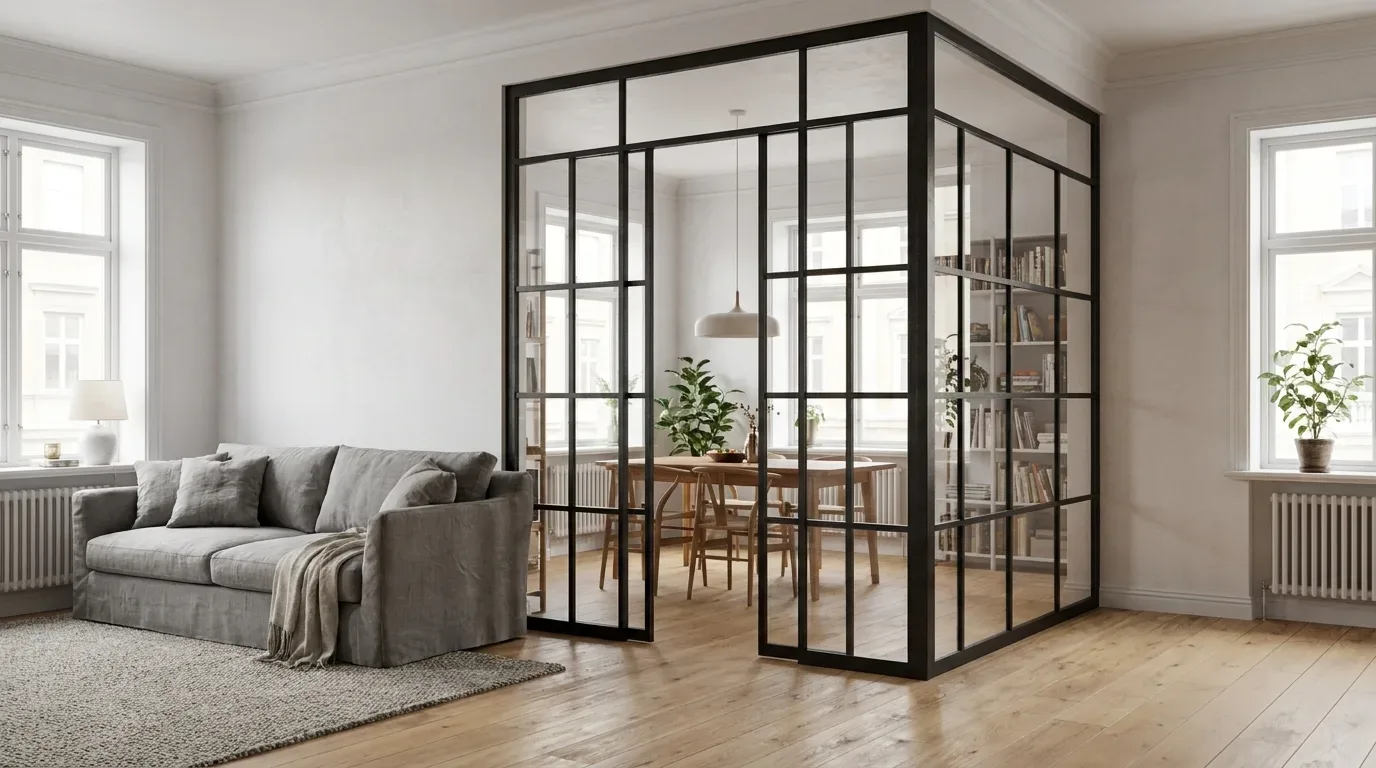
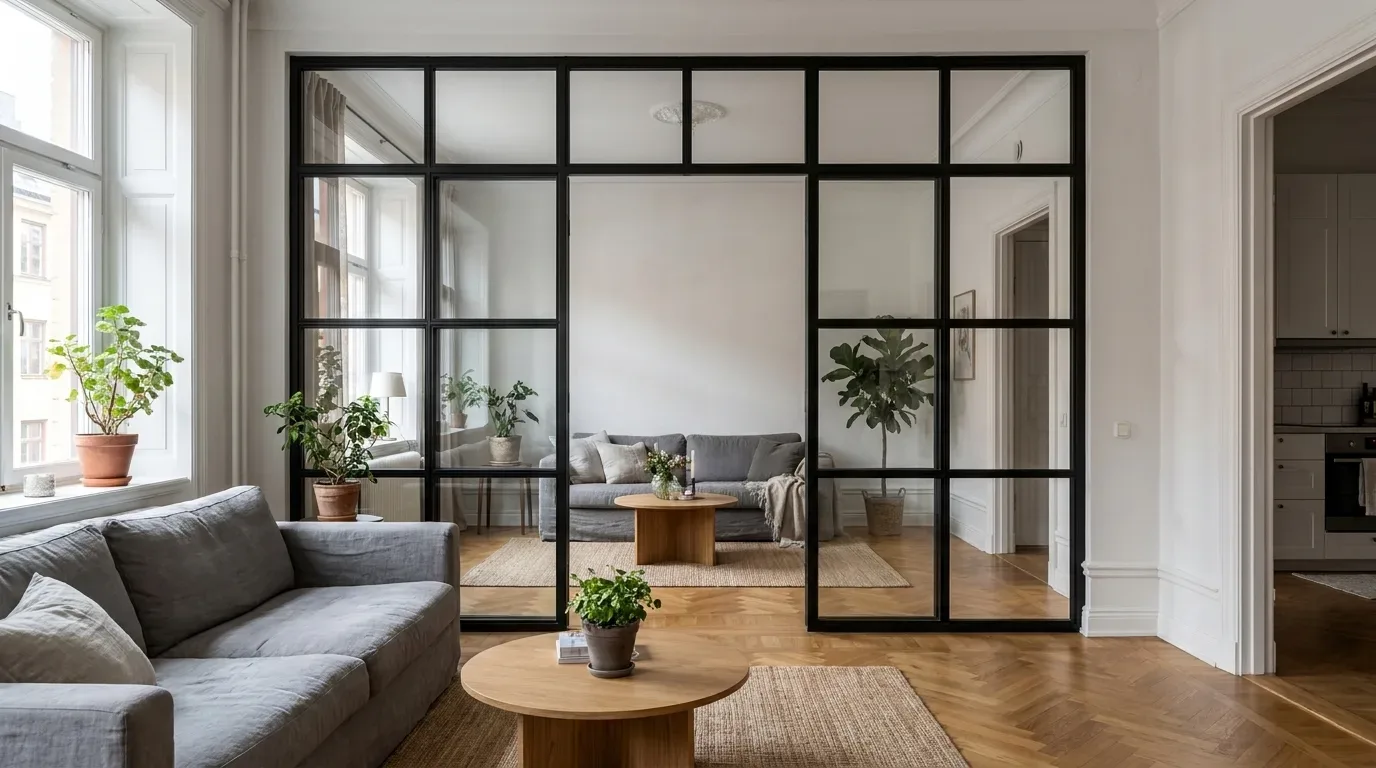
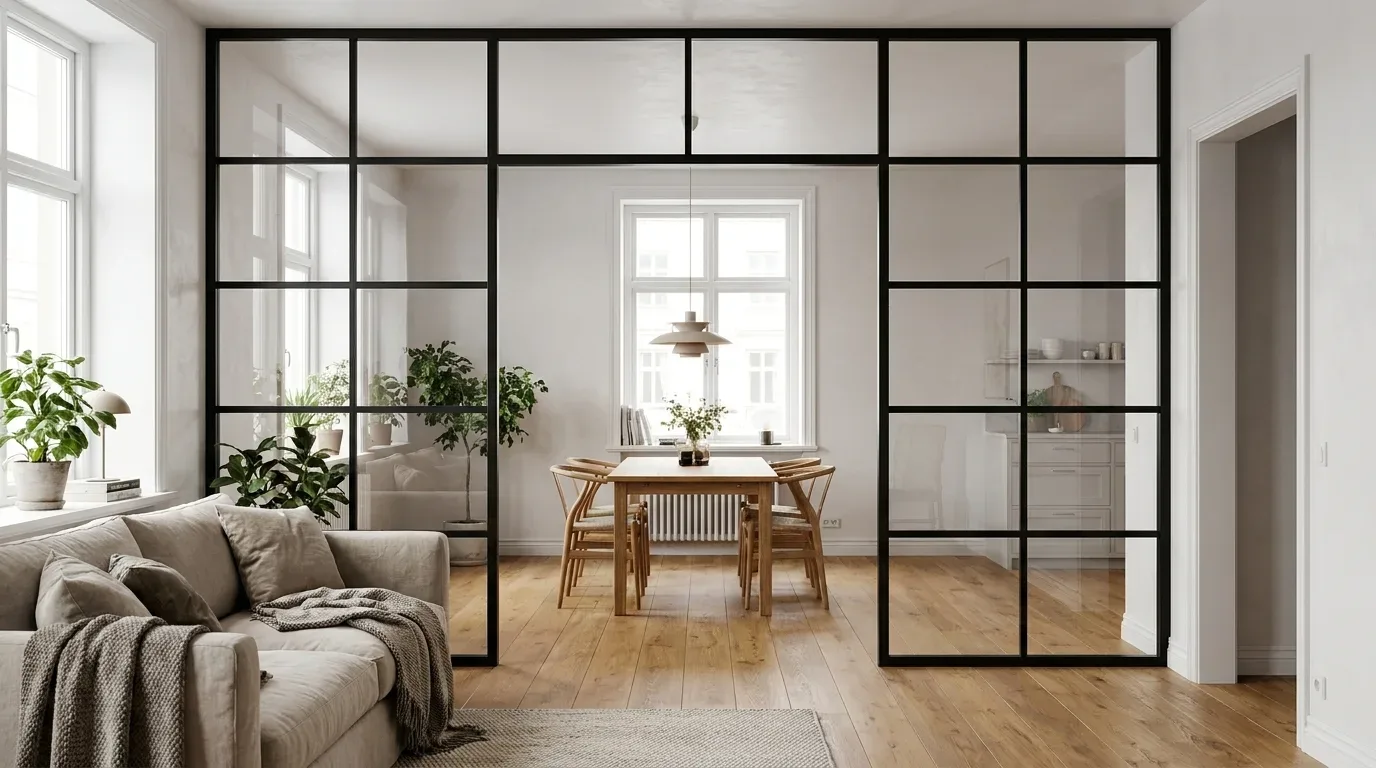
The room divider is a fixed partition - it does not open or move. There is no door stop, no hinge, no handle. It is a structural steel-and-glass wall that defines space without enclosing it completely. An open walkthrough aperture can be incorporated if you want to pass between zones without fitting a door. In open-plan flats and knocked-through Victorian terraces, a room divider is often the most elegant way to separate a home office from a living area while keeping the light flowing through the glazed panels.
Large Shelf - Steel Frame with Solid Wood Shelves
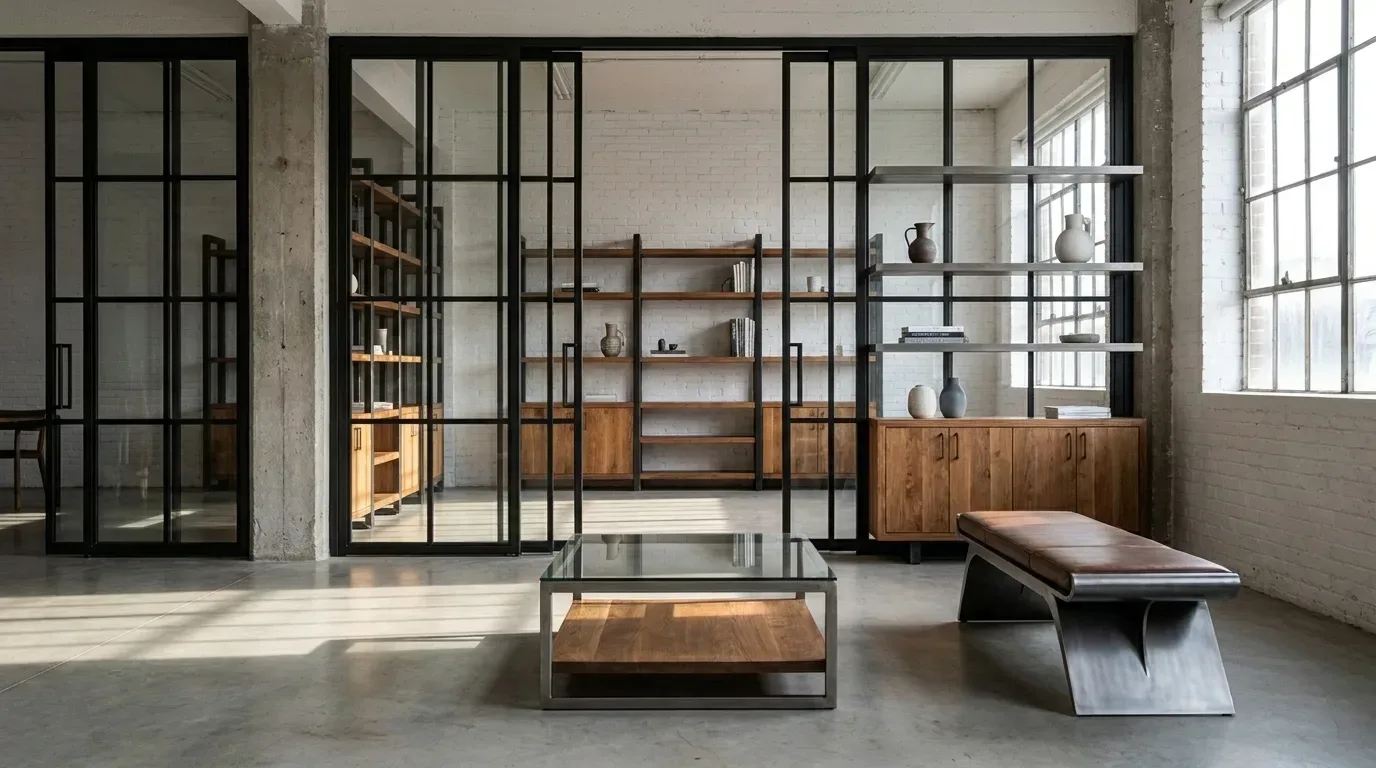
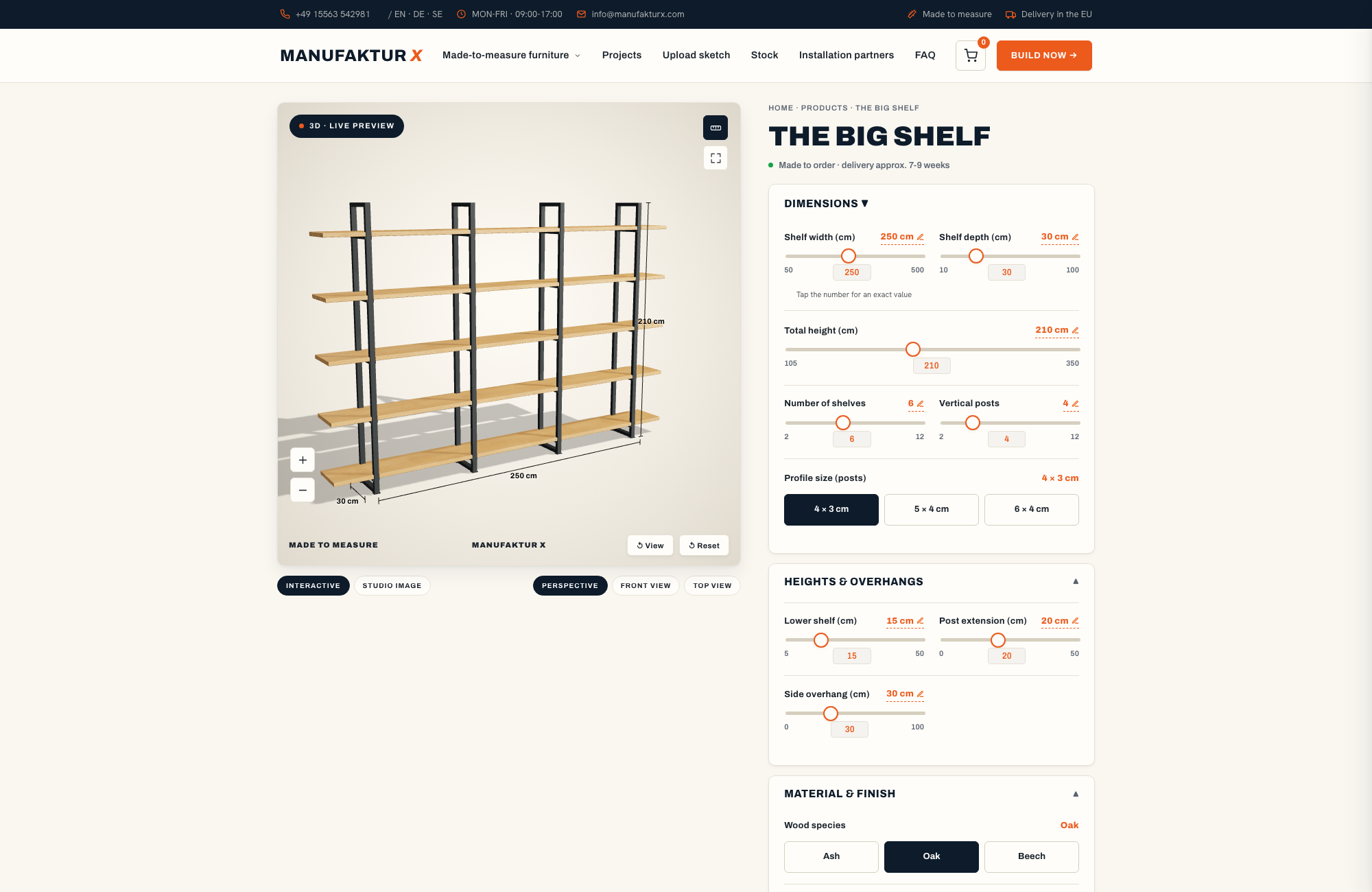
The large shelf pairs a powder-coated steel frame with solid wood shelf panels in oak, beech or ash. Timber cabinet units can be integrated as optional enclosed storage. No glass - a pure steel-and-timber construction that functions equally well as a room divider, a wall-mounted display unit or a freestanding storage solution. Current pricing is shown in the configurator.
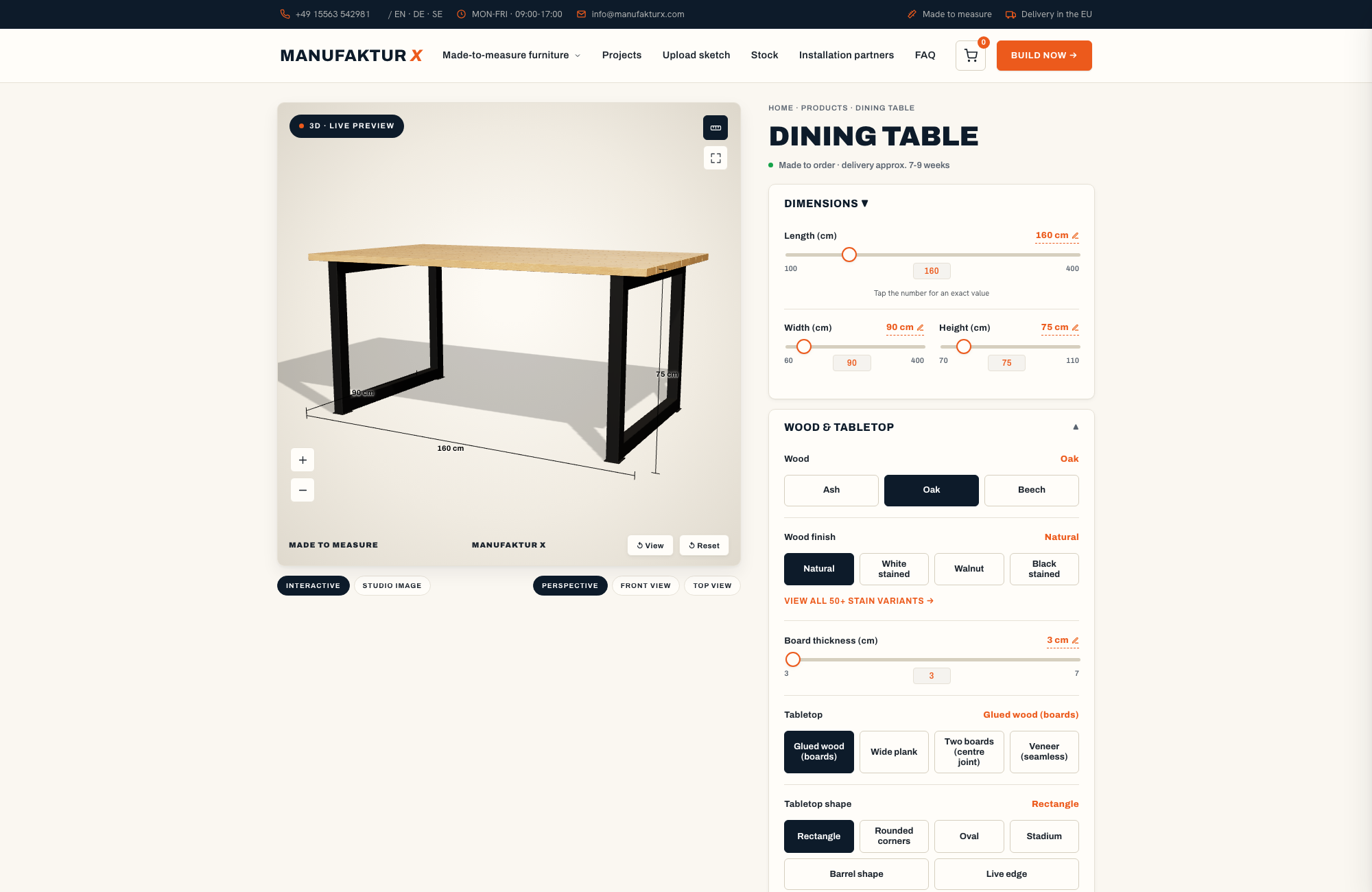
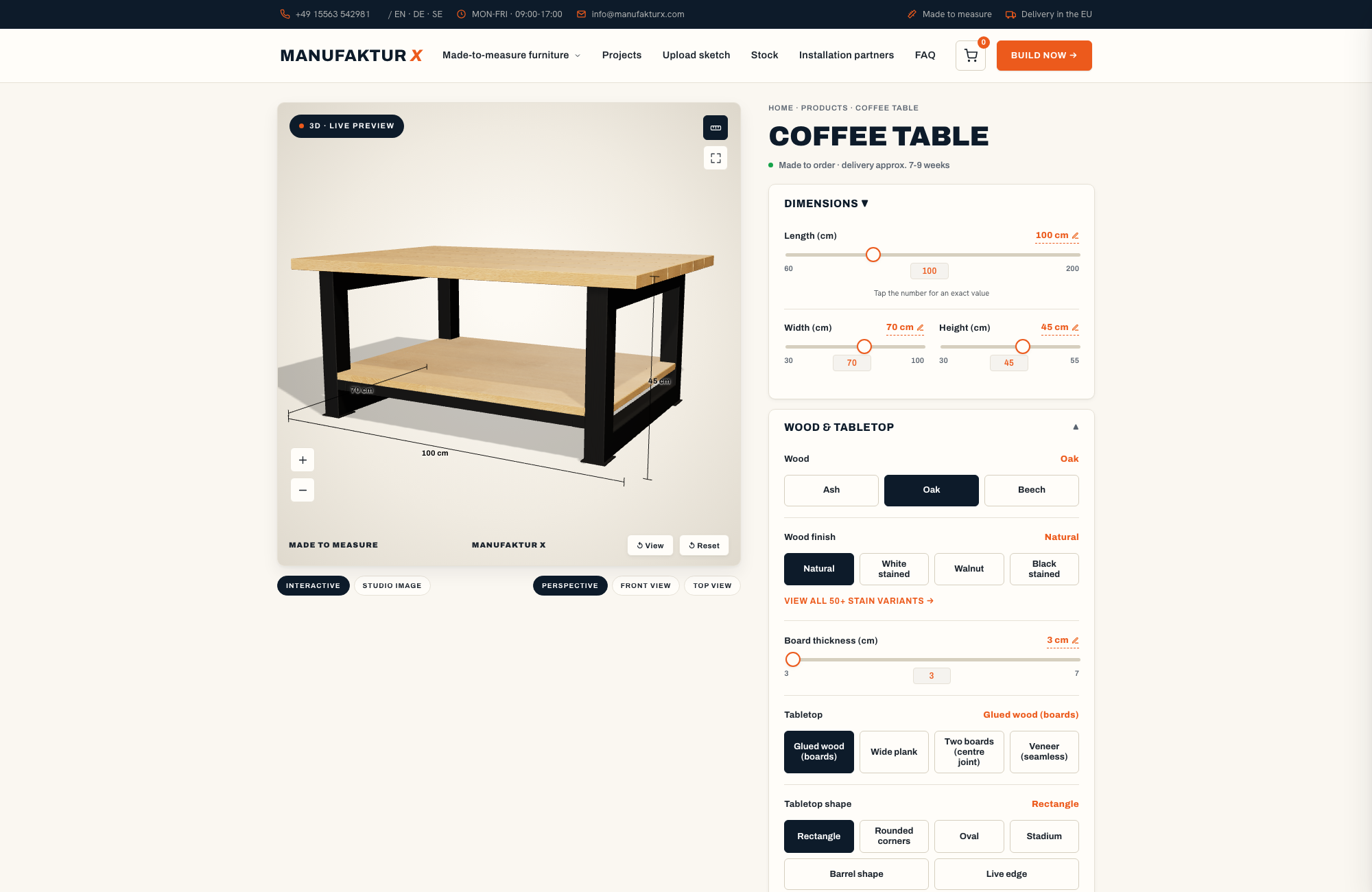
Dining Table and Coffee Table - Solid Wood on Steel
The dining table and coffee table each combine a solid hardwood top - oak, beech or ash, in solid glued board or veneered construction - with a powder-coated steel base. No glass, no chipboard, no composite board. Two materials that together make the industrial aesthetic legible at a glance: visible wood grain, clean geometric steel. Current prices for both are shown in the configurator.
Bench - Solid Wood Seat on Steel Frame
The bench uses the same material logic as the tables: solid hardwood (oak, beech or ash, solid glued board or veneer option) on a powder-coated steel frame. Robust, straightforward, honest about what it is. Pair it with the dining table for a cohesive industrial dining setup, or use it independently as a hallway or bedroom bench. Current pricing is shown in the configurator.
Pipe Shelf - Steel Tube and Solid Wood
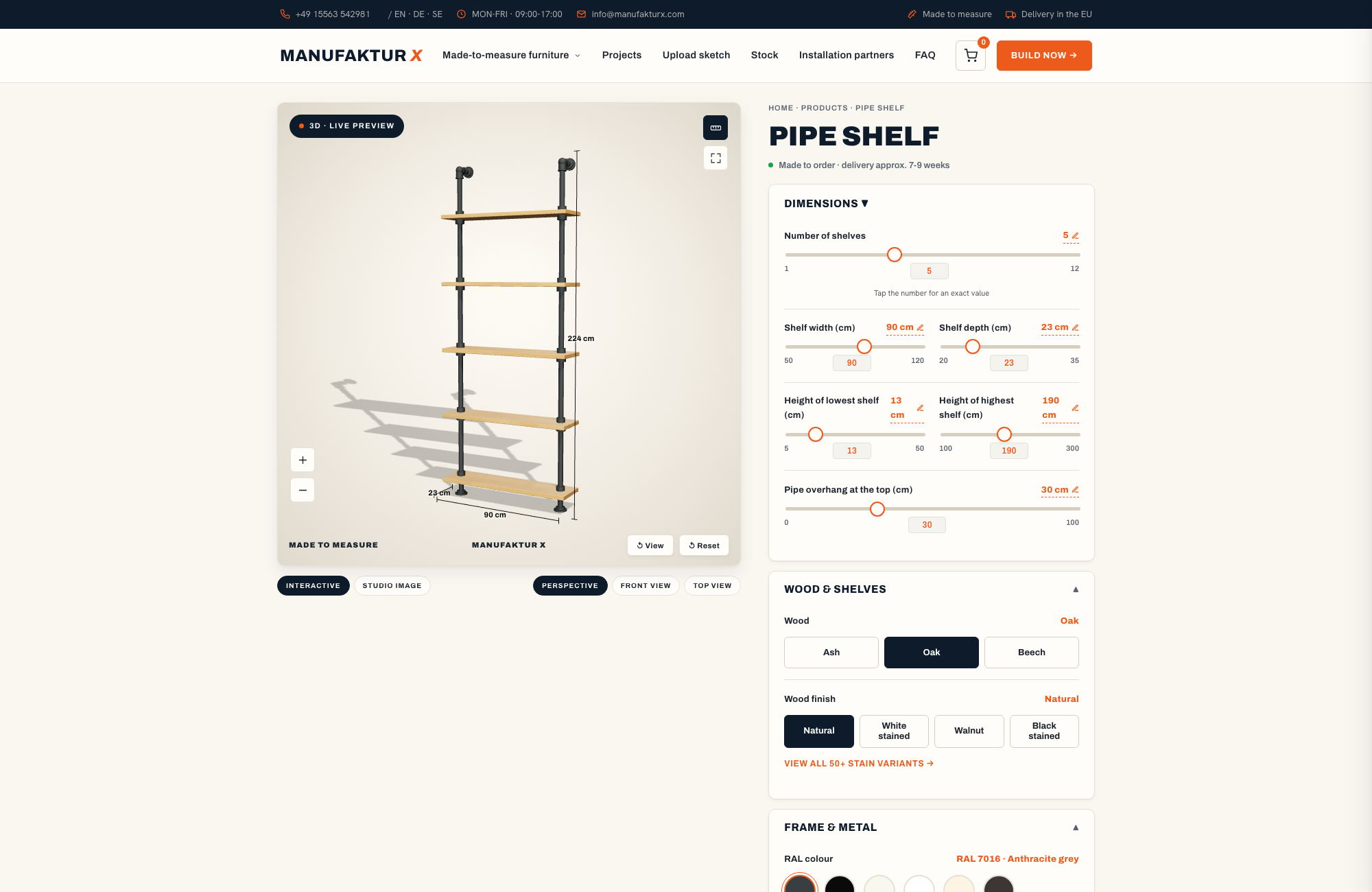
The pipe shelf is the most overtly industrial product in the range: steel tube uprights and brackets as the structural element, solid hardwood shelf boards in oak, beech or ash. Visible connections, clear geometry, no concealment. Current pricing is shown in the configurator.
Current Trends in Industrial-Style Custom Furniture
Five design directions are shaping how people are using custom industrial furniture in British homes right now.
1. Restraint with Intention
The best industrial interiors are not rooms crammed with raw materials competing for attention. The trend is towards fewer, more deliberate pieces - a single loft door that anchors an otherwise calm room, or a pipe shelf that brings structure to a plain white wall. Loft doors and room dividers have become the go-to expressions of this approach: they carry significant visual weight while remaining functionally transparent, keeping spaces feeling open.
2. Longevity as a Design Value
There is a growing resistance to furniture that looks good in the showroom and starts to show its limitations within three years. Solid hardwood and powder-coated steel do not follow this pattern - they are materials chosen for decades of use, not seasons. In our experience, customers who come to custom furniture after a succession of flat-pack purchases rarely go back. The upfront investment looks different when you stop dividing it by five years and start dividing it by twenty-five.
3. The 3D Configurator as Standard
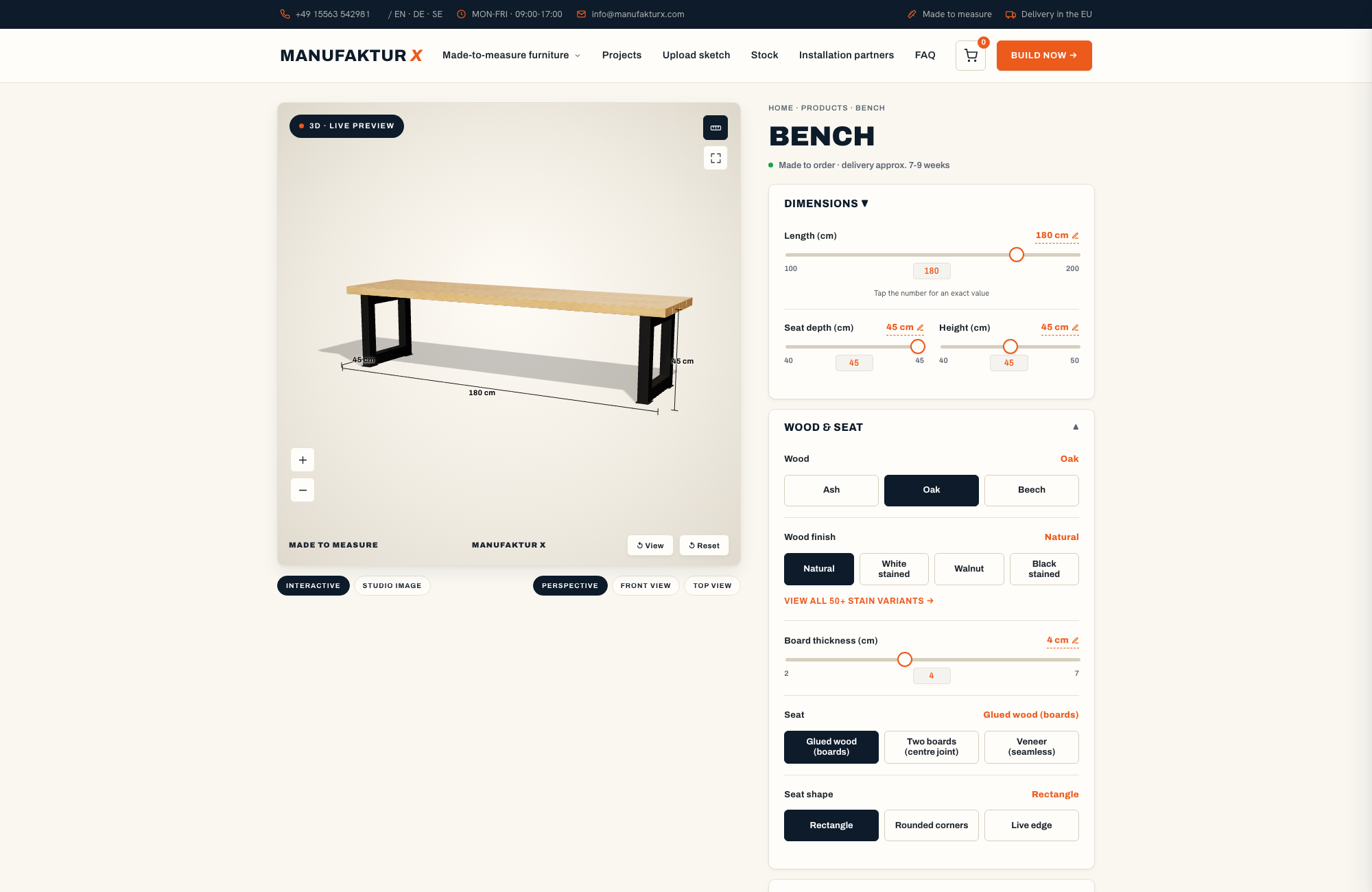
Digital planning tools have changed the way people approach custom furniture. The Manufaktur X 3D configurator lets you input your exact room dimensions, choose your wood species, steel colour and glass type, and watch the piece update in real time - including the price. There are no quotes to wait for, no back-and-forth emails to establish a ballpark figure. Shipping costs and lead times are shown clearly in the basket. What you see is what you pay.
4. Hybrid Living Spaces
The normalisation of working from home has fundamentally changed how British households use their rooms. A Victorian terrace bedroom that doubles as a study, a knocked-through reception room that needs a home office zone without losing its sociable character - these are real planning problems that custom room dividers and loft doors solve more elegantly than any off-the-shelf partition system. The ability to define space without committing to a permanent structural wall is increasingly valued.
5. Craft as Provenance
In the same way that people have become more interested in where their food comes from, there is growing interest in understanding how furniture is made and by whom. Made in the EU, to your specification, with named materials and visible construction - this is a different proposition from anonymous mass production, and it is increasingly what design-aware buyers are looking for.
Bringing the Industrial Look into a British Home
You do not need a warehouse conversion with 4-metre ceilings to make the industrial aesthetic work. The principles translate readily into more typical British properties - it is a matter of calibrating the rawness to the room.
Structuring Open-Plan Spaces
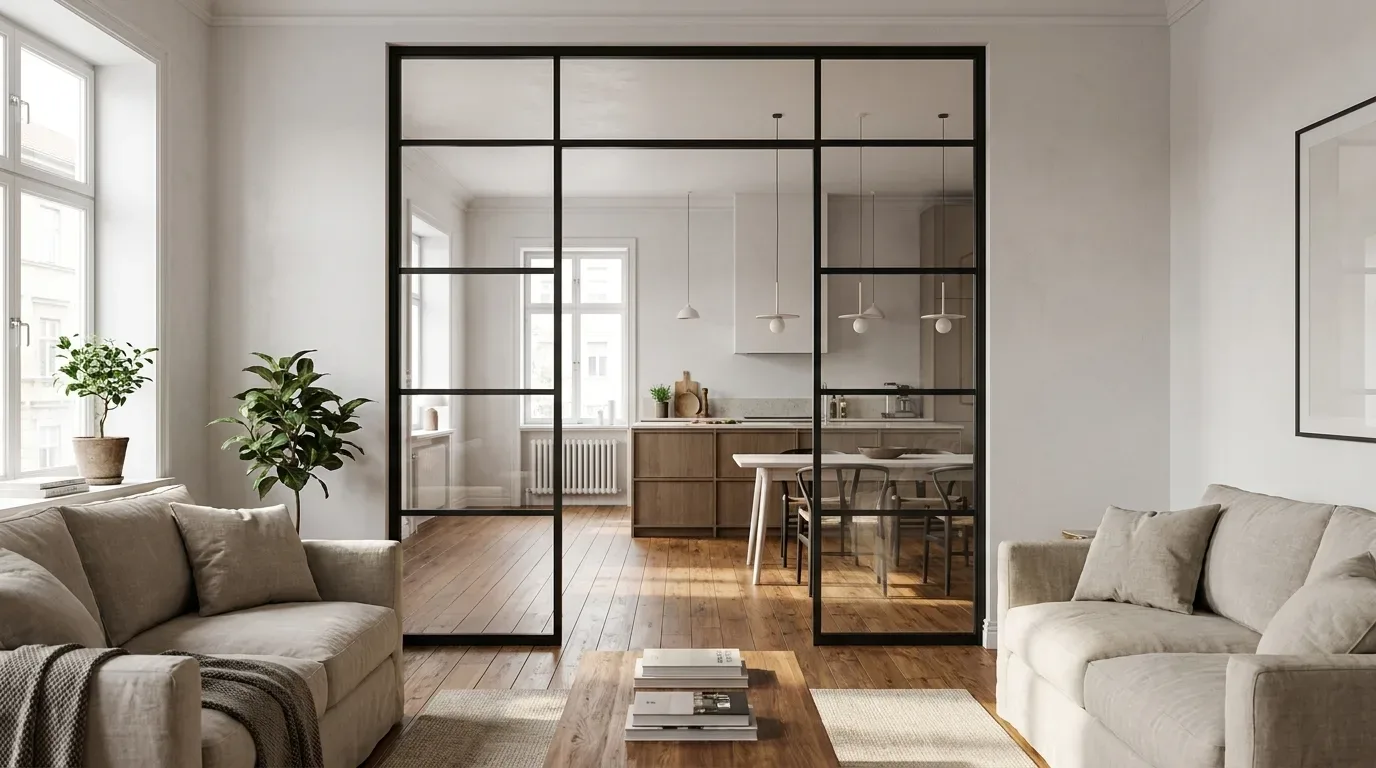
Open-plan ground floors - particularly common in knocked-through Victorian and Edwardian terraces - often benefit from a degree of spatial definition without reverting to walls. A steel-and-glass room divider or a loft door provides that definition while keeping light moving through the space.
The distinction matters: the room divider is a fixed partition, appropriate when you want a permanent architectural intervention. The loft door is a working door - better suited to situations where you want the option to close a space off entirely at certain times.
Combining Materials Well
- Steel: As frames, shelving structures or door profiles - with or without deliberate patina
- Solid hardwood: As tabletops, shelf boards or bench seats - oiled, waxed or stained
- Concrete and stone: As flooring or a feature wall - left raw and unclad
- Glass: In steel-framed loft doors and room dividers - clear, frosted or smoked
The interplay between warm and cool, hard and textured, is precisely what makes industrial design compelling. No single material does the job alone - it is the contrast that creates the effect.
Working with Colour
The industrial palette is deliberately narrow: greys from pale to deep, black, rust, raw steel tones, warm browns. Colour is used to sharpen contrast rather than to decorate. A matt black steel frame against pale oak boarding is a composition in itself. Manufaktur X's powder-coated steel frames are available in any RAL colour - but the industrial colour world is where this style feels most at home.
Period Properties and Sloped Ceilings
One of the genuine advantages of custom furniture in the UK context is the ability to accommodate the idiosyncrasies of period buildings. Victorian ceiling heights often exceed the 2.4 m standard assumed by off-the-shelf manufacturers. Loft conversions with sloped ceilings and non-standard angles need bespoke solutions that standard sizes simply cannot provide. You enter your exact desired dimensions into the configurator - not a standard construction opening - and the piece is made accordingly.
Making It Feel Like Home
The industrial look can read as cold if it is not balanced with softer elements. A few additions make an immediate difference:
- Substantial sofas in leather or heavy linen - something that has physical presence
- Natural textiles: cotton, wool and jute rugs that absorb the harder acoustics of hard-surfaced rooms
- Vintage-style filament bulbs and metal-shaded pendants for warm, directed light
- Houseplants as the one genuinely organic counterpoint to steel and glass
- A single exposed brick wall - in many Victorian and Edwardian properties, it is already there behind the plaster
The Industrial Look in Smaller Rooms
A two-bedroom flat in a 1930s semi-detached can carry industrial furniture just as effectively as a loft conversion - it just requires more selectivity. A single pipe shelf with visible steel brackets on a plain wall brings the aesthetic without overwhelming the room. A loft door with clear or frosted glazing opens up a narrow hallway visually while maintaining the option of privacy. Scale the rawness to the room size and the effect is proportionate rather than oppressive.
How a Manufaktur X Piece Is Made
The production process combines traditional handcraft with CNC precision machining - the two are not in tension, they are complementary.
Step 1: Measuring Your Space
Measure at multiple points - walls in British homes, particularly older properties, are rarely perfectly plumb or square. Always work from the smallest dimension you record; this prevents the finished piece arriving and not fitting through an opening that narrows towards the top. For loft doors specifically, deduct approximately 5 mm per side - left, right and top - for fitting clearance. You then enter those exact desired dimensions into the configurator. The piece is made to those numbers, not to a standard catalogue size.
Step 2: Configuring Online
Input your dimensions, choose your wood species, steel colour and - for loft doors and room dividers - your glass type and design. The price updates instantly as you make each selection. Shipping to the UK is a flat rate per order, shown in the basket. Customs clearance and handling are arranged and covered by us - UK import VAT is payable on import. Lead times are shown transparently in the basket.
Step 3: Bespoke Requests by Sketch
For unusual room situations - a sloped ceiling that affects the door head, a non-standard opening shape, a shelf that needs to work around a chimney breast - you can upload a sketch via the Manufaktur X sketch service. The team reviews the feasibility and provides a tailored quote.
Step 4: Production and Delivery
After your order is placed, production begins: CAD drawings for precision planning, CNC machining for accurate cuts and fabrication, then manual finishing and quality checking. Production takes 5-6 weeks. The finished piece is then delivered directly to you in the UK.
Loft Door vs. Room Divider: The Differences Explained
These two products are frequently confused, but they serve fundamentally different purposes and are constructed differently as a result.
| Feature | Loft Door | Room Divider |
|---|---|---|
| Function | Working hinged door - opens and closes | Fixed partition wall - does not move |
| Door stop | Yes - left or right hand | No |
| Opening direction / angle | Yes - configurable | No |
| Handle | Yes - Long, Discreet or Half-Moon | No |
| Hinges | Yes | No |
| Passthrough | Via opening the door | Optional open aperture without door |
| Glass options | 5 options: clear, frosted, smoked, dark smoked, textured | 5 options: clear, frosted, smoked, dark smoked, textured |
| Steel finish | Any RAL colour | Any RAL colour |
Industrial Style and Industrial Design: Not the Same Thing
Industrial design as a professional discipline is a much broader field - it encompasses ergonomics, human factors, manufacturing economics and product development methodology. When furniture makers use the term "industrial design", they mean something more specific: furniture designed according to the visual and material principles of the industrial aesthetic - raw materials, visible construction, functional honesty, individual manufacture.
That narrower, more specific meaning is what Manufaktur X works within. The broader discipline informs the precision of the process; the aesthetic philosophy shapes every material and finish choice.
| Characteristic | Industrial design (discipline) | Industrial style (interior) |
|---|---|---|
| Focus | User experience, function, commercial viability | Aesthetic of industrial materials and structures |
| Goal | Practical, manufacturable products for broad use | Authentic, characterful living spaces |
| Materials | Varied according to product requirements | Steel, solid hardwood, concrete, glass |
| Process | Research, prototyping, testing, production | Material selection, craftsmanship, bespoke manufacture |
Caring for Industrial Furniture
Custom industrial furniture made from solid hardwood and powder-coated steel will last for decades - but it does need some straightforward maintenance to perform at its best.
Caring for Solid Wood
- Oil or wax the surface periodically to keep it supple and resistant to moisture - the frequency depends on how much daily use the piece receives
- Avoid prolonged direct sunlight and very dry central heating environments, which can cause the wood to move
- Small scratches can be addressed by light sanding along the grain followed by re-oiling
- Wipe up spills promptly - solid hardwood is durable but not waterproof
Caring for Powder-Coated Steel
- Powder-coated steel frames are straightforward to clean - a damp cloth is sufficient for everyday marks
- Avoid abrasive cleaners and scouring pads, which can damage the surface coating
- If the coating is chipped or scratched down to bare metal, address it promptly to prevent rust forming beneath the surface
Cleaning Glass Panels
- Clean ESG and VSG panels with standard glass cleaner and a lint-free cloth
- Avoid abrasive products on any glass surface
- Clear glass panels benefit from regular cleaning to maintain their full transparency - fingerprints and dust accumulate quickly on high-traffic door panels
Pricing: What Does Custom Industrial Furniture Cost?
The exact price for the loft door from Manufaktur X depends on your specified dimensions, glass type, handle choice and steel colour - every selection updates the price in real time in the configurator, so there is no ambiguity about what you are paying and for what. For all other products, current starting prices are shown in the configurator and in the full price overview below.
| Product | Default configuration price | Note |
|---|---|---|
| Loft Door | £1,413 | Steel and glass, default configuration 900 × 2,040 mm |
| Room Divider | £1,902 | Steel + laminated glass, custom width |
| Large Shelf | £2,752 | Solid wood, steel frame, floor-to-ceiling |
| Dining Table | £2,038 | Solid wood, steel frame |
| Coffee Table | £1,548 | Solid wood, steel frame |
| Bench | £946 | Solid wood, steel frame |
| TV Stand | £1,324 | Solid wood, steel frame |
| Bedside Table | £856 | Solid wood, steel frame |
| Hallway Wardrobe | £1,608 | Solid wood, steel frame |
| Display Cabinet | £2,533 | Solid wood, steel frame |
| Pipe Shelf | £916 | Modular pipe shelf |
| Desk | £1,561 | Solid wood, steel frame |
| Chest of Drawers | £4,334 | Solid wood, steel frame |
Configure Your Custom Piece
If you know what you want - a room that works properly, furniture that belongs in it rather than approximating a fit - the next step is concrete. Open the configurator, enter your dimensions, choose your materials. The price is there on screen as you build, with no hidden extras. Shipping to the UK is a flat rate per order, shown in the basket. Customs clearance and handling are arranged and covered by us - UK import VAT is payable on import.
For unusual spaces - sloped loft ceilings, chimney breasts, non-standard door heights - upload a sketch and the Manufaktur X team will come back with a feasibility assessment and a specific quote. Browse the blog for further guidance on measuring, styling and installation, or explore the full product range on the Manufaktur X homepage.
Every piece is made to the dimensions you provide - not to what happens to be in stock.
Frequently Asked Questions: Custom Industrial-Style Furniture
What makes custom industrial furniture different from standard furniture?
Custom industrial furniture is made to your exact specified dimensions from authentic materials - solid hardwood in oak, beech or ash, and powder-coated steel. Unlike mass-produced furniture, which is manufactured to standard sizes and may not suit your room's proportions, a custom piece is built from scratch to your brief. Every joint, weld and surface finish is part of the design rather than something to be concealed.
Which wood species does Manufaktur X use?
Manufaktur X works exclusively with three hardwoods: oak, beech and ash. All three offer pronounced natural grain, genuine hardness and long service life. Over 50 stain finishes are available to adjust the tone while keeping the grain visible.
What is the difference between the loft door and the room divider?
The loft door is a working hinged door - it has a door stop (left or right hand), configurable opening direction, hinges and a handle (Long, Discreet or Half-Moon). The room divider is a fixed steel-and-glass partition wall with no moving parts - no door stop, no hinges, no handle. An open walkthrough aperture can be built in if required. Choose the loft door where you need to be able to close a space; choose the room divider where you want a permanent architectural division that still allows light to pass through.
What glass options are available?
Five glass designs are available for both loft doors and room dividers: clear glass, frosted glass, smoked glass, dark smoked glass and textured glass. For glass type, you can choose ESG (toughened safety glass) or VSG (laminated safety glass). VSG is recommended for larger panel dimensions - it uses two bonded panes for greater rigidity and is the appropriate specification where panel area is substantial.
How do I measure correctly for a custom loft door?
Measure the opening at multiple points - top, middle and bottom for width; left, centre and right for height. British door openings are rarely perfectly square, particularly in older properties. Always work from the smallest measurement you record. Then deduct approximately 5 mm per side - left, right and top - for fitting clearance. Enter those final figures as your desired dimensions in the configurator. The piece is made to exactly what you input.
How long does production take and is delivery to the UK included?
Production takes 5-6 weeks from order confirmation. Delivery to the UK is fully managed - customs clearance and handling are arranged and covered by us. The price shown is VAT-free as a tax-free export; UK import VAT is payable on import.
What is the starting price for a loft door?
The configurator shows the exact price for your chosen dimensions, glass type, handle design and steel colour in real time as you build your specification - no quotes required, no hidden extras.
Can I use the industrial look in a smaller flat or a period property?
Yes - and British period properties are often a particularly good fit. A loft door fitted into a Victorian or Edwardian doorframe, or a pipe shelf on a textured plaster wall, creates a striking conversation between the building's original character and a clean industrial aesthetic. In smaller spaces, the key is selectivity: two or three well-chosen pieces with genuine material presence work better than an attempt to replicate a full warehouse interior on a domestic scale. A loft door with frosted or clear glazing can also make a narrow hallway feel significantly more open.