Handcrafted Made-to-Measure Furniture for Your Home - What Really Matters
Alexander Stelzner · 12 February 2026 · 18 Minuten Lesezeit · Werkstatt Regensburg · 18
Handcrafted Made-to-Measure Furniture for Your Home - What Really Matters
Most rooms in British homes are not generic rectangles. Victorian terraces have alcoves and chimney breasts; Edwardian semis carry period proportions that no flat-pack catalogue anticipates; new-build flats maximise floor area at the expense of every spare centimetre. Manufaktur X makes made-to-measure furniture in steel and solid wood, configured online in a live 3D configurator with an instant fixed price, produced in the EU in 5-6 weeks and delivered to the UK with all customs and duties handled. This guide covers what genuinely sets handcrafted furniture apart from serial production - in materials, cost, measuring and long-term durability.
Handcrafted, made-to-measure furniture means individually built pieces in solid oak, beech or ash on powder-coated steel frames, produced to your exact wall dimensions rather than standard catalogue sizes. At Manufaktur X you set width, depth, wood species and RAL colour in an online 3D configurator, see a fixed price immediately, and receive your EU-made piece in 5-6 weeks.
Not sure which hardwood suits your household? Compare oak, beech and ash in everyday use before you configure anything - the differences are visual and tactile, not structural.
The short version
DIN 68930 complements these requirements with aspects of serviceability - including load-bearing capacity, deflection of shelves, and resistance to moisture, cleaning agents and liquids on furniture surfaces.
Made-to-measure furniture is built to your exact room dimensions - a meaningful advantage when EU homes average only 1.6 rooms per person (Source: Eurostat, 2020).
Solid oak, beech or ash combined with a powder-coated steel frame can be re-oiled, re-sanded and repaired component by component - something flat-pack chipboard simply cannot offer.
The honest cost comparison is price per year of use, not price at the till: a repairable solid-wood piece outlasts several chipboard replacements over its lifetime.
Always measure at multiple points and order to the smallest recorded value - walls in Victorian and Edwardian properties are rarely straight, and even new-build plasterwork varies by several millimetres.
A live 3D configurator with real-time pricing replaces the need for an interior designer consultation: configure online, see the fixed price immediately, and receive your piece in 5-6 weeks.
Key takeaways
Research by the German Furniture Institute indicates that made-to-measure furniture uses up to 30% more room volume compared with standard furniture.
With EU homes averaging just 1.6 rooms per person (Source: Eurostat, 2020), a piece built to the full alcove or chimney-breast width recovers usable space that no catalogue size can match.
Repairability is the real durability measure
Oiled hardwood surfaces can be touched up at home; component construction means a single part is replaced rather than the entire piece.
The smallest measurement is the one that counts
Record several measuring points per dimension and order to the smallest value, leaving a small clearance where the piece meets a wall.
Width is the most-adjusted setting
Our configurator data shows width is by far the most-used control - fit, not styling, is what drives buyers away from standard retail.
Why your home notices the difference between bespoke and off-the-shelf
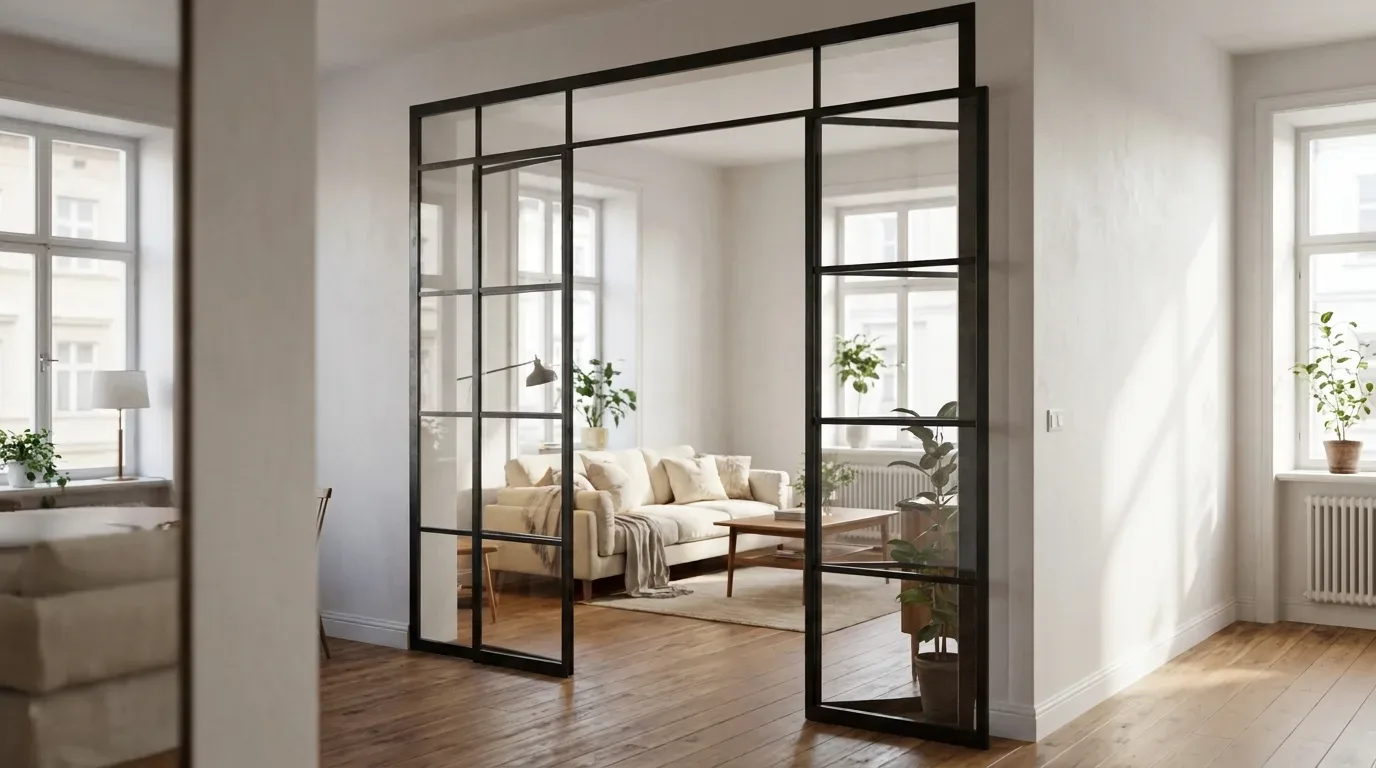
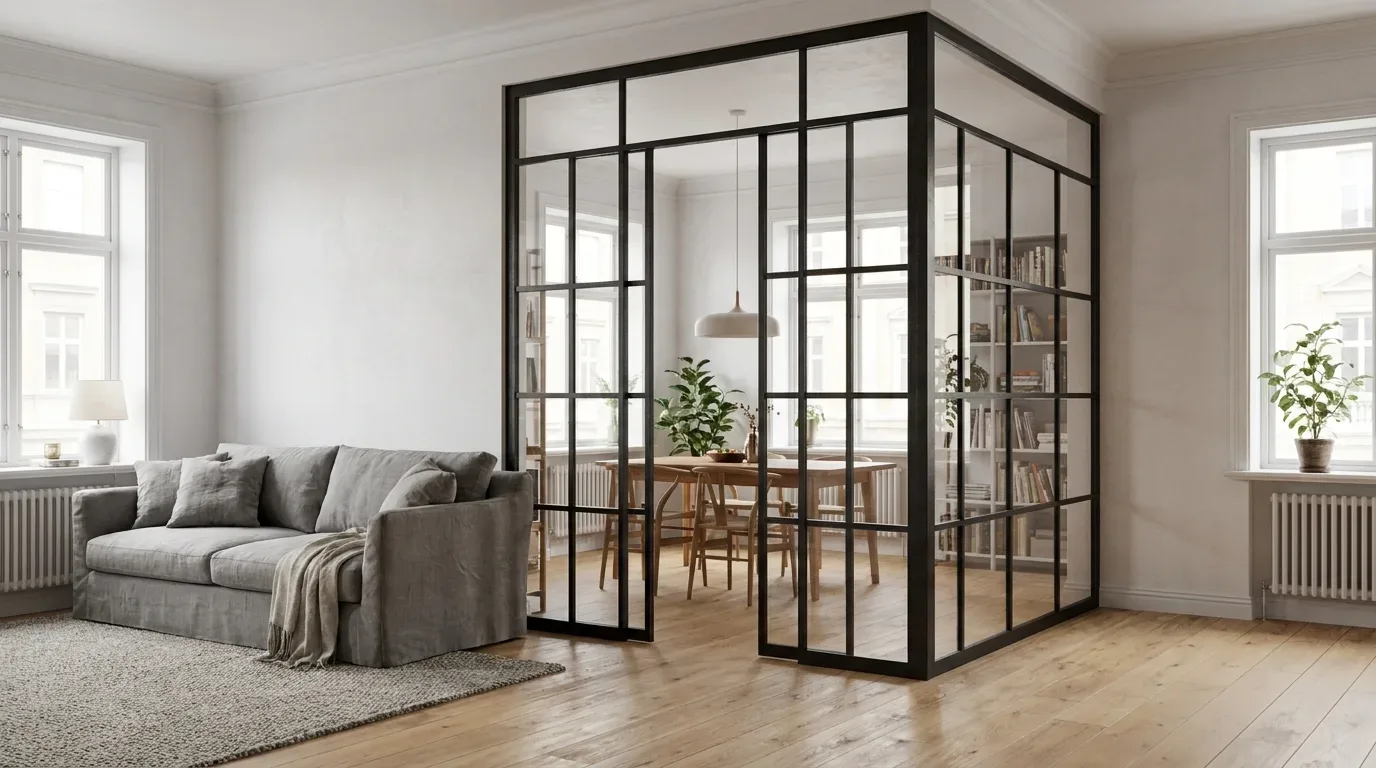
Period properties - Victorian terraces, Edwardian semis, 1930s semi-detacheds and Georgian conversions - share one characteristic: their rooms were never designed around a furniture retailer's module widths. Alcoves flank chimney breasts at irregular depths; ceiling heights in older stock typically run between 2.4 m and 2.7 m; loft conversions introduce sloped ceilings that rule out anything taller than roughly 1.9 m on one side. Even new-build flats, where developers squeeze every centimetre, present their own constraints - walls that stop 15 cm short of a logical shelf run, or an open-plan kitchen-diner that needs zoning without blocking light.
Mass production starts from the assumption that rooms are uniform. Custom furniture starts from the opposite end: your wall is the specification, and everything else follows from there.
The space arithmetic of alcove storage
Here is a calculation any homeowner with a Victorian chimney breast will recognise. A typical alcove measures somewhere between 83 cm and 97 cm wide - neither value aligns with a standard 80 cm or 100 cm cabinet. Buy the 80 cm unit and you leave a gap too narrow to use yet too obvious to ignore; buy the 100 cm unit and it simply will not fit. Multiply that compromise across a living-room wall, a hallway and a bedroom recess and you lose a meaningful amount of floor area you are already paying for in rent or mortgage. A piece built to the measured width gives that space back.
The middle ground between flat-pack and a full interior design project
There is a well-worn path between buying whatever IKEA stocks in the nearest module size and commissioning a joiner for a full fitted-furniture project. The joiner route delivers precision but adds site visits, drawings and project management time; mass retail delivers next-day convenience, though only in fixed sizes. EU-made pieces from Manufaktur X occupy the practical middle: you enter your own dimensions, the workshop builds to them without a middleman, and the materials are named explicitly - oak, beech or ash on powder-coated steel, not a vague reference to "wood-effect finish".
Oak, beech or ash - which solid wood suits everyday British life
All three are hard-wearing European hardwoods; the practical differences lie in grain character, colour tone and how each takes a stain or oil, not in raw durability. Every board starts as FSC- or PEFC-certified European timber, with the chain of custody documented from forest to finished product (Source: FSC). We work with exactly three species - oak, beech and ash - because they hold fastenings reliably, resist dents and cope with the humidity swings of British homes across all four seasons. Walnut and pine are not in our range; between three species and more than 50 stain options, almost every interior is covered. The powder-coated steel frame carries the structural load, so the hardwood only needs to win the daily battles: mugs, keys, schoolwork, elbows.
Oak, beech and ash compared: grain, tone and stain behaviour
Strength is broadly similar across all three; it is grain and colour that separate them in practice.
Stains the most evenly and predictably of the three
High contrast; grain shows through almost any colour
Everyday character
Forgiving surface; minor marks blend into the texture
Calm, uniform face; tends to show everyday traces a little sooner
Elastic and tough; absorbs knocks without complaint
Choose oak if you want visible structure and a surface that hides the marks of daily life, beech if you prefer a calm, even face that stains predictably, and ash if you like lively contrast on a pale ground - a good match for bright, Scandi-influenced interiors.
Solid glued boards or veneer - what each is suited to
On a dining table or bench you choose between solid glued boards - genuine wood through the full thickness, which can be sanded back and re-oiled repeatedly - and seamless veneer, which lays one continuous grain picture across a stable core. Both are legitimate choices; the difference is repairability versus visual continuity. Shelf boards follow a stricter rule: on the large shelf they are always solid wood, never a veneered or chipboard core.
Oiled or lacquered - choosing the right finish for your household
An oiled finish feels matt and close to the raw timber, deepens slightly with use and allows minor scratches to be rubbed out at home with a cloth and a drop of oil. A lacquered finish seals the pore completely, shrugs off water rings and is easier to wipe clean. Households with young children often lean towards lacquer for practicality; those who want the wood to age naturally and remain easy to refresh at home tend to prefer oil.
What handcrafted furniture actually costs - an honest breakdown
Bespoke furniture costs more at the point of purchase than flat-pack because you are paying for skilled hours, named materials and individual production runs. The fair comparison is not price at the till but price per year of use - and that is where a repairable, solid-wood piece almost always wins. The bill divides into three parts. Certified hardwood costs a significant multiple of chipboard per cubic metre before a single cut is made. A craftsperson then measures, mills, glues, sands and welds one order at a time. Finishing adds calendar time that cannot be compressed: a lacquered surface needs 48-72 hours of drying; an oiled one up to two weeks before it can safely be packed for delivery.
Because the 3D configurator displays a fixed price in real time as you adjust dimensions, the cost of custom furniture is visible before you order - not presented as a surprise after a sales consultation. Buying direct from the manufacturer means no distributor or showroom adds a margin in between.
What makes up the price: material, skilled hours, finishing time
Raw boards are the smallest slice of the final figure; the skilled hours dominate, because an individually built piece cannot borrow the economies of a production run of 100,000 identical units. Price transparency simply means you see what those hours produce - in pounds - before you commit to anything.
Price per year of use - the comparison that actually matters
Spread the purchase price across the years the piece genuinely serves. A solid hardwood top on a powder-coated steel frame is built to be re-sanded and re-finished rather than discarded; its working life is measured in decades. A chipboard unit that sags at the joints or swells after a leak gets replaced whole - often more than once over the same period. Divide by years of service and the ranking reverses. If the upfront sum needs to be spread, the piece can be paid in instalments through Klarna.
Want to see how the cost logic plays out for your own room? Open any piece in the 3D configurator and adjust the width - the price recalculates with every centimetre, so you can test different budget scenarios before committing. Just work through the measuring steps below first, so the numbers you test are the numbers that will actually fit.
With bespoke furniture, you pay for quality, craftsmanship and longevity. In my 12 years of loft renovation work, I have found that genuine handcraft commands its price - but it pays for itself many times over across the years.
Lukas Brandt Interior architect specialising in loft conversions
How to measure correctly for made-to-measure furniture
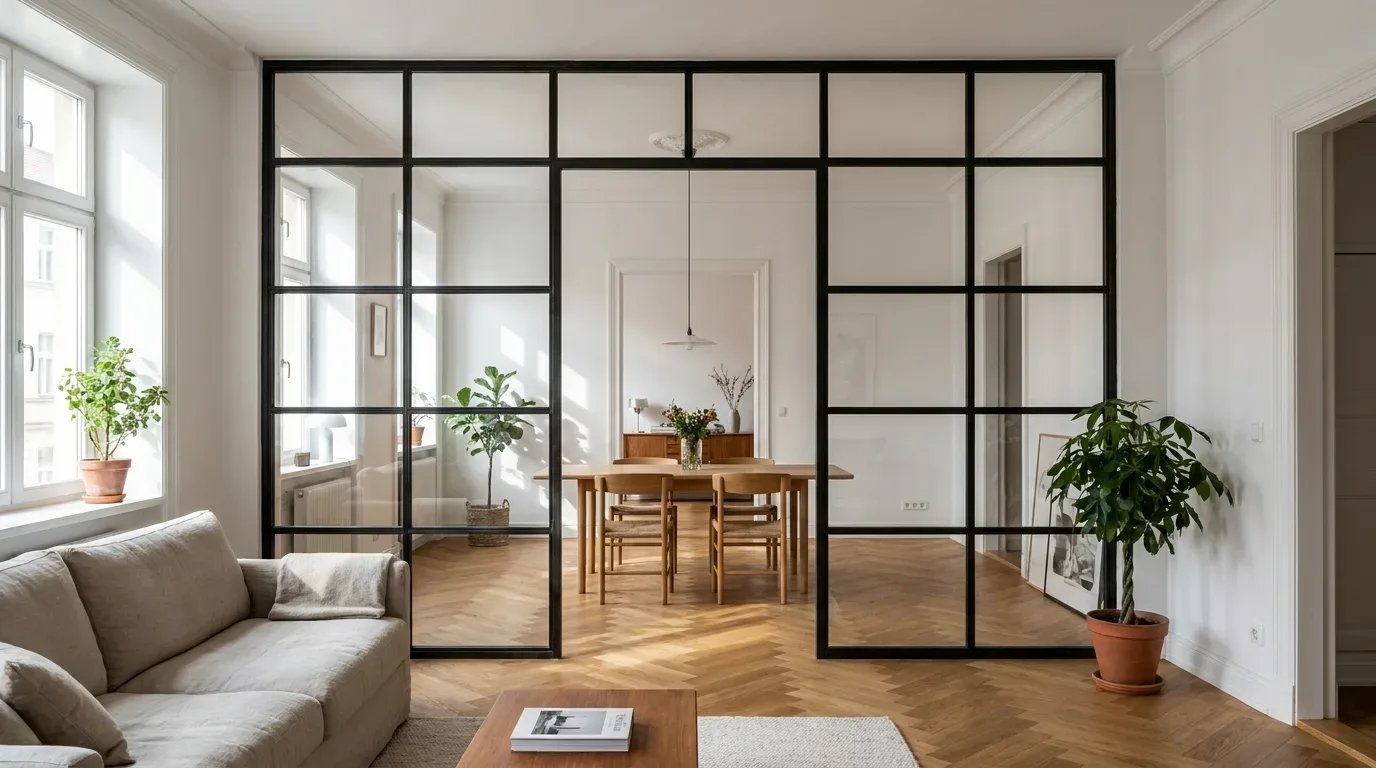
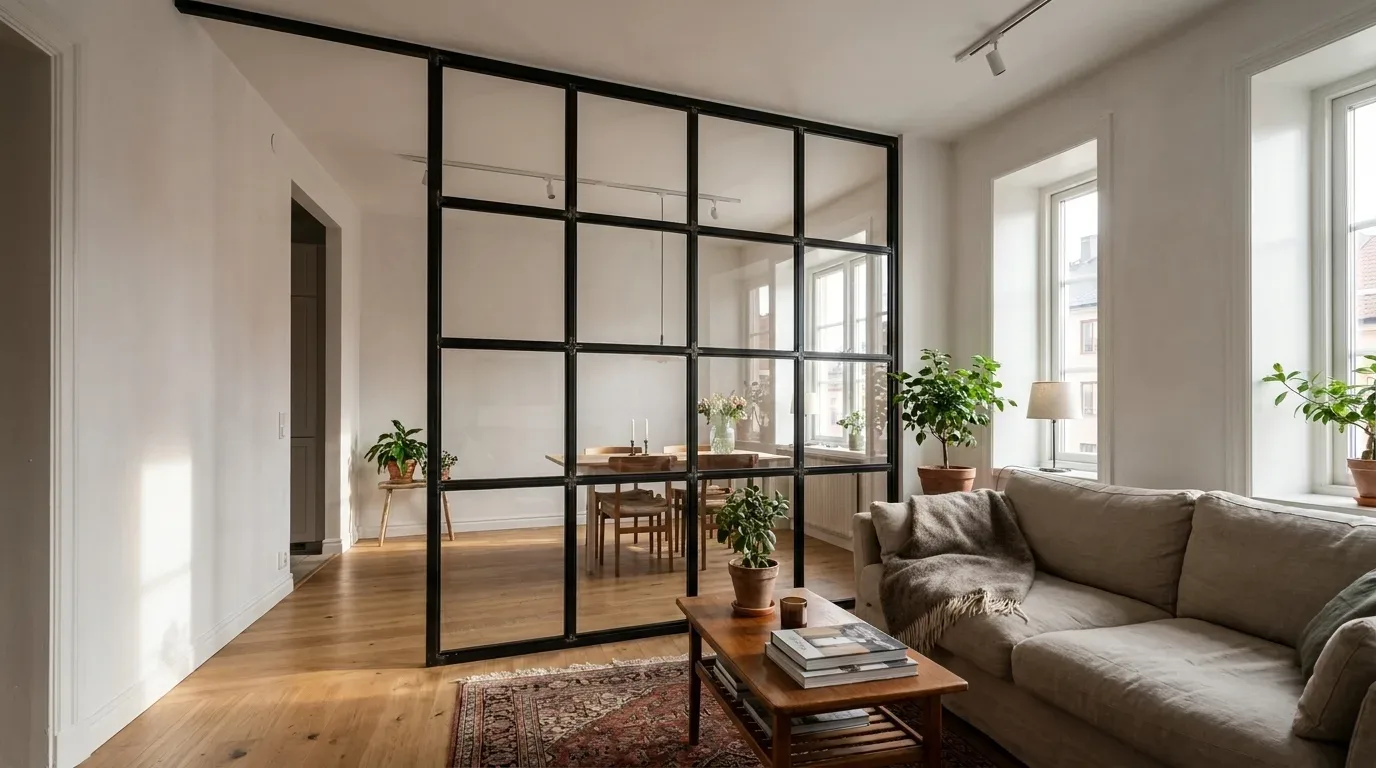
The most common reason a custom piece does not fit is a measuring error, not a production fault. Measure width and height at several points and always order to the smallest recorded value. That single rule sits at the heart of every accurate site measure, and it exists because plaster is applied by hand, buildings settle over decades, and walls that look parallel often are not. In a Victorian terrace or a 1930s semi-detached, a centimetre of deviation across a wall run is entirely normal. Wall-to-wall pieces such as a room divider expose every millimetre of that deviation: a frame ordered to the widest measured point will not pass through the narrowest one. A metal tape measure taken on site beats any floor-plan figure, since drawings record what was intended rather than what was built. Where a piece meets a wall, allow roughly 5 mm of clearance per side - the gap disappears visually and rescues the installation when tolerances are tight.
A measuring routine that takes five minutes
Measure the width at three heights - floor level, mid-height and just below the ceiling - and note every value separately.
Measure the height at the left edge, the centre and the right edge of the planned position.
Walk the footprint and note everything that projects into it: skirting boards, radiators, plug sockets, light switches and window sills.
Take the smallest width and the smallest height as your ordering basis.
Subtract the mounting clearance - approximately 5 mm per wall-contact side - and enter the result directly into the configurator as your desired finished dimensions.
The measuring mistakes that cause most difficult installations
The same handful of errors accounts for nearly every problem we see at the delivery stage:
Using floor-plan figures instead of a tape measure: drawings ignore plaster thickness, so the piece arrives oversized. Always measure the finished wall surface.
Overlooking the skirting board: the piece stands proud of the wall at its base. Either measure above the skirting or subtract its depth.
Ignoring the radiator projection: a shelf or top collides at exactly the wrong height. Note the projecting depth during your footprint check.
Forgetting plug sockets behind a closed cabinet: an open shelf keeps sockets accessible; a closed back panel does not. Map them before you finalise the design.
Misjudging a nearby door swing: a door that opened freely before now catches the new piece. Swing every door in the area before fixing the position.
Assuming old walls are straight: in Victorian and Edwardian stock especially, a deviation of a centimetre or more over two metres is routine. This is precisely why the smallest measured value is the one you order to.
How long does handcrafted furniture last - durability, care and repair
A solid-wood and steel piece is built to serve for decades because every wearing part can be renewed: the surface re-oiled or re-sanded, a single component replaced rather than the whole unit discarded. The frame material is prosaic and proven - structural steel protected by powder coating so it neither rusts nor chips in normal indoor use. Powder coating is applied electrostatically as a dry powder and cured under heat, producing a finish that is scratch-resistant, even in colour, eco-friendly in production and significantly more durable than conventional paint. Fixed to that frame is hardwood you can bring back to life yourself: a bench seat that has collected scratches gets sanded; a coffee table top that has dulled gets fresh oil. Cam-lock chipboard offers no equivalent path - once a joint pulls out or moisture swells the core, the unit is effectively waste.
The standards behind the stability: EN 1730 and structural steel
Furniture strength in Europe is not a matter of opinion. Tables, for example, are tested against a defined European standard, and load limits for shelving follow measurable physics.
EN 1730 defines test methods for the determination of the stability, strength and durability of tables.
Component construction treats the piece as a system rather than a block. A shelf board, a top or a complete leg frame can be reproduced to the original dimensions and swapped in years later, because those measurements exist as an order dataset rather than a fading memory. This kind of repairability is the quiet distinction between furniture that ages gracefully and furniture that simply expires.
Practical care: re-oiling, lacquered surfaces and seasonal movement
Care follows the finish. Oiled wood asks for re-oiling every 12 to 24 months - a DIY task of roughly 30 minutes with a cloth - and rewards you by allowing minor scratches to be buffed out at home. Lacquered wood needs only regular dusting and a damp wipe and resists spills better, but any deep damage needs a professional for refinishing. Neither routine is onerous; both add years of useful life. A hairline seasonal movement in a solid glued-board top across a British winter is the material responding to humidity changes - it is the wood breathing, not a defect.
From online configurator to delivery at your door
You configure the piece in a live 3D preview, the fixed price updates in real time with every adjustment, and the EU-made result is delivered to the UK - with all customs and duties handled - in 5-6 weeks. There is no quote request and no waiting for a callback. The configurator is the sales process, and shipping costs plus lead times appear clearly in the basket before you confirm.
Configuring with a live 3D preview and an instant fixed price
Set width and depth in centimetres, choose oak, beech or ash, select a stain and a RAL colour for the steel frame, and the 3D preview and real-time price follow every click. What you see is the binding figure, not an estimate that grows after a site survey.
What our configurator data shows about real buyers
Fit shows up in behaviour, not just in surveys. Across more than 23,000 anonymous configurator interactions, the most-adjusted room divider setting was product width, and 46% of loft door configurations previewed clear glass most often, with door leaf width the most-adjusted loft door setting. Buyers fine-tune dimensions harder than any styling choice - getting the exact width right is what brought them to the configurator in the first place.
Production and UK delivery: EU-made in 5-6 weeks
Every order is cut, welded and finished in the EU only after you confirm it - nothing sits in a warehouse waiting. Milling, joining, staining and drying set the pace, which is why the lead time is measured in weeks rather than the two days of a stocked item. The finished piece is then shipped to the UK with all import duties and customs formalities handled, so there are no surprise charges at the door.
The route from screen to sitting room, condensed:
Configure: set your dimensions, wood species, stain and RAL colour online; the price refreshes with every change.
Order: review shipping costs and the lead time shown clearly in the basket, then confirm.
Production: your piece is milled, welded, stained and finished in the EU - made to order, never picked from stock.
Delivery: the finished piece arrives in 5-6 weeks, ready for the exact spot you measured.
Your alcoves, sloped ceilings and period proportions are not standard - your furniture does not have to be either. Explore the Manufaktur X made-to-measure range, enter your own dimensions in the 3D configurator and watch the fixed price update live, with EU production and UK delivery in 5-6 weeks. Start with the piece your room is missing most - whether that is a dining table, a large shelf or a bench.
Frequently asked questions about handcrafted furniture
Is bespoke furniture worth it in a rented flat?
Yes, if you choose free-standing construction. Tables, benches and shelves on feet move with you when your tenancy ends. A piece sized to one awkward alcove still beats an undersized standard unit against any wall in your next flat. Only wall-mounted installations require your landlord's permission - and a plan for making good the fixings when you leave.
Can I have a piece adapted later if I move or renovate?
Partly. Surfaces and components can be renewed, but a piece welded for one alcove width cannot be extended. A top in oak, beech or ash can be re-sanded and re-oiled, the steel frame can be re-powder-coated in a fresh RAL colour, and individual shelves or tops can be remade to the original dimensions. What no workshop can do is stretch a frame that was built for a narrower space.
What is the difference between solid glued boards and veneer, and which should I choose?
Solid glued boards are genuine solid wood through the full thickness - they can be sanded back and refinished repeatedly. Seamless veneer lays a single, continuous grain picture across a stable core. Dining tables and benches are available as either; shelf boards are always solid wood, with no veneered or chipboard core. Choose solid glued boards when maximum repairability matters most; choose veneer when you want one uninterrupted grain image across a wide surface.
Does solid wood furniture cope with central heating and dry winter air?
Yes - oak, beech and ash are chosen specifically because they remain dimensionally stable in residential conditions of around 40-60% relative humidity. Keep a little air between the wood and any heat source, and avoid positioning a top directly against a radiator. Minor seasonal movement in a solid glued-board top across a British winter is the material responding to humidity changes - it is the wood breathing, not a manufacturing defect.
How do I recognise genuine handcrafted quality before I buy?
Check four things: named wood species and steel grade, a declared surface finish, component-level repair options, and clear statutory warranty terms. Ask specifically whether the finish is oiled or lacquered and what the repair route is if a component fails. A manufacturer that names its steel specification and shows a fixed price before you order has very little left to hide.
Rooms outlive furniture trends - and the pieces that stay are the ones that genuinely fit the space. Measuring your wall carefully today is the first step towards owning something built specifically to meet it.
Founder and Managing Director of Manufaktur X. Specializes in made-to-measure furniture and steel-glass elements, and in the 3D-configurator solutions that let customers plan their furniture online in real time. Oversees EU production and craftsmanship. Reviewed by Gustav Vahlström.