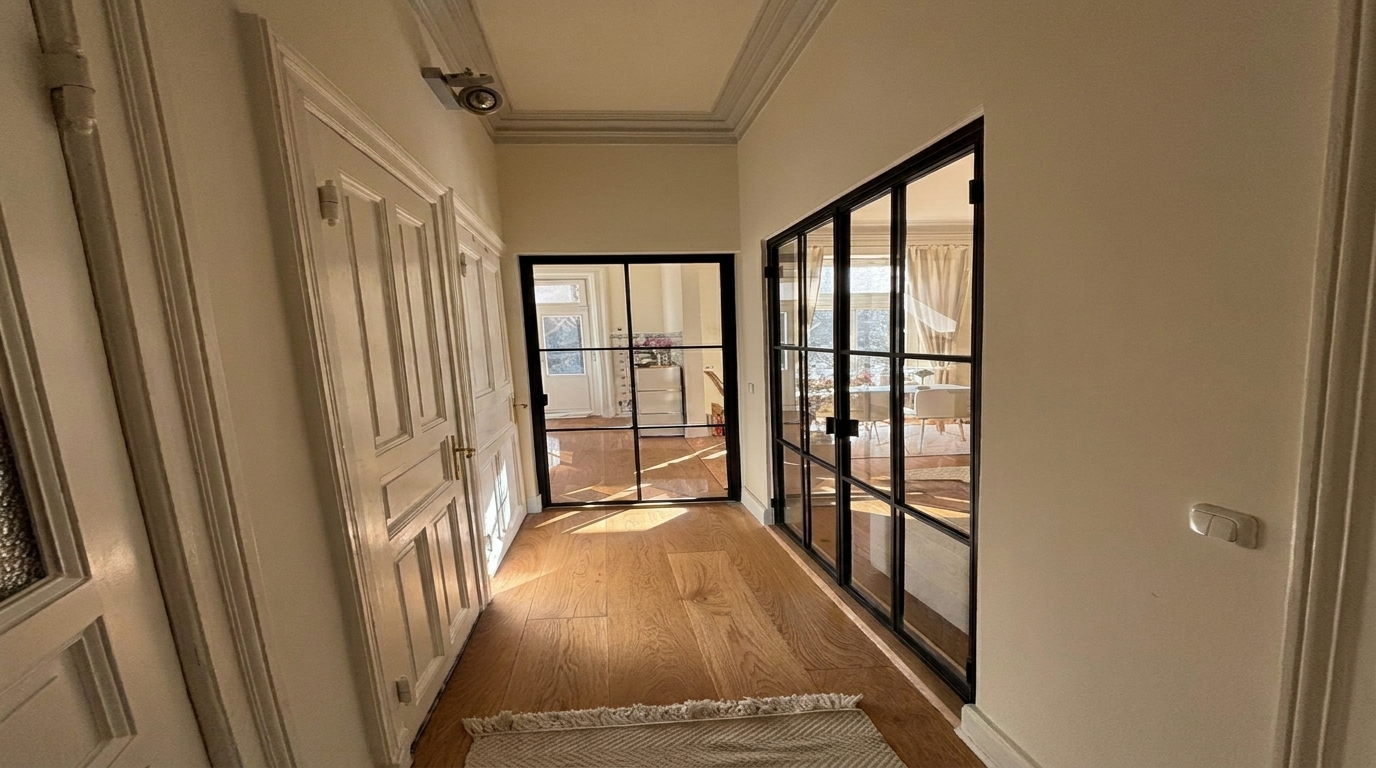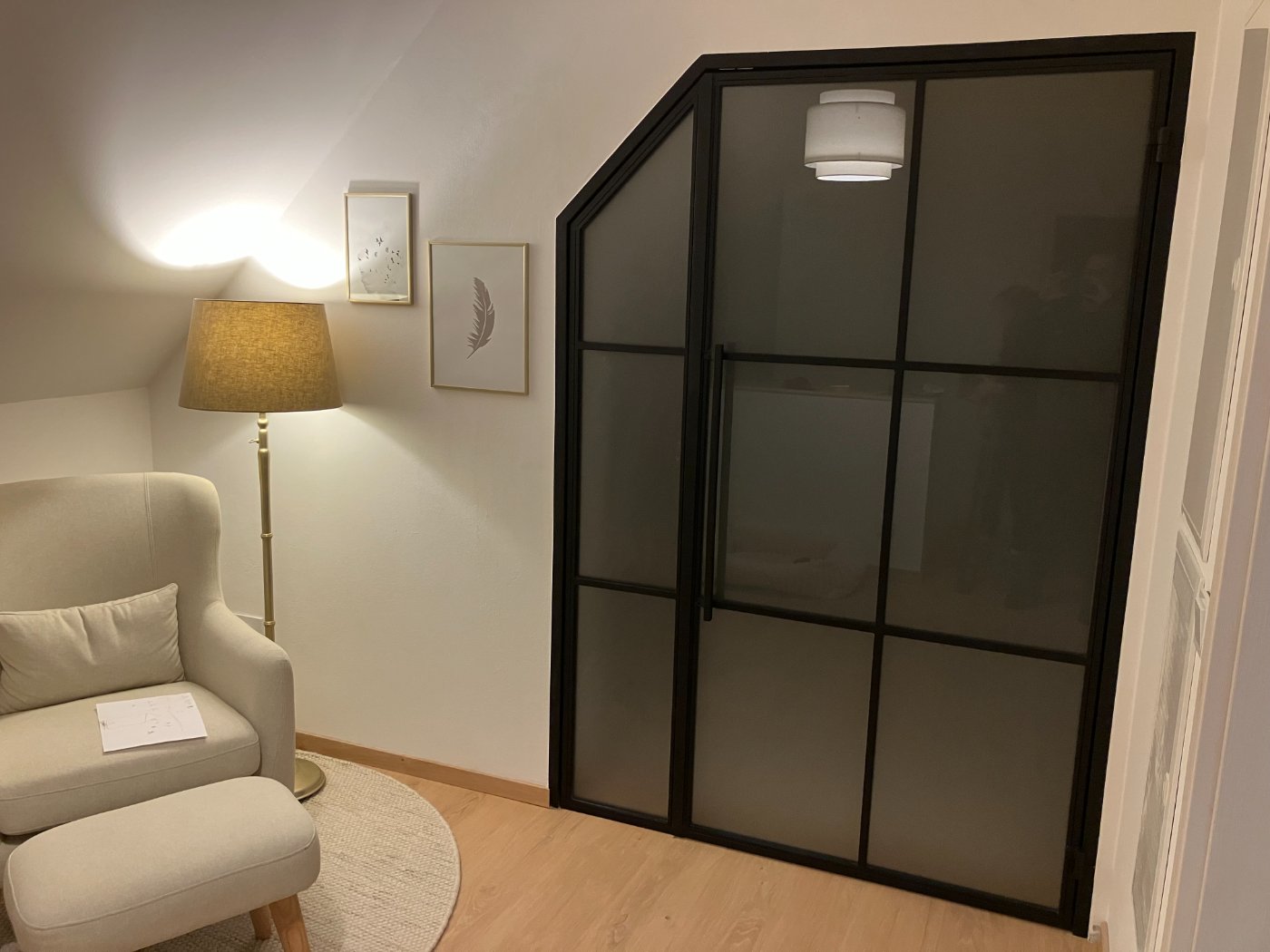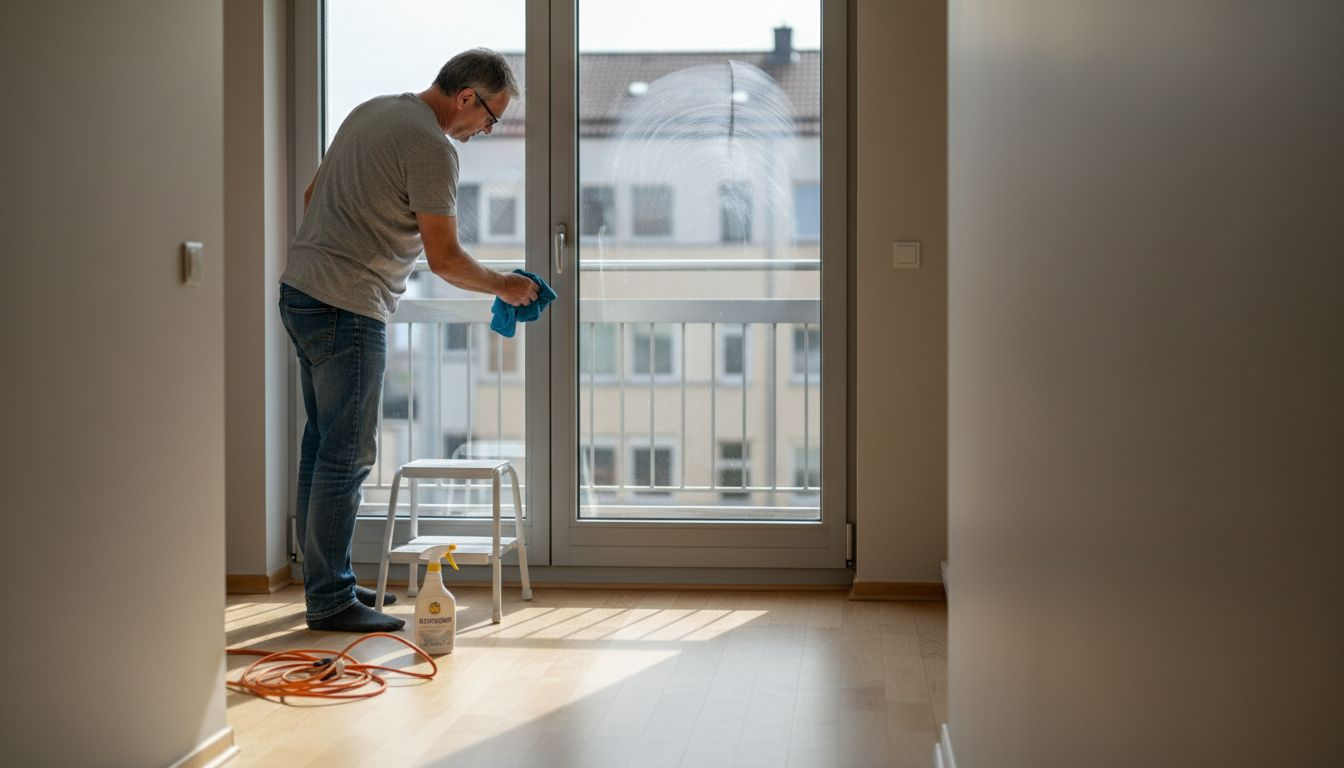
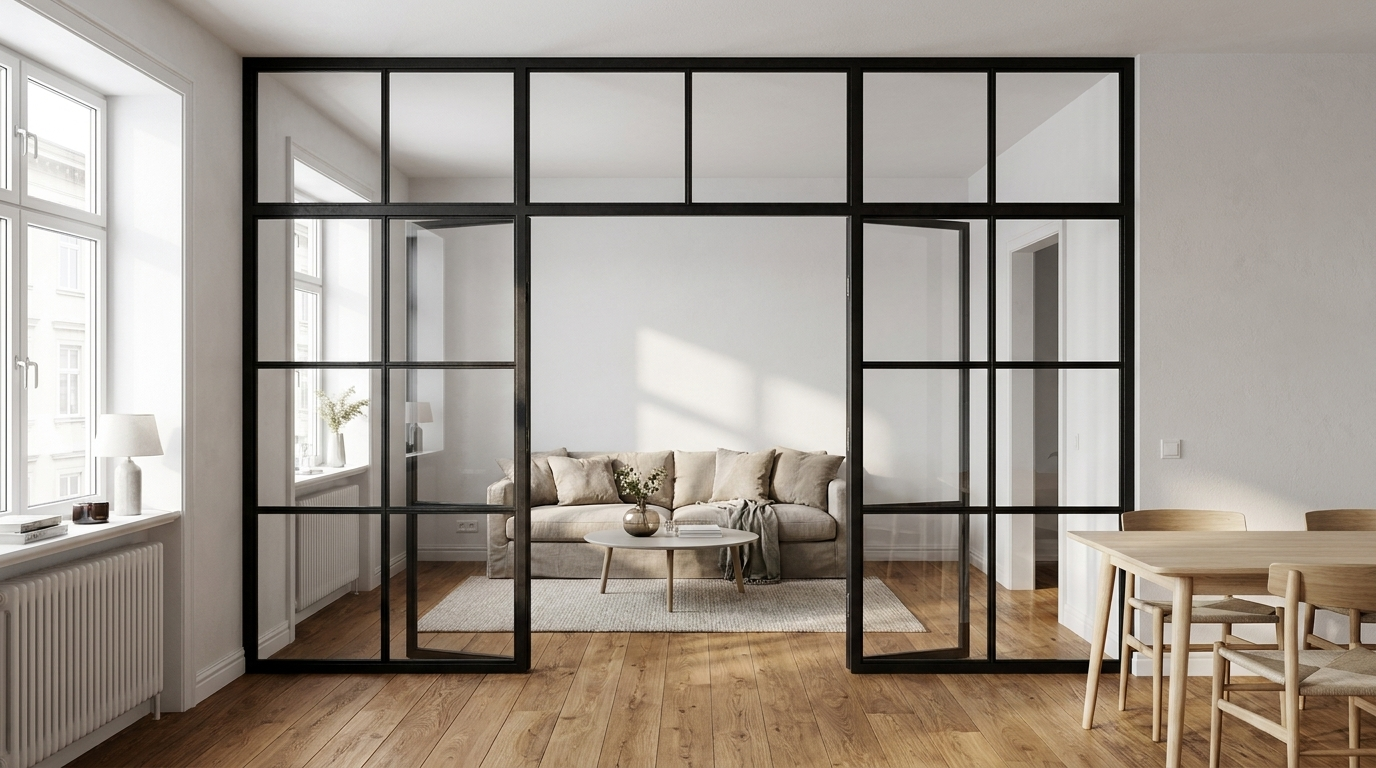
There's a particular kind of architectural confidence that comes with a steel and glass loft door. It doesn't hide what's behind it — it frames it. Light travels freely between rooms, sightlines open up, and the industrial character that defines converted warehouses, open-plan Victorian terraces, and contemporary extensions gets a focal point worth noticing. This guide walks you through every stage: understanding what a loft door actually is, choosing the right materials, taking accurate measurements, configuring your door online, and keeping it in excellent condition for the long term.
Loft Door vs. Room Divider: Understanding the Difference
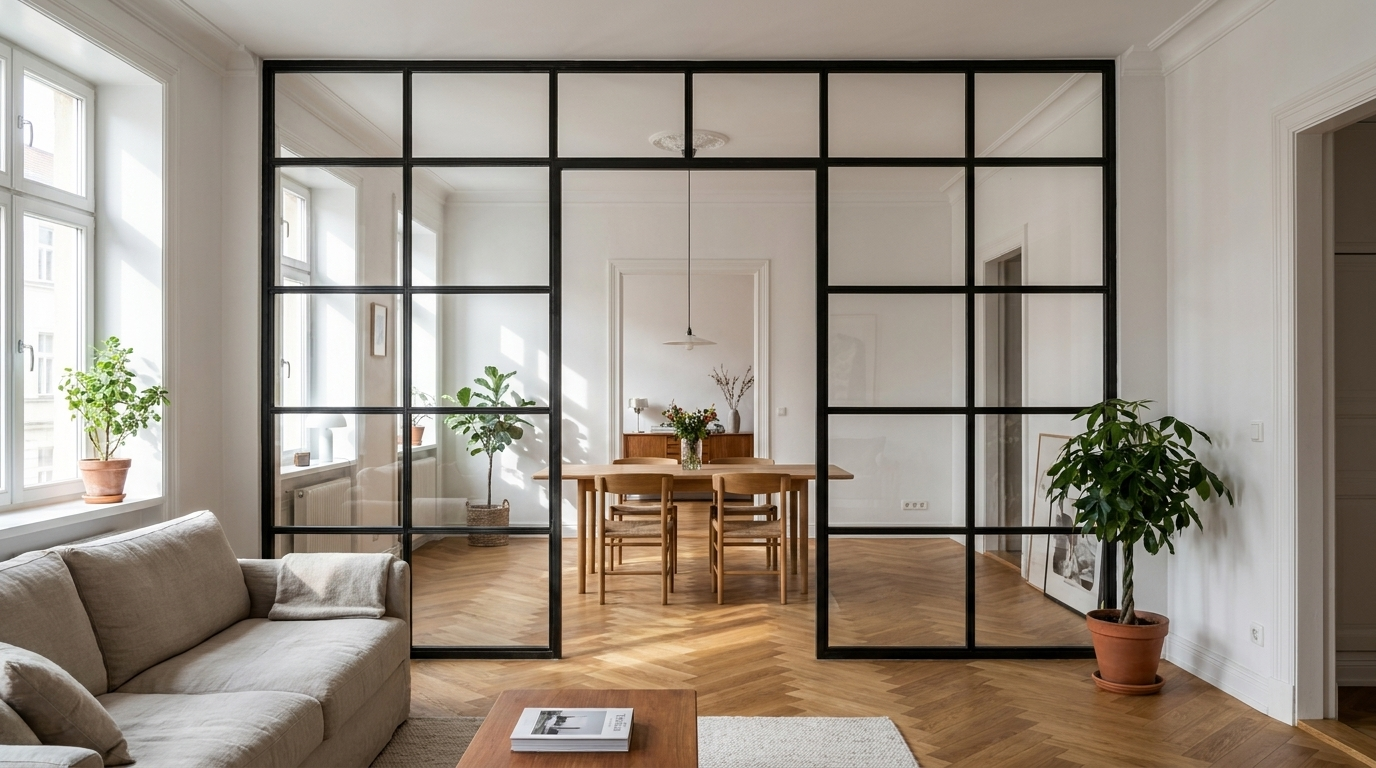
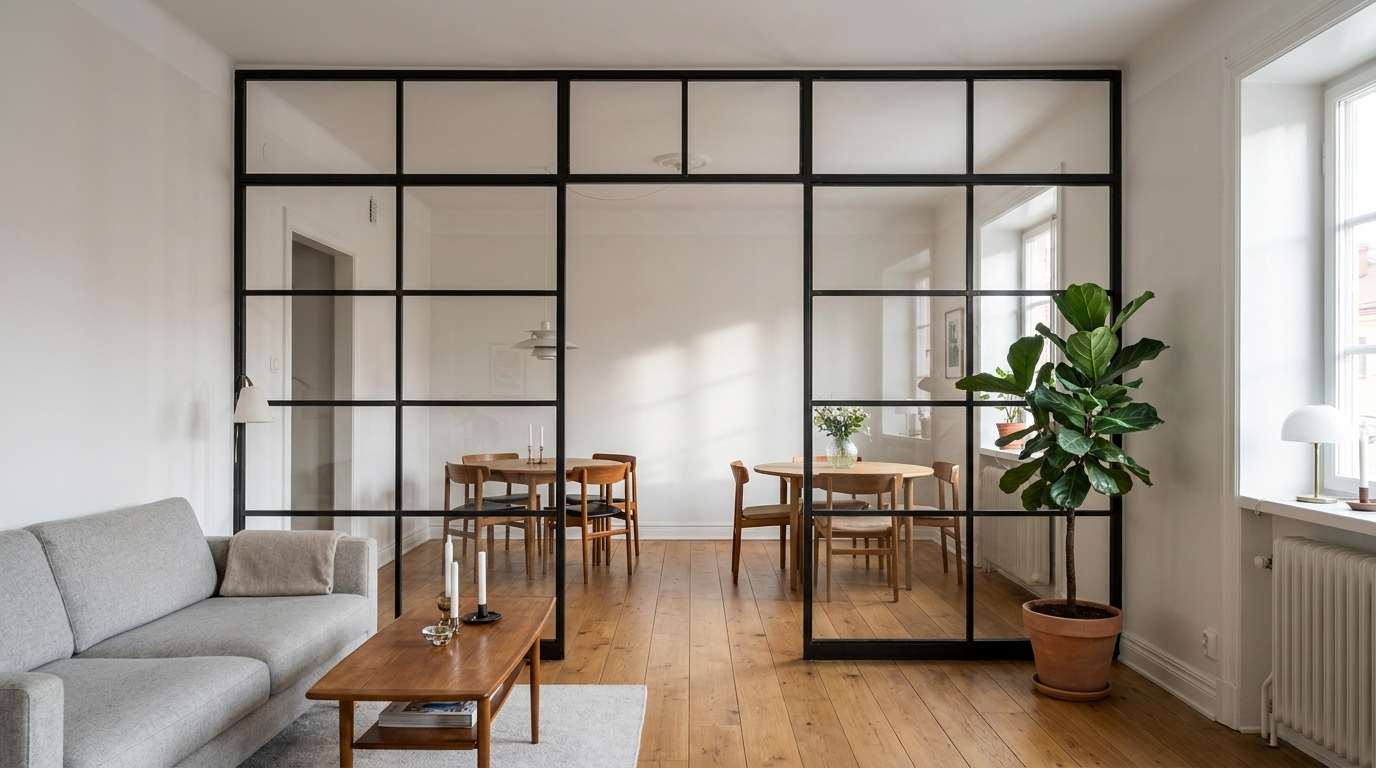
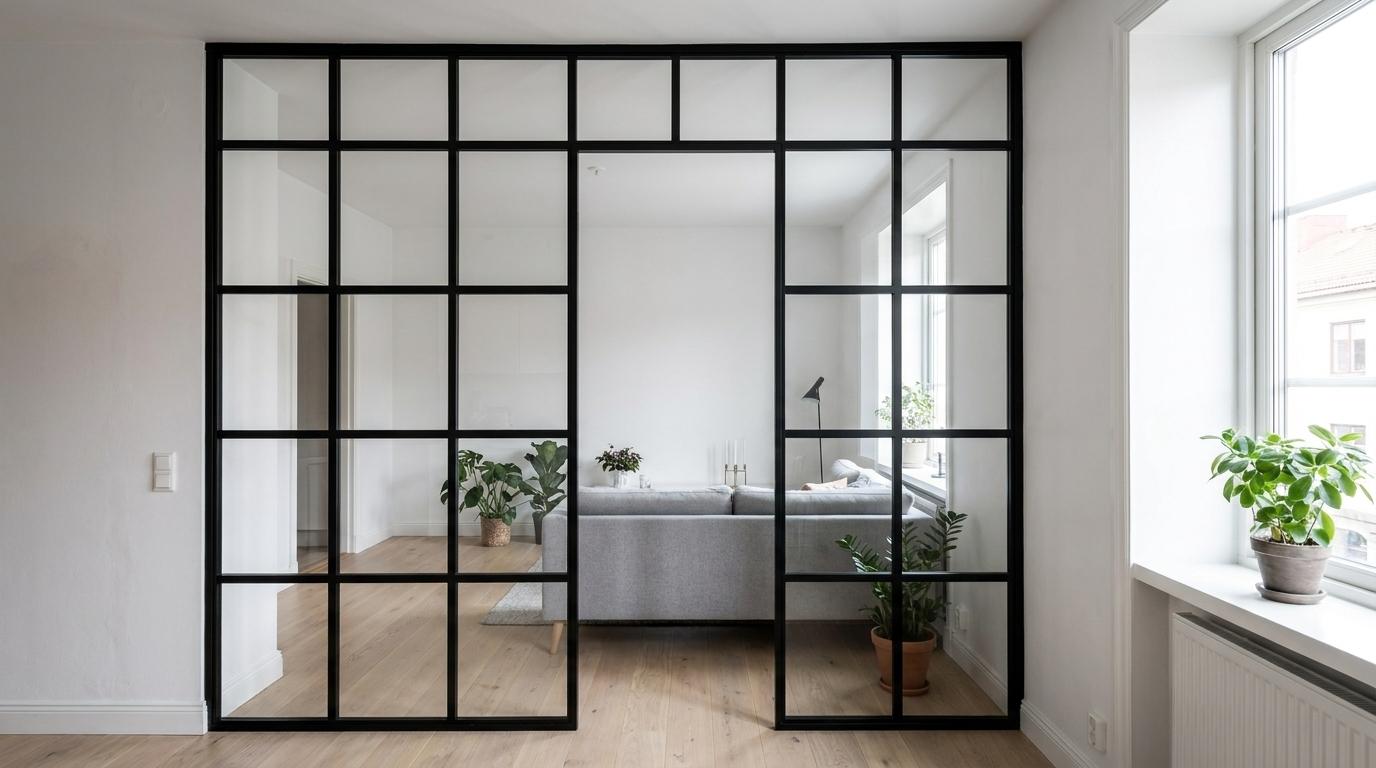
The distinction matters more than it might seem. A loft door is a functioning, hinged door — it swings open, latches shut, and operates just like any other door in your home. It has a frame with a defined hinge side (left or right, your choice), an opening direction, an opening angle, and a handle. A room divider, by contrast, is a fixed steel and glass partition wall. It can include a walk-through opening, but it doesn't swing, latch, or function as a door in the traditional sense.
If you need to control sound, close off a space for privacy, or simply want the option to fully separate two areas, you need a loft door. If you want a permanent architectural statement that divides without closing, a room divider is the right choice.
A bespoke loft door from Manufaktur X is built from the following components:
- A precision-engineered steel frame, powder coated in any RAL colour
- Safety glass panels in your choice of glass type (toughened ESG or laminated VSG)
- High-quality hinges and ironmongery rated for long-term daily use
- A choice of three handle designs: Long Bar, Discreet, or Crescent
- Selectable hinge side (left or right), opening direction, and opening angle
Materials: Steel, Glass, and How Your Door Is Made
The Steel Frame: Powder Coated for Lasting Durability
Every loft door frame is manufactured from robust steel and finished with powder coating — not paint. Powder coating is applied electrostatically and cured under heat, creating a surface that bonds at a molecular level with the steel beneath. The result is scratch-resistant, maintains an even colour across the entire surface, and is significantly more durable than conventional paint finishes. It's also an environmentally friendlier process, producing no solvent emissions during application.
You can specify any RAL colour. Classic matt black (RAL 9005) suits the industrial aesthetic that works so well in open-plan conversions and loft-style flats. Warm anthracite and dark grey tones complement period properties where you want steel without starkness. If your interior scheme calls for something less expected — a deep forest green, a warm off-white — that's equally possible. The powder coating protects the steel against corrosion and everyday mechanical wear.
Glass Design and Glass Type: Two Separate Decisions
This is a distinction that catches many people out, so it's worth being clear: the glass design refers to the visual effect and appearance of the glass — how transparent, tinted, or textured it is. The glass type refers to the structural and safety specification of the glass itself. These are two independent choices.
There are five glass designs available in the configurator:
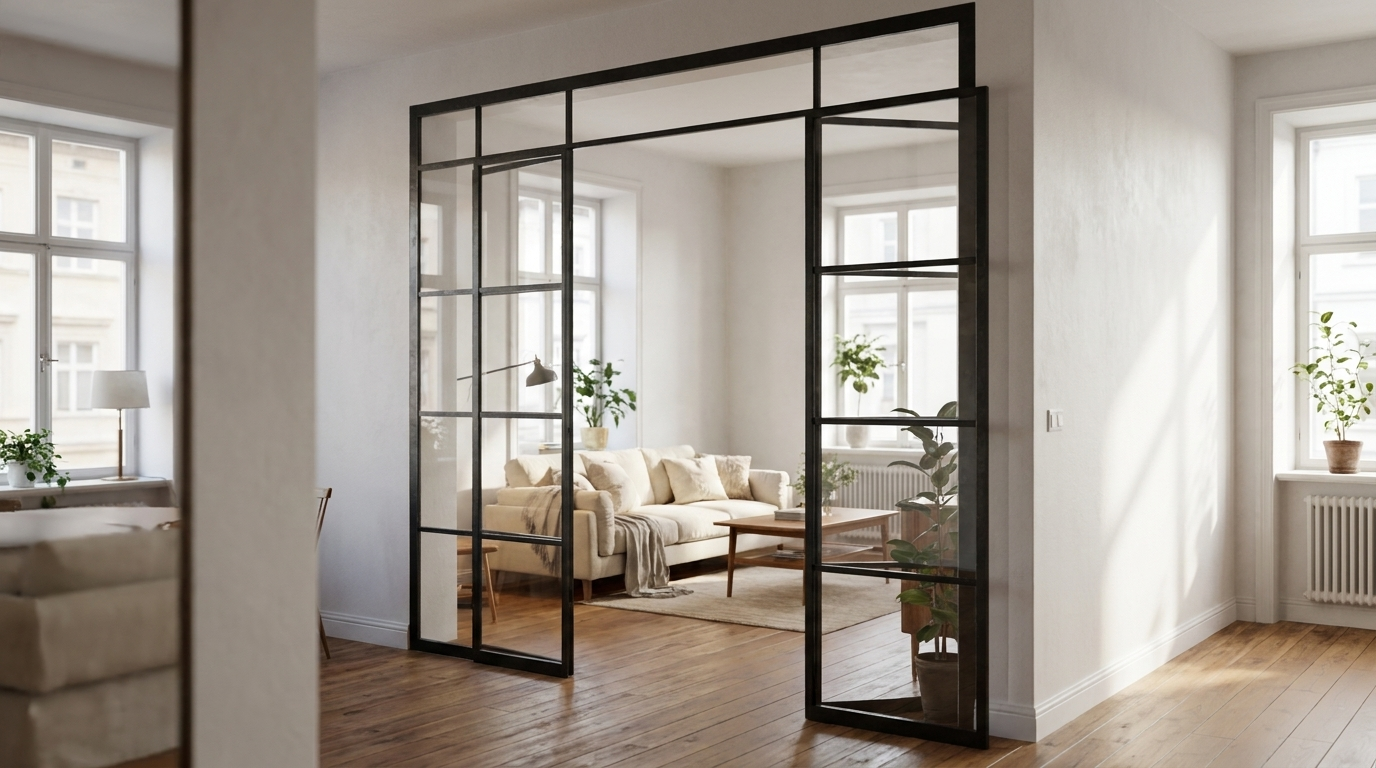
- Clear glass — maximum transparency, allows light to pass through unobstructed
- Frosted glass — diffuses light and provides a degree of visual privacy without blocking the light entirely
- Smoked glass — lightly tinted, reduces glare while maintaining good transparency
- Dark smoked glass — more heavily tinted, offers increased privacy while still permitting natural light
- Textured glass — a structured surface that scatters light and adds visual depth
There is exactly one frosted glass option — no gradations or variations in opacity. Together, the five designs cover the full spectrum from complete openness to considered privacy.
Glass Type: ESG or VSG
Independently of which glass design you choose, you'll select a glass type. ESG (toughened safety glass) is thermally pre-stressed during manufacture. If it breaks, it shatters into small, blunt fragments rather than dangerous shards — making it significantly safer than standard glass. VSG (laminated safety glass) consists of two or more panes bonded by an interlayer film. If broken, the film holds the pieces in place, preventing the panel from collapsing and providing an additional layer of security. For larger door formats, VSG is the recommended choice.
Handle Options: Three Designs
Three handle designs are available, each with a distinct character:
- Long Bar — a classic full-length bar handle, immediately recognisable as industrial in style
- Discreet — slim and understated, ideal where the door itself should do the talking
- Crescent — a gently curved form that adds a subtle sculptural quality
Configuring Your Bespoke Loft Door Online
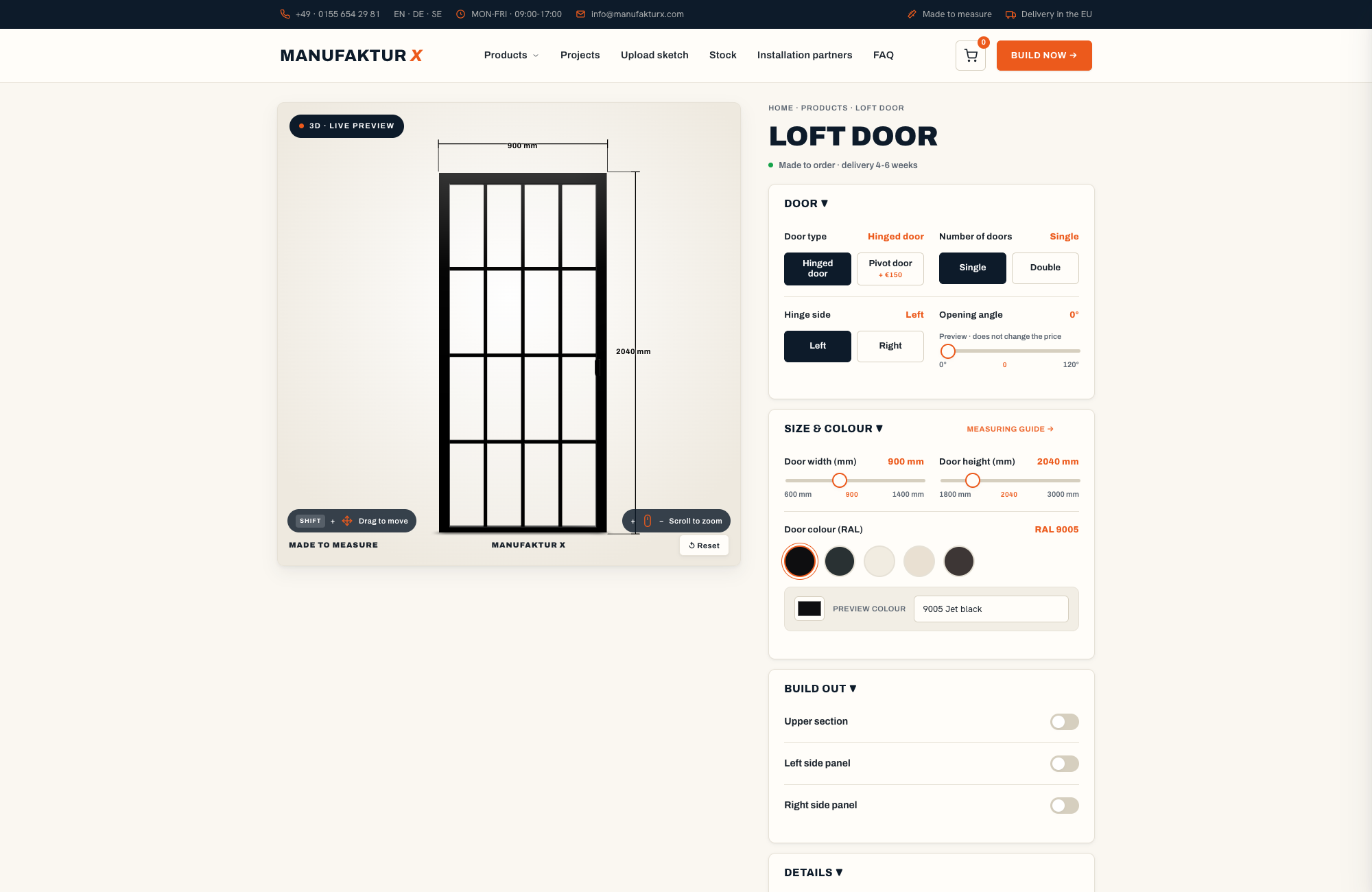
Every loft door is manufactured to your exact specifications — and the online 3D configurator at manufakturx.co.uk/loft-door makes the process straightforward. As you work through each decision, the configurator updates the price in real time. There are no hidden costs: delivery charges and lead times are shown transparently in the basket before you commit to anything.
Within the configurator, you'll specify:
- Width and height (your finished door dimensions — more on measuring below)
- Hinge side: left or right
- Opening direction and maximum opening angle
- RAL colour for the powder coating
- Glass design (one of the five options above)
- Glass type: ESG or VSG
- Handle design: Long Bar, Discreet, or Crescent
- Frame width and the grid pattern of glass panels
Loft doors start from £1,157 for the most basic configuration. The price adjusts as you select options and dimensions — the configurator keeps you informed throughout. For complex projects or unusual structural situations, you can upload a sketch of your space and receive a bespoke quotation. Get in touch via manufakturx.co.uk.
How to Measure Correctly for Your Loft Door
Accurate measurement is the single most important step in the ordering process. Unlike ordering from a standard size range, you're entering the exact dimensions you want your finished door to be — not the raw structural opening in your wall. Take your time here; an error at this stage can't easily be corrected once production is underway.
- Measure the width and height of your wall opening at multiple points — top, middle, and bottom for width; left, centre, and right for height. Walls in older UK properties, particularly Victorian and Edwardian houses, are rarely perfectly square.
- Record the smallest measurement at each axis. This is your raw opening size.
- Subtract your installation gap: approximately 5 mm clearance on each side (left, right, and top). The resulting figure is what you enter into the configurator.
The door is manufactured precisely to the dimensions you provide. If you're working with a particularly awkward opening — perhaps in a converted period property where walls run at a slight angle — take extra care and consider having measurements checked by a professional before ordering.
Keeping Your Loft Door in Top Condition
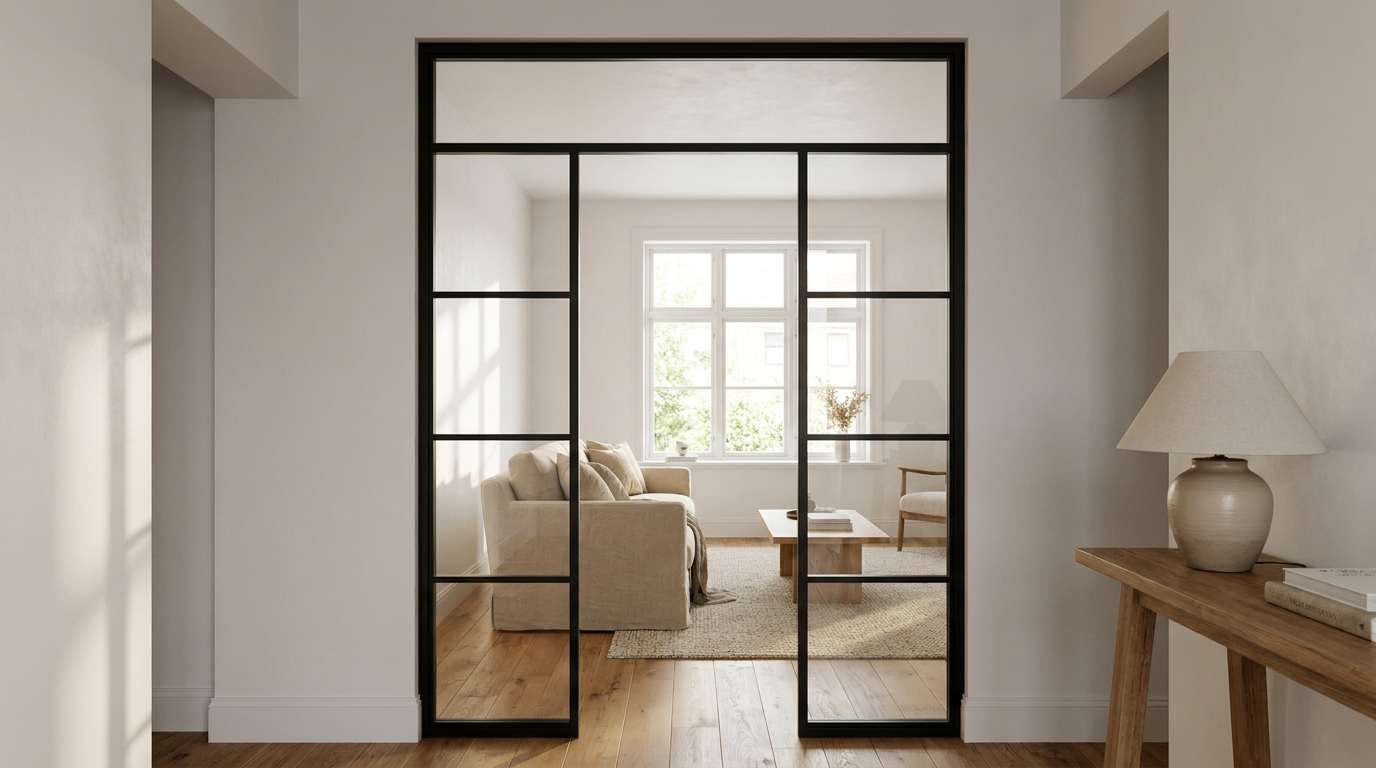
A steel and glass door requires very little maintenance when cared for correctly — but there are some clear dos and don'ts that make a real difference over time. The routine below keeps a loft door looking and functioning as it should, year after year.
A Practical Cleaning Schedule
- Daily: Remove visible fingermarks from glass panels with a dry microfibre cloth
- Weekly: Clean all glass surfaces fully; wipe down the steel frame to remove dust
- Monthly: A more thorough clean including seals and ironmongery
- Every six months: Oil hinges and fittings with acid-free oil; check that all screws remain properly tightened
- Annually: A full inspection for any signs of damage or wear, with touch-up repairs as needed
Cleaning the Glass Panels
For clear and smoked glass:
- Warm water and a lint-free microfibre cloth for daily maintenance
- A standard streak-free glass cleaner for weekly cleaning
- A diluted white vinegar and water solution works well as an eco-friendly alternative
- For stubborn marks, methylated spirits applied carefully to the affected area
- Always dry thoroughly after cleaning to prevent water spots
- Finish with newspaper for a streak-free shine — an old trick that still works
One important rule: never spray glass cleaner directly onto the steel frame. The chemicals can damage the powder coating over time.
Caring for Frosted and Textured Glass
Matte and structured glass surfaces require a little more care than their clear counterparts:
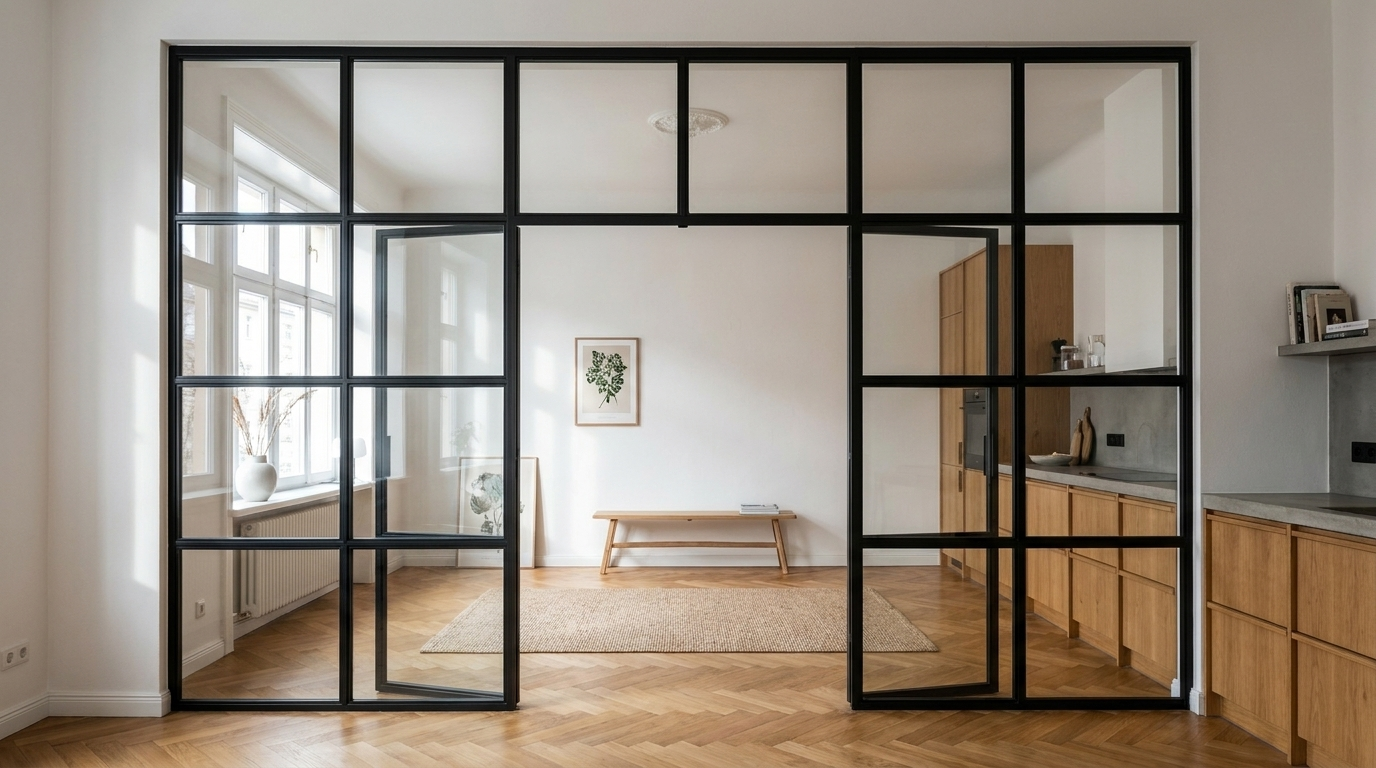
- Frosted glass: Avoid any cleaner containing oil or silicone — these leave visible residue on matt surfaces. Use a dedicated matt glass cleaner or diluted methylated spirits for stubborn marks. Always wipe in overlapping, consistent strokes and dry completely immediately afterwards.
- Textured glass: Use a soft brush to clean recessed areas and a microfibre cloth for the flat surfaces between them.
- Smoked and dark smoked glass: Stick to mild cleaning products and avoid cleaning in direct sunlight — rapid drying causes streaking on tinted glass.
- VSG (laminated glass): Avoid harsh chemicals and take particular care not to scratch the surface with hard or abrasive objects.
Looking After the Powder-Coated Steel Frame
The powder coating is your frame's primary defence against corrosion and wear. Maintaining it is straightforward:
- Dust regularly with a soft, dry cloth
- For more substantial soiling, use a slightly damp microfibre cloth
- Never use abrasive cleaners, wire wool, or scouring pads — these will scratch the coating
- Avoid all products containing chlorine, acid, or solvents
- Once a year, apply a specialist powder coating care product to maintain the finish and reinforce protection
On dark frames — particularly matt black — even minor scratches are immediately visible. A little extra care pays dividends.
Tackling Fingermarks and Water Spots
On dark steel and clear glass, fingermarks show up quickly. Here's how to deal with them cleanly:
On the steel frame:
- Dampen a microfibre cloth lightly with water and wipe gently — don't scrub
- For persistent marks, a very small amount of mild washing-up liquid works well
Water spots on glass:
- Wipe up water promptly after contact — limescale deposits build up quickly, particularly in hard water areas common across much of England
- Existing spots respond well to a solution of distilled water and white vinegar
- Finish by polishing with newspaper for a streak-free result
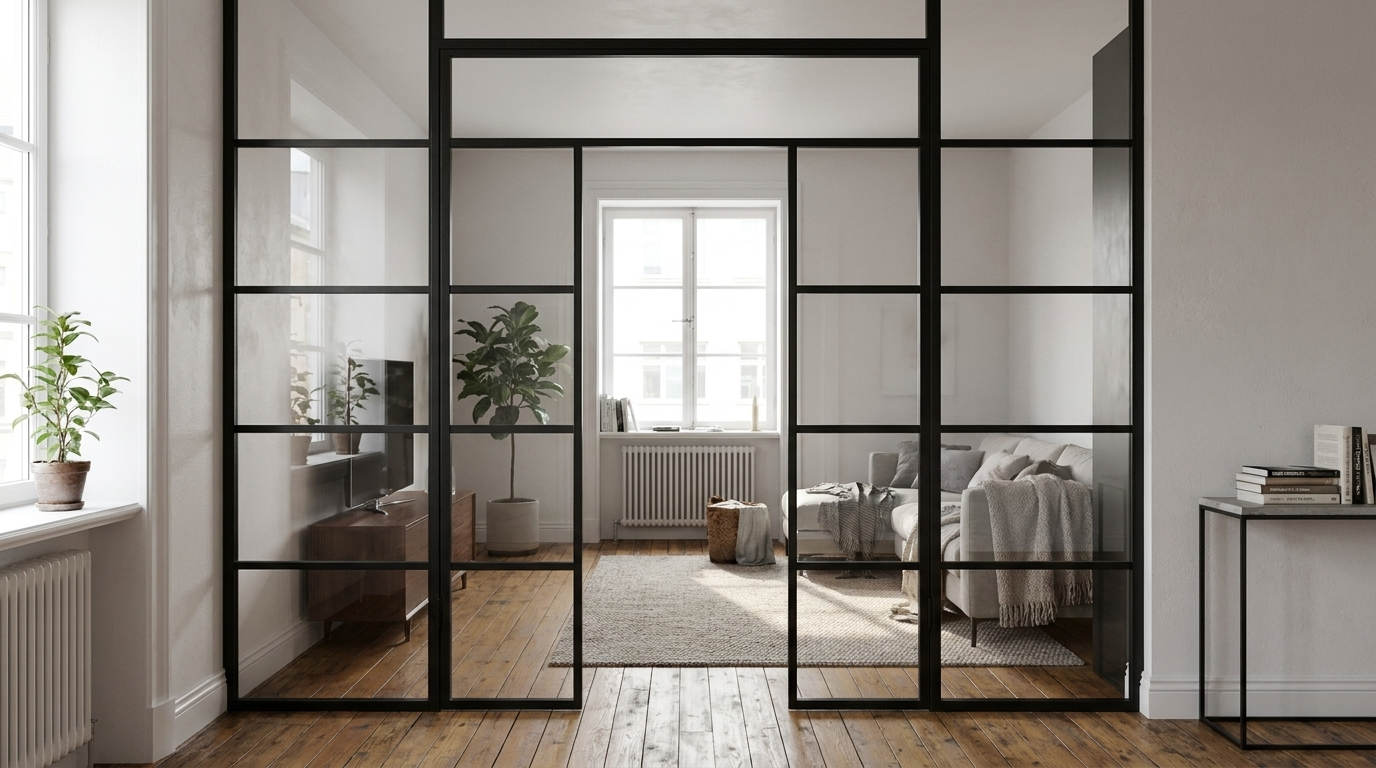
Eco-Friendly Cleaning Alternatives
All of the following work well and are kinder to your door's surfaces and the environment:
- For glass: a mixture of water, white vinegar, and a small drop of washing-up liquid
- For the steel frame: warm water with a neutral soap
- For polishing: reusable microfibre cloths rather than disposable wipes
- Avoid chlorine-based products entirely — they damage the powder coating and are harsh on the environment
Hinge and Ironmongery Maintenance
Moving parts need periodic attention. Addressing minor issues early prevents more significant problems developing over time.
- Oil hinges every six months using acid-free oil
- Check that the latching mechanism operates smoothly
- Tighten any loose screws as needed — but don't overtighten
- Inspect seals regularly for signs of wear or compression
A squeaking hinge is usually the first indication that lubrication is overdue — and it's almost always easy to fix.
Why Is My Loft Door Squeaking? Causes and Solutions
A squeaking loft door is irritating, but the cause is almost always identifiable — and fixable without professional help in most cases.
The Five Most Common Causes
- Dry or dirty hinges: When hinges lack lubrication or have accumulated dust and grime, metal moves against metal and produces the characteristic squeak.
- Misaligned or worn track (sliding loft doors): A track that isn't correctly set or has worn over time produces squeaking or grinding noises during operation.
- Floor seal dragging: A seal adjusted too low will drag across the floor — particularly noticeable on doors that weren't made to measure.
- Frame tension: Fluctuations in temperature and humidity — common in the UK's variable climate — can create tension in the frame that manifests as noise.
- Worn rollers or guides (sliding doors): On sliding door systems, rollers wear gradually with regular use.

How to Lubricate Hinges
- Clean the hinge thoroughly with a dry cloth to remove any accumulated dust or residue
- Apply WD-40 or a dedicated hinge oil
- Open and close the door several times to work the lubricant into the mechanism
- Wipe away any excess to avoid staining the floor or frame
This should be done approximately twice a year as standard practice.
Cleaning and Adjusting the Track on Sliding Doors
- Vacuum dust and debris from the track channel
- Wipe the track with a damp cloth
- Check that all track fixing screws are firmly tightened
- Treat the track lightly with silicone spray — not oil, which attracts dust
Adjusting the Floor Seal
- Locate the adjustment screws on the side or base of the door
- Turn carefully to raise the seal slightly
- Test the door's movement after each small adjustment
The seal should just touch the floor — light contact without compression is the goal.
When to Call a Professional
- If the door has warped or the frame is no longer plumb
- If rollers are damaged or the track is bent
- If the squeaking continues after lubrication
- If there are structural concerns with the fixings or glass installation
Common Maintenance Mistakes — and How to Avoid Them
| Mistake | Likely consequence | What to do instead |
|---|---|---|
| Using abrasive cleaners | Scratches and dull patches on glass and coating | Use mild, pH-neutral products only |
| Using metal tools or razor blades on glass | Permanent scratching | Soft cloths and soft brushes only |
| Leaving cleaning product residue on surfaces | Surface reactions and staining | Always rinse and dry thoroughly |
| Applying chlorine-based products to the frame | Corrosion damage to the powder coating | Use neutral soap or specialist cleaners |
| Spraying glass cleaner onto the steel frame | Coating damage and potential rust | Apply glass cleaner directly to the glass only |
| Using multipurpose household cleaners | Incompatible ingredients can attack surfaces | Use surface-specific products for glass and steel |
| Neglecting hinges | Squeaking and accelerated wear | Oil and clean every six months |
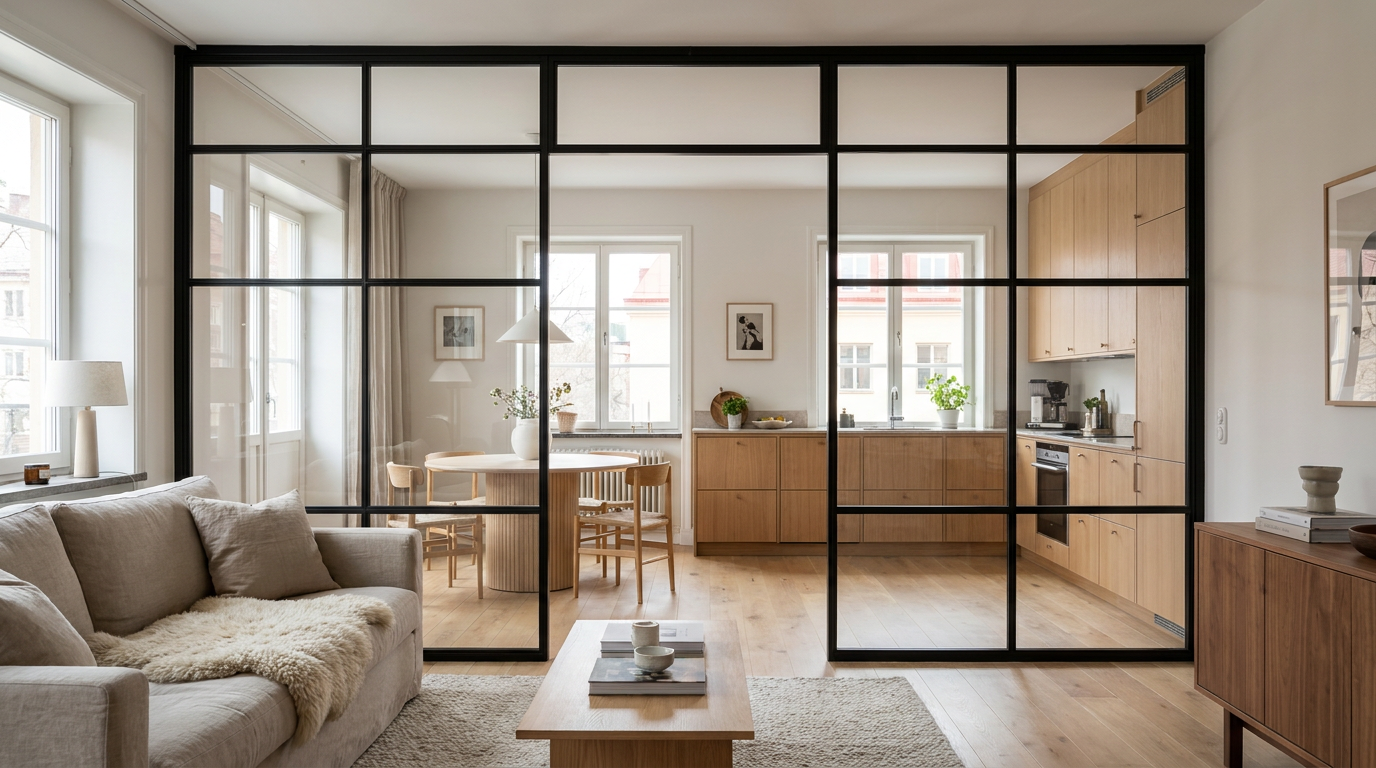
Seasonal Care Tips for UK Conditions
Winter: Managing Condensation
Cold external temperatures combined with warm, humid indoor air create ideal conditions for condensation — particularly relevant in the UK during autumn and winter. Three steps help manage it:
- Wipe condensation from glass surfaces promptly — leaving it standing encourages limescale deposits, which are harder to remove later
- Keep indoor humidity within a reasonable range (40–60% is generally recommended)
- For doors that open onto external areas, check that seals are intact before the colder months
Summer: Dust and Sunlight
- Dust more frequently during summer when windows and doors are open more regularly
- Don't apply glass cleaner in direct, strong sunlight — the product dries too quickly and leaves streaks
- Ensure good ventilation around the door to prevent heat build-up in the frame
Special Considerations for Bathrooms and Kitchens
Bathrooms:
- After showering, wipe condensation from both glass and frame
- Dry any direct water splashes immediately
- Ventilate regularly to prevent mould forming on seals
Kitchens:
- Remove grease splashes promptly — the longer they sit, the harder they become to shift
- Clean more frequently if the door is positioned near the hob
- Avoid steam cleaners — the pressure and heat can damage seals
Dealing with Rust Spots on the Steel Frame
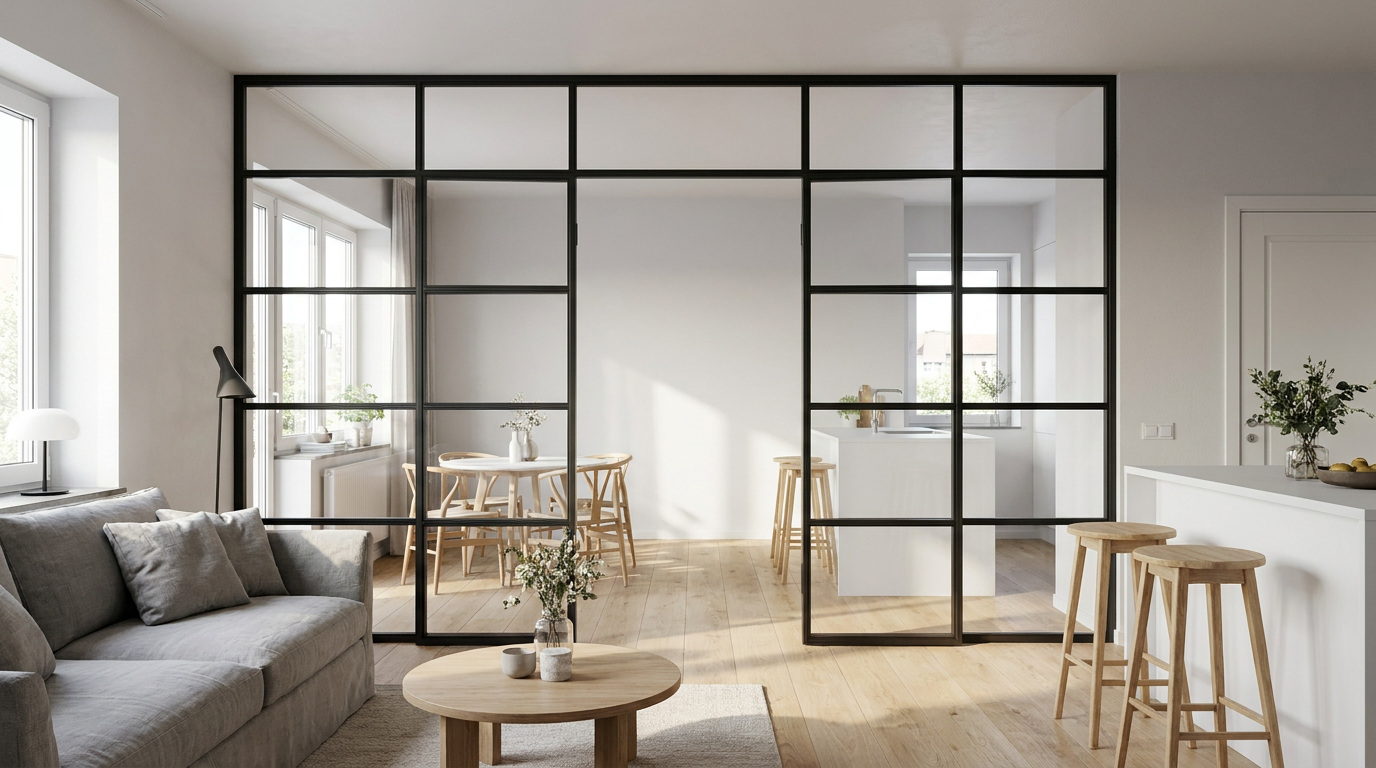
Mechanical damage to the powder coating — a significant knock or scratch — can in rare cases expose the underlying steel to moisture and allow rust to develop. If you notice a small rust spot, act quickly:
- Gently sand the affected area with fine-grit abrasive paper (400 grit or finer)
- Remove all sanding dust thoroughly
- Apply a rust-inhibiting primer to the bare metal
- Once dry, touch up with a matching colour paint or powder coat repair product
For more extensive damage or structural concerns, professional advice is the right course of action. Get in touch with the team at manufakturx.co.uk.
Preventive Steps for Long-Term Value
- Fit a door stop to prevent the door striking the wall or frame at full swing
- Keep sharp or abrasive objects away from the door's immediate vicinity
- In households with children, a fingerprint-resistant film applied at handle height reduces the frequency of cleaning needed
- Carry out regular visual checks for minor damage — catching small issues early prevents them becoming larger problems
- Avoid prolonged direct sunlight on frame sections where possible
- Check that all fixings and screws remain secure as part of your annual inspection
Replacing an Old Door with a Bespoke Loft Door
Worn finishes, outdated styling, operational problems, or a simple desire to transform the feel of a room — there are many good reasons to replace an existing door. A bespoke steel and glass loft door addresses all of these in a single step, and the transition tends to be more straightforward than people expect.
Why a Made-to-Measure Replacement Makes Sense
- Exact dimensions mean minimal remedial work around the frame on installation day
- Factory production means the door arrives ready to fit, with less disruption to your home
- Glass panels draw light through from adjoining spaces, making rooms feel larger and less divided
- If only the door leaf has deteriorated while the existing frame is still sound, it may be possible to replace the panel alone
Keeping the Installation Tidy
- Protect adjacent surfaces with masking tape and dust sheets
- Use an air purifier to capture fine dust particles during installation
- Close other internal doors to contain the work area
- Damp-mop afterwards to pick up any residual dust
Common Post-Installation Issues and How to Resolve Them
Squeaking hinges: Apply hinge oil or silicone spray; wipe away any excess immediately.
Stiff latch mechanism: Use graphite powder or a dedicated lock lubricant — not oil, which can gum up the mechanism over time.
Floor seal dragging: Adjust the setting screws until the seal achieves light, even contact with the floor without significant friction.
Pricing and the Online Configurator
Loft doors from Manufaktur X start from £1,157 — that's the entry price for the most straightforward configuration. As you add options and adjust dimensions, the price updates instantly in the configurator. Nothing is hidden: delivery and lead times (5–6 weeks from order confirmation) are shown clearly before checkout.
| Product | From | Note |
|---|---|---|
| Lofttür | £995 | Lowest possible option |
| Raumteiler | £1.900 | Steel + laminated glass, custom width |
| Großes Regal | £2.750 | Solid wood, steel frame, floor-to-ceiling |
| Esstisch | £1.360 | Solid wood, steel frame |
| Couchtisch | £995 | Solid wood, steel frame |
| Sitzbank | £945 | Solid wood, steel frame |
| TV-Board | £1.325 | Solid wood, steel frame |
| Rohrregal | £915 | Modular pipe shelf |
All orders to the UK include full handling of customs and import duties — there are no unexpected charges on delivery. Configure your door at manufakturx.co.uk/loft-door, or browse related products including room dividers and large shelving.
Frequently Asked Questions
What's the difference between a loft door and a room divider?
A loft door is a fully functioning hinged door — it opens and closes on a hinge, has a defined hinge side (left or right), and is fitted with a handle and latch. A room divider is a fixed steel and glass partition wall with no moving parts. It can incorporate a walk-through opening, but it doesn't function as a door. If you need to be able to close off a space, you need a loft door.
Which glass designs are available?
The configurator offers five options: clear glass, frosted glass, smoked glass, dark smoked glass, and textured glass. Separately, you choose the glass type — either ESG (toughened safety glass) or VSG (laminated safety glass). For larger door formats, VSG is the recommended choice.
How often should I clean and service my loft door?
Daily removal of fingermarks from glass, weekly full cleaning of glass panels and frame, monthly thorough cleaning including seals, six-monthly oiling of hinges and checking of fixings, and an annual full inspection. In higher-use spaces — a busy kitchen, for instance — a slightly more frequent routine makes sense.
What cleaning products are safe to use?
For glass panels: standard streak-free glass cleaner, warm water with a microfibre cloth, or a water and white vinegar solution. For the powder-coated steel frame: pH-neutral products or a neutral soap solution only. Never use abrasive, chlorine-based, acid-based, or solvent-based products on either surface.
What does a loft door cost?
Prices start from £1,157 for the most basic configuration. The exact price for your specification is shown in real time as you work through the configurator — there are no surprises.
Can I submit a sketch if my opening has unusual dimensions?
Yes. If your project involves a complex or non-standard structural situation, you can share the details of your space with the Manufaktur X team via manufakturx.co.uk. The team will assess the feasibility and provide a bespoke quotation.
My loft door squeaks — what should I do first?
Start with the hinges: clean them thoroughly and apply acid-free oil, then open and close the door several times to distribute the lubricant. On sliding doors, check that the track is clean and correctly fixed, then treat with silicone spray. Also check that the floor seal isn't set too low and dragging. If the door continues to squeak after these steps — or if there are signs of warping or structural issues — a professional inspection is advisable.
What other products does Manufaktur X offer?
Alongside loft doors and room dividers, Manufaktur X produces dining tables, coffee tables, benches, large shelves, and pipe shelves. All products are made to order in the EU and can be delivered across the UK with customs and duties fully handled.