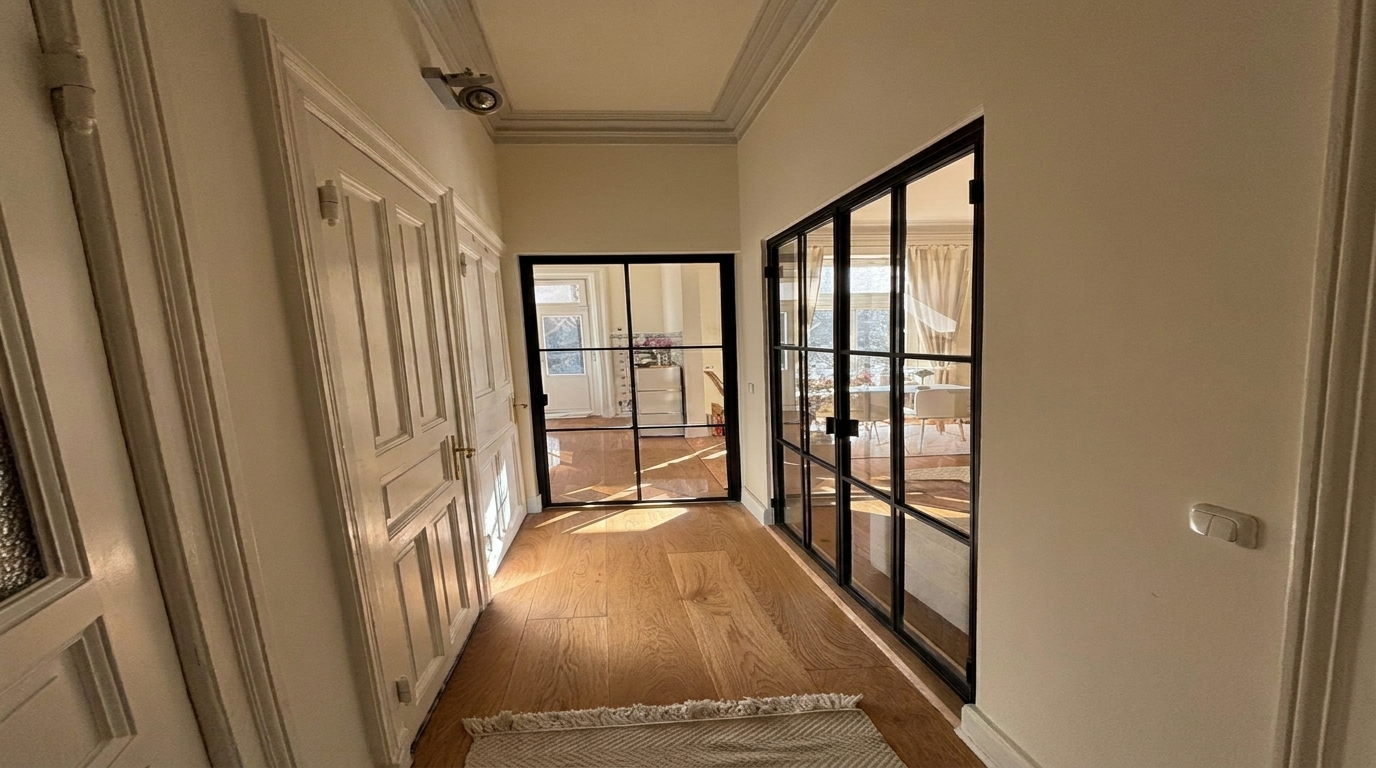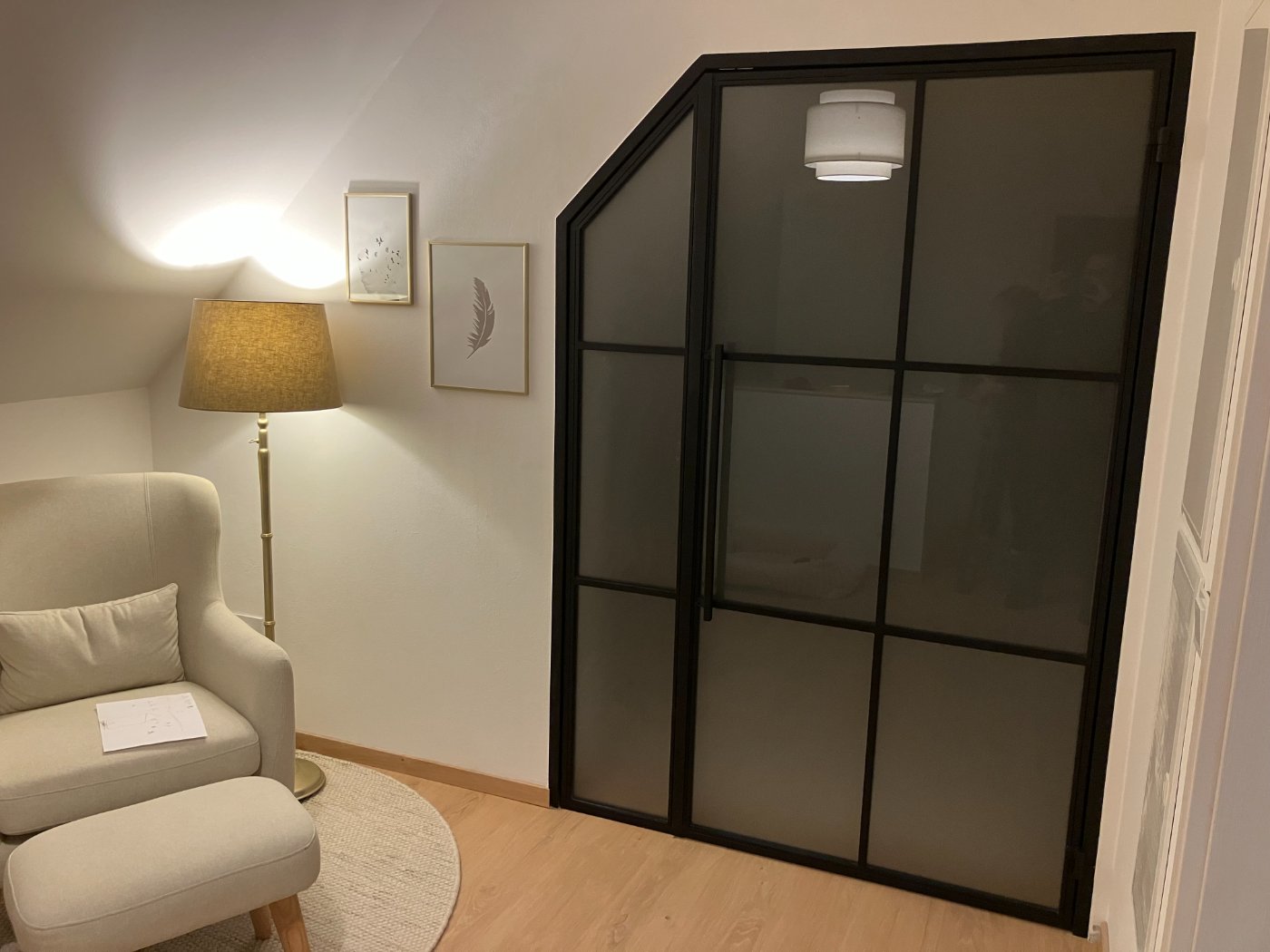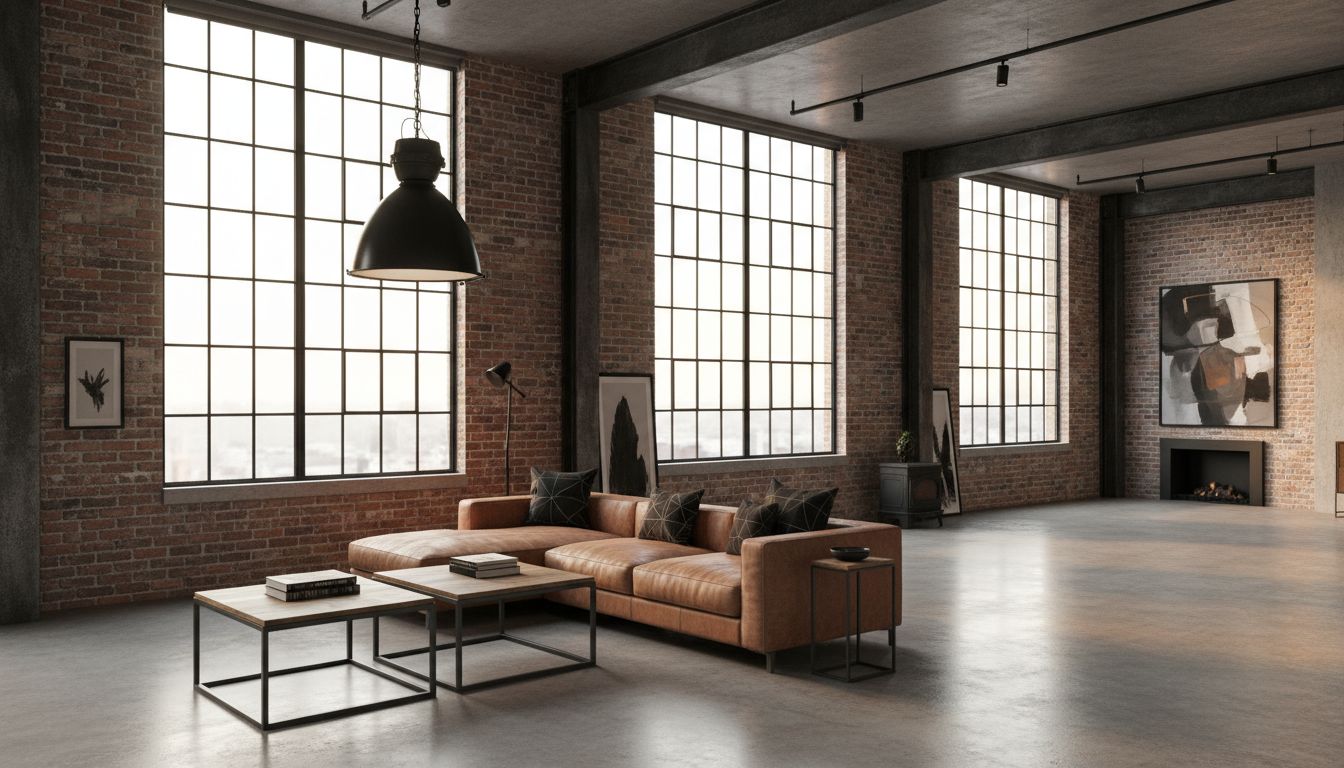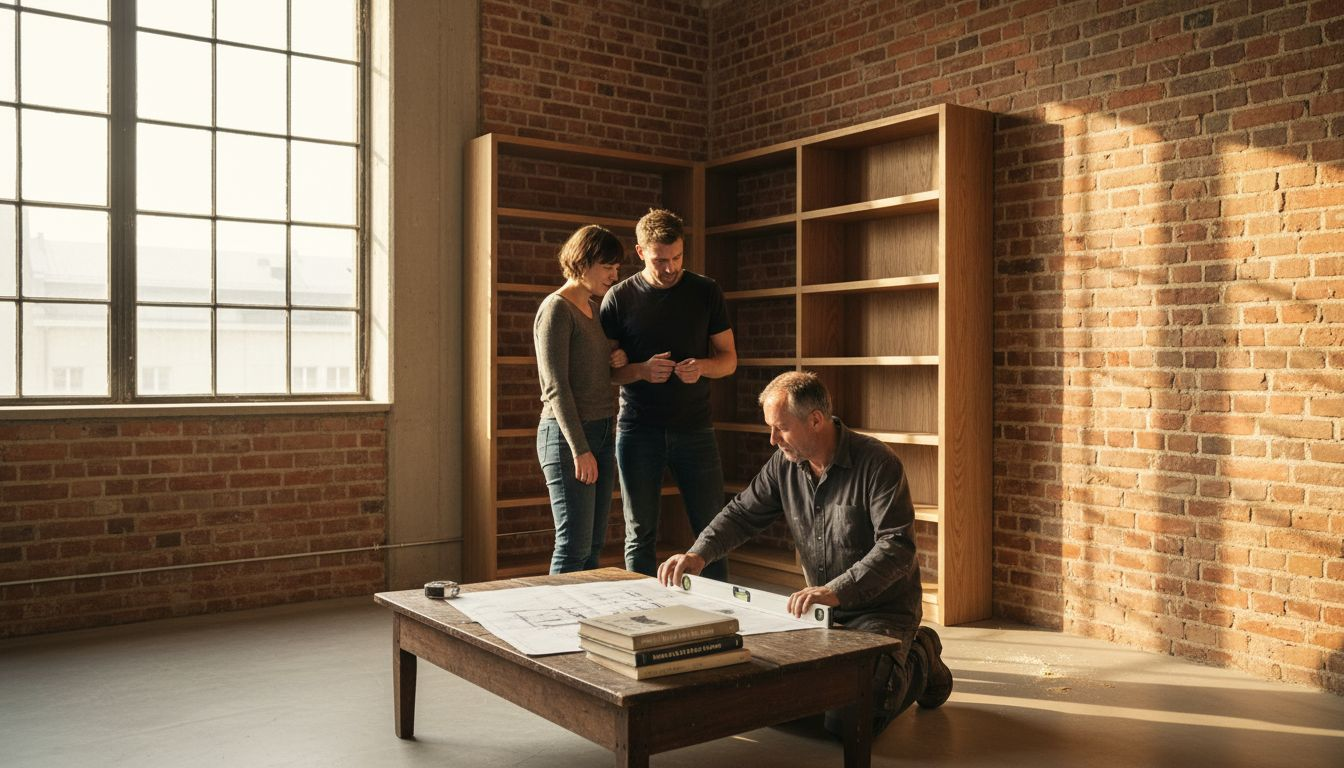
Period properties, Victorian conversions, former warehouse lofts — British homes are wonderfully varied, and that variety is precisely what makes standard furniture such a persistent headache. A doorway that measures 1,380 mm wide, a chimney breast that nudges a recess out of square, a sloped ceiling in a converted loft flat: off-the-shelf simply was not designed for these realities. Bespoke furniture made from solid wood, steel, and safety glass works the other way around — it adapts to your space, not the other way round.
Why Bespoke Furniture Is a Practical Choice, Not a Luxury One
Britain has one of the oldest housing stocks in Europe. Millions of homes were built before standard metric dimensions existed, and even post-war terraces rarely conform to the neat right angles that flat-pack manufacturers assume. Alcoves sit slightly off-centre. Ceiling heights vary between floors. Bay windows create wall returns that no catalogue shelf will ever quite meet. In these settings, the question is not whether a standard piece will fit perfectly — it is whether it will fit at all.
A shelf that is 30 mm too tall for a period alcove cannot simply be trimmed. A standard interior door leaf, typically no wider than 826 mm, is useless in a hallway that demands a 1,200 mm opening. Bespoke furniture is the functional answer to an architectural problem, and in genuinely awkward spaces it is often the only answer.
The trend is moving in one direction: home renovation activity across the UK has grown steadily, driven by homeowners choosing to improve rather than move. That means more people confronting the realities of older buildings — and increasingly turning to made-to-measure solutions as a result.
"In older properties and converted commercial buildings, bespoke joinery and furniture are not an indulgence — they are the only way to use space properly."
Grand Designs Magazine
It is also worth being clear about what "bespoke" actually means. Many retailers use the word to describe choosing from a grid of preset sizes or a limited colour palette. That is configuration, not customisation. True bespoke manufacture — the kind that Manufaktur X provides — means entering your exact desired dimensions in millimetres and having the piece built precisely to those numbers, with no rounding to the nearest standard size.
Bespoke vs. Off-the-Shelf: What Actually Differs
The practical differences go well beyond sizing. When a piece of furniture is made to order, every element is chosen by you rather than dictated by a product team in a factory somewhere. The species of wood, the stain colour, the steel finish, the glass type, the handle profile — all of it is decided before a single cut is made.
Materials matter enormously here. Solid hardwood, powder-coated steel, and safety glass are not marketing language; they are the reason a bespoke piece will still be in your home in twenty years when a flatpack equivalent has long since been replaced. At Manufaktur X, three handle styles are available for loft doors: Elongated, Discreet, and Half-Moon.
| Criterion | Standard retail furniture | Bespoke furniture |
|---|---|---|
| Fit | Approximate — often requires compromise | Exact dimensions to the millimetre |
| Design freedom | Limited by manufacturer's catalogue | Fully customisable — your choices throughout |
| Materials | Mixed wood, often chipboard or MDF | Solid wood, steel, safety glass |
| Lifespan | Typically 5–10 years | 20 years or more |
| Long-term value | Low — difficult to restore or repair | High — can be refinished and rejuvenated |
| Suitability for older properties | Poor — assumes standard dimensions | Excellent — made for any geometry |
The Manufaktur X Range: What You Can Order
Manufaktur X produces bespoke furniture in steel, glass, and solid wood — with two clearly distinct product groups depending on the materials involved.
Steel and glass products (where glass is a structural design element):
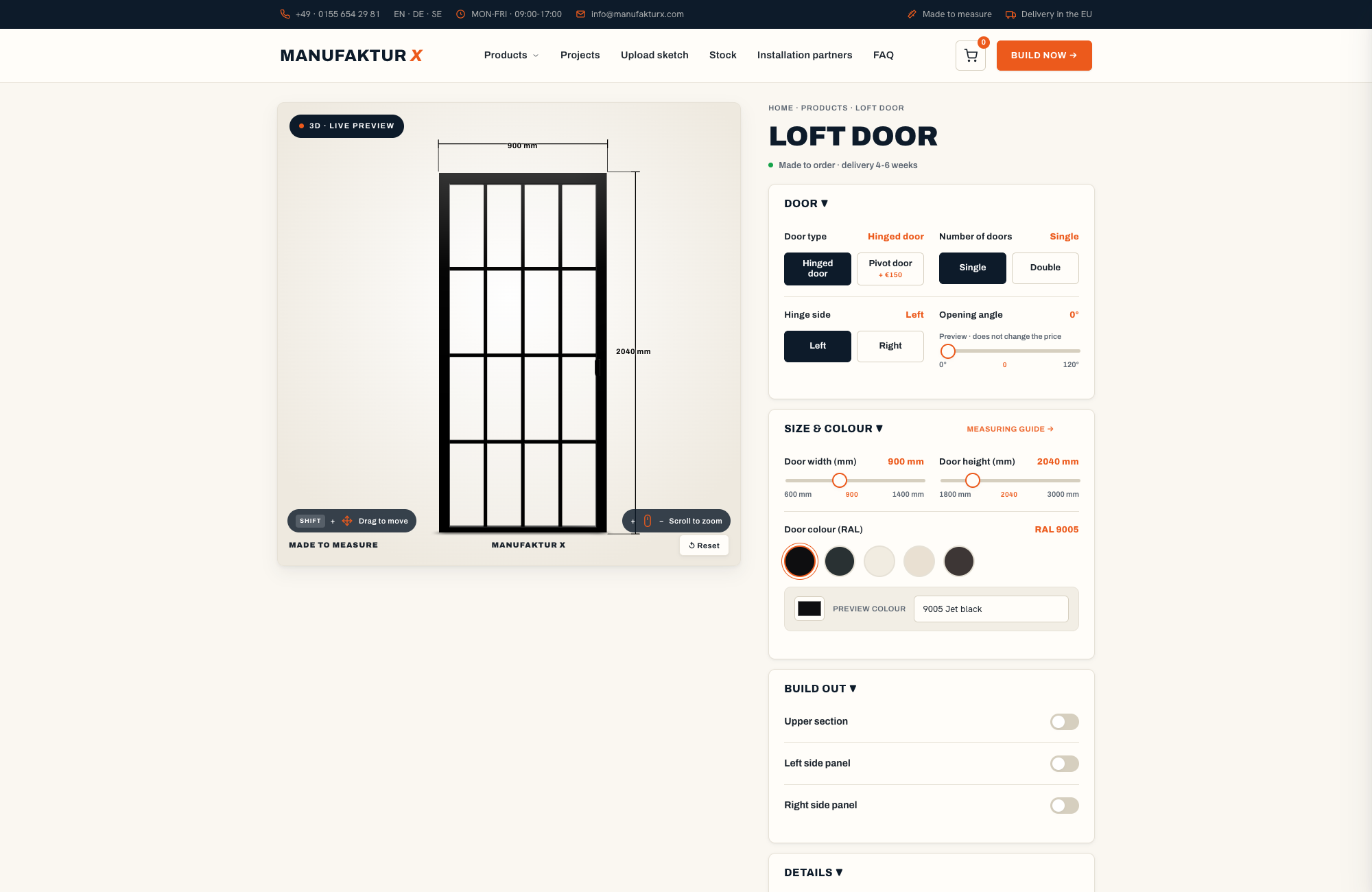
- Loft door: A fully functional door with a door stop (hinge side selectable as left or right), opening direction, opening angle, handle, and hinges. It connects spaces without sealing them off entirely — light passes through, the sense of separation remains.
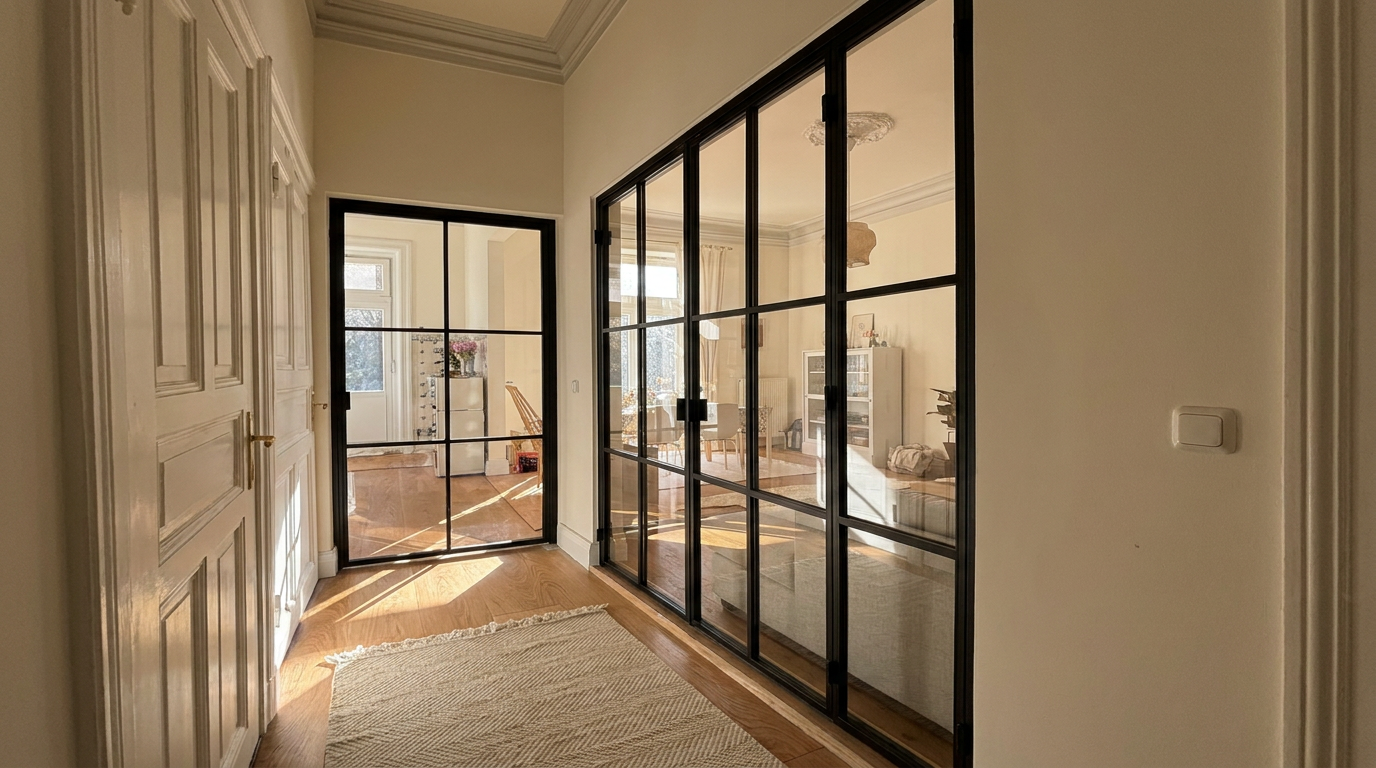
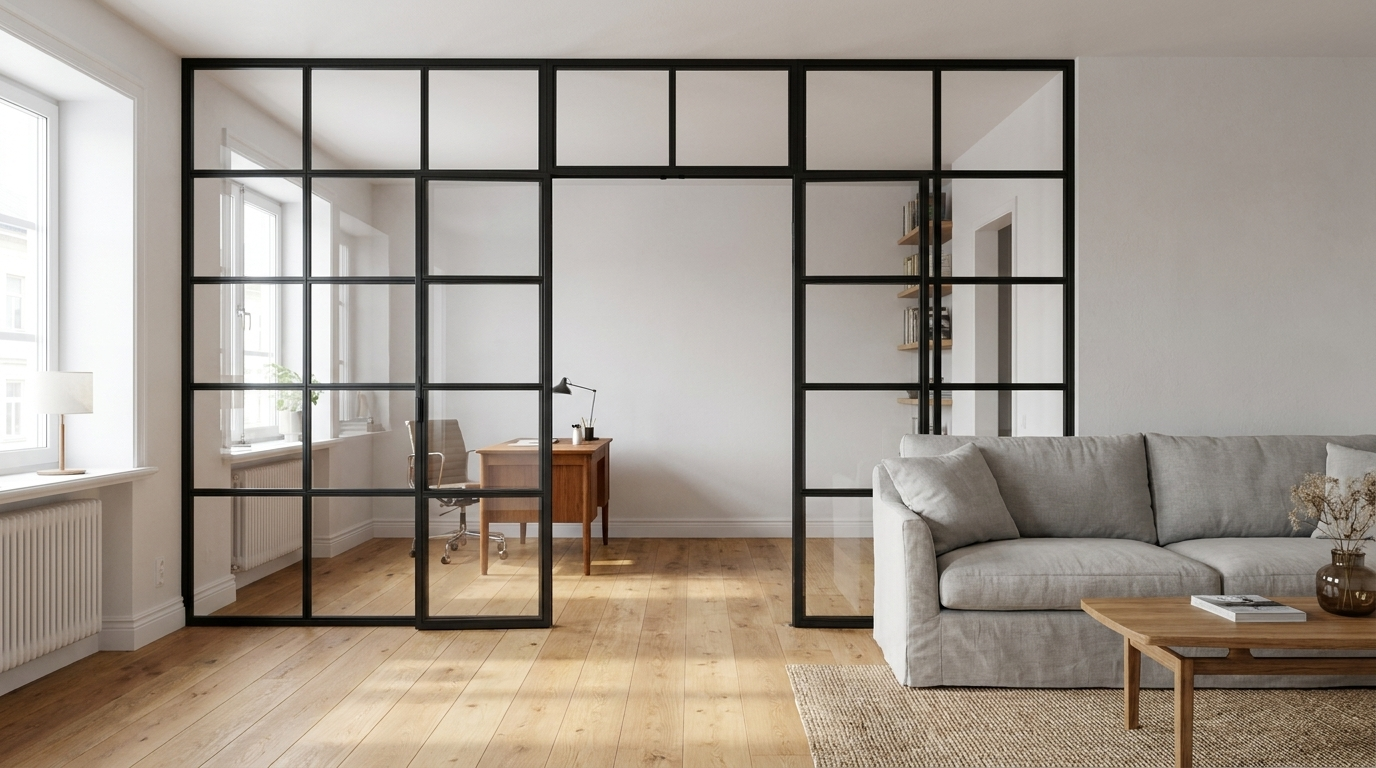
- Room divider: A fixed steel and glass partition wall with no door mechanism — no stop, no hinges, no handle. Optionally includes a walk-through opening (an unglazed gap, not a door). Ideal for open-plan spaces that need structure without full enclosure.
Solid wood and steel products (no glass):
- Large shelf unit: Steel frame with solid wood shelves, optionally including integrated wooden cupboards in the lower section.
- Dining table: Solid wood top on a steel base, sized precisely to your room and seating.
- Coffee table: Made to the exact height of your sofa or seating arrangement.
- Bench: Solid wood with a steel frame — compact, durable, and made to fit.
- Pipe shelf: Industrial-style steel tube construction with solid wood shelves.
Loft doors start from £1,157 — the entry price for the most straightforward configuration. Current pricing across the full range is shown live in the configurator:
| Product | From | Note |
|---|---|---|
| Lofttür | £995 | Lowest possible option |
| Raumteiler | £1.900 | Steel + laminated glass, custom width |
| Großes Regal | £2.750 | Solid wood, steel frame, floor-to-ceiling |
| Esstisch | £1.360 | Solid wood, steel frame |
| Couchtisch | £995 | Solid wood, steel frame |
| Sitzbank | £945 | Solid wood, steel frame |
| TV-Board | £1.325 | Solid wood, steel frame |
| Rohrregal | £915 | Modular pipe shelf |
Choosing Your Materials: Wood, Steel, and Glass
Solid Wood Species: Oak, Ash, Beech, and More
Manufaktur X works exclusively with solid hardwoods — oak, beech, and ash as core options, alongside pine, walnut, and cherry for specific applications. The selection is deliberately focused on species that are genuinely hard-wearing; there is no point in a beautifully made table that marks easily under everyday use.
- Oak: Janka hardness approximately 5.9 kN. Open-grained with distinctive figuring, it brings warmth to any room. Particularly well suited to dining tables, benches, and coffee tables in daily use. Surface marks can be disguised simply by re-oiling — something no veneer product can offer.
- Ash: Slightly harder than oak at around 6.1 kN, and visually lighter in character. A good choice for large shelf units where load-bearing capacity matters but a heavy aesthetic does not suit the space.
- Beech: The hardest of the three at approximately 6.3 kN, with a fine, even grain and a pale, clean appearance. Excellent for pieces where a uniform look is preferred, though slightly less forgiving than oak in high-abrasion applications.
All wood species can be compared directly in the 3D configurator, with pricing updated in real time as you switch between them. More than 50 stain colours allow you to adjust the final tone of any species to suit your existing interior.
One important note about solid wood: it moves. As humidity changes between a centrally heated British winter and a damper summer, timber expands and contracts across the grain. For tabletops wider than 1,000 mm, allow for a dimensional tolerance of approximately ±3 mm — this is not a manufacturing defect but a natural property of the material. A solid wood table develops genuine character over years of use; a chipboard equivalent simply deteriorates.
Steel Frames: Powder Coating in Any RAL Colour
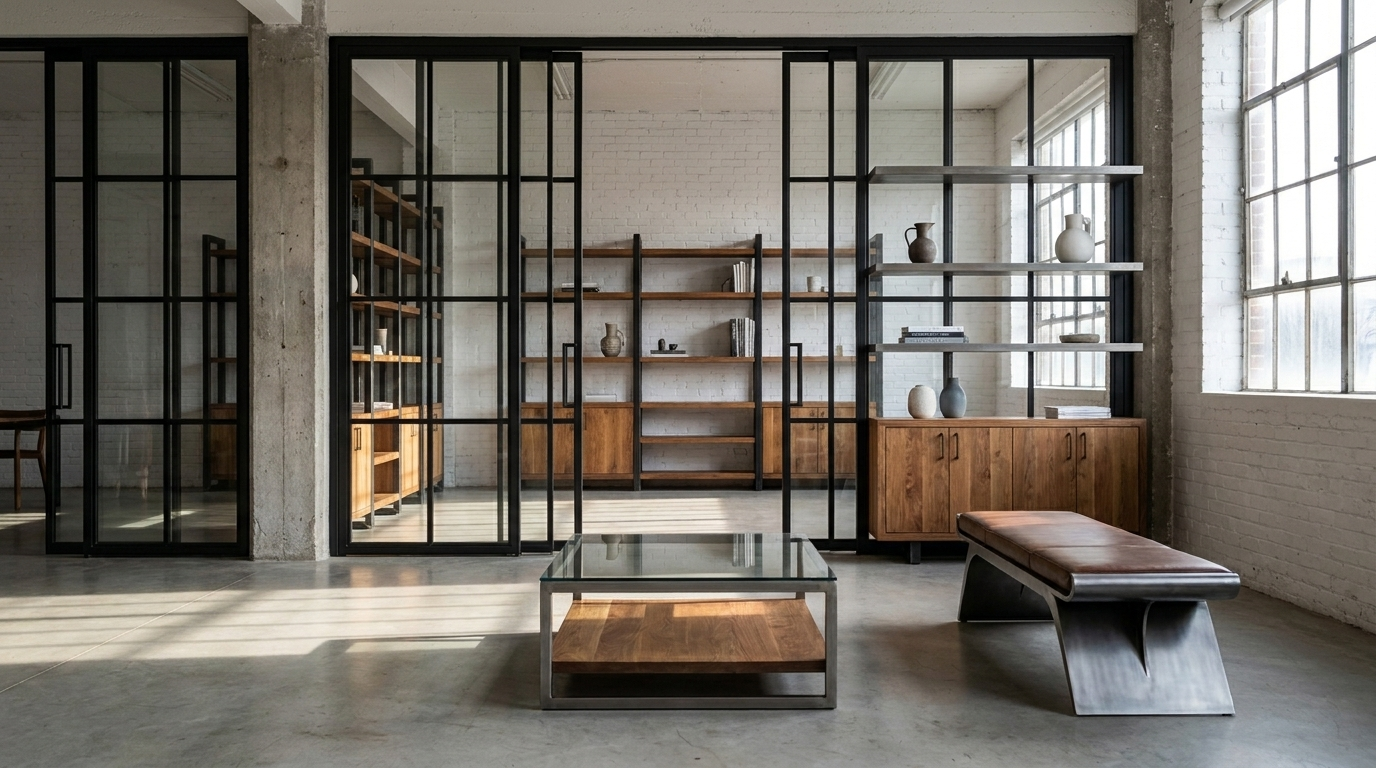
All steel frames and structural elements at Manufaktur X are powder coated — not painted. Powder coating is applied electrostatically and cured under heat, resulting in a finish that is far more scratch-resistant, colour-consistent, and durable than conventional wet paint. The coating layer runs 60–80 µm thick, which makes it genuinely suited to daily contact surfaces. It also contains no solvents, making it significantly more environmentally friendly than liquid paint.
After 15–20 years, steel frames can be recoated rather than replaced — another reason the lifetime cost calculation favours bespoke over budget.
Glass Options: Design Patterns and Glass Types Are Separate Choices
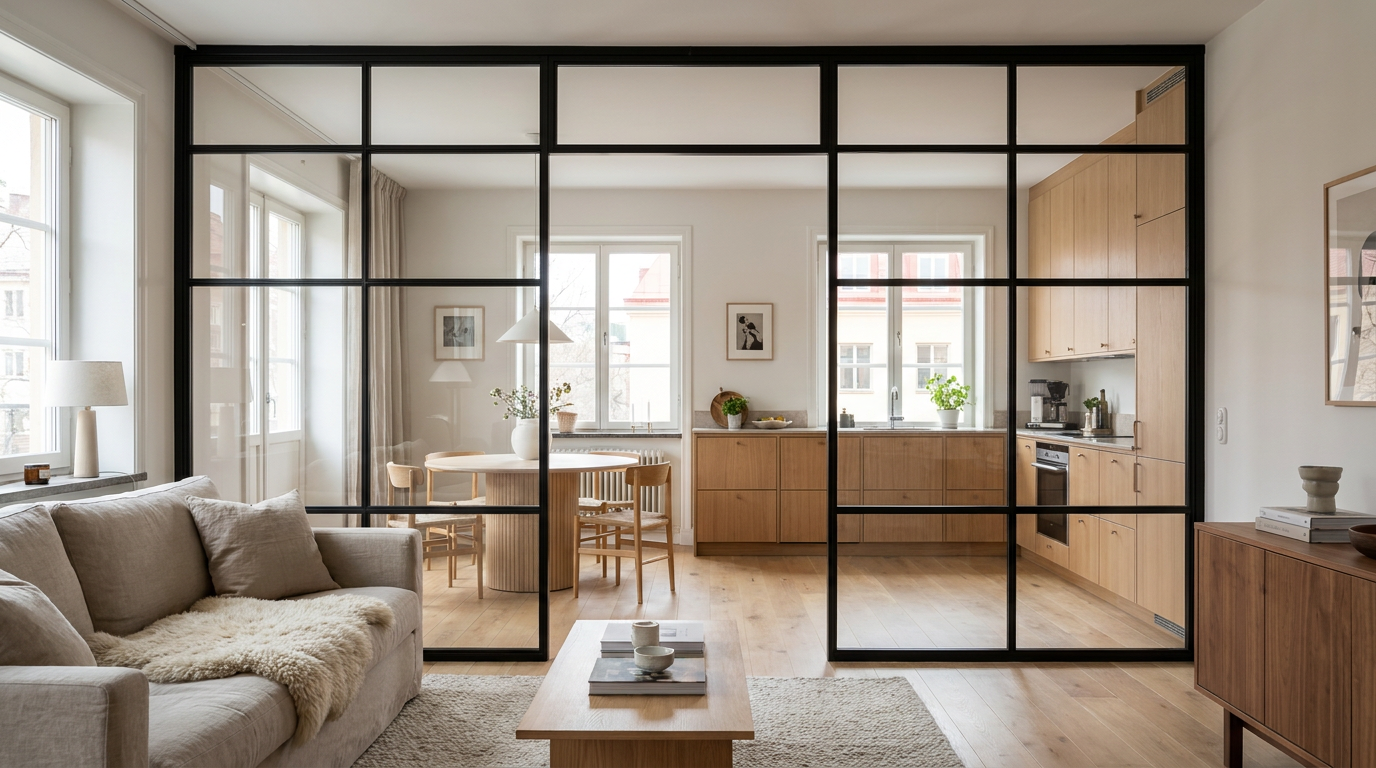
Glass is used exclusively in loft doors and room dividers. It is important to understand that the bar pattern (the visual arrangement of glazing bars within the frame) is a separate decision from the glass type itself. Manufaktur X offers five glass types:
- Clear glass
- Frosted glass
- Smoked glass
- Dark smoked glass
- Textured glass
For the safety glass type, you choose between toughened safety glass (ESG) and laminated safety glass (VSG). Toughened glass shatters into small, blunt fragments with no sharp edges. Laminated glass consists of two panes bonded by a plastic interlayer; if broken, the interlayer holds the fragments in place. For fixed room dividers in straightforward settings, toughened glass is entirely adequate. For loft doors in households with children, or for larger panels, laminated glass is the more considered choice.
Five Steps to Planning Your Bespoke Furniture
The difference between a bespoke piece that feels effortlessly right and one that falls slightly short usually comes down to the quality of the planning process. Errors in measuring cannot be corrected after manufacture. These five steps will take you through the process cleanly.
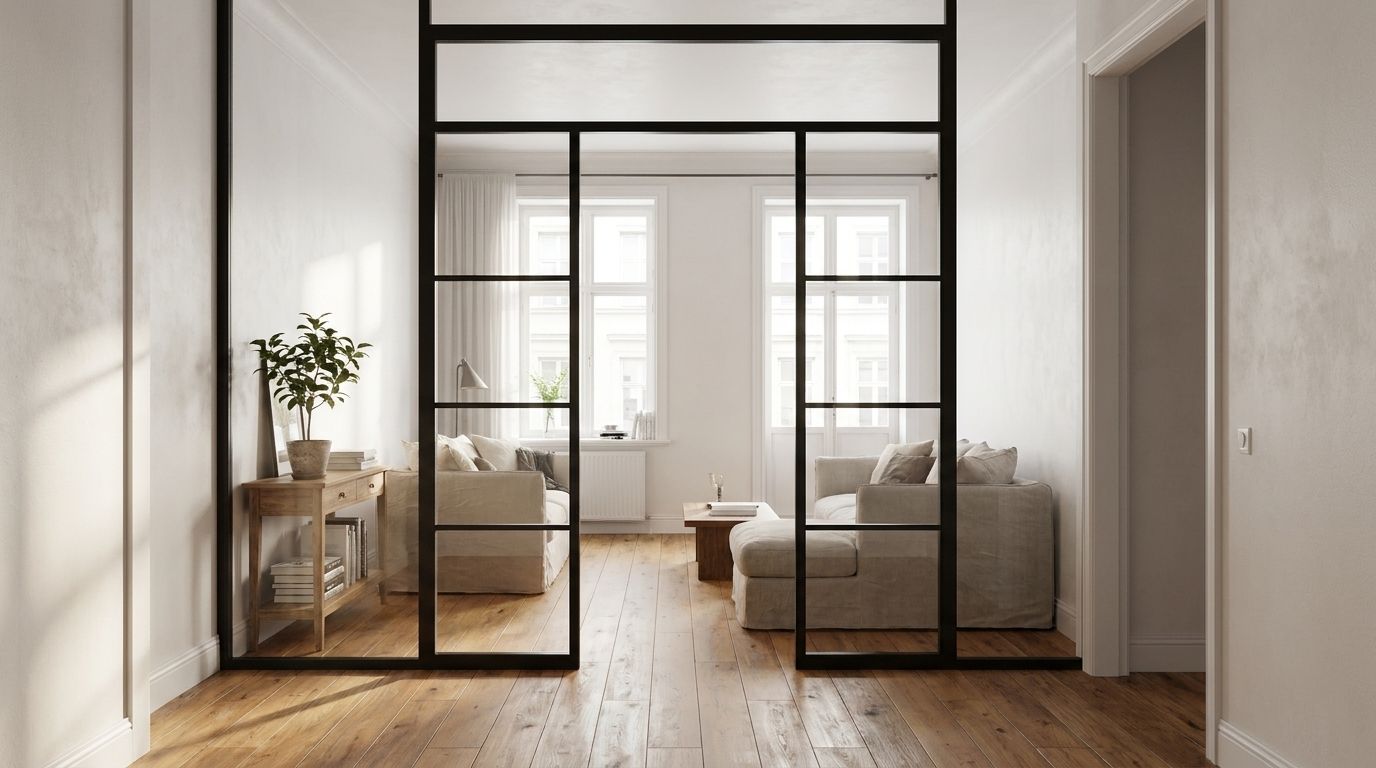
Step 1: Understand Your Space and What You Need From It
Start by measuring the actual space — not just the floor area but ceiling height, wall angles, and any architectural features that will affect the piece. In a Victorian terrace or converted flat, assume that nothing is perfectly square until you have verified it. Note the positions of sockets, radiators, windows, and any pipework that might affect installation.
Then clarify what you actually need the piece to do:
- Exact room dimensions — for loft doors and room dividers, measure the opening width and height precisely
- Functional requirements: storage, room separation, surface area
- Material and colour preferences
- Budget range
A mood board — even a simple folder of saved images — makes the configuration process considerably faster and reduces the risk of choosing a finish you later regret.
Step 2: Select Your Materials and Design Direction
Wood brings warmth; steel introduces an industrial or contemporary edge; glass keeps things light and open. The best bespoke pieces use these qualities deliberately rather than arbitrarily. Ask yourself:
- Does this material complement what is already in the room?
- Does the design suit how I actually use this space?
- Does the style work with the architecture — Georgian proportions, industrial shell, modern open plan?
- Will I still like this in ten years?
For loft doors, three handle profiles are available: Elongated, Discreet, and Half-Moon. Bar patterns and surface treatments for the wood are all configurable independently.
Step 3: Measure Carefully — Then Measure Again
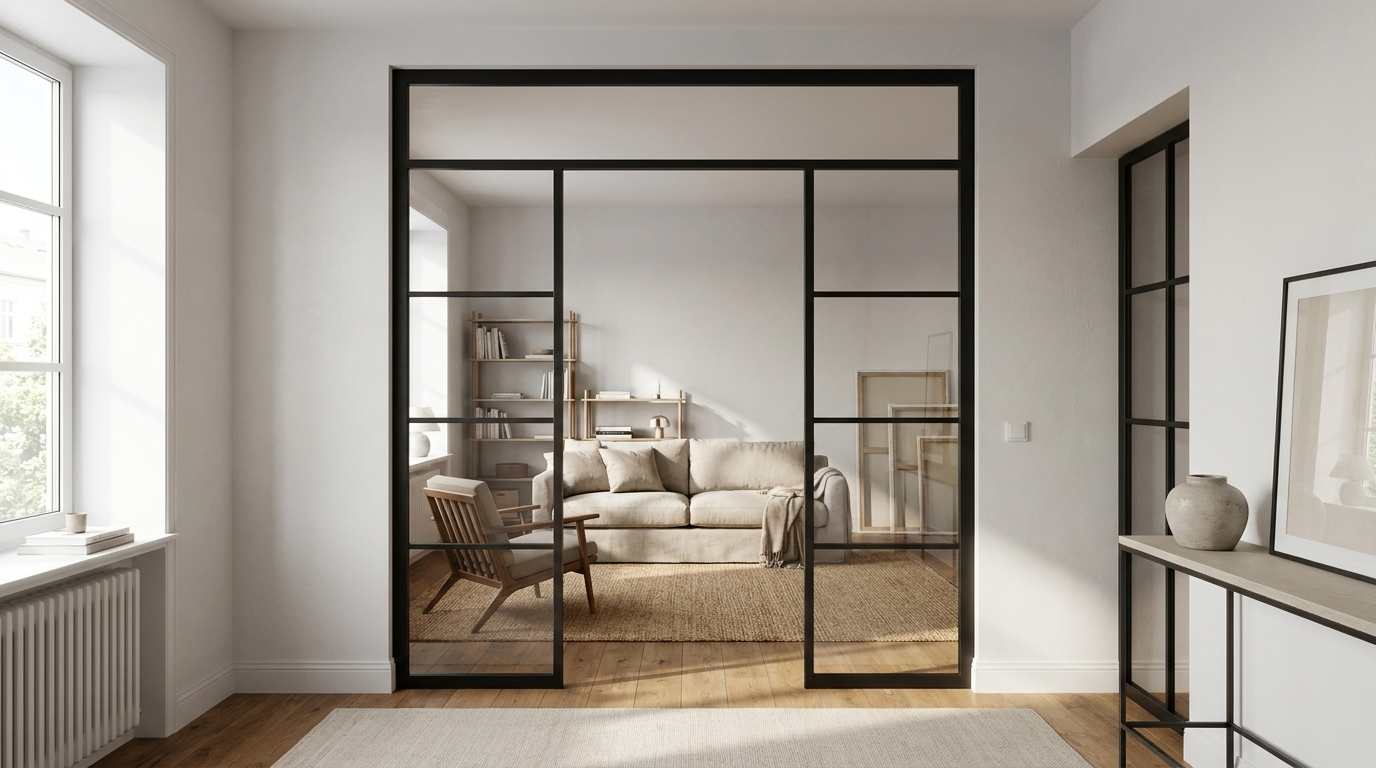
Bespoke furniture is manufactured to ±1 mm accuracy, which means your measurements need to be equally precise. Measure width, height, and depth at a minimum of three points each — top, middle, and bottom for vertical dimensions; left, centre, and right for horizontal. In any property built before 1980, these measurements will almost certainly differ from one another; 10–25 mm variation is common in period properties.
Always enter the smallest measurement you record. For loft doors specifically, subtract the installation gap from your smallest measurement — allow approximately 5 mm clearance on each side (left, right, and top) to ensure the door hangs and opens correctly. Double-check that no radiators, socket plates, or window reveals will obstruct the installation.
Practical tip: Use a laser distance measure rather than a tape for tall or wide openings. Photograph the space before you configure — it will help you judge whether a steel colour looks right against your existing walls and floors.
Step 4: Configure Online or Upload Your Own Sketch
Once your measurements and material preferences are clear, there are two routes forward:
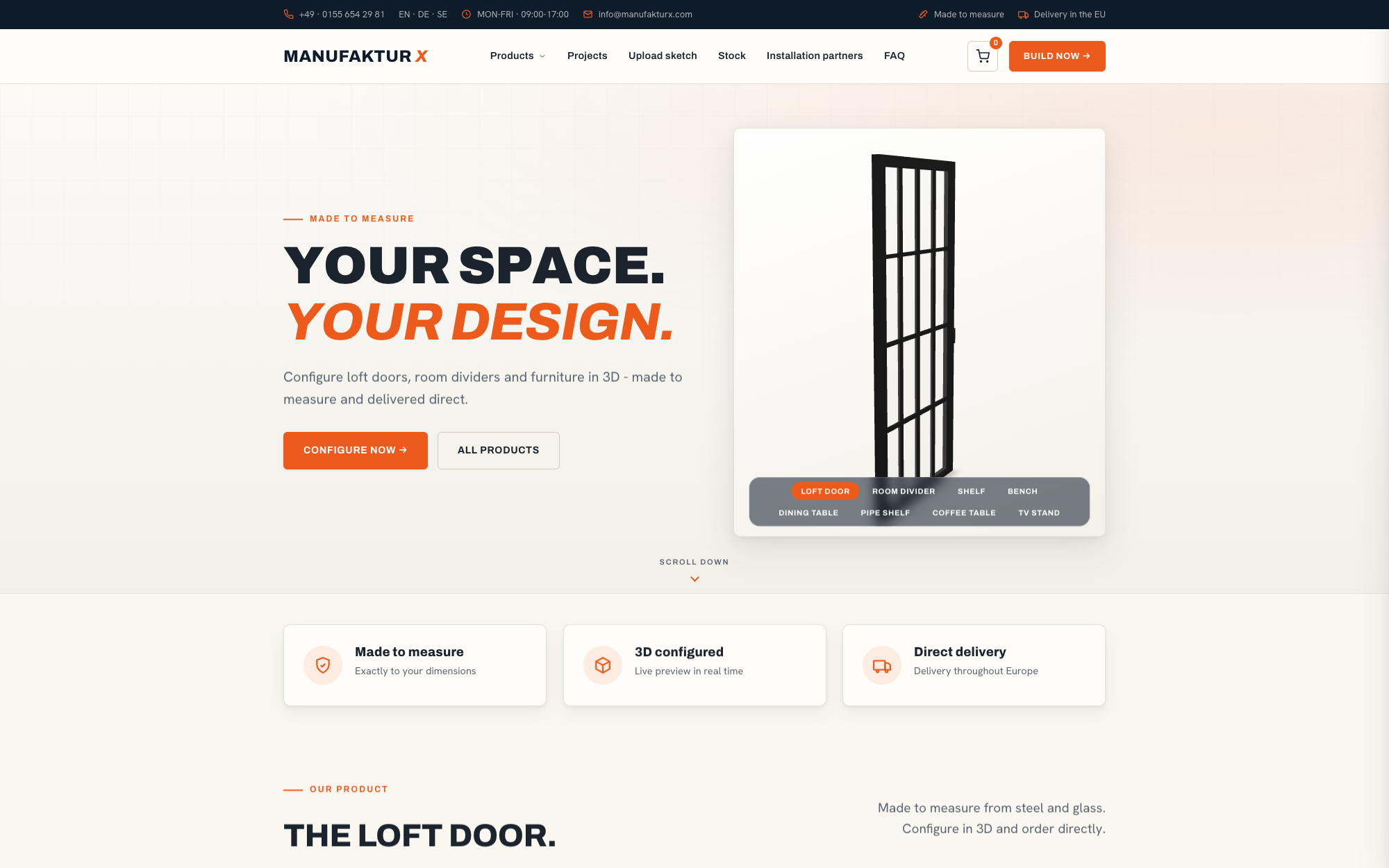
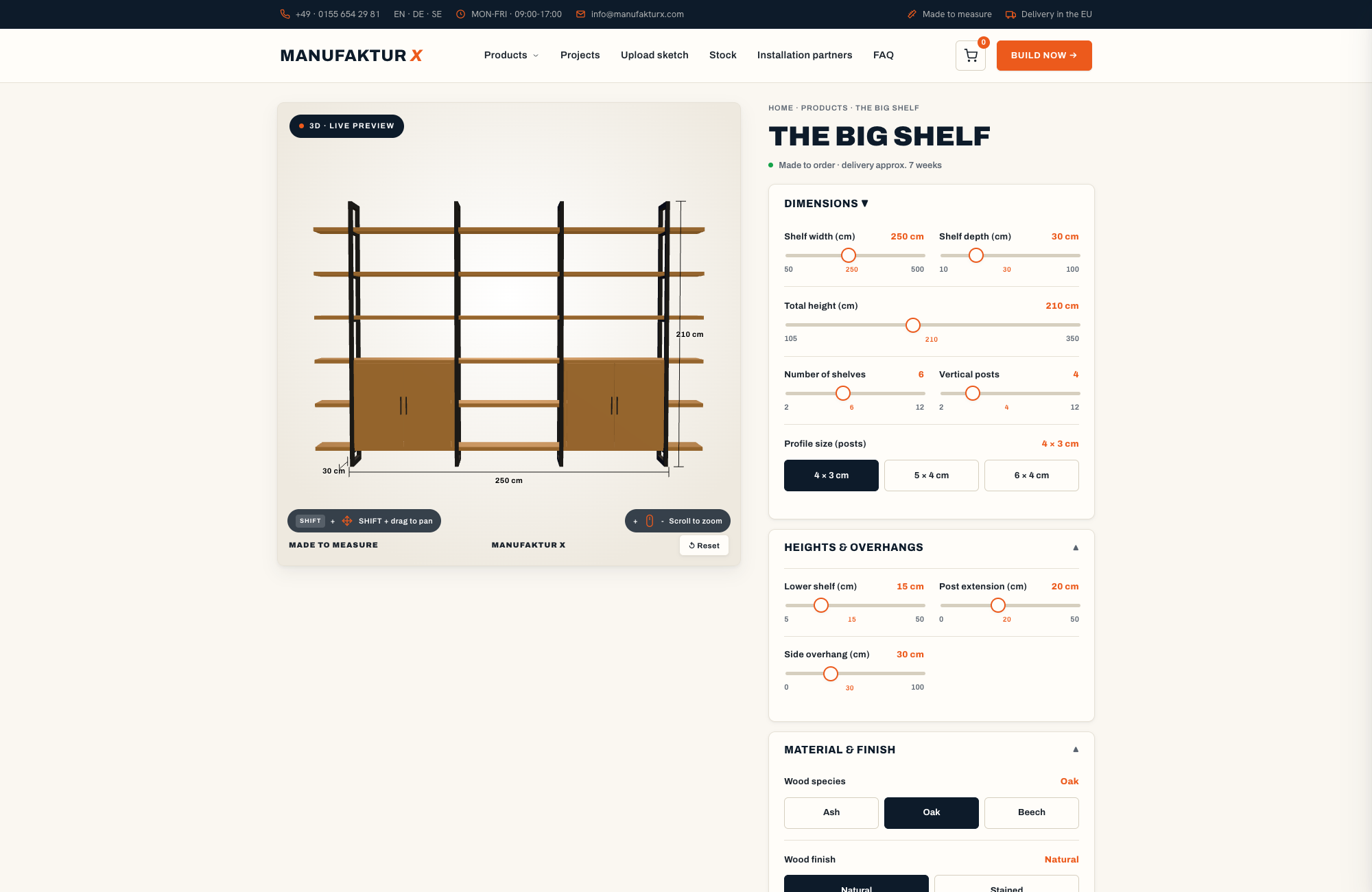
Option A — 3D Configurator: The online configurator at manufakturx.co.uk walks you through every decision in sequence: product type, dimensions, wood species, stain colour, powder coat colour, glass type, bar pattern, and handle style. Every change updates the 3D preview and the price in real time. Delivery costs and lead times are shown transparently in the basket — no surprises at checkout.
Option B — Submit a Sketch: If your project has requirements that fall outside the configurator's scope — an unusual opening geometry, a combination of elements, or a structural constraint — you can upload your own sketch. Manufaktur X will assess feasibility and provide a tailored quote. All customs duties and delivery charges to the UK are handled, so the price you see is the price you pay.
Step 5: Installation and Final Checks
Begin by inventorying every component against the delivery note before you start. Standard tools for installation: cordless drill, spirit level, tape measure, hammer, screwdrivers. Once the piece is fitted, test every function methodically — doors should close flush, shelves should bear their expected load without flex, drawers should run smoothly.
Post-installation checklist:
- Are all components present and undamaged?
- Do the finished dimensions match what was configured?
- Do all moving parts operate correctly?
- Is the structure level and stable?
- Are there any marks or damage from the installation process?
How the 3D Configurator Works
The configurator replaces the traditional process of visiting a showroom, briefing a designer, waiting for drawings, and approving a quote — all of which can take weeks before anything is made. Instead, you configure your piece yourself, in real time, and see exactly what you are ordering before you commit.
- Choose your product type: loft door, room divider, dining table, coffee table, bench, large shelf, or pipe shelf
- Enter your exact dimensions: width, depth, and height in millimetres — your actual desired measurements, not the construction opening
- Select your wood species: oak, ash, or beech
- Choose a stain: over 50 options to fine-tune the final colour
- Select a powder coat colour: the full RAL colour range for all steel elements
- Configure glass (loft doors and room dividers only): choose from clear, frosted, smoked, dark smoked, or textured; then select toughened or laminated safety glass
- Choose your handle (loft doors only): Elongated, Discreet, or Half-Moon
- Review the 3D preview: adjust anything that does not look right
- Check the price and lead time: displayed live, with full delivery costs included
Pricing updates with every single change. No hidden fees, no quote requests, no waiting.
Real Spaces, Real Applications
Loft Doors in Open-Plan Conversions
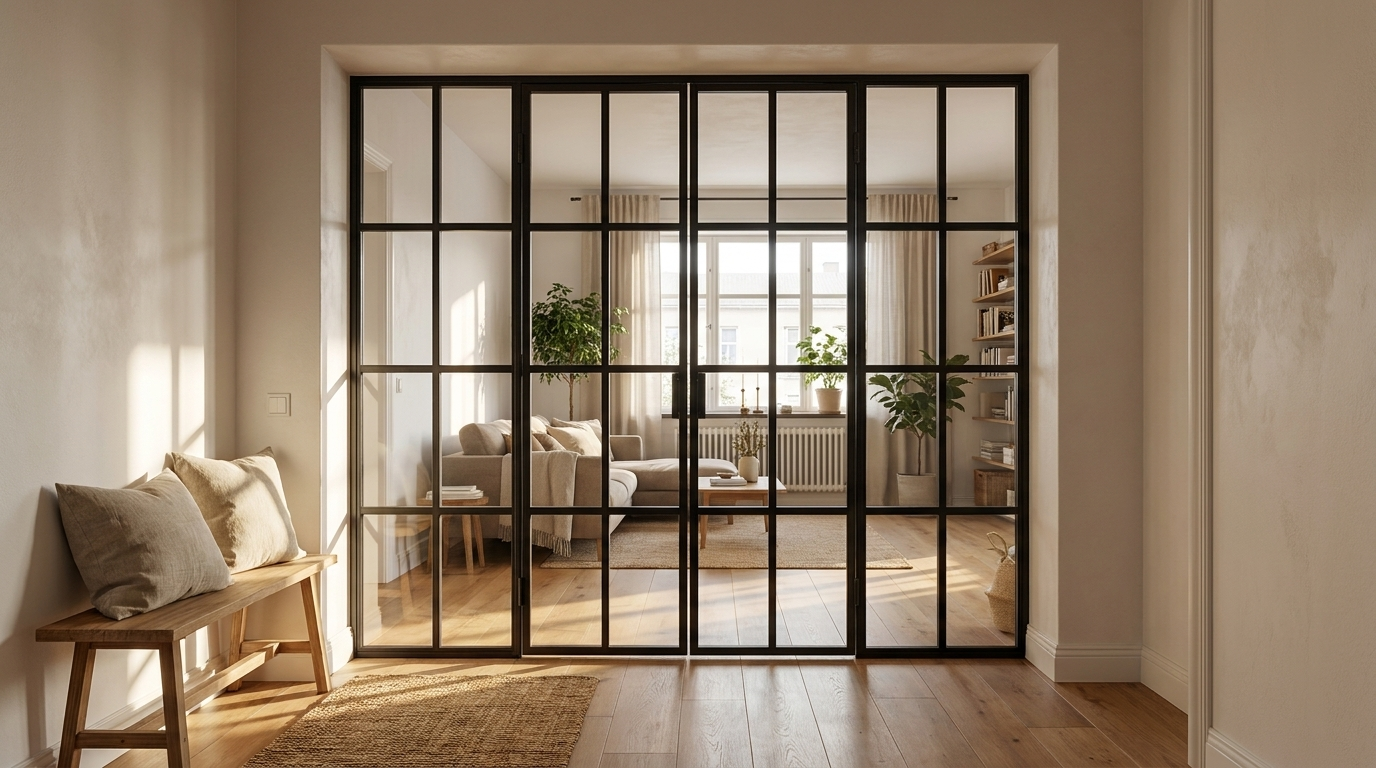
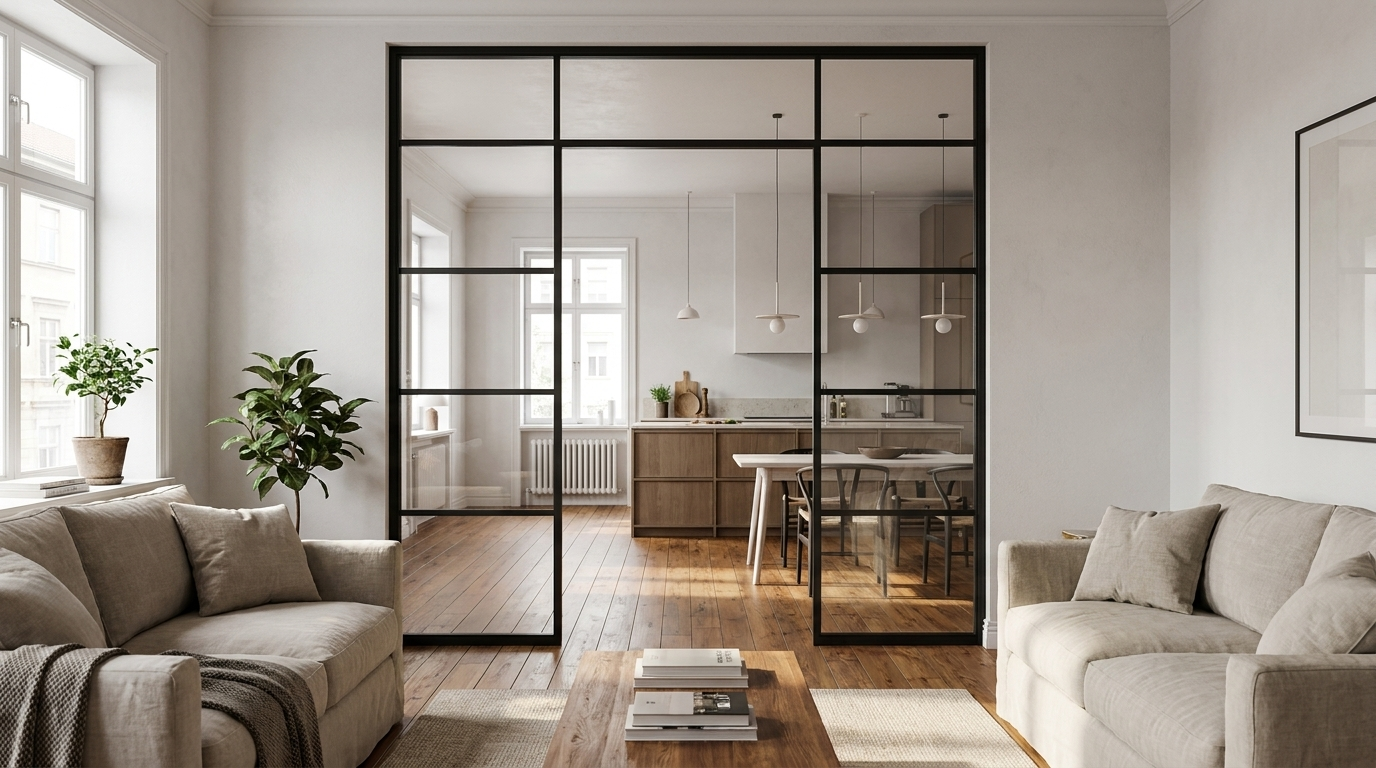
The bespoke loft door has become one of the defining elements of the industrial-chic interior aesthetic that is particularly popular in warehouse conversions and open-plan flats across British cities. It divides spaces without blocking light or creating the weight of a solid wall — the glazing keeps both areas feeling connected even when the door is closed.
Loft doors work particularly well for:
- Separating a kitchen from a living space in an open-plan layout
- Creating a home office enclosure within a bedroom or living room without losing natural light
- Openings with non-standard widths — 1,100 mm, 1,380 mm, or anything in between
- Spaces where maintaining a visual connection between rooms is as important as the separation itself
Room Dividers: Structure Without Building Work
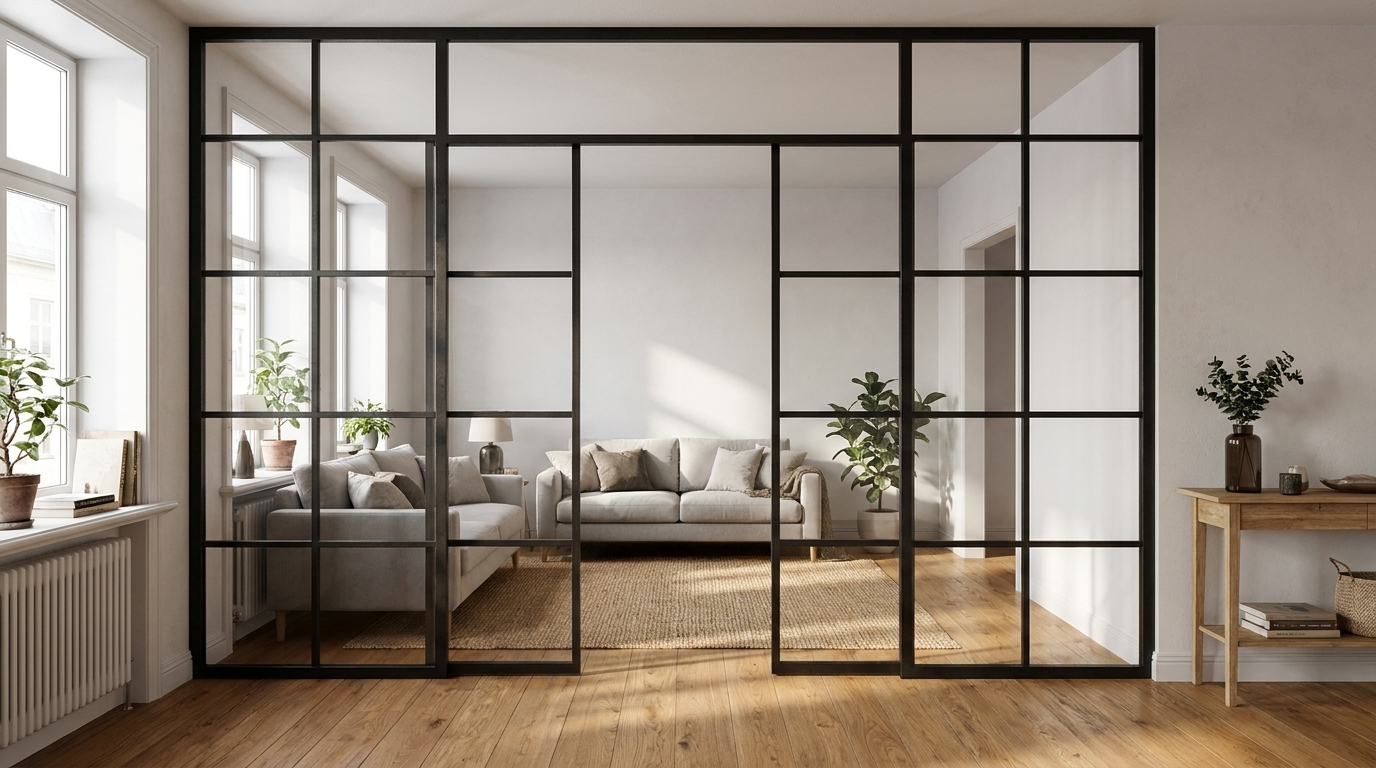
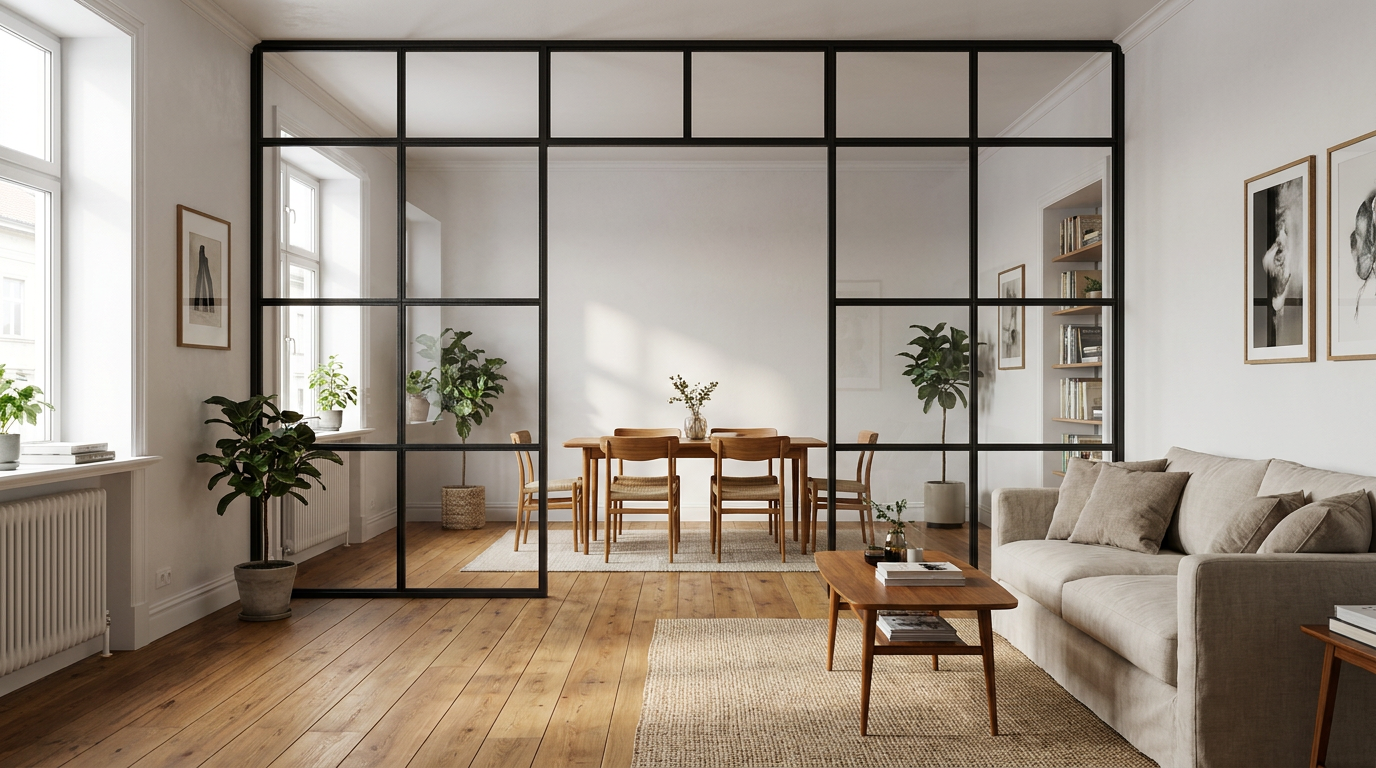
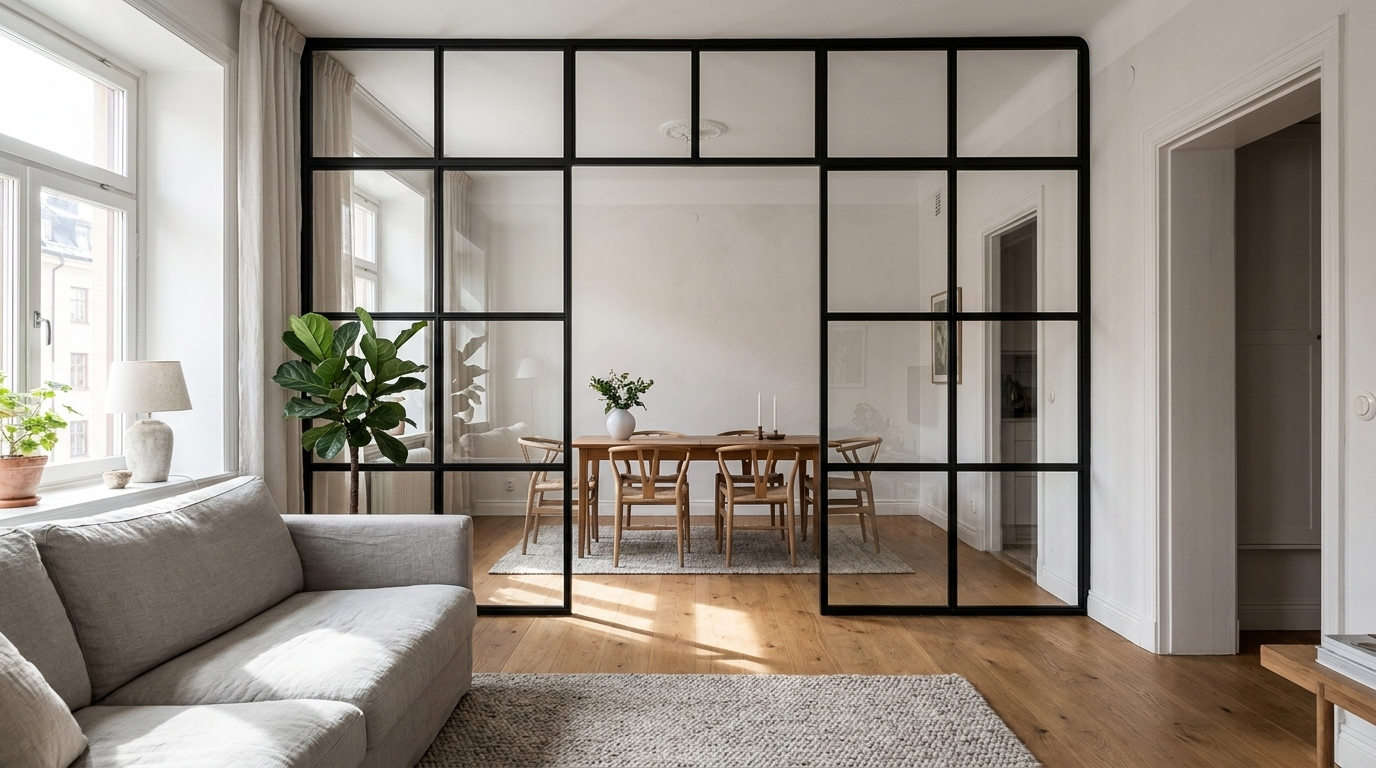
A steel and glass room divider creates the impression of a structural wall without the disruption of plastering, drying time, or redecorating. In a period property where you want to define zones within a large reception room, or in a converted flat where the open-plan layout feels too exposed, a fixed steel and glass partition delivers exactly that definition.
Unlike a loft door, the room divider has no door mechanism — no hinges, no handle, no stop. If you need a way through, a walk-through opening is designed in as an unglazed gap rather than a door. Steel and glass partitions also read as deliberate architectural features rather than neutral walls — in the same way that exposed brick or visible steel columns do in a well-designed conversion.
Tables, Shelves, and Benches: Where Solid Wood Meets Steel
The solid wood and steel range from Manufaktur X covers every major furniture category, without glass:
- Large shelf unit: Steel frame with solid wood shelving, sized to fill an alcove precisely. Optional lower cupboards integrate storage within the same footprint.
- Dining table: Solid wood top on a steel base, with length, width, and height all set to match your dining chairs and available space exactly.
- Coffee table: Height matched precisely to your sofa, rather than a generic 400 mm that may or may not work.
- Bench: Solid wood with steel legs — works as dining seating, hallway storage seating, or a standalone piece.
- Pipe shelf: Steel tube frame with solid wood shelves, an industrial aesthetic that suits both warehouse conversions and contemporary kitchens.
Costs, Lead Times, and What to Realistically Expect
Understanding the Cost Comparison
Bespoke furniture costs more upfront than high-street alternatives. But the comparison of purchase prices alone is misleading. A solid oak dining table at £2,000 used consistently over 20 years costs £100 per year. A mass-produced equivalent at £700 that lasts 8–10 years costs £70–£87 per year — and at the end of its life it goes to landfill, not to a restorer.
Solid wood and powder-coated steel can both be refinished. The wood can be sanded back and re-oiled; the steel frame can be recoated. Neither option is available with veneered chipboard. The entry price for a loft door from Manufaktur X is £1,157. Current pricing for every product is shown live in the configurator.
Production and Delivery Lead Times
All pieces are made to order, and production takes 5–6 weeks from order confirmation — not from the date of enquiry. Factor this into any renovation timeline, particularly if you are coordinating with builders or decorators.
Delivery to the UK is fully managed, with all customs duties and import charges handled. The price displayed at checkout is the price you pay. Lead times are shown transparently in the basket alongside delivery costs.
When Does Bespoke Make Sense?
| Consideration | Bespoke furniture suits you | Standard furniture may be sufficient |
|---|---|---|
| Property type | Period property, conversion, unusual geometry | New-build with standard dimensions |
| How long you plan to stay | Long term — this is your home | Renting or likely to move soon |
| Budget approach | Investing for the long term | Immediate need, tight budget |
| Design ambitions | A coherent, considered interior | Functional furnishing, no strong aesthetic agenda |
| Sustainability priorities | High — longevity and repairability matter | Lower — replacement is acceptable |
Craftsmanship, Sustainability, and EU Manufacturing
Every Manufaktur X product is manufactured in the European Union and passes through quality control before despatch. The approach to making is deliberately unhurried — individual pieces of timber are selected for grain and figure; surfaces are built up in multiple layers; adjustments are made by hand. This is not artisanal marketing language; it is what distinguishes furniture that improves with age from furniture that merely ages.
Solid wood responds to the seasons — expanding slightly in humid summer months, contracting in a centrally heated British winter. This movement is not a flaw. It is evidence that the material is genuine. A well-maintained solid wood shelf, re-oiled after 20 years, looks as considered as it did on the day it was installed. The equivalent in chipboard simply will not exist by then.
The environmental case for bespoke furniture is straightforward:
- Longer lifespan means fewer replacement purchases over time
- Repairability means less goes to landfill
- EU production means shorter supply chains than furniture shipped from outside Europe
- Pieces you genuinely love do not get replaced on impulse
Caring for Your Bespoke Furniture
Solid wood furniture is durable, but not maintenance-free. Looked after properly, it will outlast anything in a high-street catalogue by a considerable margin:
- Oiled surfaces: Re-oil once or twice a year using a suitable furniture oil. Light scratches and surface marks can usually be disguised by working fresh oil into the grain — no sanding required for minor blemishes.
- Waxed surfaces: Similar care to oiled surfaces. Re-wax when the surface begins to look flat or loses its sheen. Wax provides slightly better water resistance for everyday spills.
- Powder-coated steel: Wipe down with a damp cloth. Avoid abrasive cleaners or scouring pads — they will damage the surface coating.
- Glass: Standard glass cleaner or a damp microfibre cloth. Nothing more complicated is needed.
- Restoration after years of use: Solid wood can be sanded back and re-treated entirely, restoring it to something very close to its original condition. This is simply not possible with veneered or laminated board products.
Where possible, choose oiled or waxed surfaces over lacquered ones — they age more gracefully, are easier to maintain, and can be fully restored rather than replaced when the time comes.
Frequently Asked Questions About Bespoke Furniture
Who is bespoke furniture actually for?
Bespoke furniture is for anyone whose space does not conform to standard retail dimensions — which, in practice, means a large proportion of British homeowners. Period properties, Victorian terraces, converted flats, and loft apartments all present challenges that catalogue furniture was never designed to solve. If you are furnishing a long-term home, have specific spatial constraints, or simply want a coherent interior that reflects considered choices rather than whatever happened to be in stock, bespoke is the right approach.
Which wood species does Manufaktur X use?
Manufaktur X works with solid hardwoods — primarily oak, ash, and beech, with pine, walnut, and cherry also available. All species are selected for hardness and longevity. More than 50 stain colours allow the final appearance to be adjusted precisely to your interior.
What is the difference between a loft door and a room divider?
A loft door is a fully functioning door: it has a door stop (hinged left or right), an opening direction, an opening angle, a handle (Elongated, Discreet, or Half-Moon), and hinges. A room divider is a fixed steel and glass partition wall with none of those elements — no hinges, no handle, no stop. If you want a way through a room divider, a walk-through opening is incorporated as an unglazed gap rather than a door.
How do I measure correctly for a loft door or room divider?
Measure the width and height of the opening at a minimum of three points each. Enter your exact desired dimensions in the configurator — not the construction opening size. In any property built before the 1980s, expect variation of 10–25 mm between measurement points; always use the smallest figure you record. For loft doors, subtract approximately 5 mm per side (left, right, and top) to allow for the installation gap.
What glass options are available?
Five glass types are available: clear glass, frosted glass, smoked glass, dark smoked glass, and textured glass. For the safety glass specification, you choose between toughened safety glass (ESG) and laminated safety glass (VSG). For larger panels and households with children, laminated glass is the recommended choice.
How long does production take, and what does a loft door cost?
All products have a production time of 5–6 weeks from order confirmation. Loft doors start from £1,157 for the entry-level configuration. Exact pricing for any configuration is shown live in the 3D configurator, with delivery costs and lead times displayed transparently in the basket. Delivery to the UK includes all customs and import duties — there are no additional charges on arrival.
Can I submit my own sketch for an unusual project?
Yes. If your project involves dimensions or requirements that go beyond the configurator's scope, you can upload a sketch directly via the website. Manufaktur X will assess feasibility and provide a bespoke quote based on your specific requirements.
How do I care for solid wood furniture over the long term?
Oiled surfaces should be re-oiled once or twice a year. Minor scratches can usually be treated by working fresh oil into the affected area. Waxed surfaces should be re-waxed when they begin to look dull. After many years of use, solid wood can be fully sanded back and re-treated — a significant advantage over any chipboard or veneered product, which cannot be restored once damaged.