
6 January 2026 · ManufakturX Team
Loft Doors as Room Dividers – Bespoke Solutions for Contemporary Interiors
The Art of Open-Plan Living: Why Loft Doors Are Revolutionising British Interiors
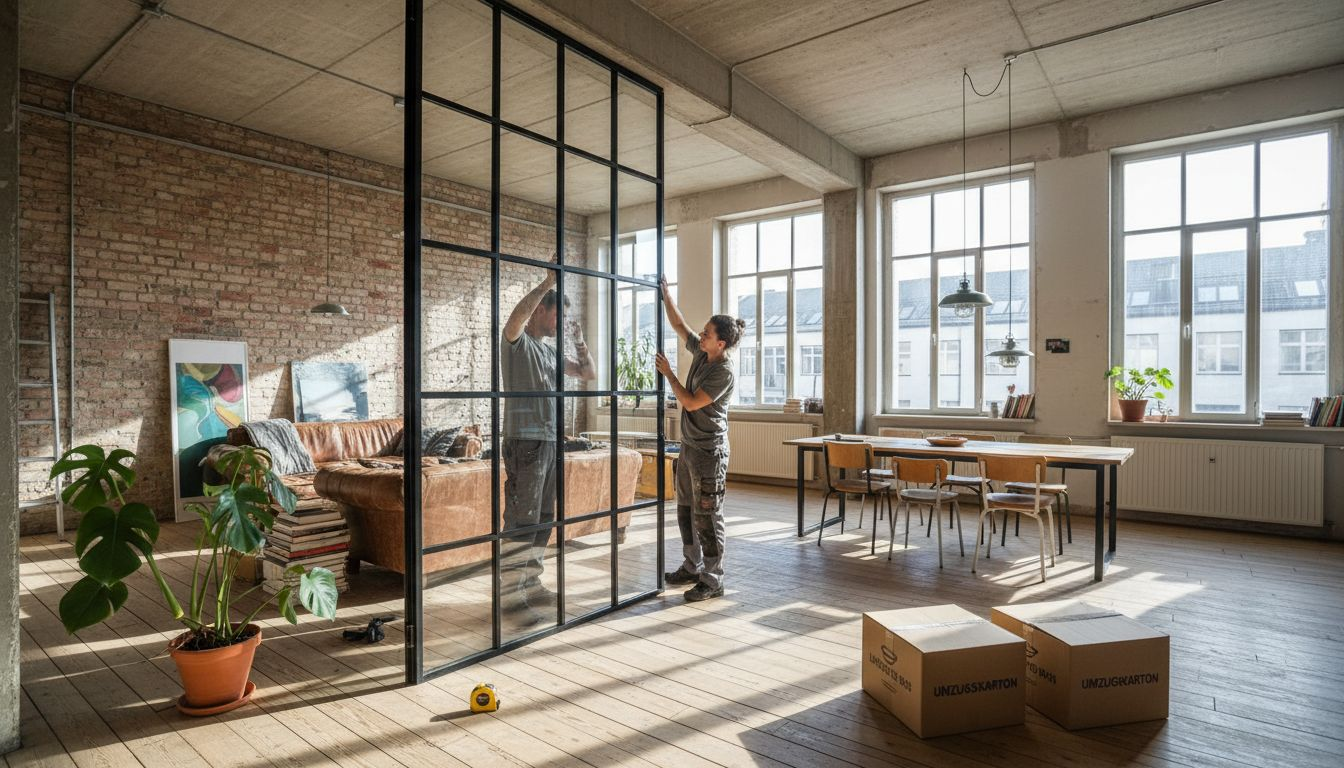
Contemporary British homeowners are increasingly embracing the concept of flexible living spaces, particularly in converted Victorian properties and modern developments across the UK. Loft doors represent a sophisticated approach to room division that maintains the airy feel of open-plan design whilst providing practical separation when needed.
Unlike traditional solid doors that create stark divisions, loft doors offer a transparent barrier that allows natural light to flow freely throughout your home. This makes them particularly valuable in British properties where maximising daylight is essential, especially during shorter winter months.
Design Variations: From Industrial Chic to Contemporary Elegance
The beauty of loft doors lies in their versatility across different interior styles popular in UK homes. Whether you're working with a converted warehouse in Manchester, a Georgian terrace in Edinburgh, or a contemporary new-build in Surrey, there's a loft door design to complement your aesthetic.
Pivot Door Systems
Pivot mechanisms create a dramatic entrance statement, rotating on a central axis rather than traditional hinges. These work exceptionally well in spacious period conversions where ceiling height allows for grand gestures.
Traditional Swing Configurations
Classic hinged loft doors offer reliability and familiarity whilst maintaining the industrial aesthetic. They're ideal for standard doorway openings and can be customised to fit exact measurements.
Material choices significantly impact both appearance and functionality. Robust steel frames provide the authentic industrial look, whilst our powder coating process ensures a scratch-resistant, durable finish that maintains its appearance for years. Safety glass panels can range from crystal-clear options that maximise transparency to subtle frosted varieties for enhanced privacy.
Bespoke Manufacturing: Tailored to Your Exact Requirements
Every British home presents unique challenges, from Victorian bay windows to Georgian proportions and modern architectural features. This is where bespoke manufacturing becomes invaluable – creating loft doors that fit your exact spatial requirements rather than forcing standardised solutions into inappropriate spaces.
At Manufaktur X, we specialise in creating furniture and doors tailored to individual specifications. Our manufacturing process begins with your precise measurements – the exact dimensions you require for your opening, not construction measurements that require additional calculations.
Material selection goes beyond aesthetics. Our solid wood options include oak, ash, and walnut for those preferring natural warmth, whilst steel frames offer industrial authenticity. The powder coating process we employ provides superior durability compared to traditional painting methods, delivering an even colour distribution that resists scratching and environmental damage.
Glass Design Considerations
Glass design patterns shouldn't be confused with glass types. Design refers to the decorative bar patterns (known as glazing bars or muntins) that divide the glass surface into geometric sections. These patterns can echo traditional British window designs or embrace contemporary minimalism depending on your preference.
Practical Applications in British Homes
Room division requirements vary significantly across different property types common in the UK market. In converted industrial buildings, loft doors can separate living areas from work spaces without compromising the original architectural character. Victorian terraces benefit from loft doors that maintain period charm whilst adding contemporary functionality.
Consider a typical scenario: converting a front reception room into a home office whilst preserving connection to the main living area. A loft door provides acoustic separation for video calls whilst allowing natural light from front windows to illuminate the rear living space.
Kitchen integration represents another popular application. Rather than completely open-plan layouts that can feel overwhelming, loft doors offer the option to partially close off cooking areas whilst maintaining visual connection and light flow. This proves particularly beneficial when entertaining guests or managing cooking odours.
Comparing Options: Loft Doors Versus Traditional Room Dividers
The fundamental difference between loft doors and conventional room separation lies in their approach to space definition. Traditional solid doors create distinct boundaries, whilst loft doors maintain spatial flow whilst providing functional separation.
Light transmission represents the most obvious advantage. British homes often struggle with natural light distribution, particularly in deeper floor plans common in terraced properties. Loft doors allow morning light from east-facing windows to illuminate west-facing rooms throughout the day.
Acoustic properties differ significantly from solid alternatives. Whilst loft doors provide some sound reduction, they won't eliminate noise transfer entirely. This makes them ideal for visual privacy whilst maintaining household connectivity – perfect for families who want flexibility between open and private living.
Flexibility and Customisation
Modern room dividers must adapt to changing lifestyle needs. Loft doors excel in this regard, offering various opening mechanisms and configurations that can be modified during installation or future renovations.
| Feature | Loft Doors | Traditional Solid Doors |
|---|---|---|
| Light Transmission | Excellent transparency | Blocks light completely |
| Space Perception | Maintains open feel | Creates closed divisions |
| Acoustic Separation | Partial sound reduction | Complete acoustic barrier |
| Design Flexibility | Multiple opening mechanisms | Limited to standard hinges |
| Visual Impact | Contemporary, architectural statement | Traditional, functional approach |
Planning Your Perfect Installation
Successful loft door installation requires careful consideration of your specific spatial requirements and lifestyle needs. Begin by evaluating how you currently use your spaces and where additional flexibility would prove beneficial.
Measurement precision is crucial for bespoke manufacturing. Unlike off-the-shelf solutions that require adaptation, our process works from your exact desired dimensions. This eliminates the guesswork and ensures perfect integration with existing architectural features.
Our 3D configurator allows you to visualise different options in real-time, adjusting materials, dimensions, and design details whilst seeing instant pricing. This interactive approach helps you explore possibilities you might not have initially considered, ensuring your final choice perfectly matches your vision.
Investment in Quality: Made in the EU Manufacturing
Quality manufacturing makes a significant difference in long-term satisfaction and durability. Our production process combines traditional craftsmanship with modern precision, ensuring every loft door meets exacting standards before dispatch.
Production typically requires 5-6 weeks from order confirmation, allowing time for careful material selection, precision manufacturing, and quality testing. This timeframe ensures attention to detail that mass-produced alternatives cannot match.
For UK customers, we handle all customs and duties, ensuring straightforward delivery to your address. This removes the complexity often associated with EU imports, making the process as simple as ordering from a domestic supplier.
Ready to transform your living space with a bespoke loft door solution? Visit our products page to explore options and begin configuring your perfect room divider today.
About the Author

Alexander Stelzner
Founder & CEO, Manufaktur X
Alexander Stelzner is an expert in custom-made steel-glass constructions and solid wood furniture. With years of experience in design and manufacturing, he leads Manufaktur X – where every piece is individually crafted to order in the EU.