Custom Shelving Units: Design, Materials & Pricing Guide
The success of bespoke shelving hinges on three crucial decisions: selecting materials that handle your actual storage needs, measuring your space accurately, and securing fixed pricing before you commit. This comprehensive guide explores the factors that determine quality and cost, common planning mistakes to avoid, and how to configure the perfect custom shelving solution using Manufaktur X's 3D configurator for a unit that fits your home precisely.
When Bespoke Shelving Outperforms Off-the-Shelf Options
Ready-Made Dimensions Force Compromises
Mass-produced shelving units follow rigid sizing patterns — typically manufactured in width increments of 400, 600 or 800mm with maximum heights of 2,200mm. In period British homes, particularly Victorian conversions with ceiling heights of 3.0m or more, standard shelving leaves substantial dead space that serves neither storage nor aesthetic purposes. Consider a typical Georgian terrace with 3,100mm ceiling height — a 2,200mm retail unit wastes 900mm of valuable vertical space. Bespoke shelving manufactured to 3,060mm height (allowing 40mm clearance for installation) maximises every millimetre of wall space.
Similarly, alcoves and recesses rarely conform to standard widths. Ready-made units either won't fit or leave unsightly gaps that make rooms appear unfinished. Custom shelving addresses width, height and depth to suit your specific installation space — rather than forcing your room to accommodate generic dimensions.
Superior Materials and Structural Engineering
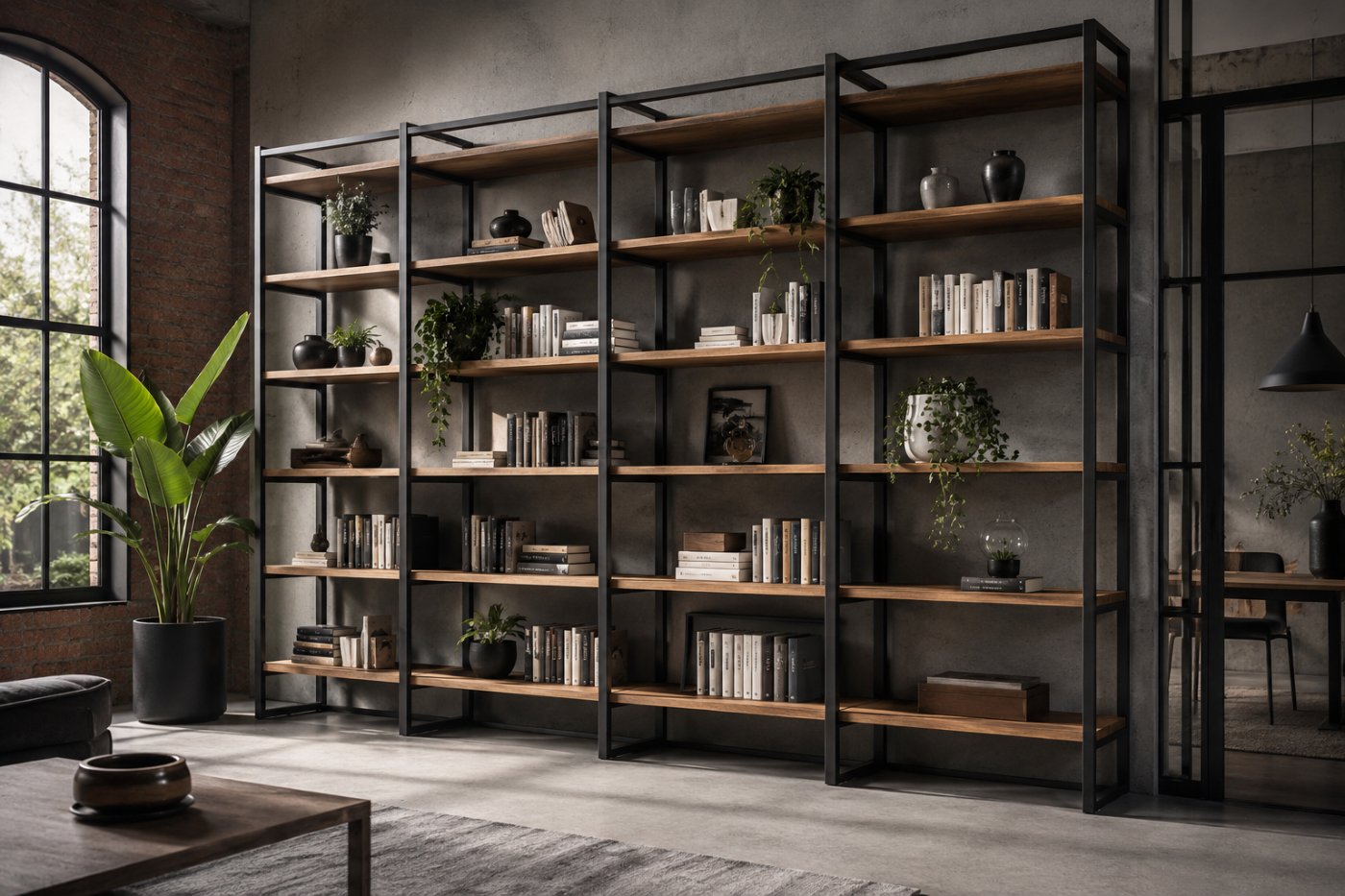
High-street chipboard shelving targets moderate loads. A 19mm chipboard shelf spanning 800mm will visibly sag 3-5mm under just 30kg of evenly distributed books. This deflection worsens over time as chipboard creeps under constant load. Solid hardwoods like oak, beech and ash behave fundamentally differently: an oak shelf's flexural strength significantly exceeds equivalent chipboard. Steel framework systems offer even greater possibilities — the metal frame carries structural loads whilst timber provides attractive surfaces, enabling slender designs impossible with conventional construction.
Design Consistency Throughout Your Home
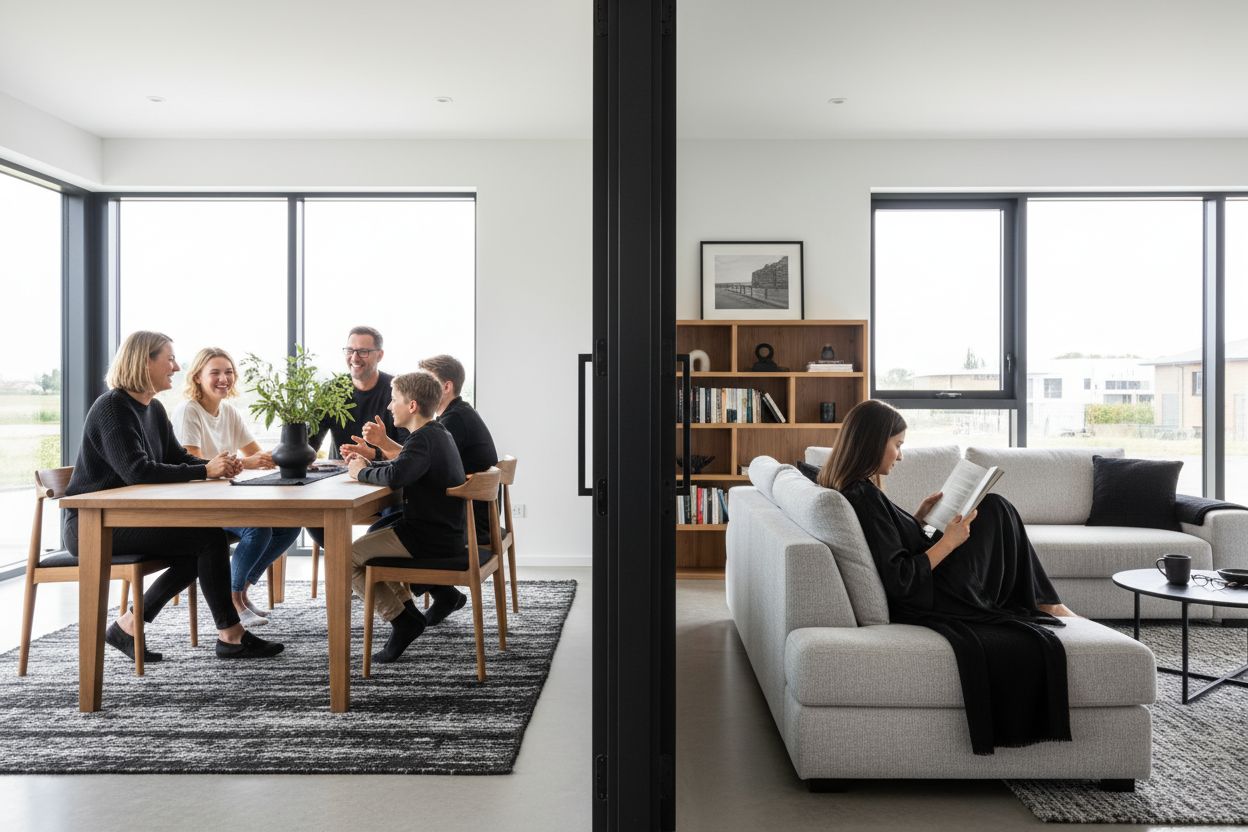
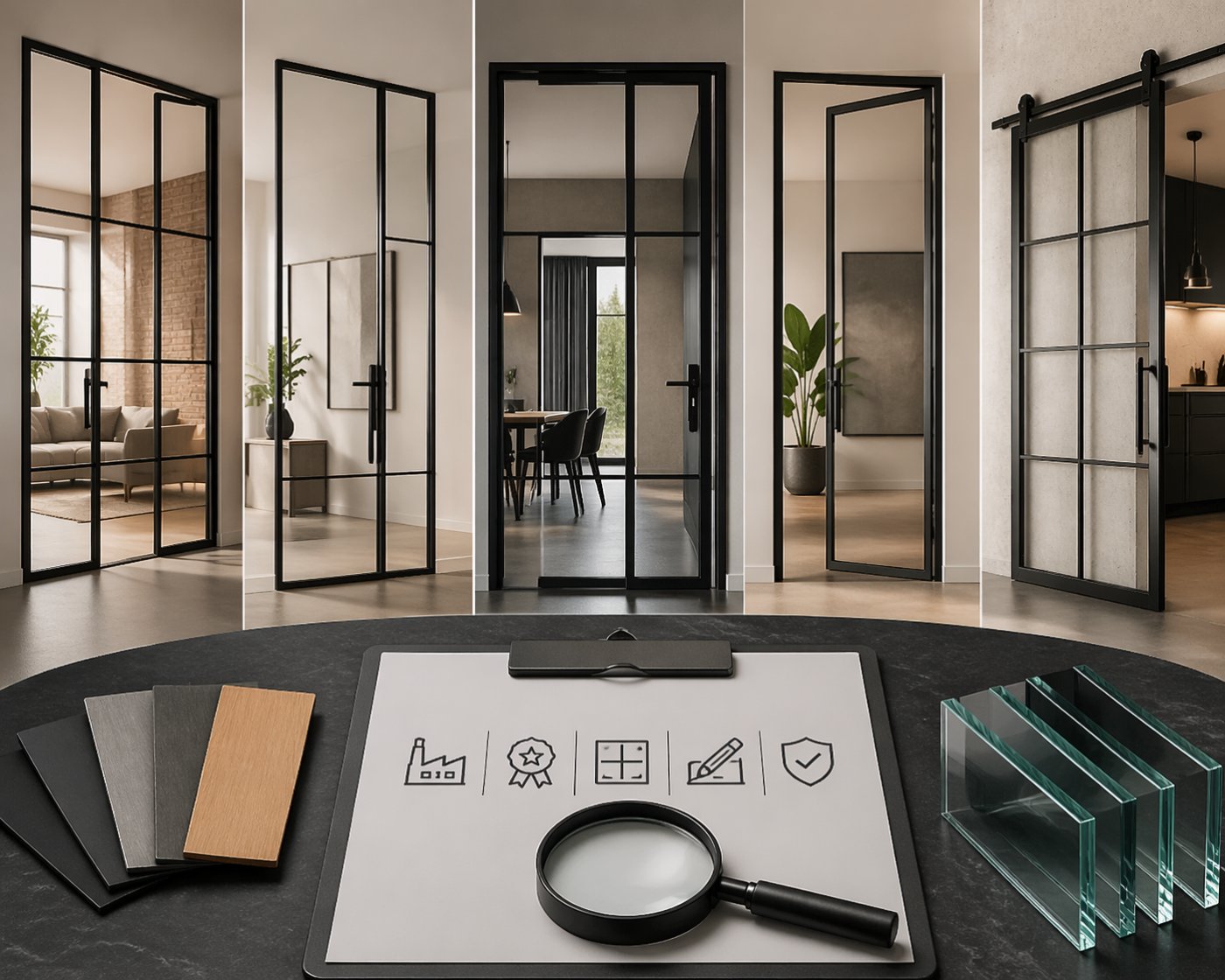
If you already own a loft door with steel frame in RAL 7016 (anthracite grey), you can specify exactly the same RAL colour for your shelving frame at no additional cost. Both the Large Shelf and Pipe Shelf from ManufakturX offer complete freedom in timber species and RAL colour selection. Your shelving becomes part of a cohesive design scheme rather than an isolated furniture piece.
Material Options for Custom Shelving Systems
Solid Hardwoods: Oak, Beech and Ash
Oak displays prominent, characterful grain patterns and offers exceptional flexural strength for wide shelves supporting heavy loads. Beech provides more uniform texture — often chosen where calmer visual impact is desired. Ash delivers lighter tones than either alternative whilst costing approximately 8-12% less than oak; for moderate-load applications, it represents excellent value. You can specify surface finishes through the configurator, with staining options to achieve your preferred aesthetic.
Steel Framework with RAL Powder Coating
Manufaktur X fabricates steel frames from box-section profiles starting at 40 × 30mm, welded and powder coated post-assembly. Coating thickness runs 60-80 microns — the range defined by DIN EN 13438 for interior powder coating durability. The resulting finish resists scratches and solvents whilst remaining easy to maintain, available in any standard RAL colour from anthracite (RAL 7016) through pure white (RAL 9010) to deep black (RAL 9005). Special colours beyond the standard RAL palette are also possible.
Steel and Timber Combinations
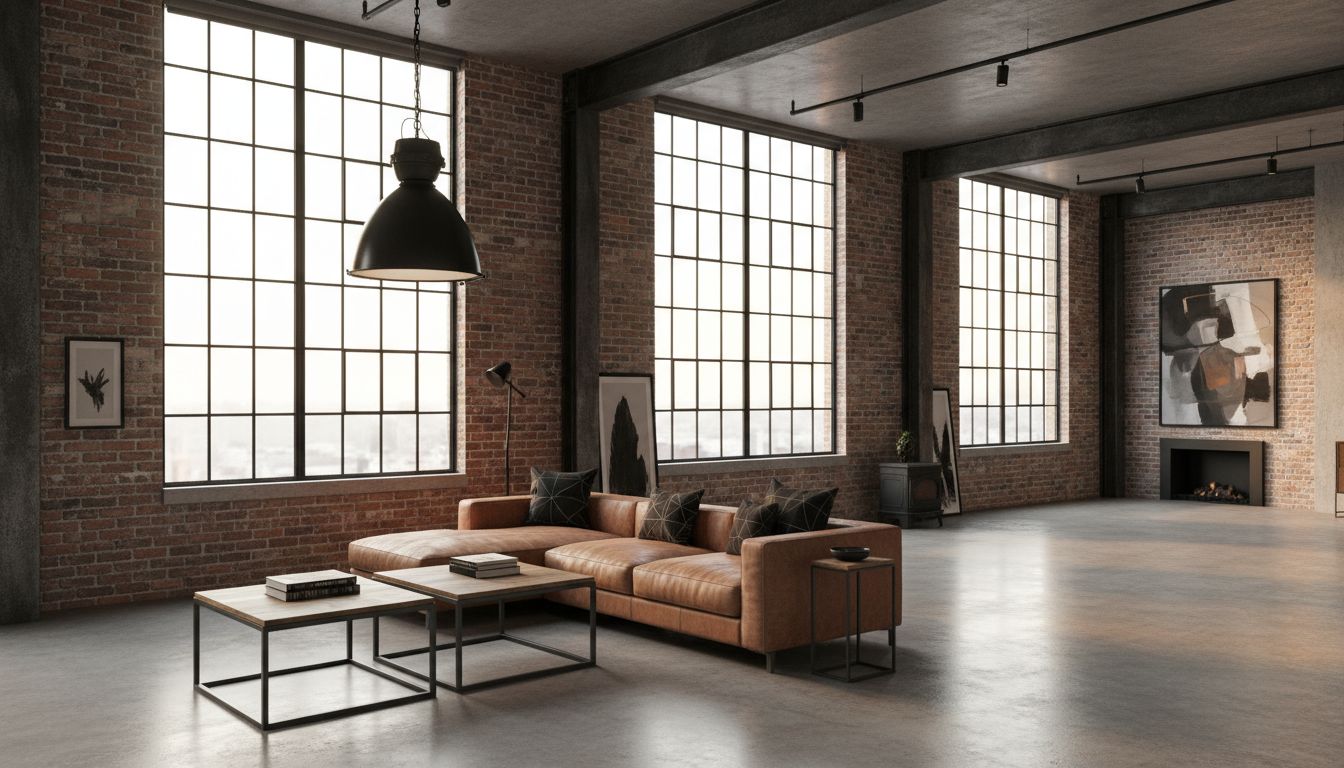
Steel handles vertical load transfer and provides structural rigidity. Timber delivers practical shelf surfaces plus tactile qualities that pure steel cannot match. The framework remains deliberately visible as integral design element — material contrasts are celebrated rather than hidden. This approach aligns with industrial chic aesthetics popular in converted warehouses and contemporary interiors, where structural logic becomes part of the visual appeal.
Choosing Between Shelving Systems
Selecting between ManufakturX's Pipe Shelf and Large Shelf depends on five key factors: wall construction, ceiling height, required depth, load requirements and visual preferences. Here's a quick comparison:
| Factor | Pipe Shelf | Large Shelf |
|---|---|---|
| Installation | Wall-mounted (essential) | Freestanding or wall-flush |
| Starting Price | From £945 | From £1,890 |
| Room Divider Use | No | Yes (open-backed) |
| Frame Style | Exposed tube framework | Welded steel construction |
| Production Time | 5-6 weeks | 5-6 weeks |
Both models offer complete freedom in timber selection and RAL colour specification, enabling seamless coordination with existing furniture — perhaps matching a loft door or dining table without additional charges. If you're uncertain which system suits your space, configure both options using the 3D configurator for direct price comparison.
Planning Your Bespoke Shelving Project
Accurate Measurement Techniques
Period properties often feature walls that aren't perfectly plumb or level. Measure width at multiple heights — top, middle and bottom — then use the smallest dimension for your order. For height, account for skirting boards, picture rails and ceiling roses that might affect installation. Remember you're specifying finished unit dimensions, not rough openings.
Load Planning and Shelf Spacing
Consider what you'll actually store. Books require different shelf spacing than displaying ceramics or storing box files. Heavy reference books need shorter spans between supports; lighter items allow wider spacing. The configurator shows structural limitations for each material combination, preventing over-specification whilst maximising utility.
Integration with Existing Architecture
Victorian and Edwardian properties often feature elaborate mouldings and architectural details. Your shelving should complement rather than compete with these elements. Consider how horizontal shelf lines interact with dado rails, picture rails and window sill heights. The 3D visualisation helps assess these relationships before committing to purchase.
Configure your custom shelving now using the 3D configurator at manufakturx.co.uk. Pricing remains transparent throughout the design process, with 5-6 weeks production time. All units are made in the EU with delivery to the UK including all customs duties.