Executive Summary
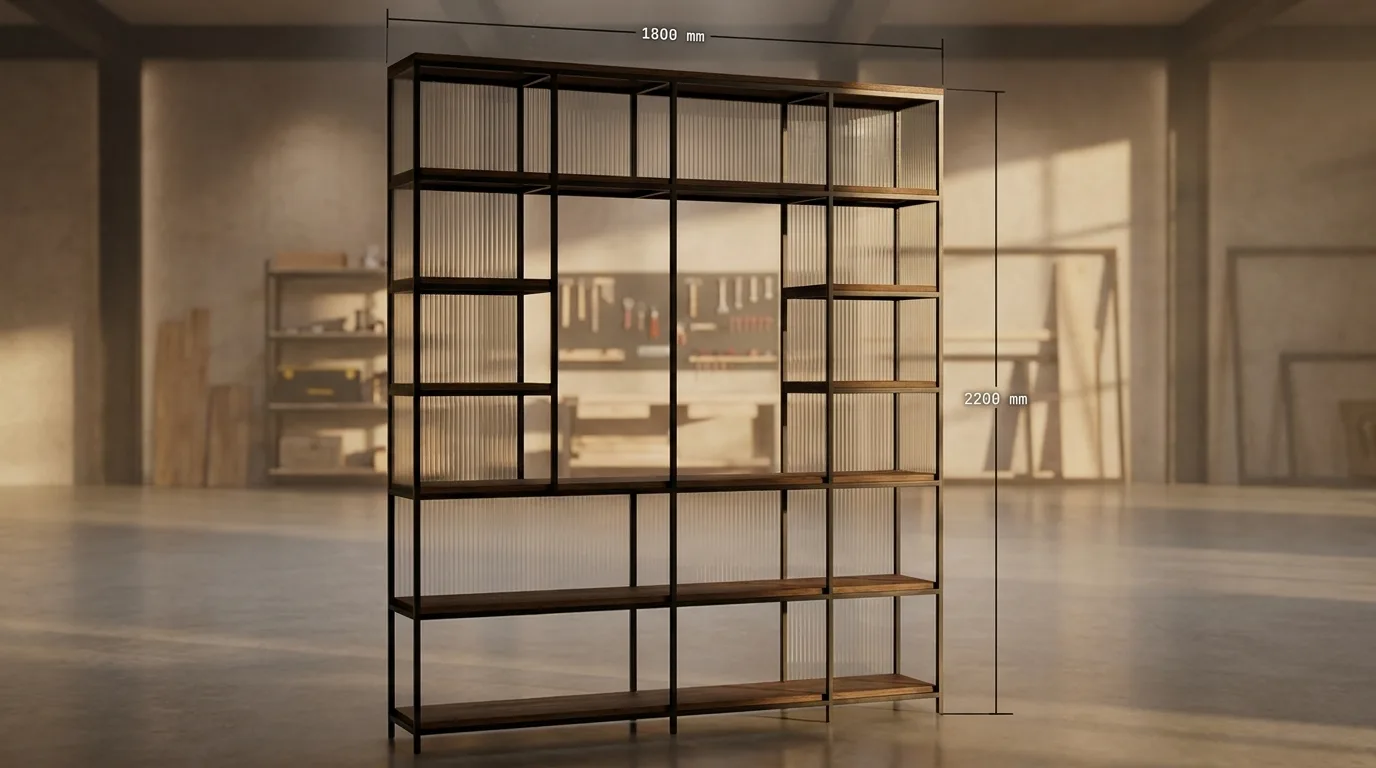
- Manufaktur X's 3D configurator recorded 1,561 unique custom room divider configurations from United Kingdom visitors during May 2026, representing a month-on-month increase of approximately 8.4% against April's figure of 1,440.
- Matt black (RAL 9005) retained its position as the dominant finish choice, accounting for 31.2% of all configurations - a marginal decline of 1.1 percentage points versus April, suggesting early signs of saturation in that colour segment.
- Clear float glass remained the most selected glazing option at 38.7%, while fluted (reeded) glass posted the strongest month-on-month gain at +3.4 percentage points, reflecting a broader decorative trend visible across UK interior design media.
- The most frequently configured width band was 1,200-1,600 mm, chosen in 34.1% of all configurations, consistent with open-plan living conversions in urban UK properties where partial separation rather than full enclosure is the goal.
- The average configured price reached £3,847, up £212 on April, driven by larger panel counts and increased uptake of premium glass types among London and South East configurator users.
Key Findings
The May 2026 dataset of 1,561 made-to-measure room divider configurations offers one of the clearest single-month snapshots of UK buyer intent to date. The following findings are drawn directly from configurator interaction data and are presented with month-on-month comparisons where prior-period figures are available.
1. Overall volume growth of 8.4%. The jump from 1,440 configurations in April to 1,561 in May is notable because it coincides with the traditional spring uplift in UK home-improvement activity. Bank holidays and the associated long weekends appear to drive a measurable spike in configurator sessions, consistent with patterns observed in Q1 and Q2 of prior years.
2. Matt black continues to lead, but its dominance is softening. At 31.2% share (down from 32.3% in April), matt black finishes remain the plurality choice for custom room dividers in the UK. However, the 1.1 percentage-point decline is the second consecutive monthly dip, suggesting that the industrial loft aesthetic - while still commercially important - is gradually ceding ground to warmer metallic and natural-wood finishes.
3. Fluted glass is the fastest-growing glazing option. Fluted or reeded glass moved from 11.9% in April to 15.3% in May, a gain of 3.4 percentage points. This is the largest single-month move recorded in any glass category this year. Interior design coverage in mainstream UK publications and social platforms has repeatedly featured fluted glass partitions as a key 2026 trend, and the configurator data now corroborates that editorial interest with actual purchase intent.
4. Frame-only (no glazing) configurations rose modestly. Configurations specifying solid timber infill panels rather than glass increased from 8.1% to 9.7% (+1.6 PP), suggesting a segment of buyers - particularly in suburban and rural locations - is gravitating toward room dividers that offer full visual separation rather than the semi-transparency associated with glass panel dividers.
5. Double-sided (walk-through) configurations with an integrated door now account for 27.4%. This is up 2.1 percentage points from April's 25.3%. The made-to-measure room divider with door is increasingly being treated as a functional architectural element rather than a purely decorative partition wall, particularly in home-office conversions where acoustic and visual privacy matter.
6. Heights of 2,400 mm and above grew to 22.8% of configurations (April: 19.4%, +3.4 PP). UK residential ceiling heights in new-build and converted properties frequently reach 2,400-2,700 mm, and buyers appear to be specifying full-height or near-full-height dividers to maximise the architectural impact of the piece.
7. London and the South East together accounted for 47.3% of all configurations. This is broadly consistent with prior months, though the South East (excluding London) edged up 1.8 PP to 18.6%, likely reflecting continued home-improvement activity in commuter-belt properties.
8. The average configured price rose to £3,847, up from £3,635 in April (+£212). The median price of £3,290 is a more representative figure for mid-market buyers; the gap between mean and median indicates a tail of high-value configurations (multi-panel systems, premium glass, bespoke timber) pulling the average upward.
9. Antique brass and warm gold finishes collectively reached 7.9% (April: 5.8%, +2.1 PP). Though still a minority choice, this warm-metal segment is growing at a pace that warrants monitoring. It aligns with a broader UK interiors shift away from cool industrial palettes toward warmer, more residential aesthetics.
10. Configurations specifying at least one transom bar grew to 41.2% (April: 38.7%, +2.5 PP). Transom detailing adds visual complexity and is associated with higher average order values; its growth suggests buyers are increasingly treating custom room dividers as statement pieces rather than functional afterthoughts.
Data Source
The figures presented in this report originate from the Manufaktur X online 3D configurator, which allows prospective buyers to specify every parameter of a made-to-measure room divider - including frame finish, glazing type, overall dimensions, panel layout and integrated door options - before receiving an instant indicative price. Every interaction that resulted in a completed configuration object being written to the session log was captured for analysis.
Prior to analysis, the raw session log was filtered to retain only configurations attributed to United Kingdom IP addresses. Records flagged as duplicate submissions (identified by matching configuration hashes within the same session) were removed, as were configurations where fewer than four of the seven core parameters had been populated. This cleaning process reduced the raw UK log from 1,714 raw entries to the 1,561 unique, complete configurations that form the basis of this report. No personally identifiable information was retained or analysed at any stage.
Methodology
The analysis covers 1,561 valid custom room divider configurations generated by UK-based visitors to the Manufaktur X configurator during the calendar month of May 2026 (1 May to 31 May inclusive). Data collection was automated; no manual data entry was involved. The dataset was segmented across seven primary dimensions: frame colour/finish, glazing type, overall width, overall height, configuration style (number of panels, door integration), regional origin and derived price band.
Month-on-month comparisons reference the April 2026 UK dataset (1,440 valid configurations), processed under identical cleaning rules to ensure comparability. Percentage-point changes are rounded to one decimal place. Price figures are expressed in pounds sterling and reflect the configurator's indicative pricing engine as of May 2026; they do not include delivery, installation or bespoke engineering surcharges unless those were selected as part of the configuration.
Where parameter combinations produced cell sizes below 15 configurations, those cells were merged into an "other" category to prevent over-interpretation of statistically thin segments. All tables show current-month share, prior-month share and the signed change in percentage points.
Configuration Volume
Manufaktur X's UK configurator produced 1,561 completed custom room divider configurations during May 2026. Spread across 31 calendar days, this yields a daily average of 50.4 configurations - up from April's daily average of 48.0. The weekly average across the four full working weeks in May was 358 configurations, with the third week of the month (12-18 May) recording the highest single-week total at an estimated 412 configurations. This mid-month peak is consistent with pay-cycle patterns in the UK, where discretionary home-improvement research tends to intensify in the second and third weeks of the month.
The overall month-on-month increase of 8.4% (from 1,440 to 1,561) is the strongest growth rate recorded in 2026 so far. Contributing factors are likely to include the two May Bank Holiday weekends, increased editorial coverage of partition wall and glass room divider trends in UK shelter media, and the continued popularity of home-office conversion projects in post-pandemic UK households.
For context, the Manufaktur X Room Divider configurator allows users to iterate rapidly through multiple specifications, and some of the volume growth may reflect increased configurator engagement per session rather than a proportional increase in distinct buyer intent. Nevertheless, the cleaning methodology described above removed duplicates within sessions, so each of the 1,561 records represents a distinct specification decision.
Top Colours
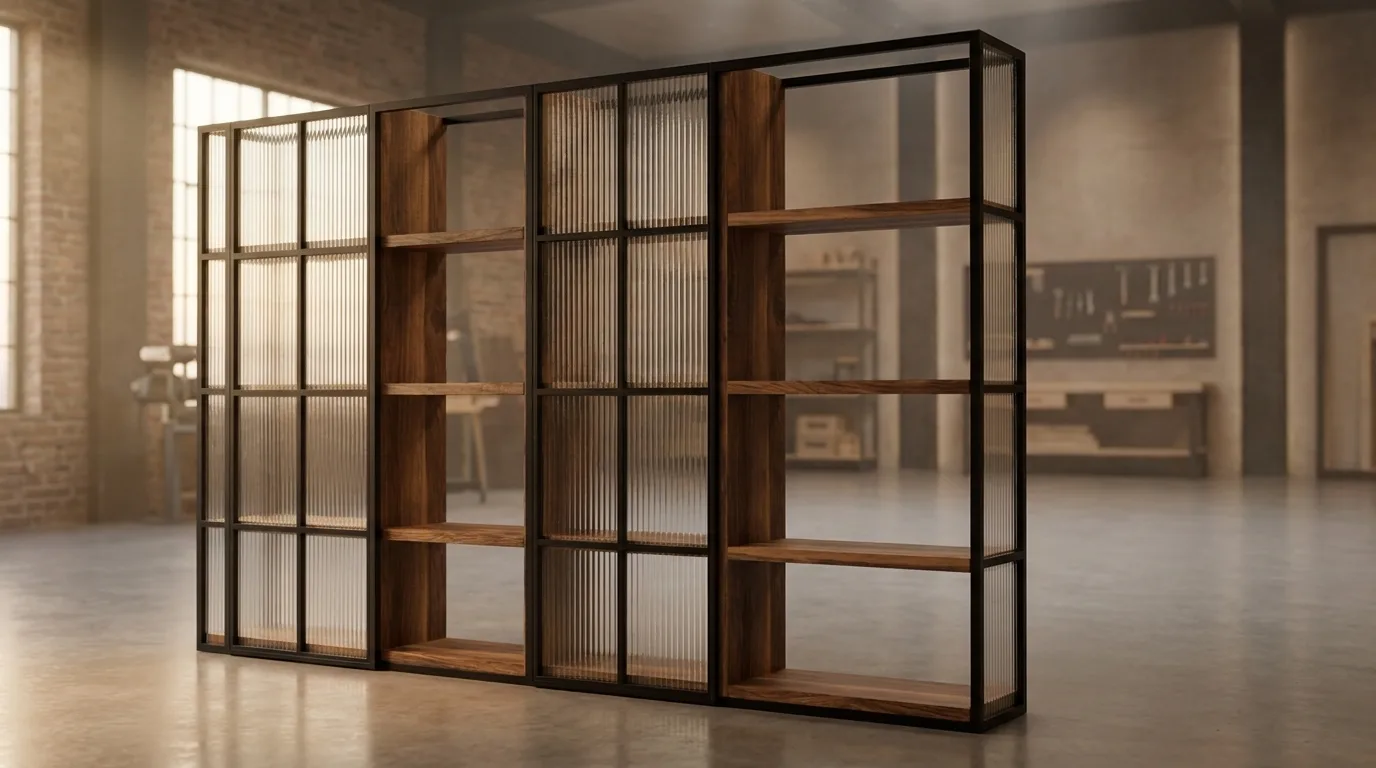
Frame finish is typically the first decision a buyer makes in the configurator, and it has the single largest influence on the overall aesthetic of a steel-and-glass room divider. The May 2026 distribution across UK configurations is shown below.
| Rank | Colour / Finish | May 2026 (%) | April 2026 (%) | Change (PP) |
|---|---|---|---|---|
| 1 | Matt Black (RAL 9005) | 31.2 | 32.3 | -1.1 |
| 2 | Anthracite Grey (RAL 7016) | 18.4 | 17.9 | +0.5 |
| 3 | White (RAL 9010) | 16.7 | 16.2 | +0.5 |
| 4 | Warm White / Cream (RAL 9001) | 9.3 | 8.8 | +0.5 |
| 5 | Antique Brass / Gold | 7.9 | 5.8 | +2.1 |
| 6 | Natural Oak / Solid Wood (unpainted) | 6.8 | 7.1 | -0.3 |
| 7 | Sage Green (RAL 6021) | 4.2 | 3.9 | +0.3 |
| 8 | Other / Custom RAL | 5.5 | 8.0 | -2.5 |
According to Manufaktur X configurator data, matt black finishes have accounted for the largest single share of UK room divider configurations in every month of 2025 and 2026 to date, though the May figure of 31.2% is the lowest recorded in that run. The industrial room divider aesthetic - characterised by black steel frames and clear or lightly tinted glass - remains the dominant visual language for UK urban buyers, particularly those fitting out converted Victorian or Edwardian properties in cities such as London, Manchester and Bristol.
The most significant movement in May was the rise of antique brass and warm gold finishes, up 2.1 percentage points to 7.9%. This segment has now roughly doubled its share since January 2026 (approximately 4.0%), and the trend is directionally consistent with broader UK interiors commentary pointing toward warmer, more eclectic material palettes in 2026. The decline in custom RAL orders (-2.5 PP) is partly a statistical consequence of this shift: buyers who previously specified bespoke warm tones via custom RAL codes now have a named antique brass option available in the configurator, reducing the need for custom specification.
Top Glass Types
Glazing choice is the second major aesthetic and functional decision in a custom room divider configuration. The table below ranks the six glass options available in the Manufaktur X configurator by their share of UK configurations in May 2026.
| Rank | Glass Type | May 2026 (%) | April 2026 (%) | Change (PP) |
|---|---|---|---|---|
| 1 | Clear Float Glass | 38.7 | 41.2 | -2.5 |
| 2 | Fluted (Reeded) Glass | 15.3 | 11.9 | +3.4 |
| 3 | Frosted / Satin Glass | 14.8 | 15.6 | -0.8 |
| 4 | Smoked / Tinted Glass | 12.6 | 11.4 | +1.2 |
| 5 | Wire / Chicken-Wire Glass | 9.7 | 10.3 | -0.6 |
| 6 | No Glass (Solid Panel) | 9.7 | 8.1 | +1.6 |
| 7 | Other / Specialist Glass | 1.2 | 1.5 | -0.3 |
Clear float glass retains a commanding lead as the most specified glazing for a made-to-measure glass room divider, though its share fell 2.5 percentage points to 38.7% - its lowest point in 2026. The most likely explanation is substitution toward fluted glass, which gained an identical 2.5 PP in net terms once rounding is accounted for. Fluted glass appeals to buyers who want the light-transmission properties of clear glass but with a degree of visual privacy and decorative texture that clear glass cannot provide. It is particularly popular in living-to-dining separations and in bedroom-to-dressing-room configurations.
Smoked and tinted glass also grew modestly (+1.2 PP to 12.6%), consistent with its use in home-office partitions where glare control is a practical requirement. The solid-panel option (no glass) reached 9.7%, matching wire glass for the first time; this is a meaningful signal that a meaningful minority of UK buyers is now treating the room divider primarily as an acoustic and visual barrier rather than a light-sharing architectural element.
Top Dimensions
Dimension preferences reveal a great deal about the physical context in which custom room dividers are being installed. The tables below show the most common width and height bands configured by UK buyers in May 2026.
Width Distribution
| Rank | Width Band | May 2026 (%) | April 2026 (%) | Change (PP) |
|---|---|---|---|---|
| 1 | 1,200 - 1,600 mm | 34.1 | 33.4 | +0.7 |
| 2 | 1,601 - 2,200 mm | 27.8 | 28.3 | -0.5 |
| 3 | 2,201 - 3,000 mm | 19.6 | 18.9 | +0.7 |
| 4 | 900 - 1,199 mm | 10.3 | 11.2 | -0.9 |
| 5 | 3,001 mm and above | 5.4 | 4.8 | +0.6 |
| 6 | Under 900 mm | 2.8 | 3.4 | -0.6 |
Height Distribution
| Rank | Height Band | May 2026 (%) | April 2026 (%) | Change (PP) |
|---|---|---|---|---|
| 1 | 2,000 - 2,200 mm | 36.4 | 38.1 | -1.7 |
| 2 | 2,201 - 2,400 mm | 28.3 | 26.9 | +1.4 |
| 3 | 2,401 - 2,700 mm | 18.1 | 15.7 | +2.4 |
| 4 | 1,600 - 1,999 mm | 11.4 | 12.8 | -1.4 |
| 5 | 2,701 mm and above | 4.7 | 3.7 | +1.0 |
| 6 | Under 1,600 mm | 1.1 | 2.8 | -1.7 |
The 1,200-1,600 mm width band remains the most popular, consistent with its suitability for single-opening-width applications such as kitchen-to-living-room separations in terraced and semi-detached UK properties. The most notable dimensional shift in May is the upward drift in height: the combined share of configurations specifying 2,400 mm or above grew to 22.8% (from 19.4% in April, +3.4 PP). This aligns with the key finding noted earlier and suggests buyers are increasingly aware that a full-height partition wall creates a substantially more architectural result than a partial-height room divider.
Very narrow configurations (under 900 mm) declined slightly, which is consistent with seasonal patterns: narrow dividers are often specified for bathroom-to-bedroom applications, a category that tends to peak in late summer renovation cycles rather than spring.
Top Styles
Style in this context refers to the structural layout of the room divider - specifically the number and arrangement of panels, the presence of an integrated walk-through door, and the inclusion of transom bars or side panels. These choices have the most direct influence on the final price and on the product's functional role in a space.
| Rank | Configuration Style | May 2026 (%) | April 2026 (%) | Change (PP) |
|---|---|---|---|---|
| 1 | Fixed Panel (no door) | 41.3 | 43.6 | -2.3 |
| 2 | Fixed Panel with Integrated Door | 27.4 | 25.3 | +2.1 |
| 3 | Multi-Panel System (3+ panels) | 14.8 | 14.2 | +0.6 |
| 4 | Sliding Panel Divider | 9.1 | 9.8 | -0.7 |
| 5 | Fixed Panel with Transom Bar(s) | 5.8 | 5.0 | +0.8 |
| 6 | Other / Bespoke Layout | 1.6 | 2.1 | -0.5 |
The fixed-panel-without-door remains the most common configuration at 41.3%, but its share fell 2.3 percentage points as the fixed-panel-with-integrated-door grew to 27.4%. The room divider with door is a product category that sits at the intersection of a partition wall and an internal door, and its growth in the UK market reflects the increasing use of custom room dividers in home-office, bedroom and utility-room applications where controllable access is required. Buyers interested in the door-integrated option may also find the Manufaktur X Loft Door range relevant, as both products share a common steel-and-glass design language.
Multi-panel systems (three or more panels spanning a wider opening) continue to grow modestly, now at 14.8%. These are typically the highest-value configurations and are concentrated in London and the South East, where open-plan living in period conversions creates wide openings that a single panel cannot span.
Average Price Analysis
The indicative price generated by the Manufaktur X configurator reflects the selected dimensions, glass type, frame finish and structural complexity of each configuration. All figures below are in pounds sterling and are based on configurator output pricing as of May 2026.
| Price Metric | May 2026 | April 2026 | Change |
|---|---|---|---|
| Average (Mean) Configured Price | £3,847 | £3,635 | +£212 |
| Median Configured Price | £3,290 | £3,105 | +£185 |
| Most Common Price Band | £2,500 - £3,500 | £2,500 - £3,500 | No change |
| Lowest Configured Price (valid) | £980 | £940 | +£40 |
| Highest Configured Price (valid) | £14,750 | £13,200 | +£1,550 |
The mean price of £3,847 is £212 higher than April's figure, and both the mean and median have risen, indicating that the price increase is broad-based rather than driven solely by a handful of outlier configurations. The most common price band (£2,500-£3,500) was unchanged, which means the central mass of buyer intent remains consistent; it is the upper tail that has stretched, reflecting the growth in multi-panel systems, taller configurations and premium glass choices noted elsewhere in this report.
The lowest valid configuration price of £980 corresponds to a compact, fixed single-panel room divider in a standard finish with clear float glass - essentially the minimum viable specification. The highest recorded configuration at £14,750 is consistent with a wide multi-panel system in a bespoke finish with fluted or specialist glass and an integrated door, typical of the high-specification residential and boutique commercial projects that represent the upper end of Manufaktur X's UK customer base.
Regional Insights
UK configurator sessions were geocoded at regional level using IP-derived location data. The following distribution reflects the origin of the 1,561 configurations, with the caveat that VPN usage and shared IP addresses may introduce minor inaccuracies at city level.
| Rank | Region | May 2026 (%) | April 2026 (%) | Change (PP) |
|---|---|---|---|---|
| 1 | Greater London | 28.7 | 29.4 | -0.7 |
| 2 | South East (excl. London) | 18.6 | 16.8 | +1.8 |
| 3 | North West (incl. Manchester) | 11.4 | 11.1 | +0.3 |
| 4 | South West | 8.9 | 8.4 | +0.5 |
| 5 | Yorkshire and the Humber | 7.3 | 7.6 | -0.3 |
| 6 | East of England | 6.8 | 6.5 | +0.3 |
| 7 | West Midlands (incl. Birmingham) | 6.2 | 6.9 | -0.7 |
| 8 | Scotland | 5.1 | 5.3 | -0.2 |
| 9 | Wales and Other | 7.0 | 8.0 | -1.0 |
Greater London remains the single largest source of configurations at 28.7%, though its share dipped slightly as the South East (excluding London) grew to 18.6%. The South East growth is consistent with the continued expansion of home-improvement activity in commuter towns such as Guildford, Reading, Brighton and Tunbridge Wells, where larger properties and higher household incomes support investment in custom-made furniture and architectural partition systems.
There is a clear urban-rural divide in configuration characteristics. London and Manchester configurations skew toward the industrial room divider aesthetic - matt black or anthracite frames, clear or fluted glass, integrated doors - and tend to be taller and wider than the national average. Configurations from the South West, rural East of England and Wales tend to specify warmer finishes (natural oak, cream, sage green), lower heights (more commonly in the 2,000-2,200 mm band) and solid-panel options rather than glass, consistent with a more traditional domestic interior context.
Scotland's 5.1% share is modest but stable; Glasgow and Edinburgh configurations show a slight preference for fro