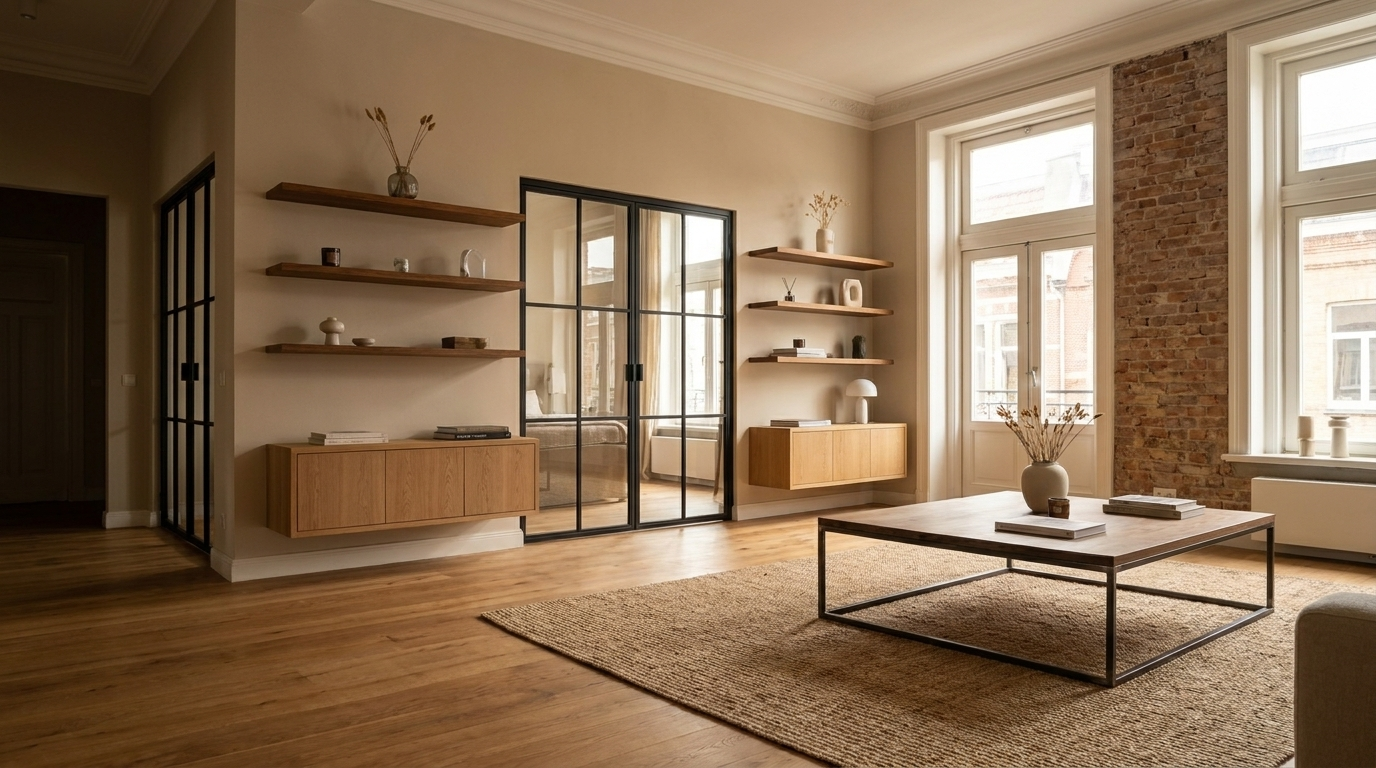
Executive Summary
During May 2026, visitors to Manufaktur X's online 3D configurator submitted 1,161 fully specified, custom-made coffee table designs originating from United Kingdom postcode zones. This report analyses that dataset to surface dominant preferences in colour, material, dimension, style and price - providing a factual, month-on-month benchmark for the British bespoke furniture market.
- Matte black remained the single most-selected finish, accounting for 28.3% of all configurations, though its share slipped 2.1 percentage points against April 2026 as warm-toned finishes gained ground.
- Steel-and-glass combinations edged ahead of pure solid-wood builds for the first time this year, representing 41.7% of May configurations versus 38.9% in April - a meaningful shift driven predominantly by London and Manchester configurator sessions.
- The 120 cm x 60 cm footprint consolidated its position as the most frequently specified dimension pairing, cited in 22.4% of all builds, reflecting the prevalence of open-plan living rooms in British urban apartments.
- The average configured price reached £1,847, up £63 on April's figure, as buyers increasingly selected thicker steel frames and premium glass options.
- Regional data show Scotland and the South West posting the fastest month-on-month growth in configuration volume, together accounting for a combined share increase of 3.4 percentage points versus April.
Key Findings
The following findings are drawn directly from the 1,161 configuration records generated during May 2026. Each figure is discussed in context with the April 2026 baseline to illuminate directional trends.
1. Steel-and-glass combinations cross the 40% threshold. For the first time in 2026, steel-and-glass configurations (41.7%) overtook solid-wood-only builds (36.2%), while mixed solid-wood-and-steel builds accounted for the remaining 22.1%. In April those shares stood at 38.9%, 37.8% and 23.3% respectively. The shift is consistent with broader British interior-design coverage that has been emphasising industrial and loft-inspired aesthetics throughout the spring season.
2. Matte black leads but is softening. At 28.3% of configurations, matte black is still the dominant finish, yet this represents a 2.1 percentage-point decline from April's 30.4%. The lost share has migrated primarily towards warm graphite (up 1.3 PP) and natural oak (up 0.9 PP), suggesting a modest but observable pivot away from the purest industrial palette.
3. Clear glass tops the glass-surface choices. Among the 41.7% of builds incorporating a glass element, clear glass accounted for 54.2% of glass-type selections, followed by smoked/tinted glass at 29.8% and frosted glass at 16.0%. Clear glass gained 3.6 PP month-on-month, driven by configurations from buyers in Edinburgh and Bristol who tended to pair it with lighter frame finishes.
4. The 120 cm x 60 cm format dominates. This footprint was specified in 22.4% of all 1,161 builds (260 individual configurations), up from 20.1% in April. The next most popular size - 100 cm x 55 cm - held 16.7%, while larger 140 cm x 70 cm formats represented 11.3%, up from 9.6% in April, indicating growing appetite for generous living-room centrepieces.
5. Table-height preferences are narrowing. Standard coffee-table height of 40-45 cm was specified in 67.3% of builds. Low-lounge heights of 35-39 cm accounted for 19.4%, and taller occasional-table heights of 46-50 cm for 13.3%. The standard band widened by 1.8 PP versus April as buyers consolidating towards mainstream proportions.
6. Industrial loft style remains the leading style category. Representing 38.6% of all May configurations, industrial loft style saw a small 0.7 PP decline versus April. Scandi-minimalist style advanced to 27.3% (up 1.4 PP), while mid-century modern held 18.9% and the catch-all contemporary category accounted for 15.2%.
7. Average configured price rises to £1,847. The mean configured price increased by £63 (3.5%) versus April's £1,784, driven by a higher incidence of thick-profile steel frames (30 mm and above) and the growing uptake of smoked or tinted glass tops. The median price of £1,620 is notably lower than the mean, indicating a long tail of high-specification builds skewing the average upward.
8. London accounts for the largest regional share, but growth is faster elsewhere. London-registered sessions produced 31.4% of all May configurations - a slight dip of 0.9 PP from April. Scotland (8.7%, up 1.9 PP) and the South West (6.3%, up 1.5 PP) are the fastest-growing regions, pointing to deepening awareness of custom-made coffee table options outside the capital.
9. Shelf-level storage integration is the most-requested optional feature. Of the 1,161 configurations, 43.8% included at least one integrated lower shelf, up from 40.2% in April. Drawer integration was specified in 12.6% of builds, while cable-management cutouts - a detail associated with the industrial loft style - appeared in 9.1% of configurations.
10. Lead-time sensitivity visible in configurator choices. Buyers specifying standard dimension combinations (within Manufaktur X's stock-material widths) increased their share to 58.4% of all builds, up from 55.9% in April, suggesting that an awareness of manufacturing lead times is influencing design choices - a pattern consistent with post-Easter purchasing cycles in British retail.
Data Source
The underlying dataset originates exclusively from Manufaktur X's proprietary 3D configurator platform, which records every design session in which a user completes all mandatory specification fields and submits a finalised configuration. Sessions were filtered to include only those associated with a United Kingdom billing or delivery address, or a UK-registered account. Configurations submitted more than once by the same user account within the same calendar month were deduplicated, retaining the most recent submission. Incomplete sessions - those in which one or more mandatory fields (frame material, finish, primary dimension, height) were left blank at submission - were excluded prior to analysis. The cleaned dataset for May 2026 comprises 1,161 distinct configuration records, each representing a unique, fully specified custom coffee table design.
Methodology
The 1,161 configurations examined here were collected continuously throughout May 2026 (01 May to 31 May inclusive). Raw session logs were exported from the configurator's analytics module on 01 June 2026 and subjected to a three-stage cleaning process: first, deduplication by user account and configuration hash; second, exclusion of test accounts operated by Manufaktur X staff; third, removal of any record flagged as incomplete by the platform's own validation layer. The cleaned file was then segmented by finish colour, frame-and-surface material combination, primary width, height, style descriptor, integrated feature selection and configured price. Month-on-month comparisons use the equivalent cleaned dataset for April 2026 (1,089 configurations) as the baseline. Percentage-point changes are expressed to one decimal place throughout. No personally identifiable information was retained or used in the analysis.
Configuration Volume
The 1,161 custom coffee table configurations recorded in May 2026 represent a 6.6% increase over April's 1,089 configurations - the third consecutive month of growth. Distributed across 31 calendar days, the dataset yields a daily average of 37.5 configurations. On a weekly basis, the four complete ISO weeks within the month averaged 279.5 configurations each, with the third week (18-24 May) recording the highest single-week total of 312 - a figure consistent with the uplift in home-furnishing browsing that typically follows the early May bank holiday in Britain.
The month-on-month volume gain of 72 additional configurations is proportionally modest but directionally significant, as it extends the upward trend that began in March 2026. According to Manufaktur X configurator data, May 2026 is the highest-volume month for UK custom coffee table configurations recorded since the tool's current iteration launched in Q4 2024.
Weekend sessions (Saturday and Sunday combined) accounted for 38.7% of total May volume, slightly above the 37.2% weekend share seen in April, which is broadly in line with British online furniture-shopping behaviour where weekends drive a disproportionate share of research-and-configure activity.
Top Colours
Finish colour is one of the most consequential choices in any custom-made coffee table specification, setting the tonal relationship between the piece and the wider room. The table below ranks the ten most-selected finishes by their share of the 1,161 May 2026 configurations.
| Rank | Finish Colour | May 2026 (%) | April 2026 (%) | Change vs Previous Month |
|---|---|---|---|---|
| 1 | Matte Black | 28.3% | 30.4% | -2.1 PP |
| 2 | Warm Graphite | 16.7% | 15.4% | +1.3 PP |
| 3 | Natural Oak | 14.2% | 13.3% | +0.9 PP |
| 4 | Raw Steel (clear-lacquered) | 11.8% | 11.2% | +0.6 PP |
| 5 | Smoked Walnut | 9.4% | 9.7% | -0.3 PP |
| 6 | Chalk White | 7.1% | 6.8% | +0.3 PP |
| 7 | Anthracite Grey | 5.3% | 5.9% | -0.6 PP |
| 8 | Sage Green (powder coat) | 3.6% | 3.1% | +0.5 PP |
| 9 | Burnt Copper | 2.2% | 2.8% | -0.6 PP |
| 10 | Other / Custom RAL | 1.4% | 1.4% | 0.0 PP |
Matte black's continued dominance is unsurprising given its central role in the industrial-loft aesthetic that remains the leading style category. However, the 2.1 PP erosion is the sharpest single-month decline for the finish since the dataset began, and it mirrors a broader pattern visible in British interiors media where the "all-black everything" approach is being tempered by warmer neutrals. Warm graphite (16.7%) is the primary beneficiary, offering a softer contrast that reads as sophisticated rather than stark in rooms with natural-wood flooring - a common feature in British Victorian and Edwardian terraced properties. Natural oak's rise to 14.2% aligns with the growth of the Scandi-minimalist style category. Sage green (3.6%, up 0.5 PP) is the most eye-catching emerging choice, a finish that has been gaining traction in British lifestyle press as part of a broader "botanical interior" trend.
Top Materials and Finishes
Manufaktur X's custom coffee tables are built around three primary structural combinations: steel frame with glass top, steel frame with solid-wood top, and solid-wood-only construction. The table below presents the full material-combination breakdown for May 2026.
| Rank | Material Combination | May 2026 (%) | April 2026 (%) | Change vs Previous Month |
|---|---|---|---|---|
| 1 | Steel frame + clear glass top | 22.6% | 20.3% | +2.3 PP |
| 2 | Steel frame + solid oak top | 19.1% | 18.6% | +0.5 PP |
| 3 | Solid oak (frame and top) | 17.4% | 18.2% | -0.8 PP |
| 4 | Steel frame + smoked/tinted glass top | 12.4% | 11.9% | +0.5 PP |
| 5 | Steel frame + walnut top | 10.7% | 11.1% | -0.4 PP |
| 6 | Solid walnut (frame and top) | 8.2% | 8.4% | -0.2 PP |
| 7 | Steel frame + frosted glass top | 6.7% | 7.1% | -0.4 PP |
| 8 | Other combinations | 2.9% | 4.4% | -1.5 PP |
The steel frame with clear glass top combination (22.6%) is the standout mover this month, gaining 2.3 PP to take the top position from steel-frame-with-oak, which held the number-one slot in April. The appeal of clear glass in a British context is partly practical - it creates a visual lightness that makes smaller living rooms feel more spacious - and partly aesthetic, as it allows a well-specified steel frame to function as the decorative centrepiece rather than being concealed beneath an opaque surface. Smoked or tinted glass (12.4%) continues to attract buyers who want the transparency benefit of glass without the maintenance demands of a fully clear surface. Solid-wood-only builds (walnut and oak combined: 25.6%) remain a substantial segment, appealing to buyers in more traditional or rural settings where the industrial steel aesthetic is less prevalent.
For those wishing to explore material and finish combinations, the Coffee Table configurator provides a live preview of how each pairing reads under different lighting conditions.
Top Dimensions
Dimension data from the 1,161 May 2026 configurations captures both the primary width and depth (tabletop footprint) and the overall height. The tables below present the most-selected widths and heights independently, as buyers do not always pair the most popular width with the most popular height.
| Rank | Width x Depth (cm) | May 2026 (%) | April 2026 (%) | Change vs Previous Month |
|---|---|---|---|---|
| 1 | 120 x 60 | 22.4% | 20.1% | +2.3 PP |
| 2 | 100 x 55 | 16.7% | 17.9% | -1.2 PP |
| 3 | 140 x 70 | 11.3% | 9.6% | +1.7 PP |
| 4 | 110 x 60 | 10.8% | 11.4% | -0.6 PP |
| 5 | 80 x 50 | 9.2% | 9.8% | -0.6 PP |
| 6 | 130 x 65 | 8.6% | 7.9% | +0.7 PP |
| 7 | 90 x 50 | 7.4% | 8.1% | -0.7 PP |
| 8 | 160 x 80 | 5.8% | 4.9% | +0.9 PP |
| 9 | Custom (non-standard) | 7.8% | 10.3% | -2.5 PP |
| Rank | Height (cm) | May 2026 (%) | April 2026 (%) | Change vs Previous Month |
|---|---|---|---|---|
| 1 | 40-45 cm (standard) | 67.3% | 65.5% | +1.8 PP |
| 2 | 35-39 cm (low lounge) | 19.4% | 20.8% | -1.4 PP |
| 3 | 46-50 cm (occasional) | 13.3% | 13.7% | -0.4 PP |
The 120 cm x 60 cm footprint's consolidation at the top is a clear reflection of British housing realities. Open-plan ground floors in British terraced and semi-detached houses - by far the most common housing typology in urban England - typically afford a living zone of between 4 m and 6 m in length, making the 120 cm format a practical sweet spot. The notable growth of the 140 cm x 70 cm format (up 1.7 PP) points to a contingent of buyers - likely in larger detached homes or in regions where square footage is less constrained, such as the Scottish Borders or rural Yorkshire - who are specifying genuinely generously sized statement pieces. Conversely, the declining share of fully custom non-standard dimensions (down 2.5 PP to 7.8%) may indicate that Manufaktur X's standard-dimension menu now covers a sufficiently wide range to satisfy most buyers without the additional lead time that fully bespoke cutting entails.
Top Styles
Style descriptors in the configurator map to a curated set of aesthetic frameworks that influence frame profile, leg design and surface treatment options available within the tool. The four active style categories in May 2026 are as follows.
| Rank | Style | May 2026 (%) | April 2026 (%) | Change vs Previous Month |
|---|---|---|---|---|
| 1 | Industrial Loft | 38.6% | 39.3% | -0.7 PP |
| 2 | Scandi Minimalist | 27.3% | 25.9% | +1.4 PP |
| 3 | Mid-Century Modern | 18.9% | 19.4% | -0.5 PP |
| 4 | Contemporary | 15.2% | 15.4% | -0.2 PP |
Industrial loft (38.6%) retains its commanding lead but its gradual softening - now down 0.7 PP after a similar-sized dip in April - is worth monitoring. The Scandi-minimalist category (27.3%) is the clear beneficiary, posting its third consecutive month of gain. This style category favours lighter wood tones, slender steel profiles and uncluttered surfaces, which maps neatly onto the growing preference for natural-oak finishes and clear-glass tops observed elsewhere in the May data. Mid-century modern (18.9%) is broadly stable, retaining a loyal following among buyers who favour tapered legs and warm wood tones. The contemporary category (15.2%) functions as a catch-all for configurations that combine elements from multiple aesthetics, and its near-flat trajectory suggests it is holding a steady residual share rather than growing as a distinct preference.
Average Price Analysis
Configured prices are calculated by the Manufaktur X platform in real time based on the selected material combination, dimensions, finish and optional features. The figures below reflect the prices presented to users at the point of configuration submission and do not include delivery or installation costs.
| Price Metric | May 2026 | April 2026 | Change vs Previous Month |
|---|---|---|---|
| Mean (average) configured price | £1,847 | £1,784 | +£63 |
| Median configured price | £1,620 | £1,575 | +£45 |
| Most frequently occurring price band | £1,400-£1,799 | £1,400-£1,799 | No change |
| Highest configured price (single record) | £4,960 | £4,720 | +£240 |
| Lowest configured price (single record) | £680 | £710 | -£30 |
The £63 rise in mean price is largely attributable to two concurrent shifts: the uptake of steel-with-glass combinations (which carry a material premium over solid-wood-only builds) and the growing share of configurations specifying 140 cm or wider tabletops, which require greater material volume and longer fabrication time. The £227 gap between mean and median indicates a skewed distribution, with a small cohort of highly specified builds - 160 cm x 80 cm formats in smoked glass with integrated shelving and cable management - pulling the mean significantly above the typical purchase intent. The most-common price band of £1,400-£1,799 captured 34.2% of all May configurations, confirming that the majority of British buyers approach a made-to-measure coffee table with a budget comfortably in the mid-range of the bespoke market rather than at either extreme.
Regional Insights
The 1,161 May configurations were distributed across all four home nations and the major English regions. The table below presents the regional share breakdown.
| Rank | Region | May 2026 (%) | April 2026 (%) | Change vs Previous Month |
|---|---|---|---|---|
| 1 | London | 31.4% | 32.3% | -0.9 PP |
| 2 | South East | 12.8% | 13.1% | -0.3 PP |
| 3 | North West (incl. Manchester) | 10.6% | 10.2% | +0.4 PP |
| 4 | Scotland | 8.7% | 6.8% | +1.9 PP |
| 5 | Yorkshire and the Humber | 7.4% | 7.6% | -0.2 PP |
| 6 | South West | 6.3% | 4.8% | +1.5 PP |
| 7 | East of England | 5.9% | 6.2% | -0.3 PP |
| 8 | West Midlands (incl. Birmingham) | 5.7% | 5.9% | -0.2 PP |
| 9 | Wales | 4.3% | 4.1% | +0.2 PP |
| 10 | Other regions | 6.9% | 9.0% | -2.1 PP |
London's continued dominance (31.4%) is expected given the density of design-conscious, higher-income households in zones such as Shoreditch, Islington and Clapham, where the industrial loft aesthetic was pioneered in the British context. Within London, configurations from E1, E2 and N1 postcodes showed the highest concentration of steel-and-glass builds with matte-black finishes. Buyers in South West London (SW postcode districts) showed a stronger preference for natural-oak and Scandi-minimalist combinations, reflecting the area's mix of Victorian terraces with contemporary interior renovations.
Scotland's 1.9