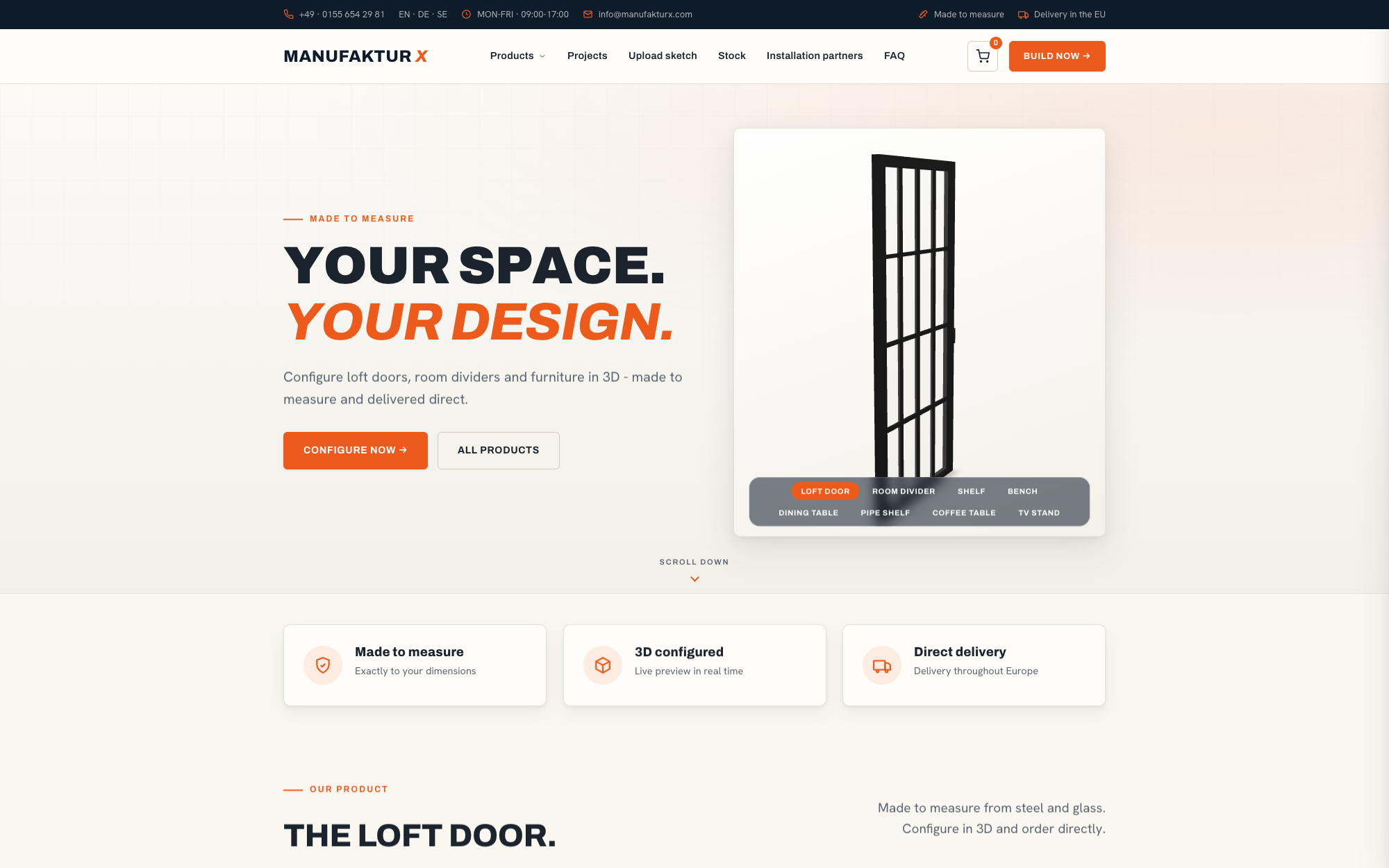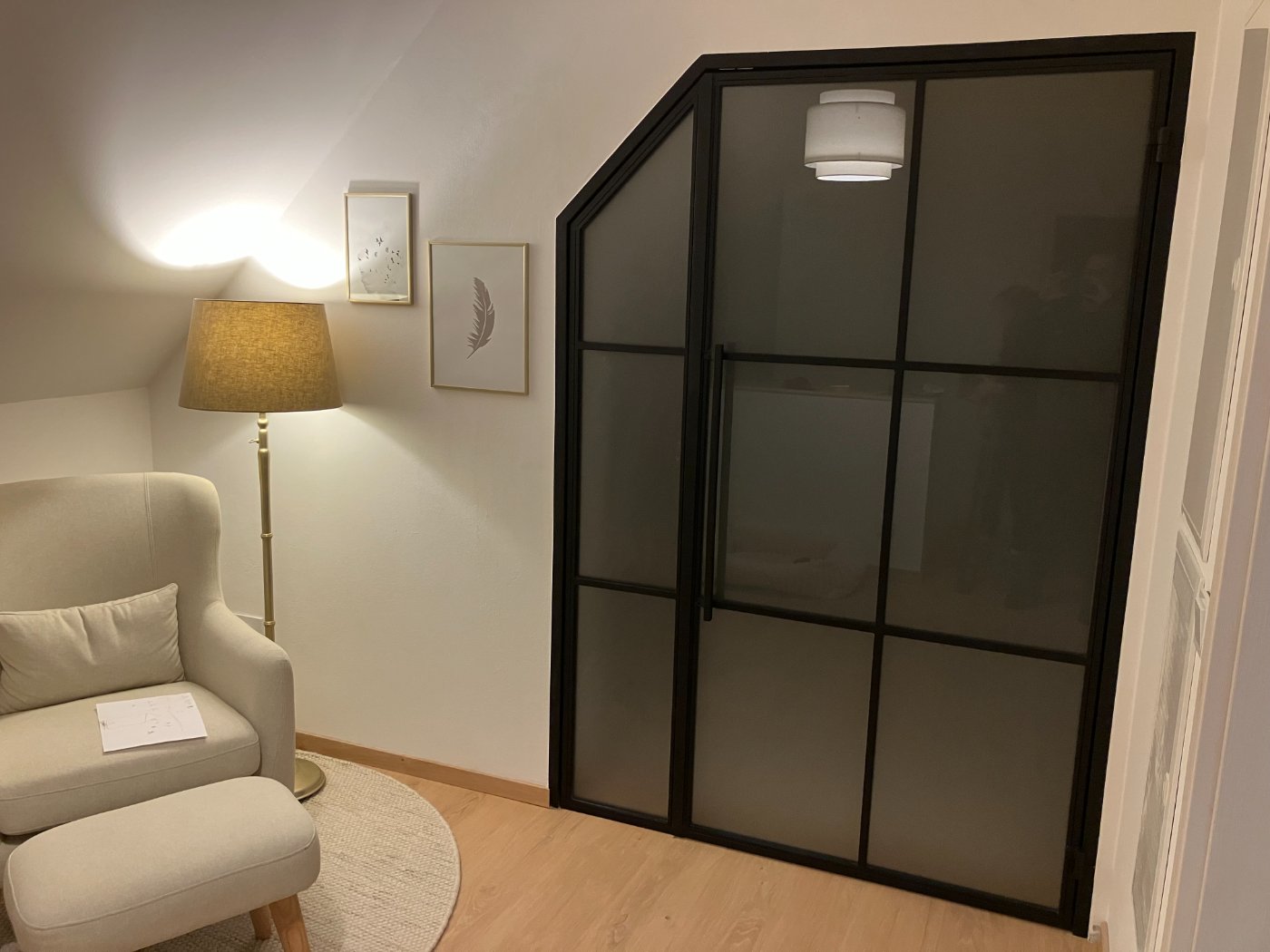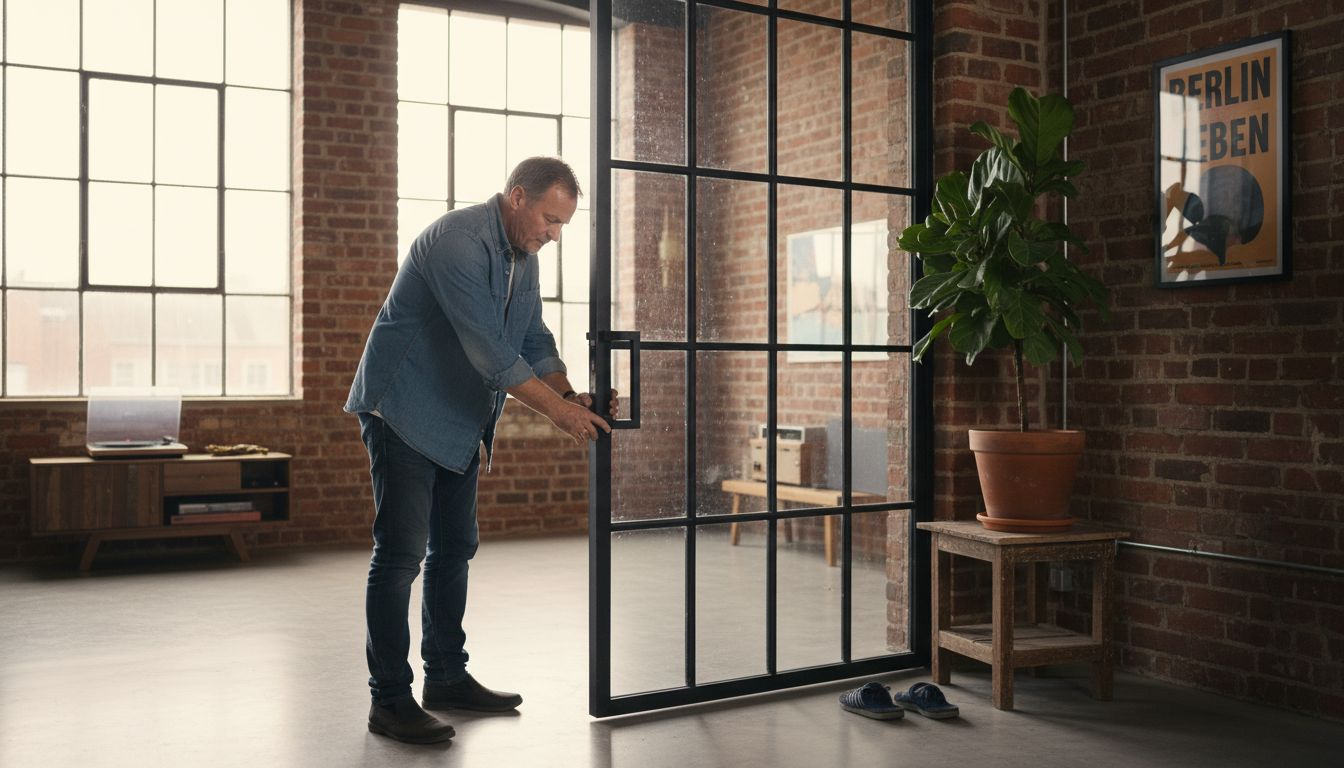
There's a particular design challenge that comes up again and again in British homes — especially in Victorian conversions, former warehouse apartments, and open-plan period properties: how do you divide a space without killing the light? A bespoke steel and glass loft door answers that question elegantly. It acts as a visual boundary rather than a physical barrier, directing natural light where it's needed while adding a strong architectural statement. This guide walks you through every decision you'll face — from choosing between five glass types to measuring your opening correctly and understanding exactly what you'll pay.
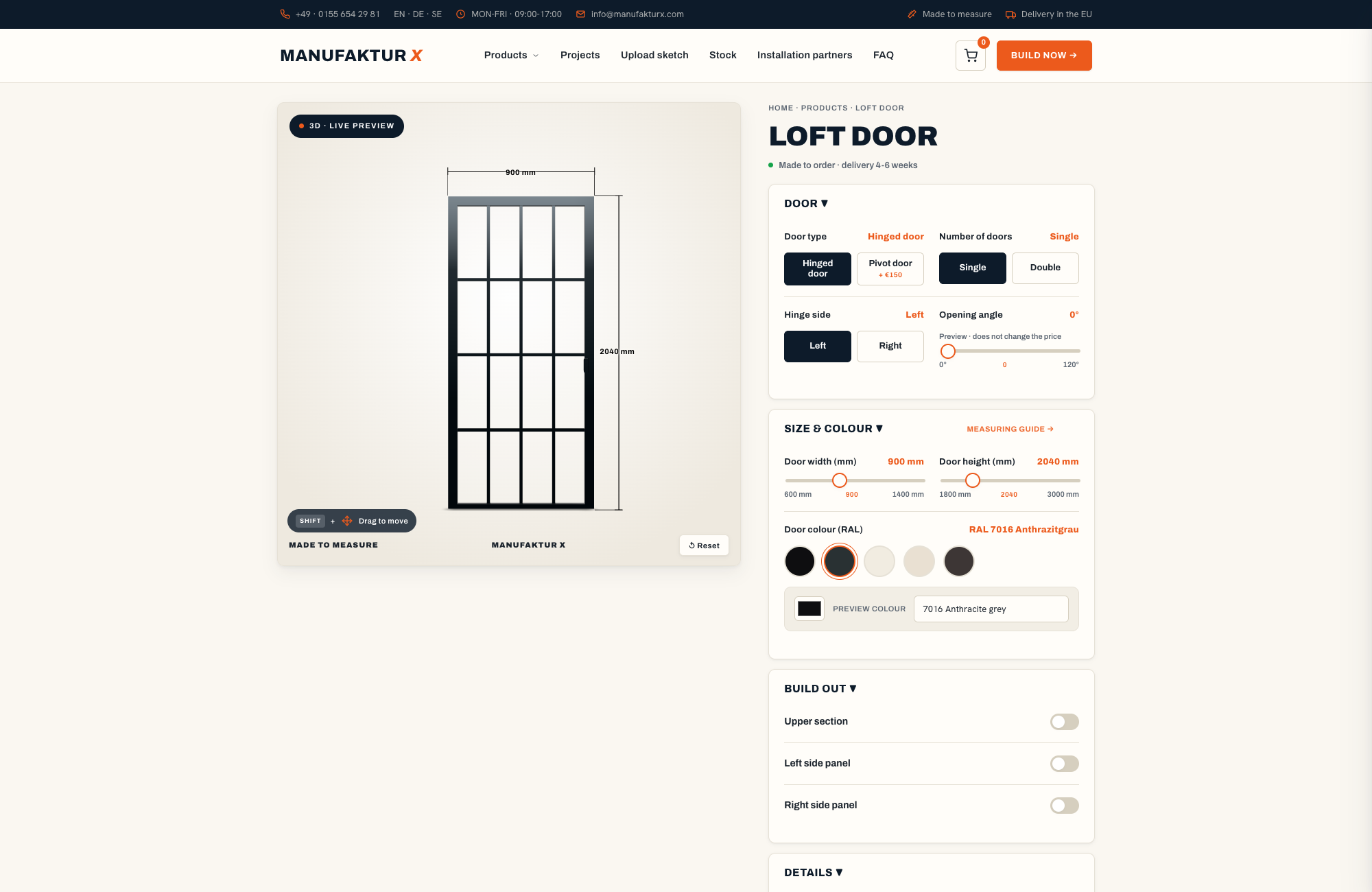
Why Steel and Glass Loft Doors Work So Well in British Interiors
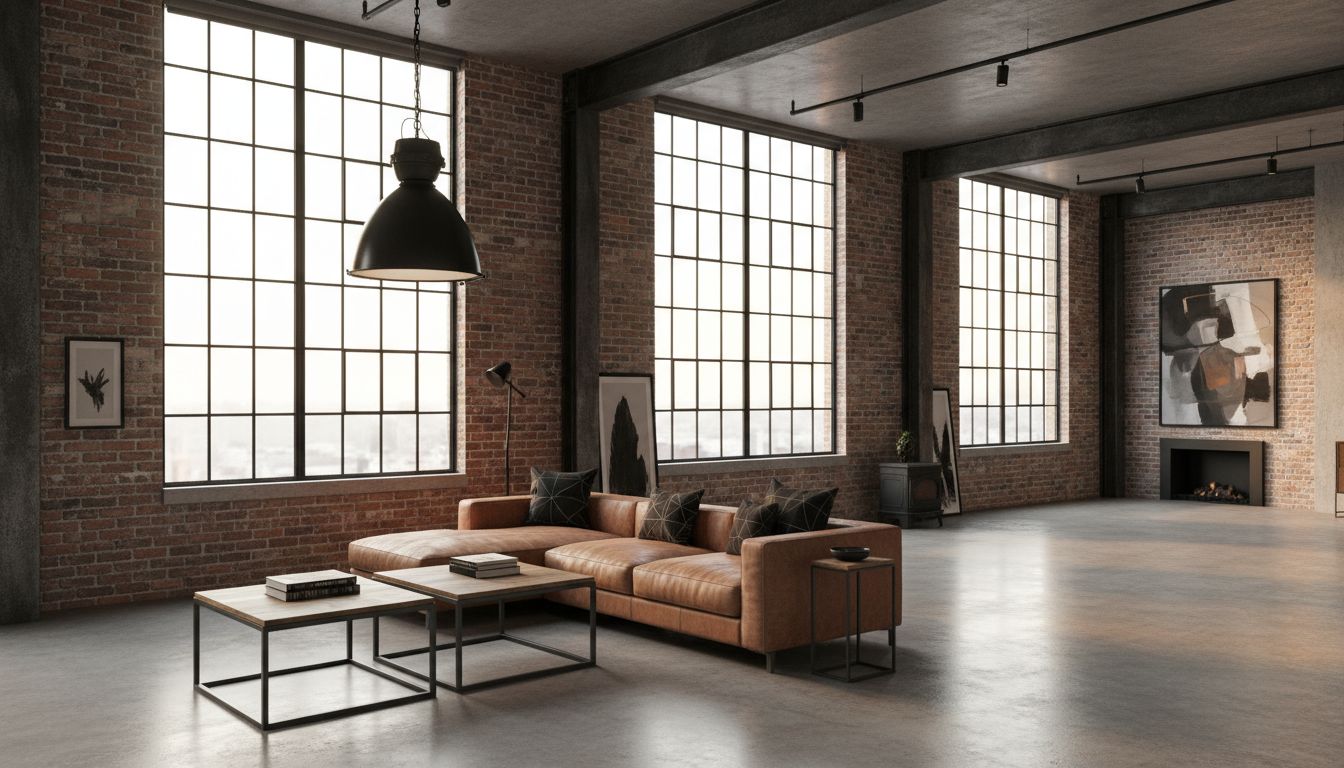
The industrial aesthetic has deep roots in British interior design. From converted Shoreditch lofts to repurposed mill buildings in Manchester and Leeds, the combination of exposed steel, large glazed panels, and raw materials has become a defining look for contemporary living. A steel and glass loft door fits naturally into this context — but it works just as well in a suburban semi with an open-plan kitchen extension or a new-build with high ceilings and minimal detailing.
What makes this style of door genuinely useful rather than merely fashionable is its flexibility. Unlike a solid panel door, it allows borrowed light to pass between rooms. Unlike a fully open archway, it gives you acoustic and visual separation when you want it. The result is a living space that feels both connected and considered.
At Manufaktur X, each loft door is built to your exact dimensions using a robust steel frame, finished with a scratch-resistant powder coating in any RAL colour, and glazed with your choice of five different glass types. Every door is made to order in the EU and delivered to the UK with all customs duties and import costs handled — no surprises at the door.
Understanding Your Glass Options
The glass you choose shapes how your loft door performs day to day. It determines how much light passes through, how much privacy you have, and the overall mood the door creates. There are five glass types available in the loft door configurator, each with a distinct character.
Clear Glass — Open, Bright and Uncompromising
Clear glass offers complete visual transparency and maximum light transmission. Rooms feel larger and more connected, which is particularly useful in homes where natural light is at a premium — a common situation in older terraced properties or north-facing rooms. If you want clean sightlines and an airy, open feel, clear glass is the straightforward choice. It suits minimalist interiors where the architectural lines of the steel frame are intended to be the focal point.
Frosted Glass — The Privacy and Light Compromise
Frosted glass scatters light softly and reduces visibility without blocking it entirely. It's the most popular choice for spaces where you want daylight to pass through but don't want full visual access — a home office separated from a living room, for instance, or a sleeping area partitioned from an open-plan space. The degree to which shapes are visible through frosted glass depends on the light conditions on either side: strong backlighting will make silhouettes more apparent.
In the configurator, there is one frosted glass option — no sub-variants or different opacity grades. If complete privacy is the priority, dark smoked glass may be worth considering instead.
Smoked Glass — Urban Elegance with a Contemporary Edge
Smoked glass has a tinted quality that softens and filters light rather than diffusing it. It offers a moderate level of privacy while retaining a sense of depth and transparency. The effect is sophisticated — it adds warmth and a slightly moody quality to a space without feeling opaque or heavy. For interiors that lean towards industrial chic or dark, dramatic palettes, smoked glass is a natural companion to a matte black or deep anthracite steel frame.
Dark Smoked Glass — Maximum Discretion, Strong Visual Impact
Where smoked glass offers a subtle filter, dark smoked glass makes a bolder statement. The deeper tint significantly reduces both light transmission and visibility, making it the right choice for bedroom doors, private studies, or any space where you want genuine separation. It works particularly well as a design element in its own right — the contrast between a dark-tinted panel and a pale interior wall creates a striking visual effect.
Textured Glass — Character and Diffusion in One
Textured glass has a patterned surface that refracts light in multiple directions, creating a decorative effect while providing a degree of privacy. It adds visual interest without relying entirely on the frame, which makes it a good option if you want the door itself to be a design feature rather than a backdrop. It's also practical — the textured surface is straightforward to clean and doesn't show fingerprints as readily as clear glass.
Glass Types at a Glance
| Glass Type | Transparency | Privacy Level | Atmosphere |
|---|---|---|---|
| Clear Glass | Maximum | None | Open, spacious |
| Frosted Glass | Diffused | Good | Soft, sheltered |
| Smoked Glass | Reduced | Moderate | Urban, refined |
| Dark Smoked Glass | Strongly reduced | High | Discreet, dramatic |
| Textured Glass | Refracted | Subtle | Decorative, characterful |
Safety Glass Explained: Toughened vs Laminated
Choosing a glass type is one decision; choosing how that glass is constructed is another. All five glass types are available in two safety glass formats — toughened (ESG) and laminated (VSG) — and the difference matters.
Toughened Safety Glass (ESG)
Toughened glass is significantly stronger than standard glass under mechanical stress. If it does break, it fractures into small, blunt-edged fragments rather than large shards — greatly reducing the risk of injury. The trade-off is that once broken, the panel is completely destroyed and will need replacing. For standard-sized openings, toughened glass is a solid, reliable choice.
Laminated Safety Glass (VSG)
Laminated glass consists of two panes bonded together with a PVB or SGP interlayer. When broken, the fragments adhere to the film and the panel holds together rather than collapsing. This provides a higher level of protection against both accidental breakage and forced entry — relevant for ground-floor rooms or any space where security is a consideration. For larger doors — taller or wider panels — Manufaktur X recommends laminated glass for the additional stability and safety it provides.
| Glass Construction | How It Breaks | Key Benefit | Best For |
|---|---|---|---|
| Toughened (ESG) | Small blunt fragments | Reduced injury risk | Standard dimensions |
| Laminated (VSG) | Fragments held by interlayer | Panel stays intact; added security | Larger panels; security-conscious installs |
The Steel Frame: Powder Coating and Colour
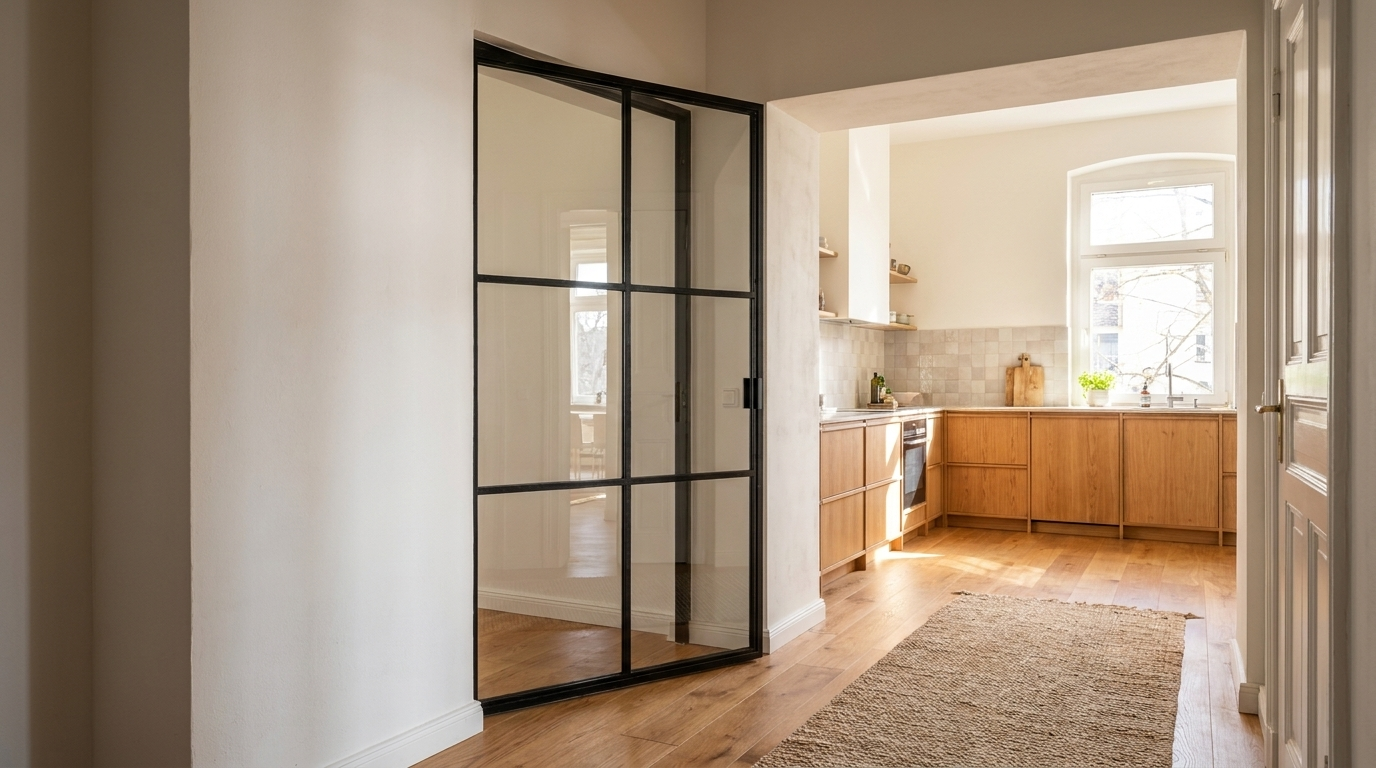
The frame is fabricated from robust steel and finished with a powder coating — not paint. This distinction matters in practice. Powder coating is applied electrostatically and cured under heat, producing a surface that is far more resistant to scratches, chips, and daily wear than a painted finish. The colour is consistent throughout the coating layer, and the process produces no solvent emissions, making it the more environmentally responsible choice.
Every RAL colour is available at no additional cost. This makes it straightforward to align a loft door with existing metalwork in your home — radiators, kitchen handles, window frames, or structural steelwork. RAL 9005 Jet Black is the most popular choice for an industrial-style interior. RAL 7016 Anthracite Grey pairs well with pale Scandi-influenced schemes. If you're working with a particular design palette, the configurator lets you specify any RAL reference and see the effect in real time.
Handle Options
Three handle styles are available for loft doors at Manufaktur X:
- Long Bar — a classic, functional form that works across industrial and contemporary settings
- Minimal — understated and flush, suited to pared-back interiors where the handle shouldn't compete with the frame
- Crescent — a curved form with more personality, useful where the door is intended as a design focal point
Handle selection is made within the loft door configurator and is reflected in the live price.
Which Glass Type Suits Which Room?
The right glass choice depends as much on how a room is used as it does on personal taste. Here are some practical starting points.
Open-Plan Living Areas and Kitchen Extensions
In the kind of open-plan kitchen-diner extension that is now standard in British family homes, a loft door with clear glass maintains the sense of space while allowing the room to be closed off when needed — useful for managing cooking smells or noise during remote working. Textured glass is a good alternative if you'd like the door to add visual interest rather than disappear into the background.
Bedrooms and Private Spaces
For a bedroom, frosted, dark smoked, or textured glass all provide adequate privacy while still allowing borrowed light from adjacent rooms. In a studio flat or open-plan bedroom layout, this is often the only way to create a sense of separation without sacrificing daylight in a windowless sleeping area.
Home Offices and Studies
A loft door between a home office and a main living space is increasingly common — and for good reason. Frosted glass allows light to flow through while signalling clearly that the workspace is in use. Smoked glass achieves a similar effect with a more dramatic finish, and works particularly well in rooms with darker, moodier colour schemes.
Period Properties with Limited Natural Light
In Victorian terraces or Edwardian semis where the middle rooms often receive little direct daylight, a frosted glass loft door can be a genuinely practical solution. Positioning it between a rear reception room and a dark hallway allows daylight from the back of the house to reach further into the property — without fully exposing the rear room to view from the front.
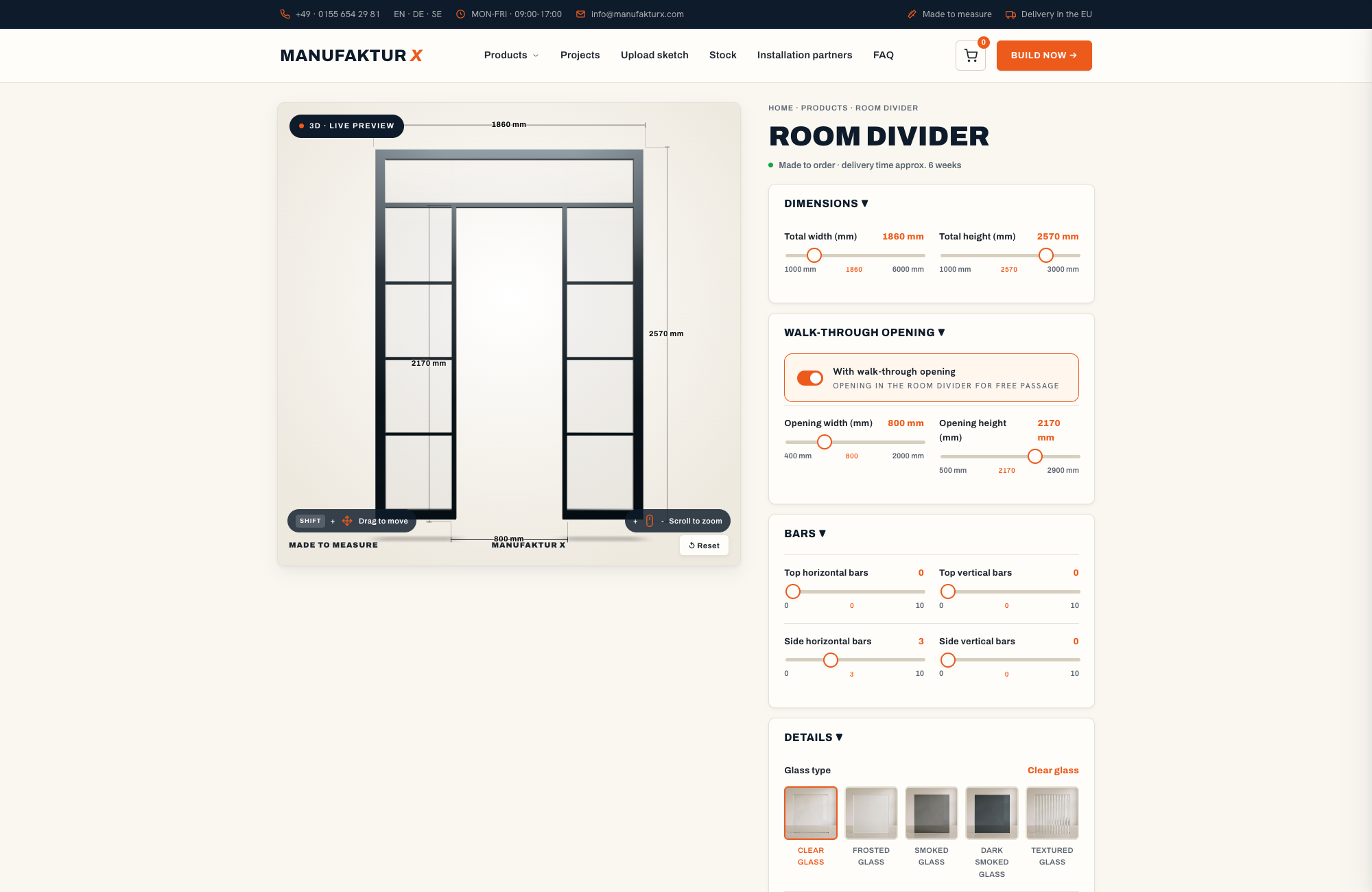
If you're looking for a fixed partition with the same glass options, room dividers from Manufaktur X offer the same five glass types and full RAL colour range in a non-opening format.
How to Measure Your Opening Accurately
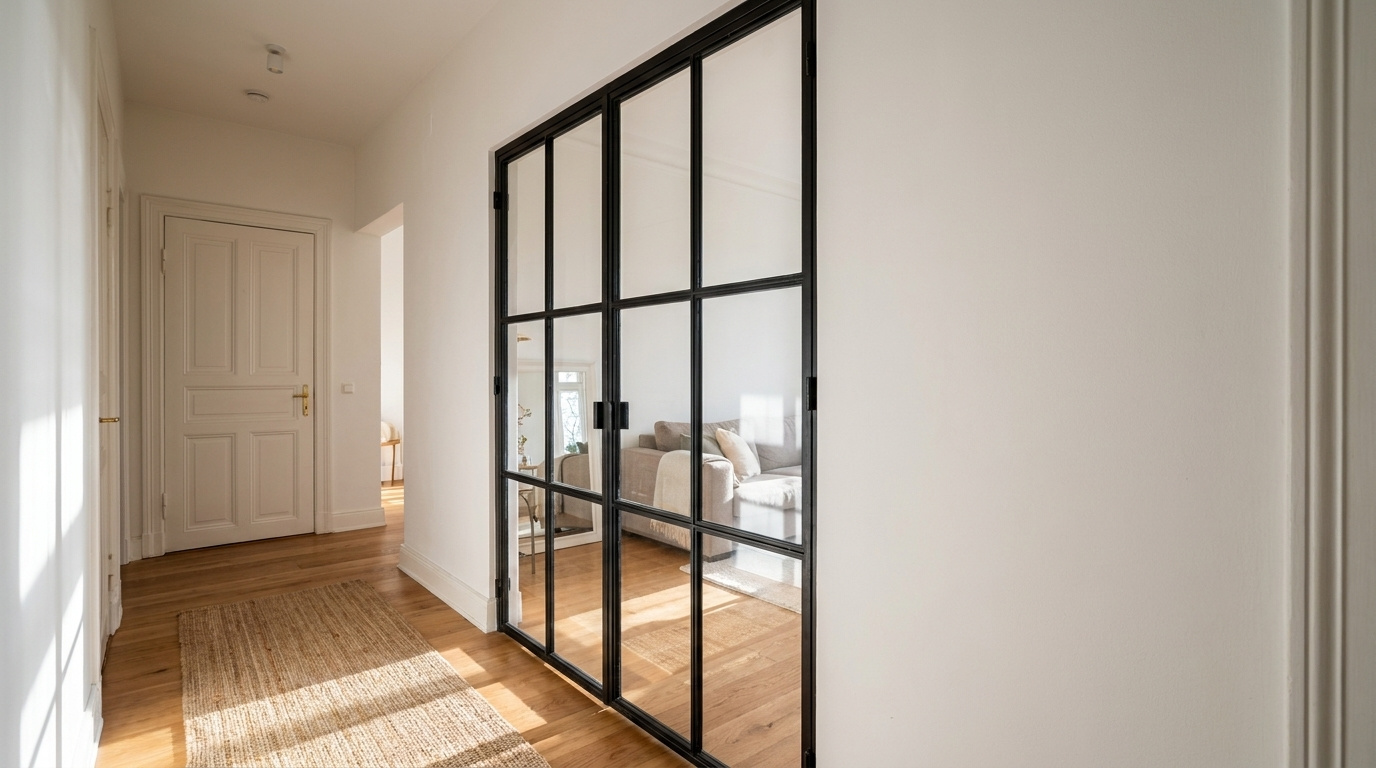
One of the most common and costly mistakes when ordering a bespoke door is entering the wrong dimensions. Because Manufaktur X manufactures each door to the exact measurements you submit, there is no margin for error.
Here's how to measure correctly:
- Measure in multiple places: Take width measurements at the top, middle, and bottom of the opening. Take height measurements on both the left and right sides. Walls and floors in older properties are rarely perfectly straight, and differences of several millimetres are common.
- Use the smallest measurement: Enter the narrowest width and shortest height you recorded. A door made to the largest measurement will not fit if the opening narrows elsewhere.
- Allow a fitting gap: Deduct approximately 5mm on each side — left, right, and top — from your smallest measurement before entering it into the configurator. This gives enough clearance for fitting without leaving a visible gap.
You enter your desired finished dimensions directly into the configurator — not the raw opening size. The door is manufactured to match what you input, so the deductions above need to be made before you type anything in.
Using the Online Configurator
The 3D configurator at Manufaktur X is designed to give you a complete, accurate picture of your door before you commit to anything. Enter your dimensions, select your glass type, glass construction, RAL colour, and handle — and the price updates in real time with every change. There are no quote requests, no waiting for a sales call, and no hidden charges added later.
The price shown in the configurator is the price you pay. Delivery to the UK is clearly displayed in the basket, and all customs duties and import costs are included — a point worth noting given that many European furniture suppliers do not make this clear upfront.
Loft doors at Manufaktur X start from £999 for the most straightforward configuration. The exact price for your combination of dimensions, glass type, glass construction, RAL colour, and handle is generated instantly in the configurator.
Placing Your Order and What Happens Next
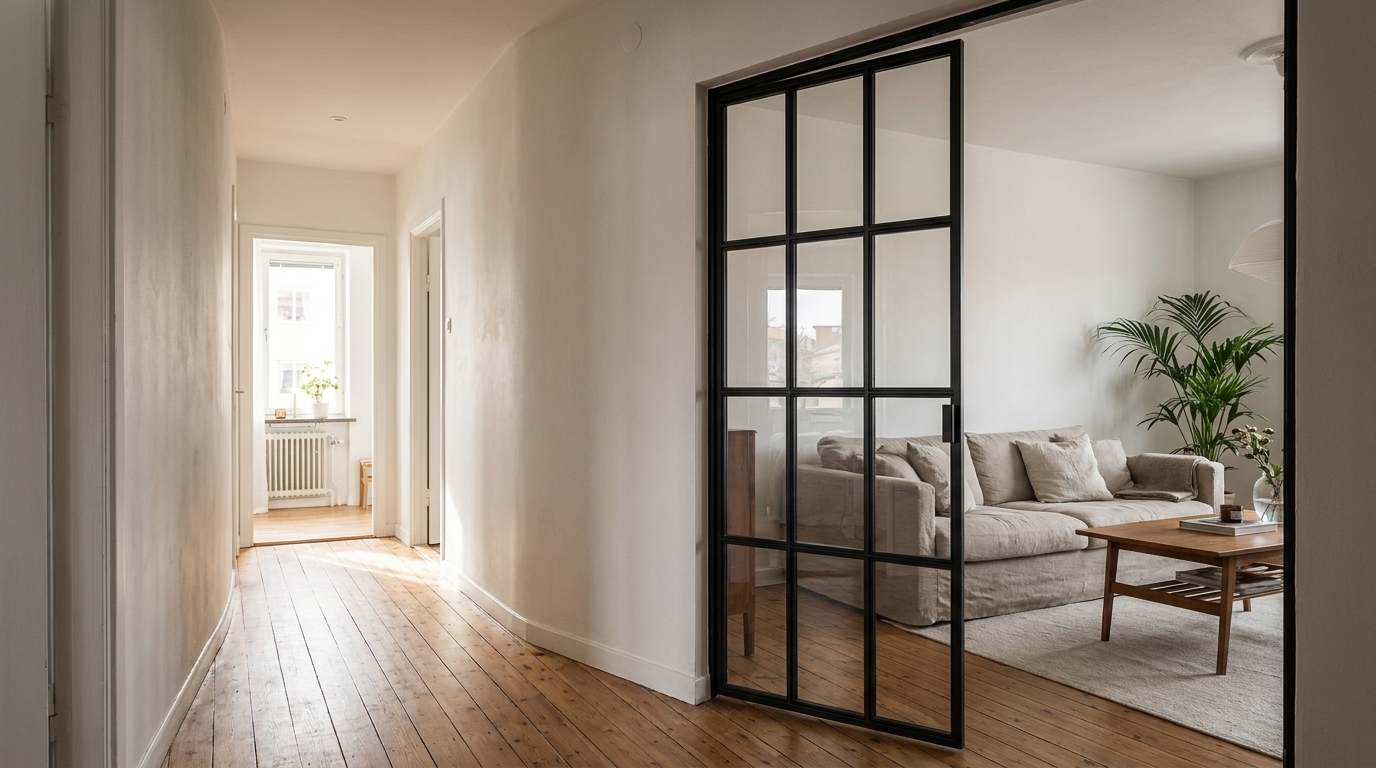
Before submitting your order, review every element of your configuration carefully: dimensions, glass type, glass construction, RAL colour, and handle choice. Once the order is placed, the configuration is fixed — changes to glass type or dimensions cannot be made after the fact, as production begins promptly.
Payment options include PayPal and Klarna. Production takes 5 to 6 weeks from the point of order. Delivery to the UK follows, with all import duties and customs costs covered — you won't receive an unexpected bill from a courier on arrival.
Unusual Openings and Bespoke Requests
If your opening has an angled head, non-standard proportions, or any feature that can't be captured through the standard configurator fields, you can submit a sketch or drawing through the Sketch Service. Manufaktur X will assess the feasibility and provide an individual quotation.
Fitting Your Loft Door
A full fitting guide is included with every order. Competent DIYers can manage the installation themselves, but it's worth being realistic about the challenge: loft doors frequently weigh in excess of 100kg, which means at least two people are needed for safe handling, and the wall structure needs to be capable of bearing the load. If you have any doubt about either the structural situation or your own experience with heavy door installations, engaging a professional fitter is the sensible choice.
| Installation Step | What You're Achieving | Key Point |
|---|---|---|
| Verify opening dimensions | Confirm the door will fit | Measure multiple times; use the smallest reading |
| Mark fixing points | Create a secure anchor | Check wall structure can bear the load |
| Set the frame level | Ensure smooth, long-term operation | Use a quality spirit level throughout |
| Seal around the frame | Prevent draughts and moisture ingress | Use an appropriate flexible sealant |
Pricing: What Does a Made-to-Measure Loft Door Cost?
Prices start from £999 for the simplest configuration, with the final figure determined by your chosen dimensions, glass type, glass construction, number of panels, RAL colour, and handle. Every variable adjusts the price in real time within the configurator.
It's worth understanding what you're comparing when you look at loft door prices online. Many listings show only the cost of the glass panel. The steel frame, fittings, frame surround, and delivery are often separate line items that add significantly to the total. At Manufaktur X, the price shown in the configurator is the complete price — no additional components, no phased quoting process.
Off-the-shelf loft doors are available at lower entry prices, but they come with fixed dimensions, no individual colour choice for the steel frame, and no ability to accommodate the irregular openings that are common in older British properties. For many homes, a made-to-measure door isn't a premium option — it's simply the only one that will actually fit and look right.
| Product | From | Note |
|---|---|---|
| Lofttür | £995 | Lowest possible option |
| Raumteiler | £1.900 | Steel + laminated glass, custom width |
| Großes Regal | £2.750 | Solid wood, steel frame, floor-to-ceiling |
| Esstisch | £1.360 | Solid wood, steel frame |
| Couchtisch | £995 | Solid wood, steel frame |
| Sitzbank | £945 | Solid wood, steel frame |
| TV-Board | £1.325 | Solid wood, steel frame |
| Rohrregal | £915 | Modular pipe shelf |
Keeping Your Loft Door in Good Condition
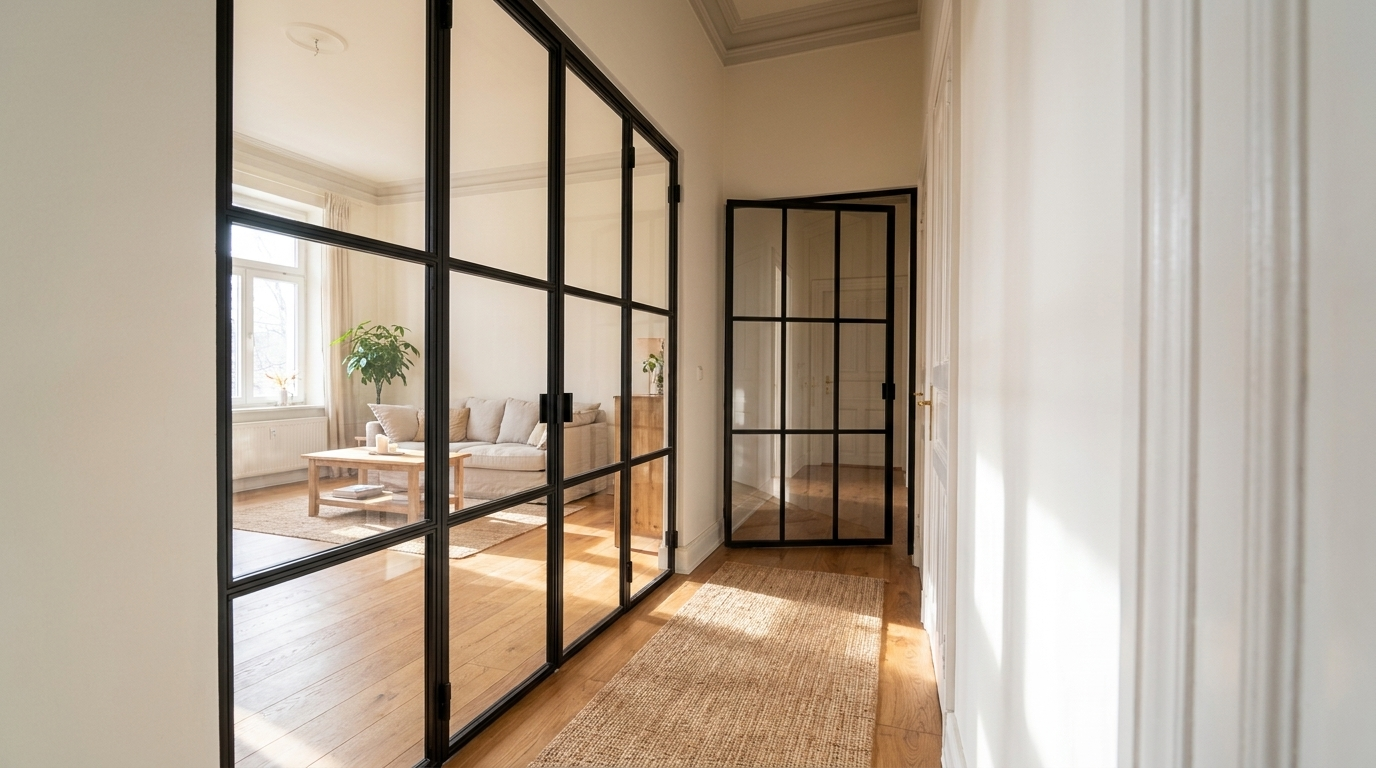
Cleaning the Glass
Use a glass-appropriate cleaner and a microfibre cloth for all glass types. Microfibre is effective at lifting fingerprints and everyday marks without scratching the surface. Avoid abrasive cloths, scouring pads, or cleaning products containing harsh chemicals — these can permanently damage the glass surface, particularly on textured or treated types.
Caring for the Steel Frame
The powder-coated frame is durable and requires minimal maintenance, but it benefits from occasional cleaning with a mild, non-abrasive product. Avoid solvent-based cleaners, which can degrade the powder coating over time. A wipe-down every six months is generally sufficient to keep the finish in good condition.
Hinges and Hardware
Check hinges, fixings, and any moving parts annually. A small amount of appropriate lubricant applied to hinge points once a year will keep the door operating smoothly and prevent wear on the fixings. Also check the glass panels annually for any chips or cracks — particularly at the edges, where impact damage is most likely to occur.
| Component | Maintenance Task | Frequency |
|---|---|---|
| Glass panels | Clean with microfibre cloth and glass cleaner | As needed |
| Steel frame | Wipe with mild, non-abrasive product | Every six months |
| Hinges and fixings | Lubricate and check for wear | Annually |
| Safety glass | Inspect for chips or edge damage | Annually |
The Manufaktur X Range
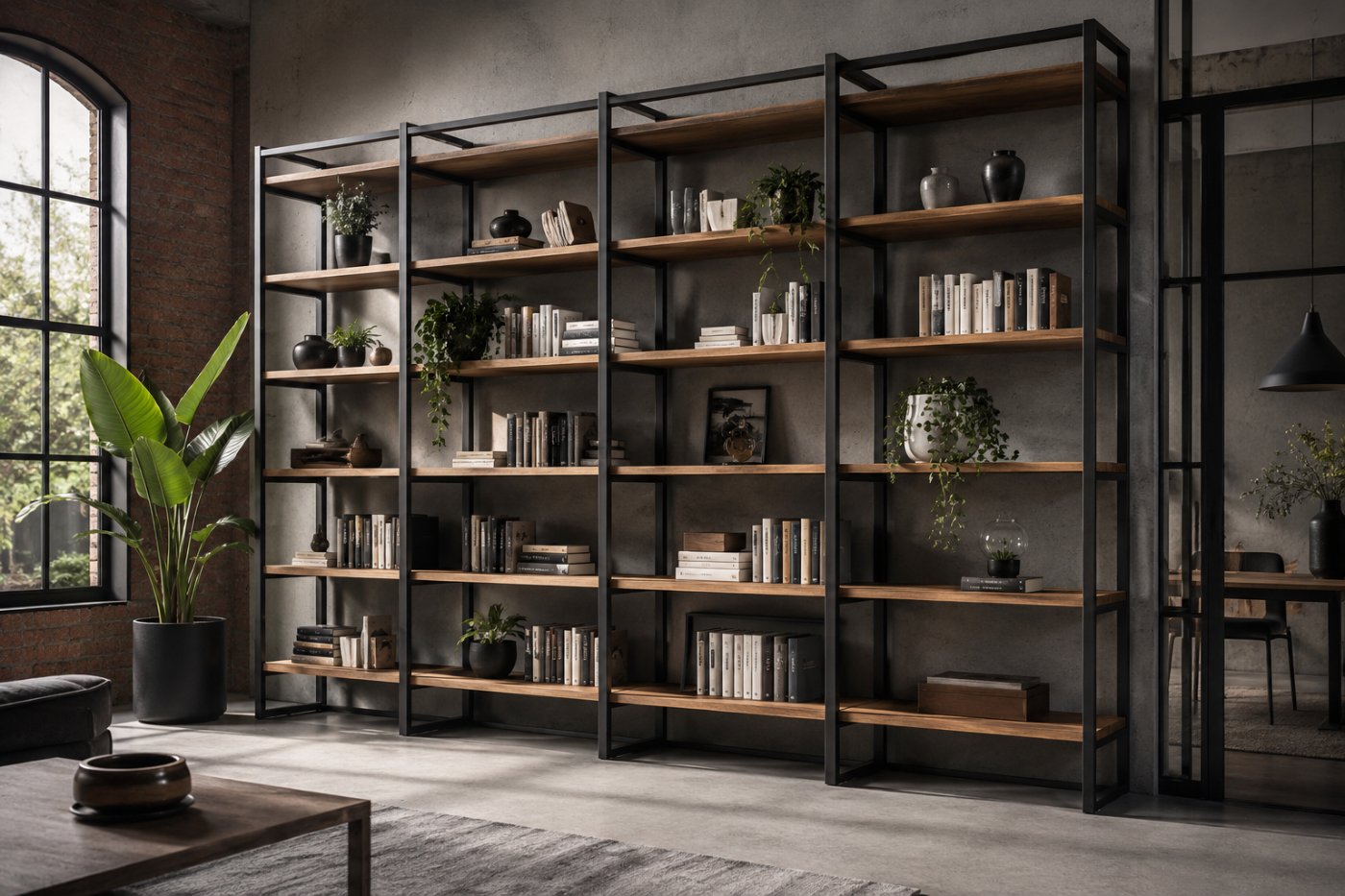
Manufaktur X specialises in made-to-order steel and glass furniture and interior doors, manufactured in the EU to precise customer specifications. The full range extends beyond loft doors to include room dividers, dining tables, coffee tables, benches, large shelving units, and pipe shelves.
Solid wood tops for tables and shelving are available in oak, beech, pine, ash, walnut, and cherry, with over 50 stain options for precise colour matching. All products are configured online with real-time pricing and delivered to the UK with import duties included.
Frequently Asked Questions
What glass types are available for loft doors?
There are five options: clear glass, frosted glass, smoked glass, dark smoked glass, and textured glass. Each is available as either toughened (ESG) or laminated (VSG) safety glass. For larger panels, laminated glass is recommended for greater stability and security.
Do I measure the opening or the door itself?
You enter your desired finished door dimensions into the configurator — not the raw opening size. Measure the opening at several points, use the smallest reading, deduct approximately 5mm per side for fitting clearance, and enter the result. The door is manufactured to exactly what you input.
What does delivery to the UK involve?
All customs duties and import costs are included in the price shown at checkout. You will not receive a separate bill from the courier. Production takes 5 to 6 weeks, after which delivery to your UK address is arranged.
What is the difference between toughened and laminated safety glass?
Toughened glass (ESG) breaks into small, blunt-edged pieces with a low injury risk, but the panel is completely destroyed. Laminated glass (VSG) holds together when broken because the fragments adhere to an internal film — providing better resistance to forced entry and greater residual stability. Laminated glass is recommended for larger doors.
Can I order a door for an unusual or angled opening?
Yes. If your opening has features that can't be configured through the standard tool — such as a sloped ceiling, angled head, or non-rectangular frame — you can upload a drawing through the Sketch Service. Manufaktur X will confirm feasibility and provide a tailored quote.
What handle styles are available?
Three handle styles are offered: Long Bar, Minimal, and Crescent. The choice is made during configuration and is included in the live price shown in the configurator.
Can I change my order after it's been placed?
No. Once an order has been submitted, the configuration — including dimensions, glass type, and RAL colour — is fixed and cannot be altered. Please review all details carefully before confirming your purchase.
Is a loft door suitable for DIY installation?
A fitting guide is included with every door. Experienced DIYers can manage the installation, but the weight — typically over 100kg — means at least two people are required, and the supporting wall structure must be assessed beforehand. If you are uncertain about either, a professional installer is strongly recommended.